Chris Hughes discusses Japanese foreign and security policy at Warwick’s Politics Reconsidered blog.

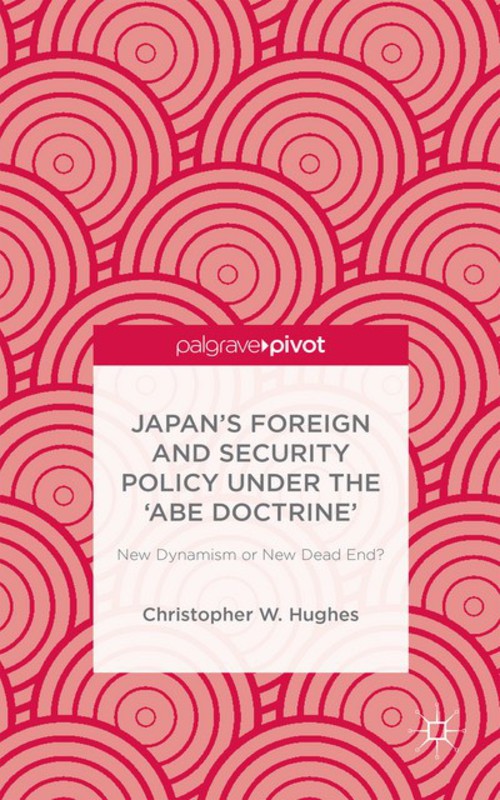 Japan’s Foreign and Security Policy Under the ‘Abe Doctrine’
By Professor Chris Hughes
This post originally appeared on Japan Focus.
Prime Minister Abe Shinzō’s stunning return to power in the December 2012 landslide election victory, and the consolidation of his leadership in a repeat victory in December 2014, has heralded the resurgence for Japan of a more assertive, high-profile, and high-risk, foreign and security policy.[i] However, as Japan’s Foreign and Security Policy Under the ‘Abe Doctrine’ suggests, Abe’s status as an arch-‘revisionist’ ideologue, combined with the track record of his first administration in 2006-2007, made clear that he would move aggressively to shift Japan towards a more radical external agenda—characterized by a defense posture less fettered by past anti-militaristic constraints, a more fully integrated US-Japan alliance, and an emphasis on ‘value-oriented’ diplomacy with East Asian states and beyond.[ii] Indeed, Abe’s diplomatic agenda has been so distinctive and forcefully articulated in…
View original post 2,357 more words
Discover more from Progressive Geographies
Subscribe to get the latest posts sent to your email.


