
Patrick Gamez has a generous, appreciative and thoughtful review of my 2021 book The Early Foucault in the Journal of the History of the Behavioral Sciences. It’s in the same issue as my review of Elisabetta Basso’s Young Foucault (here). Both reviews require subscription, unfortunately. A preprint of my review of Elisabetta Basso’s book is here.
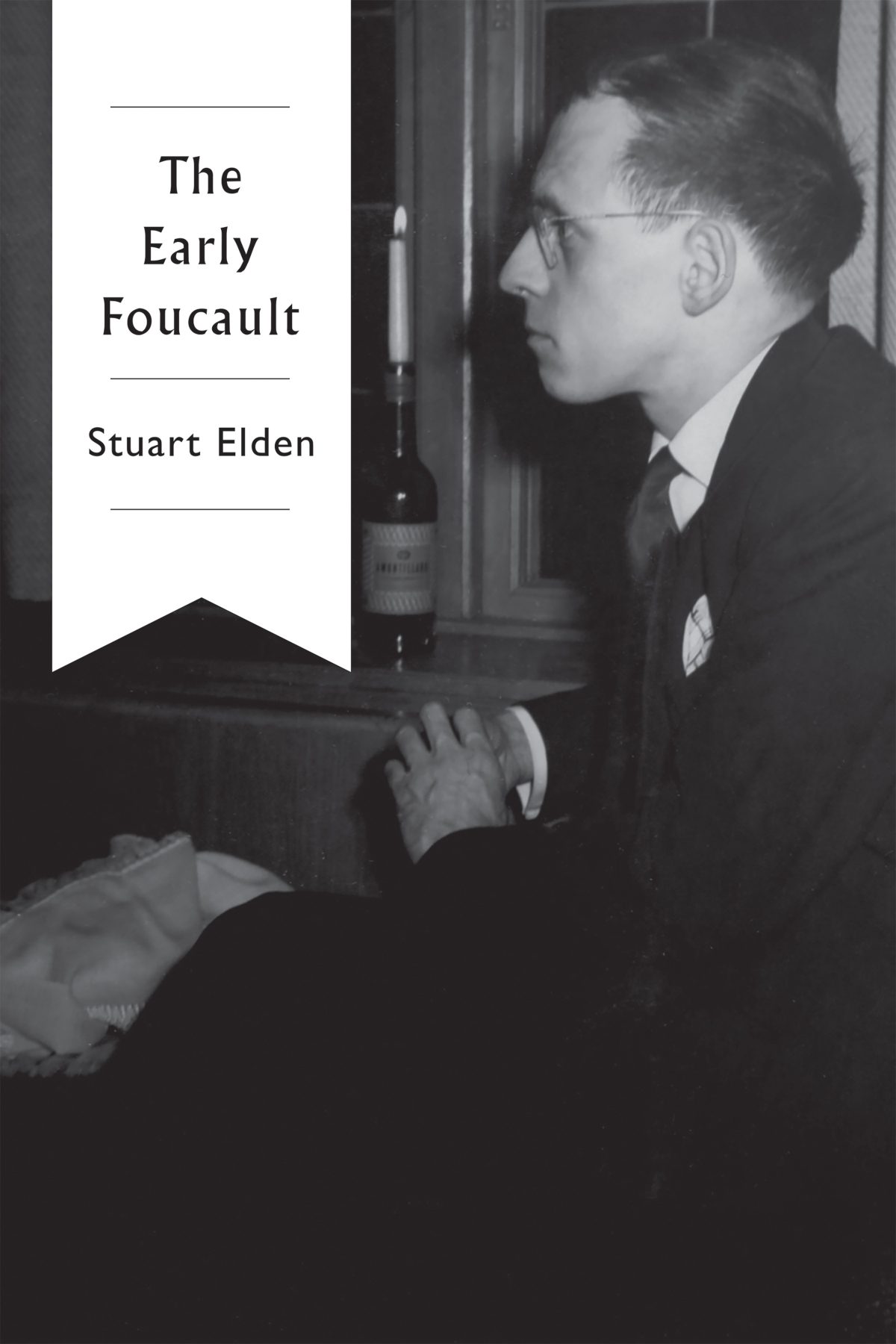
Here’s a few bits from the start of the Gamez review:
This is a somewhat belated review of Stuart Elden’s The Early Foucault, the third volume of a now‐completed tetralogy of works providing the most comprehensive intellectual history of Foucault available in English, covering the first major period of his intellectual activity, from his preparation for agrégation at the ENS in 1950 through the writing, submission, and subsequent revisions of his thesis, Folie et déraison, and the accompanying secondary thesis, a translation of and introduction to Kant’s Anthropology from a Pragmatic Point of View.
For Anglophone scholars, partisans, and critics of Foucault, Elden’s work has simply been a gift, demanding gratitude first. This volume is no different, being richly rewarding for those hungry for information about the young Foucault’s intellectual life and, for a book that deals above all in facts about the whos, whats, wheres, and whens, very pleasantly written. While there are a couple of excellent biographies of Foucault, there is nothing that compares to what Elden has provided in terms of detailed research into Foucault’s sources, abandoned writings, academic contacts and conversations—in short, the whole archive of how his thought came to maturity.
And the very last part:
… consider, for comparison, the way in which Paul Rabinow’s division of Foucault’s texts into widely influential readers in the 1990s, focusing on “Power,” “Ethics,” and the grab‐bag of “Aesthetics, Method, and Epistemology” has subtly enforced our most basic framings of Foucault, splitting his work into both methodologically and substantively distinct periods. Despite the fact that Elden has largely respected that framing, the very idea of foregrounding Foucault’s predoctoral work like The Early Foucault does works against it. If this body of work deserves such attention, it must be because of its subterranean influence on his later thought; a profound continuity, despite the surface differences. Indeed, Elden cannot but disrespect arbitrary periodizations, following the reception and revisions of Folie et déraison into the mid‐1960s, bleeding into the archaeological period (Ch. 8). One wonders what sort of Foucault would emerge if we started from a more holistic perspective to begin with. Of course, this is all speculative. Elden’s book will be incredibly valuable not only to researchers and graduate students, but to anyone interested in one of the most important figures in 20th century French thought.
Discover more from Progressive Geographies
Subscribe to get the latest posts sent to your email.


