


I have now been back at work for a few weeks, initially beginning half-time and gradually increasing what I can do. The support I have had from my department for a long period off work and a phased transition has been much appreciated. However, the nature of being unwell on a research fellowship is that the amount of work does not reduce, just the time in which to do it. I can’t write 90% of the planned book, I don’t want to produce something less than I originally had in mind, and I don’t want to cut corners. So it is likely I will have to extend the period working on this project beyond the original plan. The end of the project is a good way off, but it’s hard to escape the feeling that I am a long way behind.
Especially given the shorter days I’ve been working, I tried to come up with some relatively small and sometimes discrete tasks, so that I could tackle something manageable and have a sense of progress. The plan for term 1 is to write a draft of a chapter on Émile Benveniste’s work in the 1930s and 1940s. This was initially the plan for the first half of the summer, but as well as starting later than planned, I’m also not going to be able to work so intensely. So it’s been a case of breaking down this work into smaller sections, parts and tasks, even more so than normal. One of the things that is interesting about this work is that while I know the broad contours of the themes this chapter needs to cover – Benveniste’s key works, his election to a chair at the Collège de France, his exile in the war, and fieldtrips to Iran and Afghanistan – there are going to be questions I don’t yet know which will need to discussed.
One relatively discrete task was writing about the teaching done by Benveniste. We have a good summary record from the Annuaires of both the Collège de France and the EPHE. Unfortunately his own archive only seems to have limited records of courses, a few of which have been digitised. His Last Lectures have been published, but there doesn’t seem to be a more extensive plan of publication. There are also a few notes from auditors available in archives. But for most years it looks like we simply have his own report of what he did, usually a paragraph in length. Before I became unwell, I’d done a systematic trawl through the Annuaires and had copied or downloaded the reports, and largely consolidated these into single file for each institution. It provides a really interesting trajectory of a career, as the record also does for Georges Dumézil – whose own teaching record is much better preserved – and, in the previous project, Foucault. I’ve been writing small sections on the teaching – Benveniste’s courses were disrupted by war and his health, so it breaks down into shorter periods. At some point I will go through the archival records in Paris and fill in what more detail I can, but for many of the years I think the reports are all we have.
I’ve also being making a few visits to UK archives. I made a return visit to Oxford, to look at the Society for the Protection of Science and Learning (SPSL) papers I mentioned in the previous update. This was mainly to check a few things in relation to the Walter Bruno Henning story I have now drafted. I also used the visit there to request a couple of things from the library I can’t access in London.
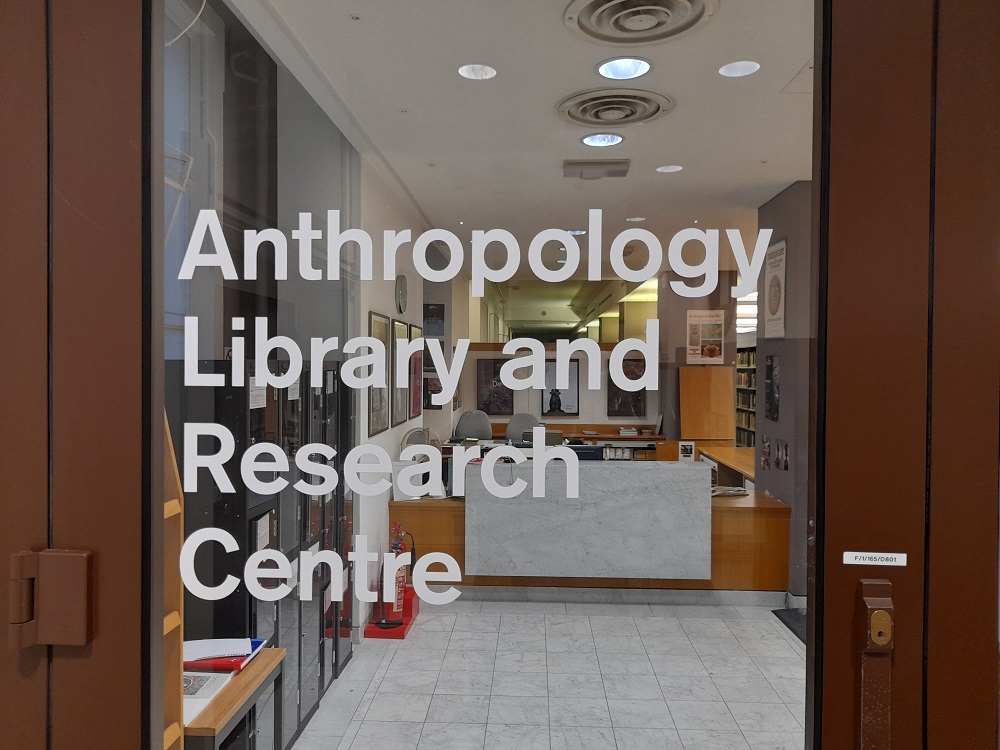
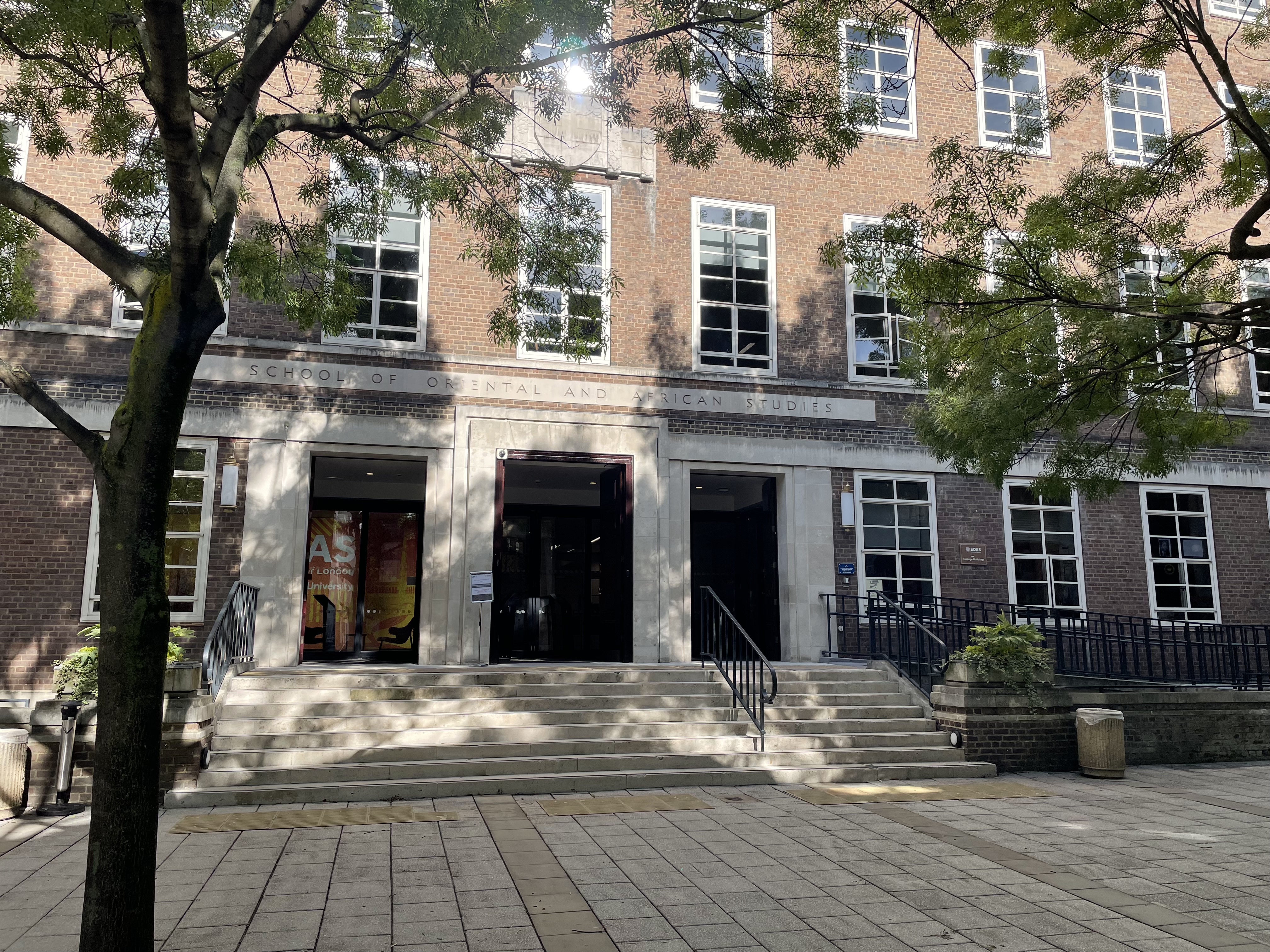
I also visited the archives of SOAS to look at the personnel files of Henning and Harold Bailey. The Bailey files were missing from the relevant box, so a search has been started to see where they might have ended up. The Henning files were fascinating, and helped to fill in some detail in the story I’d reconstructed from the SPSL papers. I made a return visit to the Ancient India and Iran Trust in Cambridge, to look again at the Harold Bailey papers, which include his extensive correspondence with Benveniste. I also took an initial look at some of the other letters there, mainly his long correspondence with Henning.
In the previous update I said I thought I’d finished, at least for now, the discussion of Benveniste’s early work on the Sogdian language. This was work begun by Robert Gauthiot with materials brought back to Paris by Paul Pelliot. Gauthiot died from wounds in the First World War, and a very young Benveniste was asked by Antoine Meillet and Pelliot to continue this work. But I wanted to get a better sense of Gauthiot’s work, and so started reading more of his work. Following a lead there, I chanced upon the work of Ursula Sims-Williams of the British Library. She discusses the exchange between Aurel Stein and Pelliot, and through Pelliot with Gauthiot, where Gauthiot helped to decipher some of the texts brough back by Stein to London. I already knew the importance of Stein to the story because he was at the Dunhuang caves shortly before Pelliot. His haul ended up in various London museums. In parallel to the work going on in London and Paris, there was also work in Berlin with the materials from the Turfan expeditions. A young Henning was involved in that work before he moved to SOAS. Yet again I’m shown by the material how hard this is going to keep to a single-country focus.
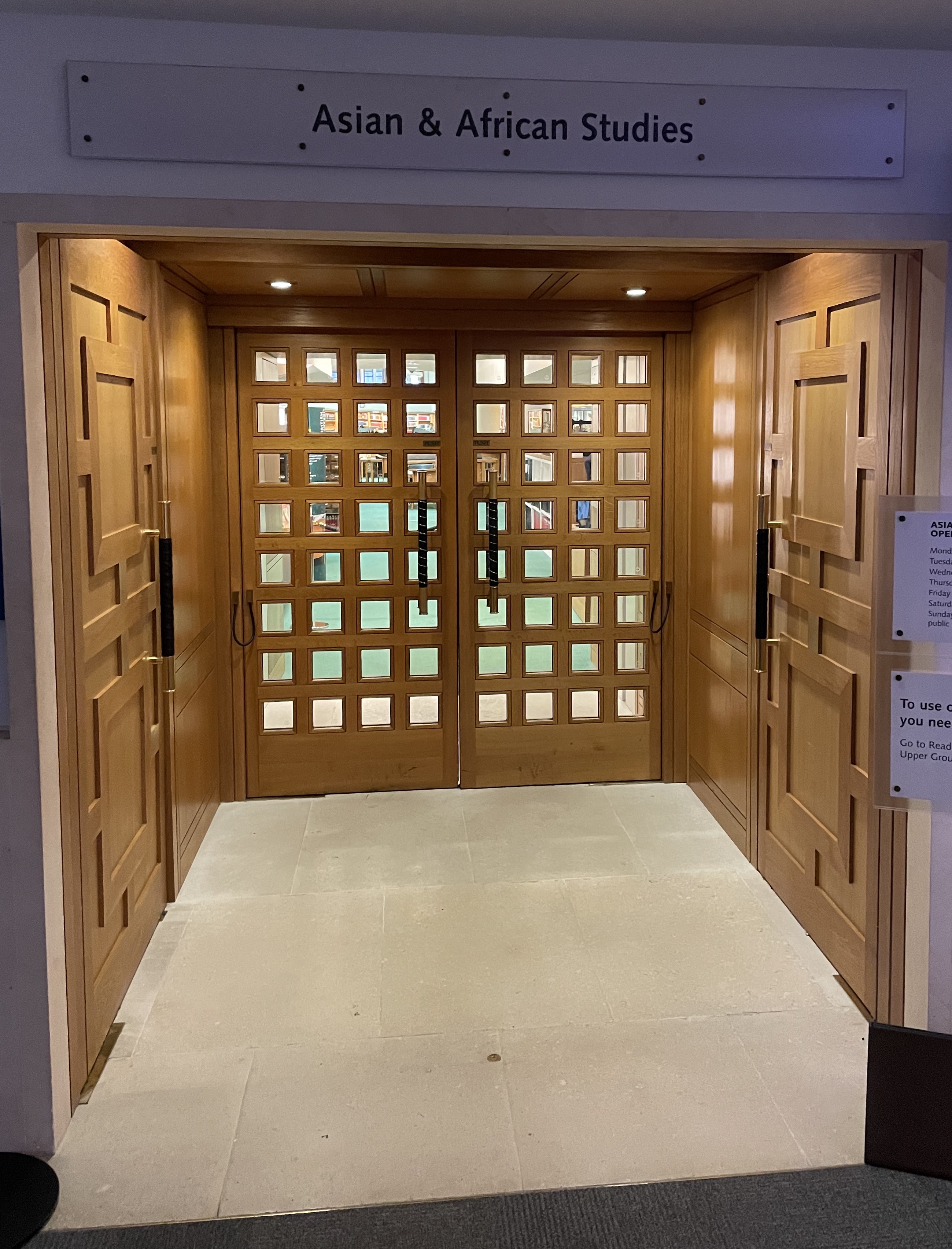
This reading led me to look in a big more detail at Stein himself. I say more about that work here. A lot of his papers are at the Bodleian, including parts of his correspondence. Sims-Williams indicates that at least some of his letters with Pelliot were at the British Library, and they provide a very interesting account of what happened. In all the years I’ve been using the British Library this was the first time I’d consulted something from the Archives and Manuscripts collections. Much of his correspondence is part of the Oriental manuscripts collection, so needs to be read in the Asian and African Studies room; but related material was in the Western manuscripts collection so that led to the Manuscripts room. There are also some very interesting papers at the British Museum, relating to his work for that institution, which also has many of the objects brought back from his expeditions.
Quite a lot of Stein’s reports appeared in print, and he generally gave papers to the Royal Geographical Society on his return to London. These talks were published in The Geographical Journal, and some of the original papers are at the RGS itself. Reading old issues of The Geographical Journal are a real window into orientalism and imperialism, often with names that almost sound made-up. The discussion after a 1916 report by Stein on exploration in Central Asia comprises General Baron Kaulbars of the Imperial Russian army, Sir Hercules Read of the British Museum, RGS President Sir Francis Younghusband, Sir Henry Trotter (a former British Indian Army officer, and about to be president of the Central Asian Society), and the Tory MPs Colonel C.E. Yate and Austen Chamberlain (then Secretary of State for India, and future party leader and Foreign Secretary). I made a visit to RGS archives to look at what they had, and found the correspondence there especially interesting.
For knowing where to look, I found the Handbook to the Collections of Sir Aurel Stein in the UK very useful. There are other archives in London which I hope to visit, including at the British Academy (family correspondence) and the Royal Asiatic Society (mainly photographs). But some crucial materials are in Budapest at the Hungarian Academy of Sciences. It’s clear much more could be done with all these sources, though I’ve been trying to keep a focus on his links to Pelliot, Gauthiot and Benveniste.
So most of the work this month has been at home, with a few short trips to UK archives. It’s been good to get working on the project again, even with the restrictions on time and a daunting amount of work ahead. I’m planning to get back to Paris in November. There are some things I want to consult at the Archives Nationales, some of which I’ve seen before, but most of the time will be spent continuing work at the Collège de France and the Bibliothèque Nationale.
Previous updates on this project can be found here, along with links to some research resources and forthcoming publications, including the delayed reedition of Dumézil’s Mitra-Varuna. There is a lot more about the earlier Foucault work here. The final volume of the series, The Archaeology of Foucault, is now out worldwide. The special issue of Theory, Culture & Society I co-edited on “Foucault before the Collège de France” is also now published.
Discover more from Progressive Geographies
Subscribe to get the latest posts sent to your email.


Pingback: On the trail of Aurel Stein – working in archives for the Indo-European thought project | Progressive Geographies
Pingback: Indo-European Thought in Twentieth-Century France update 17: Contextualising Benveniste | Progressive Geographies
Pingback: International Dunhuang Programme new website | Progressive Geographies