
Holly Langstaff, Art and Technology in Maurice Blanchot – Edinburgh University Press, October 2023 (print and open access e-book)
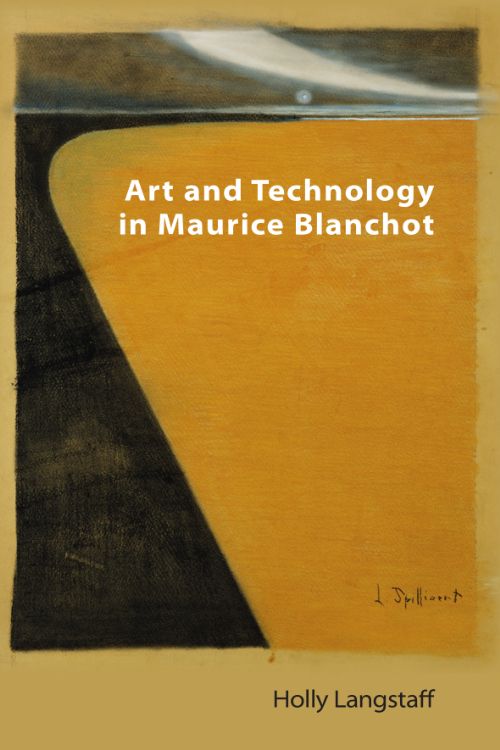
Demonstrates Blanchot’s ongoing importance for contemporary philosophical debate about technology, the post-human, and ecological thinking
- Demonstrates a considerable shift in Blanchot’s thinking from 1940s to 1980s
- Highlights the significance of Blanchot for important figures of twentieth-century French thought such as Jacques Derrida, Michel Foucault, and Bernard Stiegler
- Argues for the continued relevance of Blanchot to twenty first-century debates in literary theory and criticism
Holly Langstaff reappraises the influential French thinker Maurice Blanchot’s writing from the 1940s to his late work in the 1980s, demonstrating how Blanchot’s exploration of the question of technology remains decisive throughout his career.
She situates Blanchot’s fictional and critical work in the context of his thinking of art as techne – as it develops out of Martin Heidegger’s philosophy. While Blanchot follows Heidegger in the view that writing is a form of techne, he never appeals for salvation from the menace of technology in the modern era. Rather, he sees in all forms of technology the opportunity for a new way of thinking beyond value. This, Blanchot calls an entirely different sort of affirmation.
Discover more from Progressive Geographies
Subscribe to get the latest posts sent to your email.


https://newbooksnetwork.com/immanent-critiques
“The Frankfurt School’s own legacy is best preserved by exercising an immanent critique of its premises and the conclusions to which they often led. By distinguishing between what is still and what is no longer alive in Critical Theory, Immanent Critiques: The Frankfurt School Under Pressure (Verso, 2023) seeks to demonstrate its continuing relevance in the 21st century. Fifty years after the appearance of The Dialectical Imagination, his pioneering history of the Frankfurt School, Martin Jay reflects on what may be living and dead in its legacy. Rather than treating it with filial piety as a fortress to be defended, he takes seriously its anti-systematic impulse and sensitivity to changing historical circumstances. “