


I’m now back at work full time, though very grateful to be free of teaching and administrative duties, and I am feeling much better and more like myself. I was in Paris for two weeks this month, which was the first trip I’d made there since April, with a couple of planned trips cancelled due to surgery and recovery. It was great to get back, and it felt like a significant step in the recovery.
I was mainly working at the Collège de France with the Dumézil archive. Although before all this I’d been working box by box through the files relating to his publications (and before that, all his surviving courses), on this trip I decided to jump ahead and look at the boxes of correspondence. This was on the thinking that the correspondence might be more interesting, and that I wasn’t sure how often I would be able to get back. If I could only make limited visits, I was thinking, then I’d better look at the most important stuff first. But this trip went without incident, so I do hope I can continue to go through much more of the Georges Dumézil material, at least as an initial pass through. I already knew that a lot of Dumézil’s correspondence was filed with his teaching, year by year, but that’s also the way some of the boxes just of correspondence are organised. There are only two boxes of correspondence filed by correspondent, but letters from those people are also elsewhere in the collection. For me, with Dumézil as one of the key figures I’m interested in, that’s fine, as I just have to take good notes to be able to work out where things are for future visits. But if you were primarily interested in, for example, Stig Wikander, you’d need to look in lots of different places – some of which are not obvious. I found one letter by Foucault in the files which I recognised because of the handwriting, signed fairly illegibly as MF, which I suspect many people would pass by. But it’s really just a brief note from Uppsala complaining about the snow.
I’m fortunate because most of the people I am interested in because they were a contact of Émile Benveniste or Dumézil have their own correspondence filed by sender, and more targeted requests can yield almost everything. So for Harold Bailey or Ignace Meyerson, for example, where I am mostly interested in them because of their correspondence with Benveniste, it’s nearly all in a single file. But sometimes working through things systematically has other benefits: you can find things you didn’t know you were looking for, or discover things in a place that was unexpected. One nice moment in the Dumézil archive was when I came across a copy of a letter and supplementary note that is in typescript and unsigned. From its content and date I recognised it as a letter mentioned in a biography of Marcel Mauss, where the author didn’t give a precise archive reference. I had imagined trying to find the original would take forever in the Hubert-Mauss archives, and then I chanced upon it, almost certainly a copy of what the biographer had seen elsewhere. So the biography helps me to identify its author; but now I’ve seen the whole text, rather than just the bit the biographer quoted.
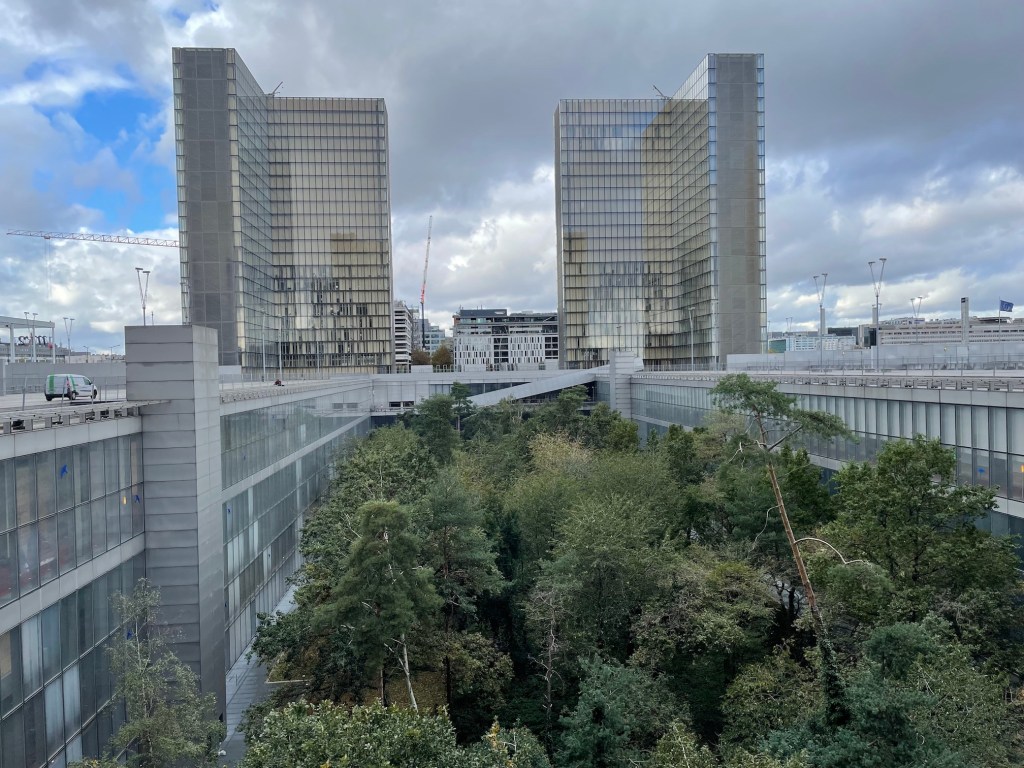
I made shorter visits to the Richelieu and Mitterand sites of the Bibliothèque nationale as well as to the Archives Nationales. At the BnF archives I wanted to check two things in the Foucault collection relating to Dumézil, and to take a look at some of the correspondence in the Georges Bataille papers. There are two bound volumes of correspondence, both of which are extraordinary. I say a bit about what is there here. There are some other things at the BnF archives which have to wait for another visit – there are a few things in the Aron, Barthes, and Kojève files I’d like to see, and perhaps to look at some more of the Lévi-Strauss papers.
The Mitterand site of the Bibliothèque nationale is great for things I couldn’t find in London. There is a lot more on open shelves here than there is in London, so not everything needs to be ordered from the stores. Some things do though, and equally some are not available in print as a copy has been made. Fortunately this time I didn’t have to fight the microfiche readers, as they have a digital copy. Perhaps the most interesting of these were material relating to the careers of Émile Benveniste and Alexandre Koyré, produced as part of their applications for teaching posts. The Collège de France has quite a bit of archival material relating to Koyré’s failed application for a chair there, about which I might write something at some point. At the Archives Nationales I wanted to look at some of the records of the teaching careers of Benveniste, Dumézil, and Robert Gauthiot. There are varying amounts here, but nearly all interesting. And I was able to look at a file of correspondence which is restricted access, after going through what felt like a rather byzantine set of procedures some months ago. I think I know what I’m doing for other restricted materials there now.
Back in the UK, I went back to the Ancient India and Iran Trust in Cambridge, to look at a few more things in the Harold Bailey papers, and to Oxford, hopefully the last visit to use the Aurel Stein archives. It would be so easy to get caught up in this interesting material – I say a bit about why here. I’m sure I’ll be back in Oxford for other things. Following the Stein lead took me to the Royal Asiatic Society, right next to the High Speed 2 building site near Euston station. They have a large photographic archive from Stein’s expeditions. Many of these photographs are in Stein’s published accounts, but still interesting to see the originals. The Royal Asiatic Society also currently has an exhibition at the Brunei Gallery of SOAS, Extraordinary Endeavours, celebrating their bicentenary. It’s quite interesting if you’re in the area, and is open until mid-December.
As some people will know, the British Library online catalogue and ordering system have been unavailable for a month now, following a ransomware attack. (They are updating a blog with developments.) It’s surprising that this has not received more attention – or, as the joke goes, it’s not surprising librarians kept that quiet. With ordering material from offsite stores not possible, and onsite material only available via paper catalogues and handwritten requests, I only spent a few hours there, working with some of the material on the open shelves of the Asian and African Studies reading room. I also went to see Kenneth Branagh’s King Lear. I’m hardly the first to say this, but it was disappointing. Cut heavily and played quickly, running for a bit less than two hours, it just felt hurried and somewhat lifeless.
I am hoping to get to a lot of US archive collections next year, or maybe early 2025, but I’ve been in touch with a few archives which are further apart where I don’t need to see much, and have generously been sent some scanned material. I’d rather see things in person, of course, but logistically some of it is just too challenging, and I’m hugely grateful for what people will do if you ask nicely.
I have a couple of other London trips in December, though with the British Library still out of action, I’m thinking of which other libraries to use. I have realised just how much I use the BL online catalogue, as a first place to check whether they have something, and adding to the basket or making lists of future things to consult. Worldcat is coming in useful for finding where else might have something – I’m fortunate in having library cards for many of the London university libraries. I am still trying to work on the chapter on Benveniste in the 1930s and 1940s, which is opening up some interesting questions. In particular, I’m doing some reading on Jean de Menasce, who was a student of Benveniste’s and helped get him out of France after the German occupation. I’ve also just finished reading the second volume of Rosemary Lévy Zumwalt’s remarkable biography of Franz Boas, after reading the first part earlier this year. That was mainly for background interest, though there are some useful bits on Claude Lévi-Strauss which connect to the story I’m trying to tell, and I particularly liked the parts about the network of thinkers of which Boas was such a central figure.
Previous updates on this project can be found here, along with links to some research resources and forthcoming publications, including the still-delayed reedition of Georges Dumézil’s Mitra-Varuna. There is a lot more about the earlier Foucault work here. The final volume of the series, The Archaeology of Foucault, is now out worldwide. The special issue of Theory, Culture & Society I co-edited on “Foucault before the Collège de France” is also now published.
Discover more from Progressive Geographies
Subscribe to get the latest posts sent to your email.


