
In my chapter on Émile Benveniste from roughly 1934 to 1949, I’ve been finding all sorts of interesting things to explore. Looking for some of Benveniste’s early publications in the Bulletin de la Société de Linguistique de Paris led me to do a systematic trawl through all the issues available on Gallica. As well as a lot of short papers, not included in Benveniste’s essay collections, the Bulletin reports on the Société’s meetings, including who attended, and this helped to clear up a couple of details. A simple attendance list is a good, but not definitive sign that someone was there – it’s easy for mistakes to be made here. But a report given at a meeting or a paper delivered is a stronger indication. People can’t be in more than one place at a time, and this was an age when journeys took substantially longer. The run of journals on Gallica is incomplete, and if I’m working through a sequence of a journal to check things like meeting reports or mastheads over a long period, it’s a pain to have to order each issue separately, especially with the ongoing British Library problems. Fortunately there is an Oxford library with a long sequence on open shelves. I’ve been using the Bodleian libraries quite a bit recently, so have been working through a few years each time I’m there.
Despite his very thorough work, this process has created a few doubts about some of the dates reported by Georges Redard in his “Bio-Bibliography” of Benveniste and the chronology included in the Dernières Leçons/Last Lectures volume. I need to complete the work with the Bulletin and do the same for the Journal Asiatique, which reports on the Société Asiatique.
There are also various reports about some manifestos or open letters which Benveniste signed – the surrealist manifesto of 1925, a statement in opposition to the Rif war in Morocco that same year, and Marc Bloch’s open letter against the Union Générale des Israélites de France – a Vichy organisation claiming to represent all Jews in France. While there are repeated claims of these, I wanted to check the original sources. The first was straight-forward: La Révolution surréaliste is on Gallica, and Benveniste’s name appears as a signatory to “Révolution d’abord et toujours” in issue 5.
The opposition to the Rif war was started by an initial challenge by Henri Barbusse in l’Humanité in July 1925, co-signed by Barbusse’s colleagues on the Clarté editorial team, the surrealists, and the team behind the Philosophies journal, including Norbert Guterman, Henri Lefebvre and Georges Politzer. The best source I know on these questions is often Jean-François Sirinelli, Intellectuels et passions françaises: Manifestes et pétitions au XXe siècle (Paris: Fayard, 1990), and he does reproduce the text from l’Humanité as well as the pro-colonialist response published in Le Figaro. His list of signatories for the first misled me, because Benveniste is not there. From the various sources online, I knew the initial challenge was followed by names in a July 1925 issue of Clarté, but that isn’t as easy to find. In the end, I used a microfilm at the Bibliothèque nationale. But checking l’Humanité showed Benveniste was an initial signatory, despite Sirinelli’s list. I also looked at the piece in Le Figaro, to see who put their name to that. Quite apart from the politics, the first is by far the better company to be in. There was a later piece in L’Humanité co-signed by Benveniste, and La Révolution surréaliste manifesto was also published there, but these seem to be the only pieces.
Marc Bloch’s open letter is included in the Gallimard edition of his L’étrange défaite, which is reprinted in the Quarto collection L’Histoire, la Guerre, la Résistance. Benveniste is listed as a signatory. Carole Fink’s biography of Bloch indicates that there were several drafts of the letter, with the final version only bearing the names of Benjamin Crémieux, René Milhaud and Bloch. Fink does not mention Benveniste in her discussion (pp. 273-75). She provides some archival sources, one of which is at the Archives Nationales but unfortunately this is not accessible due to the condition of the document. She also gives some references to the Centre de Documentation Juive Contemporaine in Paris. That might be worth a visit at some point.
Another minor Benveniste piece reprinted in Langues, Cultures, Religions on the Indo-European people raised a little question for me, and so I went looking for its original place of publication in the Revue de Synthèse, thinking that would resolve it. It did, but it also made me realise the reprint was completely detached from the piece’s original context, where it was not just a standalone lecture, but followed by other contributions, including one by Marcel Mauss, and a discussion, with contributions by linguists and historians, including Marc Bloch. And that was just the first day of a week of discussions. A minor piece suddenly seemed much more interesting and opened up yet another network of ideas and contacts to explore.
This chapter on Benveniste has taken me much longer to complete than I’d expected. Even on my revised plan after returning to work I’d hoped to have a draft by the New Year, and I’m still working on it. But a large part of this is because of the interesting material and the relative lack of secondary literature discussing this. Some of the work of Irène Fenoglio has been particularly useful, though there is a lot more which I will go through in time. I quickly realised that trying to write summaries of all Benveniste’s essays in this period, on top of discussions of his books, would take up far too much space, so I’m trying to synthesise some key themes and only write more extended discussions of a few particularly interesting or illustrative analyses. In this early period “Les mages dans l’Ancien Iran” and “The Nature of the Linguistic Sign” seem to me to be worth that more concentrated work, along with the discussion of the Indo-European people paper. Other essays help supplement the discussions of these, or the books, though I’m also struck by not just the reach of his work, but how many different things he was working on around the same time. The same goes for his teaching, which I’ve mentioned working on before (here and here), and which I’m trying to place in this chapter.
I also had a good trip to Paris where I worked on a lot of different things. I had authorisation to look at a few restricted files at the Archives nationales, which provided some interesting information about funding for Dumézil and Eliade from the CNRS, and about Dumézil’s teaching after the Liberation. At the Bibliothèque nationale I had requested a few specific things from the Lucien Tesnière, Claude Lévi-Strauss and Alexandre Kojève collections. These were mostly correspondence files. I also had a visit to the Bibliothèque universitaire des langues et civilisations (BULAC), where I looked at two boxes of the Fonds Jean de Menasce, which has some letters from Benveniste and Dumézil, among many others. And I now have a card for the library at the Muséum national d’Histoire naturelle, which has some potentially interesting things I will need to spend time with.
That was a lot of back-and-forth across Paris, but I spent most of my time at the Collège de France, continuing work on the Dumézil archives and beginning to look through the Benveniste archives there. The latter has the partial manuscript of Redard’s biography of Benveniste which was edited for Last Lectures, but as well as papers from Benveniste himself, it also has Redard’s working notes and files for his uncompleted biography. These include photocopies of a lot of material from other archives, which was extremely helpful both in revealing possible sources and possibly saving me from some trips. In particular I now have a much better idea of what happened to him in the war, though still have several unanswered questions.
There are other Benveniste archives at the Bibliothèque nationale, which I’ve yet to begin work with. I already know these are far from complete, with much material, especially pre-war, long lost. In Last Lectures there is a useful piece by Emilie Brunet discussing where the different parts of Benveniste’s papers ended up, including his notes on indigenous languages of the Pacific Northwest which are at the University of Alaska, Fairbanks. A trip to Alaska was always unlikely, especially since this is material outside the Indo-European focus of my project, but I was curious as to what was there. There are also good discussions of this work by Chloé Laplantine, among others, and fortunately, quite a bit of material has been photocopied and scanned and is available online. I’ve also realised there are questions which will only be resolved by the archives of others, some of which are in Paris, but others are further afield.
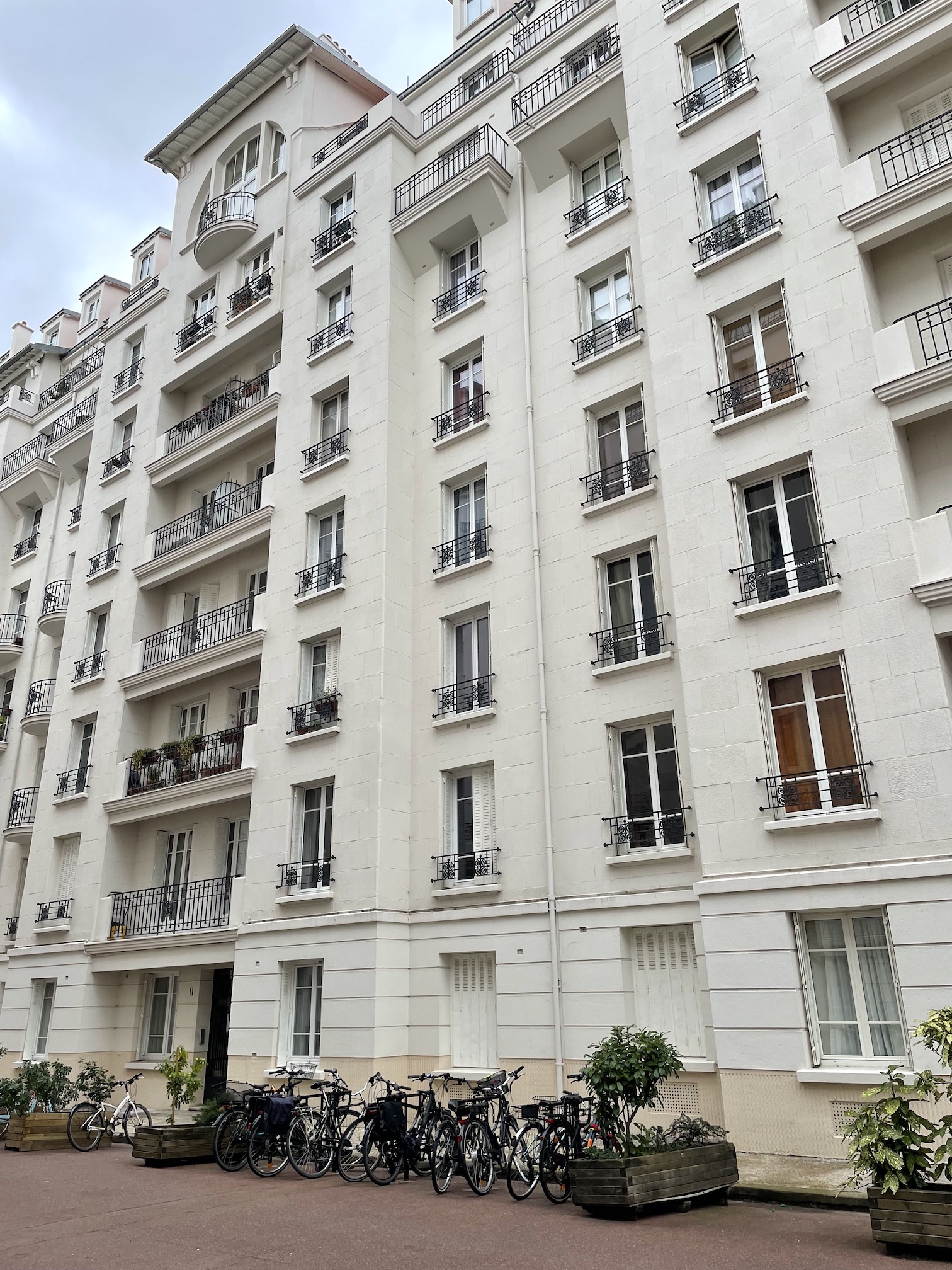
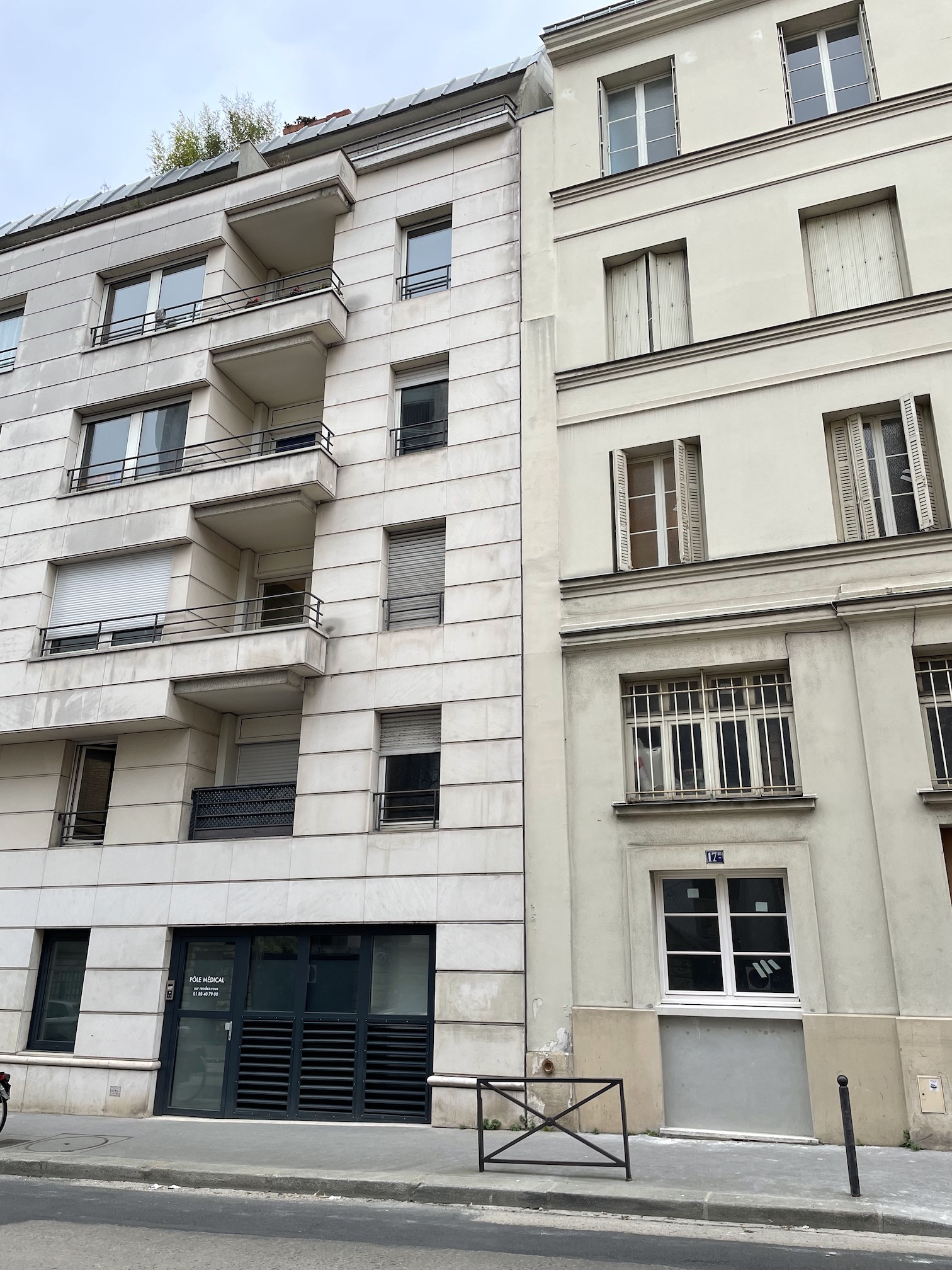
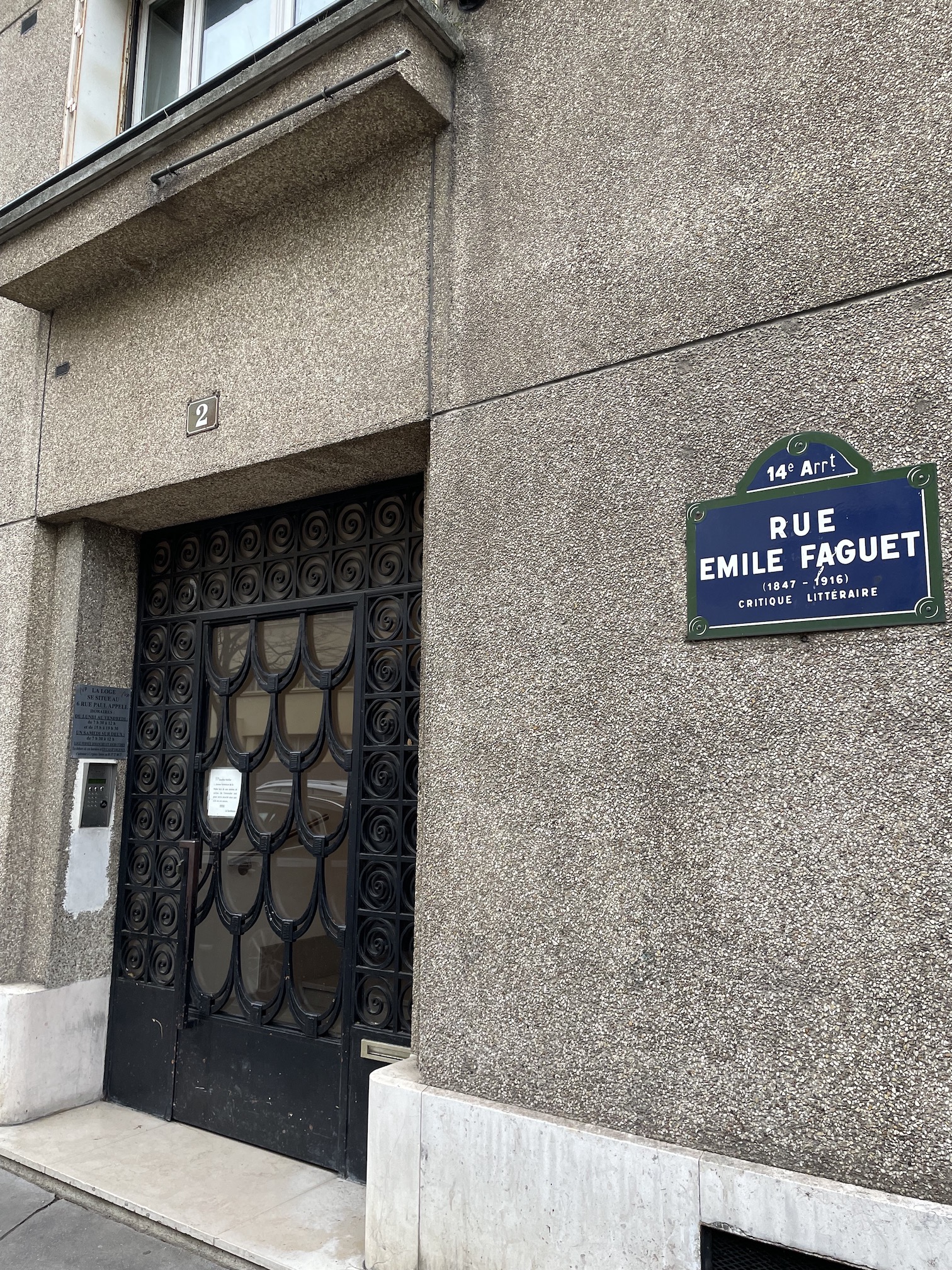
I also took a walk through a bit of Paris I didn’t know before, walking between different places Benveniste lived before and after the war in the 13th and 14th arrondissements. While obviously a lot will have changed, the buildings do all seem to be still there. One of the pre-war addresses, near La Santé prison, was an address in which Henri Lefebvre also lived, though not, I think, at the same time. And rue Monticelli, where Benveniste spent most of his post-war years, was also the street where Fernand Braudel and Jacques le Goff lived.
Previous updates on this project can be found here, along with links to some research resources and forthcoming publications, including the still-delayed reedition of Georges Dumézil’s Mitra-Varuna. There is a lot more about the earlier Foucault work here. The final volume of the series, The Archaeology of Foucault, is now out worldwide. The special issue of Theory, Culture & Society I co-edited on “Foucault before the Collège de France” is also now published.
Discover more from Progressive Geographies
Subscribe to get the latest posts sent to your email.


Pingback: Indo-European Thought in Twentieth-Century France update 18: further work on Benveniste and more archives in Paris | Progressive Geographies