
This is a revised, expanded and more fully referenced version of a post from March 2024. There is a Spanish translation of the earlier version here.
Alexandre Kojève’s seminars on Hegel’s Phenomenology of Spirit, given at the École Pratique des Hautes Études in the years before the Second World War, are an important and much discussed moment in European intellectual history. He was deputising for Alexandre Koyré, while Koyré was teaching in Cairo. Koyré’s lectures were on Hegel and the philosophy of religion; Kojève broadened the focus. The lectures were edited and published in 1947 by Raymond Queneau, and about half of that volume was translated into English by in a selection by Allan Bloom. A complete translation of the lectures by Trevor Wilson is forthcoming from Routledge.
Kojève is certainly undergoing a revival of interest. Jeff Love’s biography from a few years ago has been joined this year by a translation of Marco Filoni’s Italian biography, with a forthcoming one from Boris Groys. Samantha Rose Hill is also working on a study. Wilson published Alexandre Kojève and the Specters of Russian Philosophy last year, and co-edited an issue of Studies in East European Thought with Isabel Jacobs on this theme. In 2024 Filoni and Massimo Palma edited a collection, Tyrants at Work: Philosophy and Politics in Alexandre Kojève, taking stock of the renewed interest. Hager Weslati’s translation of Kojève’s Kant has just been published, following her translation of The Notion of Authority a decade ago, both with Verso. In France, the first volume of Kojève’s Sophia: Philosophie et phénoménologie has just been translated from the original Russian manuscript. Its translator, Rambert Nicolas, has also recently published La Conscience de Staline: Kojève et la philosophie russe, which could be read in part as an extended introduction and commentary on Sophia.
While Kojève’s lectures on Hegel are quite often discussed, they are almost as famous for their audience as their content. A lot of interesting figures were there: Henry Corbin, Jacques Lacan, Georges Bataille, Queneau, and Éric Weil all attended in the first year. There are many, often conflicting, reports of who else was there in subsequent years. I’ve seen Hannah Arendt, Raymond Aron, Maurice Blanchot, André Breton, Alexandre Koyré, Emmanuel Lévinas, Maurice Merleau-Ponty, and Jean-Paul Sartre all mentioned. I said in The Early Foucault that Louis Althusser attended (p. 11), but I’ve been told I was mistaken, and a December 1946 letter from Althusser to Kojève indicates that this correction is right – it’s clearly not a letter from someone who had attended these classes. I’ve also seen reports that Henri Lefebvre attended, but when I mentioned this in Understanding Henri Lefebvre (p. 96 n. 33), I said this was uncertain.
The focus here is not about Kojève’s seminar itself. Rather, it concerns how Kojève was working on a French translation of the Phenomenology before the war; who he was potentially working with; and why this was never completed.
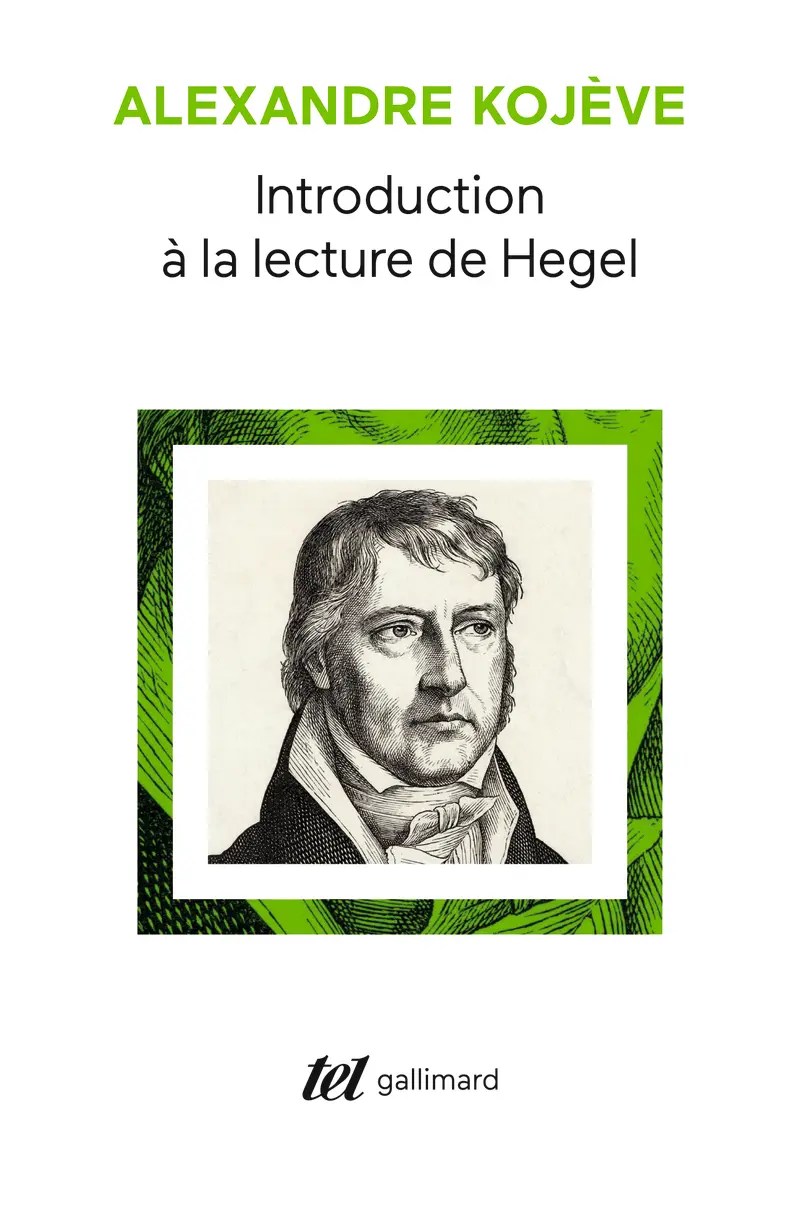
In the Kojève archive there is correspondence with Gaston Gallimard in June 1938 indicating that a contract for a translation was close to being agreed. Gallimard offered a royalty of 7% and 10 complementary copies. Kojève wanted 12% for the first 1000 sold and 15% of those afterwards, and 25 copies. Bernard Groethuysen acted as an intermediary on behalf of Kojève with Gallimard. Groethuysen is an interesting figure in his own right, as a translator of Goethe and writer on the French Revolution and political theory, as well as important in the French reception of Kafka. He also founded Gallimard’s “Bibliothèque des idées” series with Jean Paulhan, in which Kojève’s Hegel course first appeared. It seems this series would have included the planned translation.
Kojève’s request was conveyed to Gallimard by Groethuysen, but Gallimard argued that increasing the royalty would put up the cost, which would make the book prohibitively priced, and therefore would benefit none of them. But Gallimard would happily agree to additional copies. Then the surviving Kojève-Gallimard correspondence ends, until it is picked up after the war in relation to publishing books written by Kojève, notably his Essai d’une histoire raisonnée de la philosophie païenne, which also appeared in the Bibliothèque des idées series. Could it really be that Gallimard’s low royalty had derailed the translation?
Kojève’s correspondence with Groethuysen suggests there had previously been another idea. In January 1938 Groethuysen had said that he hopes the saga of the translation could be ended, and that he wanted to introduce Kojève to Henri (misspelt as Henry) Lefebvre. He suggests a three-way meeting, which from subsequent correspondence seems to have happened. (This seems to confirm that Lefebvre had not attended the earlier seminars.) There is one letter from Lefebvre to Kojève in which Lefebvre agrees they should join forces, but notes when they met that they had not decided on a division of labour. Lefebvre indicates the sections of the text for which he has a translation already, and suggests that they could each work on parts. Would Kojève agree to this divide?
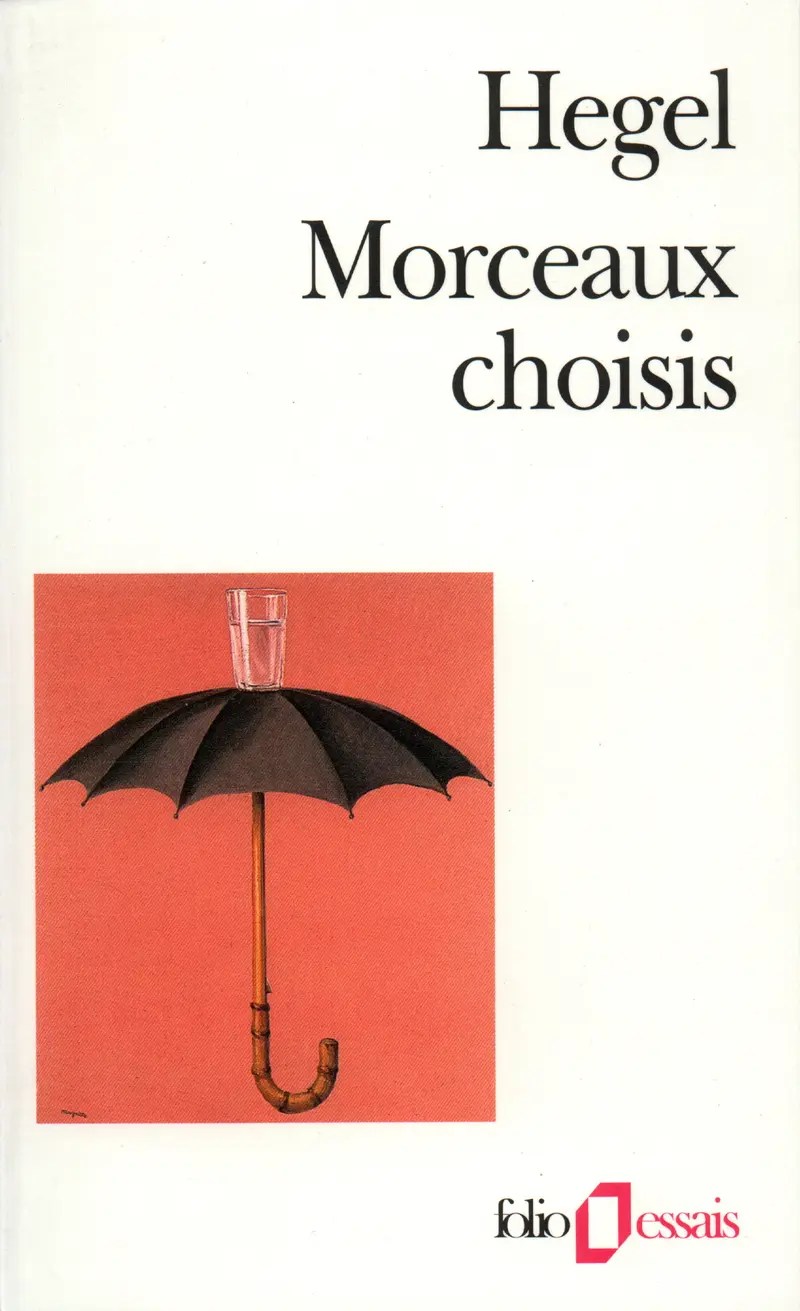
The correspondence with Lefebvre predates the correspondence with Gallimard, so it is possible Kojève rejected the offer and decided to go alone. Notably Lefebvre, along with Norbert Guterman, would publish Morceaux choisis of Hegel with Gallimard shortly afterwards. That book has gone through multiple editions, and Gallimard’s website says it was published on 1 January 1939. Georges Canguilhem damns the book with faint praise: “A useful book, but more likely, by its very nature, to whet the appetite than to satisfy it” (“Hegel en France”, Œuvres completes IV, 327). However, the amount of translated material Lefebvre tells Kojève could be part of a joint venture is much more extensive than the short passages included in Morceaux choisis.
In April 1939 – ten months after the discussion of royalties – Groethuysen writes to Kojève to say that Gallimard has told him that Fernand Aubier will be publishing a translation of the Phenomenology by Jean Hyppolite – misspelt as ‘Hippolyte’. Gallimard doesn’t think two versions in quick succession would be viable. Groethuysen tells Kojève that this is “more than annoying… it’s a disaster”. He says that Hyppolite’s translation was known about, but that he had been assured it was not going to be published. Groethuysen wonders if at least a part of Kojève’s translation could be published, with a commentary. A second-best solution, he thinks, but at least something. Here, again, the correspondence in the files breaks off.
Hyppolite had reportedly chosen not to attend Kojève’s seminar for fear of being influenced. His translation of Hegel’s Phenomenology of Spirit would appear in two volumes in 1939 and 1941, and his massive commentary on the text, Genesis and Structure in Hegel’s Phenomenology of Spirit, also in two volumes in 1946. The latter was recently reedited by Giuseppe Bianco for Classiques Garnier. Amazing as it might seem, these two pieces of work were submitted for his doctoral degree: Genesis and Structure the primary thesis; the translation the secondary thesis. Hyppolite is a major and, I think, somewhat neglected figure today, though there has been some interest in his work in English recently – Philosophy, Politics and Critique recently had a few pieces about him, for example. Hyppolite was the supervisor of Foucault’s recently rediscovered and published diploma thesis on Hegel and rapporteur for his secondary doctoral thesis translating and commenting on Kant’s Anthropology. Bianco has edited a good collection on Hyppolite, which includes his Collège de France course summaries (on which, see here).
Kojève’s commentary, when it did appear after the war in 1947, was a significant moment in itself. The different readings of Hyppolite and Kojève have been discussed in various places. I briefly talk about this in a piece on “Canguilhem, Dumézil, Hyppolite” (requires subscription), mainly through the reading Canguilhem made of “Hegel en France”. Canguilhem rightly indicates the importance of Jean Wahl and Koyré’s earlier work on Hegel in shaping the French reception. Koyré’s important essays on Hegel, including ones on the translation challenges, are reprinted in Études d’histoire de la pensée philosophique. That’s a side of his work which is neglected today, compared to his work on the philosophy and history of sciences.
The correspondence in the fonds Kojève indicates that Lefebvre had much more material than he and Guterman published – or, possibly more likely, he and Guterman had more material which Lefebvre told Kojève he could use for their project. By 1938 Guterman, who was Jewish, was in exile in the United States, and he and Lefebvre’s joint working relationship was largely conducted by letter. I’d long thought it was Guterman who did most of the translation work for their joint ventures before the war, with Lefebvre taking the lead on the commentaries. Guterman would carve out a career in the US as a translator, as well as working with Leo Löwenthal on Prophets of Deceit: A Study of the Techniques of the American Agitator, first published in 1949, recently reedited by Verso. The Second World War and the German occupation made publishing much more complicated, as I discuss in relation to Lefebvre in an earlier piece – “Henri Lefebvre and the “Liste Otto” of Prohibited Books in Occupied France“.
Although the translation work itself doesn’t seem to be discussed in Marco Filoni or Jeff Love’s books on Kojève, Stefanos Geroulanos has indicated how much work Kojève had done preparing his lectures over several years, including translating Hegel.
With the exception of the final year of his course, 1938–39, where his lectures numbered to twelve, Kojève always gave more than twenty lectures (twenty-one the first year, twenty-two the second, twenty-four the third, twenty-six the fourth, and twenty-five the fifth). Kojève numbered the pages of his lecture notes, including in this count the translations he worked off. Though notes from the first four years are relatively scarce, the translation survives in full, and the final page numbers in each of these years indicate a total of more than 2,682 pages of notes.
An Atheism that is not Humanist Emerges in French Thought, 354 n. 14
Those notes are in the Kojève archive. Perhaps the Lefebvre archive will shed light on what, if anything, survives of the material he told Kojève about. Lefebvre’s papers have been deposited at IMEC, and are currently being catalogued. 140 boxes of material is going to take some time for researchers to make sense of – that’s a similar amount of material to the different Foucault collections at the Bibliothèque nationale. How a collaborative project to merge these two translations by Kojève and Lefebvre could have worked is open to question. But the correspondence alone sheds a little light on an interesting aspect of the story of Hegel in twentieth-century France.
References
“Queneau éditeur”, Gallimard, https://www.gallimard.fr/actualites-entretiens/queneau-editeur
Giuseppe Bianco ed., Jean Hyppolite: Entre Structure et Existence, Paris: ENS, 2013.
Georges Canguilhem, “Hegel en France”, Revue d’histoire et de philosophie religieuses 28-29 (4), 1948, 282-97, reprinted in Œuvres complètes tome IV: Résistance, philosophie biologique et histoire des sciences 1940-1965, ed. Camille Limoges, Paris: Vrin, 2015, 321-41.
Stuart Elden, Understanding Henri Lefebvre: Theory and the Possible, London: Continuum, 2004.
Stuart Elden, The Early Foucault, Cambridge: Polity, 2021.
Stuart Elden, “Canguilhem, Dumézil, Hyppolite: Georges Canguilhem and his Contemporaries”, Revue internationale de philosophie, 2024, 27-48.
Stuart Elden, “Henri Lefebvre and the “Liste Otto” of Prohibited Books in Occupied France”, Progressive Geographies, 22 June 2025.
Marco Filoni, The Life and Thought of Alexandre Kojève, Evanston: Northwestern University Press, 2025.
Marco Filoni and Massimo Palma eds., Tyrants at Work: Philosophy and Politics in Alexandre Kojève, Napoli: Editions ETS, 2024.
Michel Foucault, La constitution d’un transcendantal historique dans la Phénoménologie de l’esprit de Hegel: Mémoire du diplôme d’études supérieures de philosophie, ed. Christophe Bouton, Paris: Vrin, 2024.
Stefanos Geroulanos, An Atheism that is not Humanist Emerges in French Thought, Stanford University Press, 2010.
Boris Groys, Alexandre Kojève: An Intellectual Biography, London: Verso, forthcoming 2025.
Norbert Guterman and Leo Löwenthal, Prophets of Deceit: A Study of the Techniques of the American Agitator, Verso, 2021 [1949].
G.W.F. Hegel, Morceaux Choisis, ed. and trans. Henri Lefebvre and Norbert Guterman, Paris: Gallimard, 1939.
G.W.F. Hegel, Phénoménologie de l’esprit, trans. Jean Hyppolite, Paris: Aubier, two volumes, 1939-41.
Samantha Rose Hill, “The Scar of Identity”, Aeon, March 2023, https://aeon.co/essays/the-philosophical-legacy-of-alexandre-kojeve
Jean Hyppolite, Genèse et structure de la Phénoménologie de l’esprit de Hegel, ed. Giuseppe Bianco, Paris: Classiques Garner, 2022 [1946]; Genesis and Structure in Hegel’s Phenomenology of Spirit, trans. Samuel Cherniak and John Heckmann, Evanston: Northwestern University Press, 1974.
Isabel Jacobs and Trevor Wilson eds. “Alexandre Kojève and Russian Philosophy”, Studies in East European Thought, Vol 76 No 1, 2024.
Immanuel Kant, Anthropologie du point de vue pragmatique, trans. Michel Foucault; and Michel Foucault, Introduction à l’Anthropologie, Paris: Vrin, 2008.
Alexandre Kojève, Introduction à la Lecture de Hegel, ed. Raymond Queneau, Paris, Gallimard, 1947.
Alexandre Kojève, Introduction to the Reading of Hegel: Lectures on the Phenomenology of Spirit, ed. Allan Bloom, trans. James H. Nicholls, Jr., New York: Basic Books, 1969.
Alexandre Kojève, Essai d’une histoire raisonée de la philosophie païenne, Paris: Gallimard, three volumes, 1968-73.
Alexandre Kojève, Kant, Paris: Gallimard, 1973; Kant, trans. Hager Weslati, London: Verso, 2025.
Alexandre Kojève, La notion d’autorité, Paris: Gallimard, 2004; The Notion of Authority, trans. Hager Weslati, London: Verso, 2014.
Alexandre Kojève, Sophia I: Philosophie et phénoménologie, trans. Rambert Nicolas, Paris: Gallimard, 2025.
Alexandre Koyré, Études d’histoire de la pensée philosophique, Paris: Gallimard, 1961.
Jeff Love, The Black Circle: A Life of Alexandre Kojève, New York: Columbia University Press, 2018.
Rambert Nicolas, La Conscience de Staline: Kojève et la philosophie russe, Paris: Gallimard, 2025.
Trevor Wilson, Alexandre Kojève and the Specters of Russian Philosophy, Evanston: Northwestern University Press, 2024.
Archives
Fonds Alexandre Kojève, Bibliothèque nationale de France, NAF 28320, https://archivesetmanuscrits.bnf.fr/ark:/12148/cc588221
Lefebvre, Henri (1901-1991), IMEC, 1067LFB/1-140, https://collections.imec-archives.com/ark:/29414/a011639151852PElaQJ
This is the twenty-ninth post of a weekly series, where I post short essays with some indications of further reading and sources, but which are not as formal as something I’d try to publish more conventionally. They are usually tangential to my main writing focus, a home for spare ideas, asides, dead-ends and possible futures. I hope there is some interest in them. They are provisional and suggestions are welcome.
The full list of ‘Sunday histories’ is here.
Discover more from Progressive Geographies
Subscribe to get the latest posts sent to your email.


Pingback: Alexandre Kojève, Henri Lefebvre and the translation of Hegel’s Phenomenology | Progressive Geographies
Pingback: Indo-European Thought in Twentieth-Century France update 29: working on Benveniste’s Vocabulaire, Dumézil’s Bilan and other work | Progressive Geographies