
One of Georges Dumézil’s most loyal students was Lucien Gerschel. He seems to have begun attending his classes at the École Pratique des Hautes Études in 1937-38, but certainly was there for the 1938-39 course which became Dumézil’s 1940 book Mitra-Varuna. Other students in that course included Roger Caillois, who in the middle of the year gave five presentations on the sacred, soon published as L’Homme et le sacré(Man and the Sacred), as well as Marie-Louise Sjoestedt and Élisabeth Raucq, both of whom I’ve written about before in this series. Gerschel also attended many of Émile Benveniste’s classes, and his notes were used in the production of Benveniste’s 1969 book Vocabulaire des institutions indo-européens (translated as the Dictionary of Indo-European Concepts and Society), which I’ve discussed before in relation to territory (here and here). Gerschel was Jewish, and Dumézil notes that this meant he was excluded from some debates in the war-years (Mariages indo-européens, 26). In the late 1940s to the early 1950s Dumézil was supervising Gerschel’s research, and he includes parts of Gerschel’s mémoire in his own Jupiter Mars Quirinus IV (pp. 170-76). Gerschel attended Dumézil’s classes until the 1960s, and provided research support including correcting proofs to books.
Dumézil’s most famous idea is the trifunctional analysis, analysing divisions of society and pantheons of gods in three main areas. The first is the sovereign class of kings and priests, the second warriors, and the third producers or farmers. This can be found in the caste system of India, or the groupings of Jupiter, Mars, Quirinus; Odin, Thor, Njördr or Freyr; Mitra-Varuna, Indra, Nasarya or Asvina. He stresses the first function is itself split, with a legal, contractual god often pairing a more terrible, magical one – Mitra alongside Varuna, Tyr with Odin, Dius Fidius with Jupiter. Gerschel’s work generally either extends Dumézil’s work or applies trifunctional analysis to different sources. The mémoire, for example, uses the trifunctional analysis to examine Roman law. Gerschel published a series of articles on mythology from 1950 to 1966. His interests range from ancient Rome to Germanic legend, Norse sagas and Celtic studies. Two of his articles appeared in Revue de l’histoire des religions, two in Annales and others in the Journal de Psychologie normale et pathologique, Latomus (a Belgian Latin studies journal), Études Celtiques and an English piece in Midwest Folklore. He also wrote a lot of book reviews, including of Dumézil’s work, but also the Dutch Germanist (and Nazi collaborator) Jan de Vries, most of which were for the Revue de l’histoire des religions.
Dumezil wrote a short introduction, “Sur quelques expressions symboliques de la structure religieuse tripartie à Rome”, to Gerschel’s 1952 essay, “Structures augurales et tripartition fonctionnelle dans la pensée de l’ancienne Rome”. This is another example of how Dumézil was willing to use his status to support Gerschel’s work – he was generally loyal to his former students and allies, often citing their work at length. In Gerschel’s case he particularly makes references to his work in the 1966 book Archaic Roman Religion. In July 1967, in the preface to the first volume of the Mythe et Épopée series, Dumézil mentions the “varied and original contribution… of my longest-standing collaborator” (p. 17). But he mentions his death in the second edition preface of 1973, and C. Scott Littleton refers to him as “the late Lucien Gerschel” in the 1973 introduction to Dumézil’s Gods of the Ancient Northmen (p. xv). This seems relatively young if he was a student in the late 1930s.
Some of Gerschel’s early work is in danger of being too much of an acolyte, with an extension of Dumézil’s work into different areas. Later in his career he began to write more distinctive pieces on numbers and their relation to alphabets, especially in Roman, Irish and Greek thought – “Comment comptaient les anciens Romains?” “L’Ogam et le nombre” and “Le conquête du nombre”. Another late piece, possibly his last, is a discussion of colours and dyes. Many of Gerschel’s articles are fairly substantial, but he seems never to have written a book-length study. In 1979, Dumézil indicates that a collection of Gerschel’s essays will be published, edited by another of his students, Georges Charachidzé, but this seems not to have been completed (Mariages indo-européens, 22 n. 1). Gerschel also wrote an introductory essay on Dumézil’s work, translated into English in 1957, which was surely one of the first, and certainly one of the most enthusiastic, anglophone presentations of the work. Littleton provides the fullest discussion of his contributions in his book on Dumézil, The New Comparative Mythology (especially pp. 161-67); Udo Strutynski situates his work on one theme in “The Survival of Indo-European Mythology in Germanic Legendry”.
My interest here is in Gerschel’s 1953 discussion of the Roman warrior Coriolanus. Coriolanus is a figure from early Roman history, Gaius Martius, who took on the honorific name of Coriolanus following a battle with the Volscians at the city of Corioli. The classic sources are primarily Plutarch’s Lives, Livy’s Ab Urbe condita and Dionysius of Halicarnassus’s Roman Antiquities. It is questionable how much the Coriolanus presented in these sources is a genuinely historical person, or is either a legendary figure or a real person embellished with mythical elements.
Gerschel presented his reading in a Festschrift for the Annales historian, Lucien Febvre, Éventail de l’histoire vivante. His essay is simply titled “Coriolan” (Vol II, pp. 33-40). Gerschel recognises that Coriolanus is a warrior above all, but he sees elements of all three functions on Dumézil’s model in the story. After his military triumphs Coriolanus attempts a political career, but comes into conflict both with the plebians who are petitioning for grain, and elements within the patrician class. He is expelled from the city, or goes into voluntary exile, and eventually allies with the Volscians to lead an attack on Rome. Rome tries to dissuade him, sending representations of the priesthood and the political hierarchy, but with no success. Only through the petition of Roman women, including his wife, children and mother, does he relent. The classical accounts of his fate differ, but suggest either that the Volscians kill Coriolanus, that he dies by suicide, or goes into exile. His crimes against the Roman state are threefold – refusal to grant sustenance to the people, a clash with the sovereign, political class, and a military assault on the city. Gerschel indicates that the struggles in the story go beyond a simple patrician-plebian divide, but exemplify “a truly ideological-functional conflict [un véritable conflit idéologique fonctionnel]” (p. 38). The petitions to Coriolanus when he is leading the assault on Rome also represent elements of the three functions – the two aspects of the first function, priests and politicians, challenging the second function of the warrior, and the warrior ultimately limited by the third function of fertility.
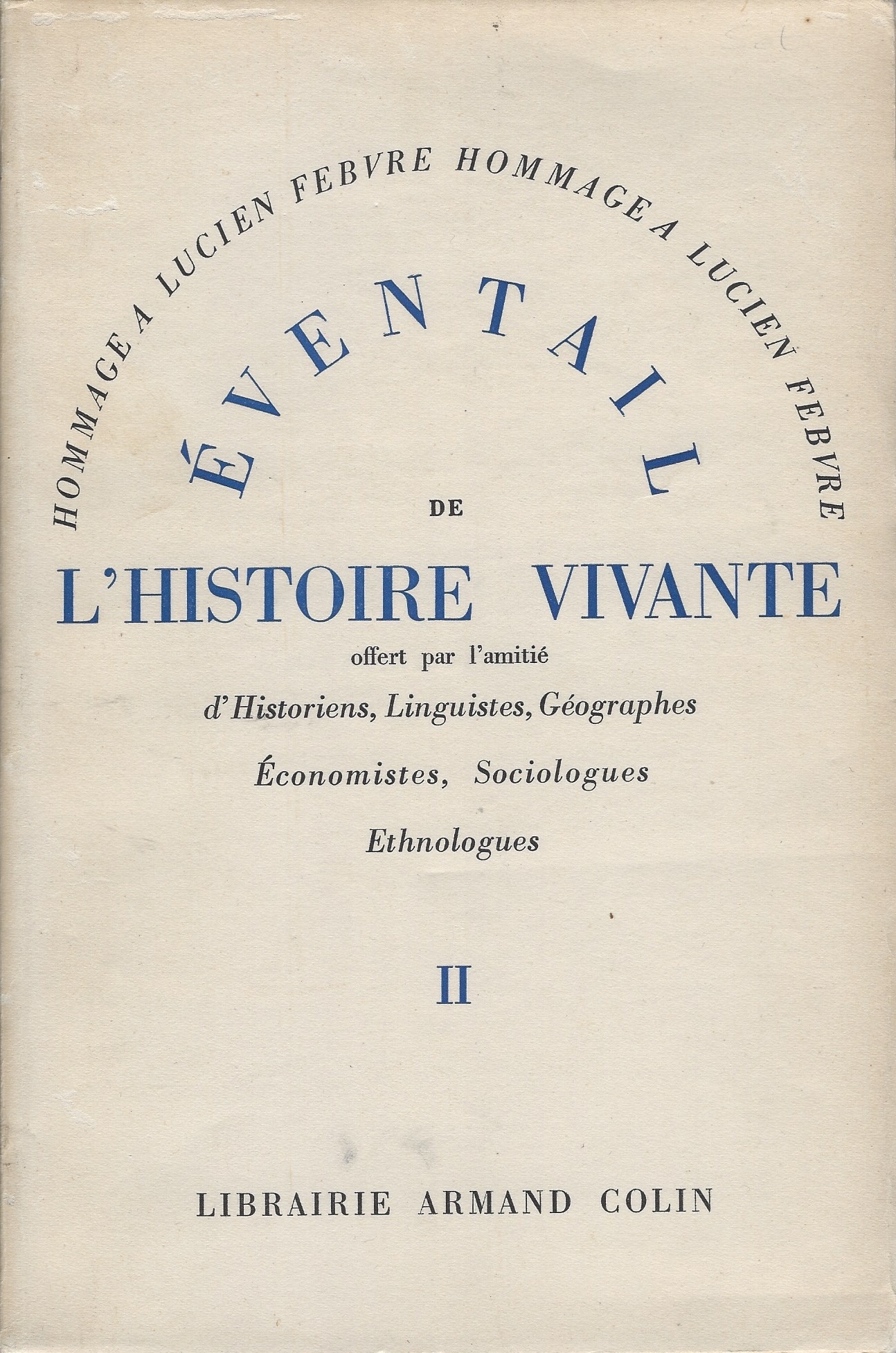
Dumézil wrote the previous essay in Volume II of the Febvre tribute, on the three functions in Greece. In 1958, he discussed the story of Coriolanus in relation to Gerschel’s reading in an article in the Latomus journal, “L’idéologie des trois fonctions dans quelques crises de l’histoire romaine”. Indeed, much of this piece is about Gerschel. He praises Gerschel as his “learned and ingenious collaborator” (p. 432) and discusses his 1952 article “Structures augurales et tripartition fonctionelle dans la pensée de l’ancienne Rome” (pp. 432-34). He then quotes quite a long passage from Gerschel’s essay on Coriolanus (pp. 435-36), but does not substantially develop the analysis. He gives Gerschel credit for discovering the trifunctional elements of the Coriolanus story, which he sees as embodying elements of the “very archaic ideal of the warrior class” and recognising that this may be “incompatible with the morality of the citizen” (p. 435).
Fifteen years later he returned to Gerschel’s reading. This came in the third volume of Mythe et Épopée in 1973, of which a large part has been translated as the English book Camillus. (For a list of what is, and what isn’t translated in this series, see here.) In the third chapter of the third part of that book, not translated into English, Dumézil discusses the story of Coriolanus at length and builds on Gerschel’s account (pp. 239-62). Part of the point of Dumézil’s discussion is to systematise Gerschel’s insights, but also to provide a comparison with Camillus. Gerschel’s death around this time was, it seems, a significant factor in his paying tribute to him through this detailed reading. Indeed, in a note, Dumézil indicates that on one point Gerschel’s original manuscript had a different interpretation, but that he advised him to make a change (pp. 257-58, n. 1). Regretting that now, he presents the original analysis, giving Gerschel credit.
As Littleton outlines the argument of the piece:
In the case of Coriolanus, Dumézil seems finally to have accepted the basic interpretation offered many years ago by Gerschel (1954), to the effect that Coriolanus acts as a thoroughly disturbing element in the body politique and that he, like Camillus, commits a series of offenses against ‘the system’. These include, again in chronological order, refusing to sell grain to the poor at a reasonable price (third function), a sacrilegious attack on a Tribune, who was considered inviolable (first function), and raising a private army and paying it with illgotten gains (i.e. the praeda, which he had usurped; second function) (Littleton, The New Comparative Mythology, p. 239).
Littleton adds that the account Dumézil offers is another indication of Indo-European ideology being replicated in the histories of early Rome.
Thus, although they are ostensibly historical figures, the accounts of the crimes of Camillus and Coriolanus demonstrate once again how deeply the inherited Indo-European had penetrated Roman historical thought. Not, of course, at the conscious level; but Livy, Plutarch, et. al., were indeed unconsciously drawing upon an ideological model already over three millennia old at the time they wrote (Littleton, The New Comparative Mythology, pp. 239-40).
Coriolanus is of course also one of William Shakespeare’s last tragedies, probably composed around the same time as Antony and Cleopatra. Plutarch was Shakespeare’s main source. I have written about Shakespeare’s play before in “Bellies, Wounds, Infections, Animals, Territories: The Political Bodies of Shakespeare’s Coriolanus”, which was revised as Chapter 8 of my book Shakespearean Territories.
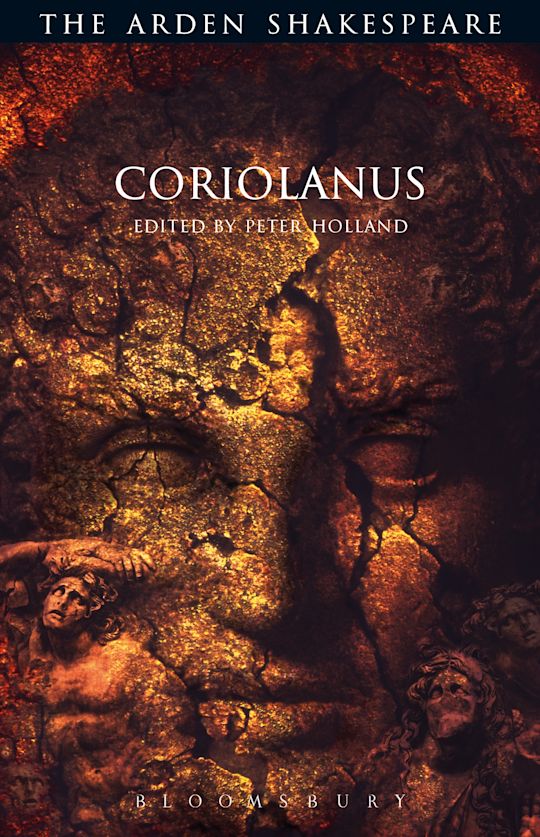
Neither Gerschel nor Dumézil mention Shakespeare’s dramatic retelling of the story. The literature on Coriolanus more generally is, of course, huge, but I know of only a few pieces that discuss Gerschel or Dumézil’s work in relation to Shakespeare. Richard Wilson mentions Dumézil in relation to Julius Caesar in Shakespeare in French Theory, while for this play Roger Woodard’s article “Coriolanus and Fortuna Muliebris” acknowledges the importance of Gerschel and Dumézil’s accounts. Woodard uses a quote from Shakespeare’s play as the epigraph to his article, but does not otherwise mention Shakespeare. His essay is primarily concerned with the different sources of the classical figure, and the way Coriolanus exhibits elements of an archetype. It is an extension of the arguments in his book Myth, Ritual, and the Warrior in Roman and Indo-European Antiquity, where he looks at the returning warrior who, because of their experience of combat, becomes a threat to their own community. Coriolanus certainly fits that role. In an earlier piece Tim Cornell discusses the Coriolanus story, in terms of the historical sources, Shakespeare’s dramatization, and the readings of Gerschel and Dumézil. He suggests that
As so often in the work of Dumézil and his pupils, this analysis is brilliantly argued and expressed with great lucidity. The insights are often acute but their utility is limited by the procrustean framework of the three functions, and the idea that the historical tradition of early Rome was constructed by a person or persons possessing a genetically inherited ‘Indo-European’ mental outlook—a pseudo-scientific notion that is as implausible as it is potentially dangerous (“Coriolanus: Myth, History and Performance”, p. 82).
These pieces are interesting and useful sources for a wider discussion. I wonder if it might be worthwhile to explore Shakespeare’s play further in the light of these readings.
References
Roger Caillois, L’Homme et le sacré, Paris: Librairie Ernest Leroux, 1939, second edition, Paris: Gallimard, 1950; Man and the Sacred, trans. Meyer Barash, Glencoe, IL: The Free Press of Glencoe, 1959.
Tim Cornell, “Coriolanus: Myth, History and Performance”, in David Braund and Christopher Gill (eds.), Myth, History and Culture in Republican Rome: Studies in Honor of T. P. Wiseman, Exeter: University of Exeter Press, 2003, 73-97.
Georges Dumézil, Mitra-Varuna: Essai sur deux représentations indo-européennes de la souveraineté, Paris: Gallimard, second edition, 1948 [1940]; Mitra-Varuna: An Essay on Two Indo-European Representations of Sovereignty, trans. Derek Coltman, ed. Stuart Elden, Chicago: Hau, 2023 (open access).
Georges Dumézil, Jupiter Mars Quirinus IV: Explication de textes indiens et latins, Paris: Presses Universitaires de France, 1948.
Georges Dumézil, “Sur quelques expressions symboliques de la structure religieuse tripartie à Rome”, Journal de Psychologie normale et pathologique XLV, 1952, 43-46.
Georges Dumézil, “Les Trois fonctions dans quelques traditions grecques”, Éventail de l’histoire vivante: Hommage à Lucien Febvre, Paris: Armand Colin, two volumes, 1953, Vol II, 25-32.
Georges Dumézil, “L’idéologie des trois fonctions dans quelques crises de l’histoire romaine”, Latomus 17 (3), 1958, 429-46.
Georges Dumézil, Mythe et Épopée I: L’idéologie des trois fonctions dans les épopées des peuples indo-européens, Paris: Gallimard, fifth edition, 1986 [1968].
Georges Dumézil, Mythe et Épopée III: Histoires romaines, Paris: Gallimard, 1973.
Georges Dumézil, Mariages indo-européens, suivi de Quinze questions romaines, Paris: Payot, 1979.
Georges Dumézil, Camillus: A Study of Indo-European Religion as Roman History, trans. Annette Aronowicz and Josette Bryson, ed. Udo Strutynski, Berkeley and Los Angeles: University of California Press, 1980.
Stuart Elden, “Bellies, Wounds, Infections, Animals, Territories: The Political Bodies of Shakespeare’s Coriolanus”, in Jenny Edkins and Adrian Kear (eds.), International Politics and Performance: Critical Aesthetics and Creative Practice, London: Routledge, 2013, 179-200.
Stuart Elden, Shakespearean Territories, Chicago: University of Chicago Press, 2018.
Lucien Gerschel, “Saliens de Mars et Saliens de Quirinus”, Revue de l’histoire des religions 138 (2), 1950, 145-51.
Lucien Gerschel, “Structures augurales et tripartition fonctionelle dans la pensée de l’ancienne Rome”, Journal de Psychologie normale et pathologique XLV, 1952, 47-77.
Lucien Gerschel, “Coriolan”, Éventail de l’histoire vivante: Hommage à Lucien Febvre, Paris: Armand Colin, two volumes, 1953, Vol II, 33-40.
Lucien Gerschel, “Sur un schème trifonctionnel dans une famille de légendes germaniques”, Revue de l’histoire des religions 150 (1), 1956, 55-92.
Lucien Gerschel, “Georges Dumezil’s Comparative Studies in Tales and Traditions”, trans. Archer Taylor, Midwest Folklore 7 (3), 1957, 141-48.
Lucien Gerschel, “Varron logicien”, Latomus 17 (1), 1958, 65-72.
Lucien Gerschel, “Un episode trifonctionnel dans la saga de Hrólfr Kraki”, Hommages à Georges Dumézil, Bruxelles: Latomus, 1960, 104-16.
Lucien Gerschel, “Comment comptaient les anciens Romains?” Hommages à Léon Herrmann, Bruxelles: Latomus, 1960, 386-97.
Lucien Gerschel, “L’Ogam et le nombre: Préhistoire des caractères ogamiques”, Études Celtiques 10 (1), 1962, 127-66.
Lucien Gerschel, “La conquête du nombre: des modalités du compte aux structures de la pensée”, Annales: Histoire, Sciences sociales 17 (4), 1962, 691-714.
Lucien Gerschel, “L’Ogam et le nom”, Études Celtiques 10 (2), 1963, 516-57.
Lucien Gerschel, “Couleur et teinture chez divers peuples indo-européens”, Annales: Histoire, Sciences sociales 21 (3), 1966, 608-31.
C. Scott Littleton, The New Comparative Mythology: An Anthropological Assessment of the Theories of Georges Dumézil, Berkeley: University of California Press, third edition, 1982 [1966].
William Shakespeare, Coriolanus, ed. Peter Holland, London: Arden Shakespeare, 2013.
Udo Strutynski, “The Survival of Indo-European Mythology in Germanic Legendry: Toward an Interdisciplinary Nexus”, The Journal of American Folklore 97 (383), 1984, 43-56.
Richard Wilson, Shakespeare in French Theory: King of Shadows, London: Routledge, 2007.
Roger D. Woodard, Myth, Ritual, and the Warrior in Roman and Indo-European Antiquity, Cambridge: Cambridge University Press, 2013.
Roger D. Woodard, “Coriolanus and Fortuna Muliebris”, JASCA 4 (2), 2020, 1-32.
Archives
Fonds Georges Dumézil, Collège de France
It is the 33rd post of a weekly series, where I post short essays with some indications of further reading and sources, but which are not as formal as something I’d try to publish more conventionally. They are usually tangential to my main writing focus, a home for spare ideas, asides, dead-ends and possible futures. I hope there is some interest in them. They are provisional and suggestions are welcome. A few shorter pieces in a similar style have been posted mid-week.
The full list of ‘Sunday histories’ is here.
Discover more from Progressive Geographies
Subscribe to get the latest posts sent to your email.


Pingback: Indo-European Thought in Twentieth-Century France update 29: working on Benveniste’s Vocabulaire, Dumézil’s Bilan and other work | Progressive Geographies