
Back in November 2014, while I was researching Foucault’s Last Decade, I wrote “A minor note on Michel Foucault and Peter Brown: From a watershed to the parting of the waters” for this site. I was interested in Foucault’s use of an idea from Brown in one of his essays. In Foucault’s Last Decade, p. 134 and p. 225 n. 3, I briefly summarised the post. Some new sources have been published or made available in archives since I wrote that book, so it seemed worthwhile to update and expand the analysis for this series.
In the closing lines of his essay “Le combat de la chasteté”, first published in May 1982, Michel Foucault mentions Peter Brown’s description of “la cartographie du partage des eaux” between pagan antiquity and Christianity (p. 24; reprinted in Dits et écrits, Vol IV, p. 308). This essay was taken from the draft manuscript of the volume of the History of Sexuality on early Christianity, unpublished in his lifetime.
The English translation of Foucault’s essay as “The Battle for Chastity” translates the phrase as “the topography of the parting of the waters”. The first version of the translation, by Anthony Forster, appeared in the edited collection Western Sexuality in 1985 (this phrase is on p. 25), and was reprinted in the Foucault collections Politics, Philosophy, Culture (p. 241) and Religion and Culture (p. 197). Though the translation in volume 1 of Foucault’s Essential Works, subtitled Ethics, was slightly revised, the phrase is the same in all of these English versions (Ethics, p. 196).
This phrase was also used in Foucault’s Subjectivité et vérité course, in the lecture of 14 January 1981. It appears on p. 40 of the published course – “comment établir ce partage, comment faire la cartographie de ce «partage des eaux», as Peter Brown calls it, between what we call Christianity and what we call paganism”.
When I was working on this period of Foucault’s work I was curious as to what, exactly, Brown said. There is no note, by author, editor or translator, to this phrase in any of the editions of “The Battle for Chastity”. But the course editor, Frédéric Gros, provides a note in Subjectivité et vérité, p. 47 n. 8. There, he refers to Foucault’s source, Brown’s The Making of Late Antiquity. He provides a page number to the French translation of Brown’s book – Genèse de l’Antiquité tardive, p. 22 – citing a passage talking of “la ligne de partage des eaux”. The English original of Brown’s book is referenced, but no page number is given.
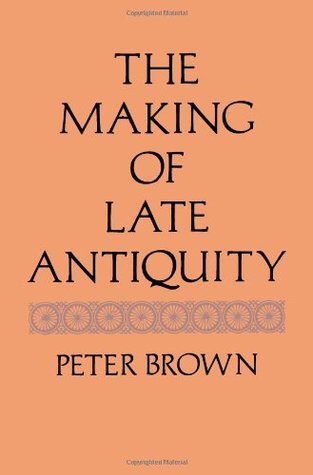
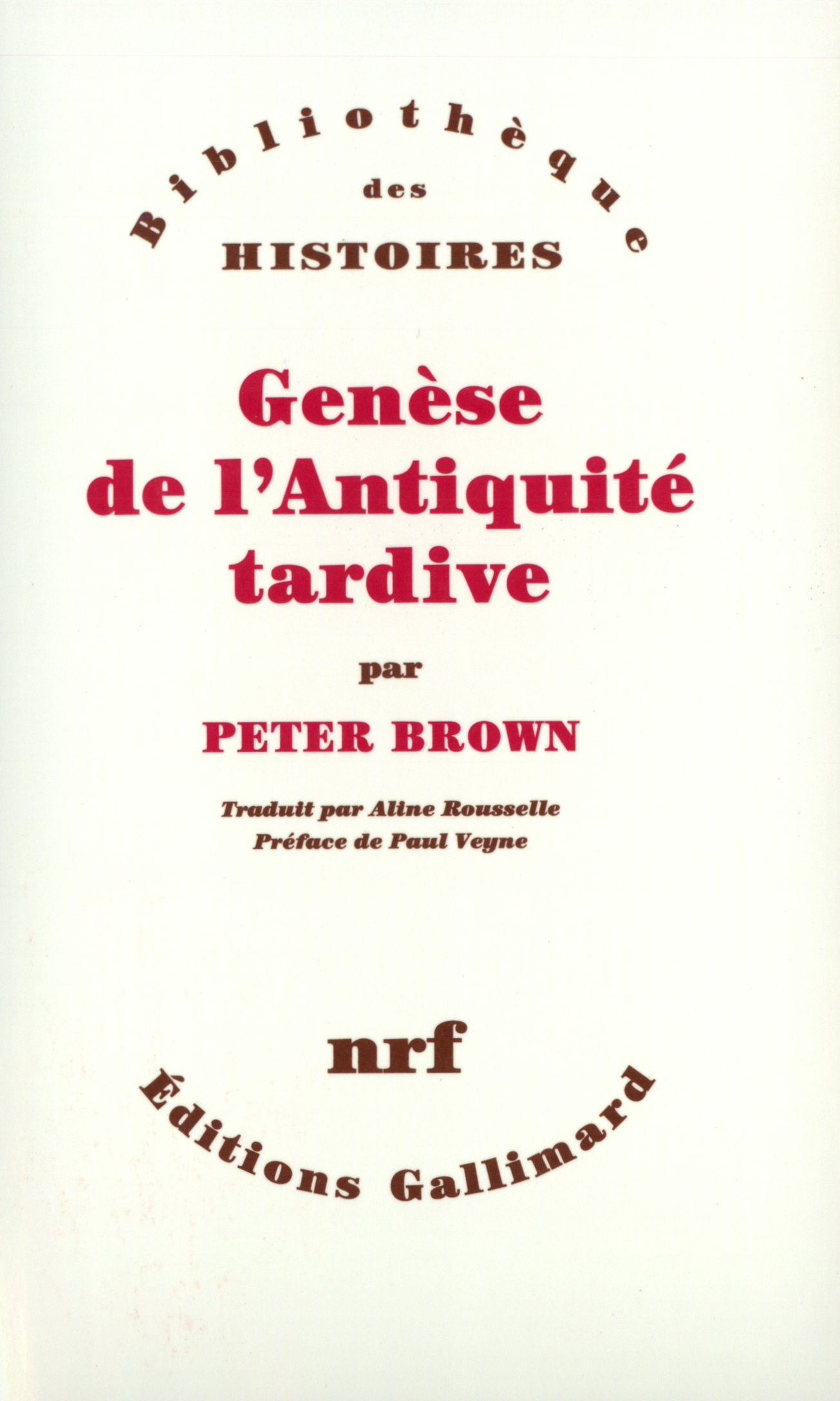
The English text has the relevant passage on p. 2. (The French text has a long Introduction by Brown, dated to May 1983, which I don’t think is available in English.) In his book Brown talks of a ‘watershed’, and he indicates that it is a term that he takes from W.H.C. Frend, Martyrdom and Persecution in the Early Church, p. 389, which discusses the “watershed between the Ancient World and the European Middle Ages”. In his apparatus to Subjectivité et vérité Gros notes that link, but provides the French version of the line Brown cites: “la ligne de partage des eaux entre la monde antique et le Moyen Âge européen”. In other words, the French translation of Brown parallels Foucault’s choice to render Frend and Brown’s “watershed” as “partage des eaux”.
The French edition of Brown’s book, translated by Aline Rousselle as Genèse de l’Antiquité tardive, was published in November 1983 – almost three years after Foucault’s lecture and eighteen months after “Le combat de la chasteté” essay was published. Foucault read English, and knew Brown, so he was not reliant on the translation, and the dating makes it clear that he was using the English edition. Foucault owned the book – as Brown’s testimony I quote below proves. There is no entry in Foucault’s fiches de lecture – the digitised version of his reading notes, now in the Bibliothèque nationale de France archives, but these usually report on books he had read in libraries, not ones he owned.
Foucault’s choice of the phrase “partage des eaux” to render “watershed” was, I said in my earlier post, curious, but it was pointed out to me in a comment that for French motorists heading south for the summer it would be familiar – “Ligne de partage des eaux” appears on a road sign in the Ardèche marking the divide between the drainage basins of the Mediterranean and the Atlantic.
On consideration, I think that it is the very literal English translation of Foucault’s French phrase as “parting of the waters” which is a bit odd – since all the English editions of the translation of Foucault’s essay go for this, and none of them check the source in Brown’s work. In English, “parting of the waters”, to me at least, seems to indicate something more like the Red Sea and Moses than a geophysical change. That said, in the original post I had already indicated that “Parting of the Waters” is a site in Wyoming where a creak splits and flows to either the Atlantic or Pacific ocean. The translation of Foucault’s essay, in all the English reprints, also renders “cartographie” as “topography”.
It is also significant that the division being described isn’t quite the same in all three authors. For Frend it’s a divide between antiquity and the Middle Ages; for Brown it is between “the pagan, classical world and the Christian Late Roman Empire”, of which Marcus Aurelius and Constantine stand as emblematic figures; and for Foucault it is the difficulty of establishing a clear break between paganism and Christianity within the wider period of antiquity.
Since I wrote that original post, some other sources have been published. This includes the English translation of the Subjectivity and Truth course, which has the relevant passage on p. 37. Graham Burchell translates it as: “It is about this that we should say something now: how to establish this division, how to make the cartography of this ‘watershed’, as Peter Brown expressed it, between what one calls Christianity and what one calls paganism?” So, Burchell returns to Brown’s use of ‘watershed’, and renders the French cartographie as cartography, the word Brown had himself used. In the note, p. 44 n. 8, he references Brown’s English book, and notes where Brown takes it from Frend. This is really what previous translators and editors of Foucault’s essay should have done.
Also now available, in both French and English, is Foucault’s Les Aveux de la chair, edited by Frédéric Gros and translated as Confessions of the Flesh, the volume of the History of Sexuality from which “Le combat de la chasteté” was taken. (At the time, Foucault had not settled on the final structure of the series, and he describes this as the third volume. In his final plan it was the fourth.) This book contains almost all the text Foucault published in 1982 (Les Aveux de la chair, pp. 230-45; Confessions of the Flesh, pp. 178-89), but not the final paragraph, in which the explicit reference to Brown and the “parting of the waters” or “watershed” appears. This part was either removed between drafts, or, perhaps more likely, it was added to the version published by Foucault as a standalone text. With the exception of this paragraph, Gros uses the excerpt Foucault published as an essay to edit the text in Les Aveux de la chair: “we have taken account of the minor corrections made by Foucault to his text” (p. v n. 3/p. 327 n. 21).
Brown’s fascinating memoir, Journeys of the Mind: A Life in History, published in 2023, also mentions this term. Among much else, he remembers his encounters with Foucault, initially in the Bear’s Lair tavern in Berkeley (Chapter 84). He discusses a long conversation with Foucault after the Howison “Truth and Subjectivity” lecture on John Cassian. (These lectures are very close to About the Beginning of the Hermeneutics of the Self, given in November at Dartmouth College, and the edition of that text indicates the differences. There are recordings of the Berkeley lectures here.) The whole chapter of Brown’s memoir, and indeed the book, is worth reading. But Brown picks up on this question of the watershed:
I left next day for Chicago, so as to deliver lectures under the rubric of “Philosophers and Monks” at Seabury Western Theological Seminary (very much a summary of my work in the past two years); but not before leaving with Foucault a photocopy of the typescript of those lectures, along with The Making of Late Antiquity. It seems that what interested him most in that book were my remarks on the “watershed” between classical antiquity and the later world of Christian monasticism (represented by Cassian)—a watershed that he himself was exploring in terms of differing attitudes to the self.
My next extensive contact with Foucault was very different from that evening in the Bear’s Lair. I passed through Paris in February 1981 and had dinner at Foucault’s apartment along with Paul Veyne, whom I met for the first time. The occasion was utterly unpretentious. Foucault served a stew based on a Poitevin recipe of his mother’s. Purposive as ever, much of the conversation hinged on possible Anglophone authors in the field of late antiquity who might be translated in a new series edited by Gallimard (p. 588).
The copy of The Making of Antiquity which Brown gave to Foucault is now held by Yale University, in the Beinecke library, which has a collection of books from Foucault’s library which have dedications by their authors. It is in their catalogue as BEIN Foucault 1516. I have been to the Beinecke library to look at some things in that collection, but in this case I requested a remote scan of key pages. The dedication is dated to 29 October 1980, which is actually a week after the Howison lectures, which took place on 20 and 21 October, and just before Foucault went to New York to begin the ‘Sexuality and Solitude’ seminars with Richard Sennett (which have been published in Généalogies de la sexualité and which I write about here). I was hoping that Foucault might have underlined the page about the watershed, but the text there is unmarked.
In a note to Journeys of the Mind, Brown mentions Niki Kasumi Clements’s article “Foucault and Brown: Disciplinary Intersections”, indicating that “Evidence for Foucault’s reading of my Making of Late Antiquity and other papers by me that I sent him at a later time has been assembled by Professor Niki Clements of Rice University in her visits to the Foucault archive at the Bibliothèque nationale” (p. 588, n. 7). That is indeed the case, and her article “Foucault and Brown” is a fascinating account of an intellectual friendship.
On this specific point, Clements indicates that there is an important manuscript draft by Foucault,
In a difficult-to-date archival draft (probably destined for an earlier version of Les Aveux de la chair), Foucault writes : « Pour s’être donné d’autres éléments de savoir, les discussions d’aujourd’hui sur les communications et les lignes de partage—le Water _________ comme dit Peter Brown entre la culture païenne et la pensée chrétienne, sont toujours aussi chargées d’enjeux (24). » Foucault writing « le Water ______ » in French suggests he had not yet settled on how to translate this historiographical concept into French (p. 12).
This essay has more on the “watershed” notion (especially pp. 12-13 and 18-19), and on the Brown and Foucault intellectual friendship, so much so that it renders what else I might say largely redundant. In terms of the specific issue, Clements indicates an important shift in Foucault’s use of the terminology, in 1981’s Subjectivity and Truth course he sees it as an actual divide, while in 1982 in “The Battle for Chastity” he sees it as more blurred and complicated. As she says:
We have thus gone from marking a division to mapping a dynamic system. Foucault’s ethical turn as articulated in his study of late antiquity and early Christianity encodes this genealogical dialectic: of both registering the enormity of a historical change and rejecting a search for origins (pp. 19-20).
But the passage cited above from Brown’s memoir also alerted me to something else. The translation of Brown’s book as Genèse de l’Antiquité tardive, published by Gallimard in the Bibliothèque des Histoires series,has a preface by Paul Veyne. This series published all the volumes of Foucault’s Histoire de la sexualité series. So, this February 1981 meeting between Foucault, Brown and Veyne seems to have been significant in the translation of Brown’s book into French.
[Update 6 October 2025: Niki Clements tells me that Foucault also owned a copy of Genèse de l’Antiquité tardive, which was kept in his personal library and by Daniel Defert after Foucault’s death.]
References
Peter Brown, The Making of Late Antiquity, Cambridge, MA: Harvard University Press, 1978; Genèse de l’Antiquité tardive, trans. Aline Rousselle, Paris: Gallimard, 1983.
Peter Brown, Journeys of the Mind, Princeton: Princeton University Press, 2023.
Niki Kasumi Clements, “Foucault and Brown: Disciplinary Intersections”, Foucault Studies 32, 2022, 1-27.
Stuart Elden, Foucault’s Last Decade, Cambridge: Polity, 2016.
Michel Foucault, “Le combat de la chasteté”, Dits et écrits, eds. Daniel Defert and François Ewald, Paris: Gallimard, four volumes, 1994, Vol IV, 295-308; “The Battle for Chastity”, trans. Anthony Forster, in Philippe Ariès ed., Western Sexuality, Oxford: Basil Blackwell, 1985, 14-25, reprinted in Politics, Philosophy, Culture: Interviews and Other Writings 1977-1983, ed. Lawrence D. Kritzman, London: Routledge, 1988, 227-41;Essential Works Volume 1: Ethics, Subjectivity and Truth, ed. Paul Rabinow, New York: The New Press, 1997, 185-97; Religion and Culture, ed. Jeremy Carrette, Manchester: Manchester University Press, 1999, 188-97.
Michel Foucault, L’origine de l’herméneutique de soi: Conférences prononcées à Dartmouth College, 1980, eds. Henri-Paul Fruchaud and Daniele Lorenzini, Paris: Vrin, 2013; About the Beginning of the Hermeneutics of the Self: Lectures at Dartmouth College, 1980, trans. Graham Burchell, Chicago: University of Chicago Press, 2016.
Michel Foucault, Subjectivité et vérité: Cours au Collège de France 1980-1981, ed. Frédéric Gros, Paris: Seuil/Gallimard/EHESS, 2014; Subjectivity and Truth: Lectures at the Collège de France 1980-1981, trans. Graham Burchell, Palgrave, 2017.
Michel Foucault, Histoire de la sexualité 4: Les Aveux de la chair, ed. Frédéric Gros, Paris, 2018; Confessions of the Flesh: The History of Sexuality Volume 4, trans. Robert Hurley, New York: Pantheon, 2021.
Michel Foucault, Généalogies de la sexualité, eds. Daniele Lorenzini and Henri-Paul Fruchaud, Paris: Vrin, 2024.
W.H.C Frend, Martyrdom and Persecution in the Early Church: A Study of a Conflict from the Maccabees to Donatus, Oxford: Basil Blackwell, 1965.
Victor Shammas, “Michel Foucault’s Library of Inscription Copies”, 30 April 2021, https://www.victorshammas.com/blog/2021/4/30/michel-foucaults-library-of-inscription-copies
Paul Veyne, “Préface”, in Peter Brown, Genèse de l’Antiquité tardive, trans. Aline Rousselle, Paris: Gallimard, 1983, vii-xxii.
Archives
Fonds Michel Foucault, NAF 28730, Bibliothèque nationale de France, https://archivesetmanuscrits.bnf.fr/ark:/12148/cc98634s
– some of Foucault’s reading notes are available at https://eman-archives.org/Foucault-fiches/
Michel Foucault audio archive, Berkeley library, https://guides.lib.berkeley.edu/c.php?g=901488&p=6487003
Michel Foucault library of presentation copies, Beinecke Rare Book and Manuscript Library, Yale University, https://rbc-cataloging-manual.beinecke.library.yale.edu/foucault-collection
This is the 40th post of a weekly series, where I post short essays with some indications of further reading and sources, but which are not as formal as something I’d try to publish more conventionally. They are usually tangential to my main writing focus, a home for spare ideas, asides, dead-ends and possible futures. I hope there is some interest in them. They are provisional and suggestions are welcome. A few shorter pieces in a similar style have been posted mid-week.
The full chronological list of ‘Sunday histories’ is here, with a thematic ordering here.
Discover more from Progressive Geographies
Subscribe to get the latest posts sent to your email.


Pingback: A minor note on Michel Foucault and Peter Brown: From a watershed to the parting of the waters | Progressive Geographies
Pingback: Indo-European Thought in Twentieth-Century France update 30 – archive work in Paris, Bern and Cambridge, MA, and Benveniste’s library | Progressive Geographies
Pingback: Foucault’s Multiple Plans for his History of Sexuality | Progressive Geographies