
In two previous pieces in the ‘Sunday Histories’ series, I have discussed the planned but unrealised collaboration between Vladimir Nabokov and Roman Jakobson on an edition and translation of “The Song of Igor”, an old Russian poem of the 12th century. Jakobson had first led a collaborative seminar on the text at the École Libre des Hautes Études in New York City during the Second World War, producing a largely French collection La Geste du Prince Igor’, published in 1948. This book included, among other things, an edition of the text, French and English translations, and a long essay by Jakobson demonstrating the text’s authenticity. The particular reason Jakobson was motivated to produce this edition, and especially his essay, was to challenge André Mazon’s 1940 claim that the text was a later forgery.
In “Vladimir Nabokov, Roman Jakobson, Marc Szeftel and The Song of Igor“ I outlined the plans for the edition of the text by Jakobson and the translation by Nabokov, with a historical commentary by Szeftel. But I also discussed the acrimonious break down of relations between Jakobson and Nabokov and the abandonment of the plan. The idea of a collaboration had developed after Nabokov wrote a review of La Geste du Prince Igor’, which he struggled to get published. They then agreed that Nabokov would produce a new translation, which would be accompanied by Jakobson’s edition of the text and some other writings. This was a project which they worked on in early-mid 1950s. But in 1957 Nabokov broke off the collaboration, and published his translation alone in 1960. In that edition, Nabokov says that his original translation, which he dates to 1952, was
purely utilitarian—to provide my students with an English text. In that first version I followed uncritically Roman Jakobson’s recension as published in La Geste du Prince Igor. Later, however, I grew dissatisfied not only with my own—much too ‘readable’—translation but also with Jakobson’s views. Mimeographed copies of that obsolete version which are still in circulation at Cornell and Harvard should now be destroyed (p. 82 n. 18).
In “Vladimir Nabokov, Roman Jakobson, and The Song of Igor – other sources for the story of a failed collaboration“ I added a bit more detail to this story, in particular making use the Nabokov-Edmund Wilson letters, which were published as the book Dear Bunny, Dear Volodya, and also the Nabokov archives in the Berg collection of the New York Public Library. That collection has the typescript of the published translation by Nabokov, with handwritten corrections. It also has some of the Nabokov-Jakobson correspondence, which interestingly is almost all in English. Fortunately, Nabokov kept carbon copies of his letters to Jakobson as well as those he received. Szeftel’s correspondence with Nabokov and Jakobson has been published, but most of the Nabokov-Jakobson letters have not. The one exception, to my knowledge, is the 14 April 1957 letter which broke off the collaboration, in the Berg collection, which was published in Vladimir Nabokov, Selected Letters, 1940-1977 (p. 216). But the Berg collection does not have a copy of the earlier translation which was planned to be part of the Jakobson-Nabokov edition.
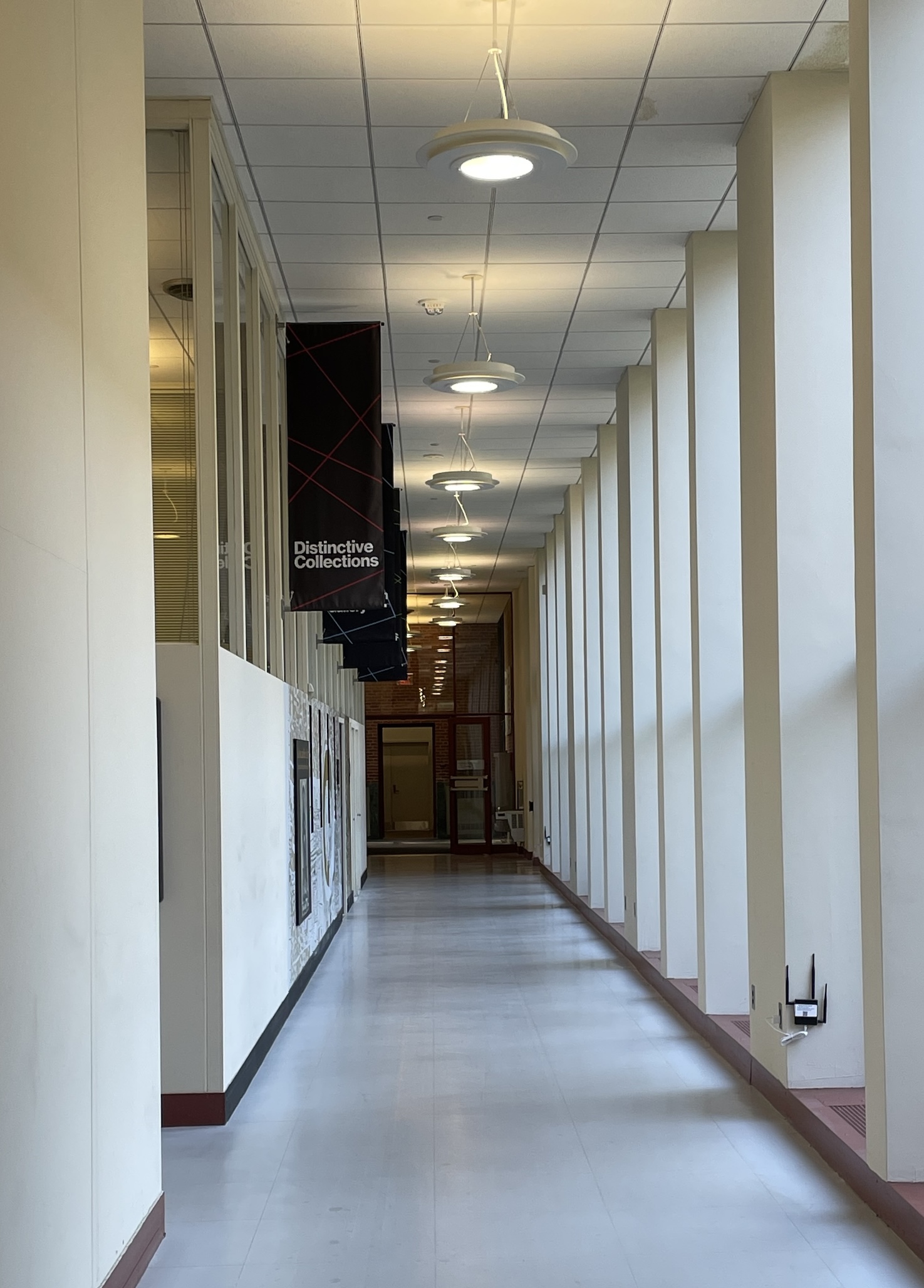
The earlier Nabokov translation is, however, in the Jakobson archives held by the Massachusetts Institute of Technology, which can be consulted in the Distinctive Collections reading room. I had visited this archive once before, but with largely different questions in mind – I was at that time particularly interested in Jakobson’s correspondence with Émile Benveniste and Alexandre Koyré. I was back for some other reasons, mainly concerning some of Jakobson’s early work in the United States (on which more here and here), and so also requested the boxes relating to The Song of Igor. Boxes 11 and 12 of the Jakobson archives have a lot of material – reading notes, correspondence, drafts, and images. There are a few different translations including Samuel H. Cross’s version which is in La Geste du Prince Igor’ (box 11, folder 80); and one by Sidney Monas, which was published in 1971 with Burton Raffel named as co-translator (folder 81; see Raffel’s 1986 reflections on this translation). Horace Lunt’s translation of the first 25 verses, compiled from the versions produced for Harvard’s ‘Russian 203’ course, is in the same box (folder 15). But it was Nabokov’s early version which I really wanted to see (folders 82-84). Clearly Jakobson did not follow Nabokov’s 1960 directive that this “obsolete version… should now be destroyed”.
The first folder (number 82) has a typed version of the translation and notes, which is indicated to be edited by Jakobson. That has the addition “Translated by Vladimir Nabokov”, which I think is in Jakobson’s handwriting. The second folder (83) has another typescript, in carbon copy and original, which incorporates those changes. The third folder (84) has a different style typescript of the translation alone, which textually looks the same as the corrected version, but which has some further emendations in pencil and ink, mostly on the first page. For the most part this looks like a clean and final form.
The first of these folders also includes a letter from Nabokov to Pascal Covici of Viking Press, 2 June 1951, saying that while the entire manuscript of the volume is not yet complete, he was sending his translation as a preview. He hoped to improve it, but suggested that it was more or less there. He said the volume would contain his translation, foreword and translation notes; Jakobson’s edition of the original text and its recension; papers by Jakobson and Szeftel on linguistic and historical aspects; bibliography and index; and illustrations of Old Russian miniatures and other images. While this accords well with other sources, it was interesting to see how closely Nabokov’s vision for the volume matched with Jakobson’s, at least in 1951. This folder also includes a nine-page “Translator’s Foreword”. There is an index of names mentioned in the poem, keyed to the line numbers of the translation, and a concluding note. This note mentions Mazon’s attempt to prove the text was a fake, and gives Nabokov’s clear indication that he supported Jakobson’s demonstration that this view was false. Nabokov praises La Geste du Prince Igor’ as a “remarkable volume”, and that “Roman Jakobson, with the utmost precision, analyses and annihilates Mazon’s fancywork”. The problem of words which were believed to be unique to the poem, not being in other old Russian texts (i.e. what is known as hapax legomenon), were either subsequently found in manuscripts discovered later, or were convincingly demonstrated to be legitimate. Nabokov endorses Jakobson’s view that far from Mazon’s assessment that the forger had insufficient knowledge of the language, and therefore erred in his forgery, Mazon’s claims rather demonstrated his own insufficient knowledge.
Box 12, folder 1 of Jakobson’s archives contains four typed pages of some suggested changes to the translation, which appear to be from Jakobson to Nabokov. A letter from Nabokov to Jakobson, dated 19 January 1953 (box 12, folder 9), lists thirteen misprints which he asks are corrected before proofs are produced. This seems to indicate that they were, at this stage, largely content with the text itself. But the delays in producing the other texts for their planned edition seems to have given Nabokov time to doubt his work, and for the falling out with Jakobson to occur. There are quite large differences between this translation and the 1960 published version. The immediately striking thing is that the earlier translation is in prose, short paragraphs usually of one sentence each. The published version is displayed as short lines of verse. Comparing them line by line would be interesting, but really ought to be done by someone who knows the Russian original. In particular, a fuller comparison would need not just to look at the two different translations, but to explore how they are translations of different source texts – Jakobson’s recension for the first and the Russian text Nabokov later preferred for the second. In his published foreword, Nabokov complains that “No satisfactory edition of The Song exists in Russian” (p. 19) and describes La Geste du Price Igor merely as “useful” while criticising Cross’s translation within it as “a poor English version… more or less patched up by the editors” (p. 20).
An unexpected postscript to this story came from the correspondence between William J. McGuire and Jakobson, also in box 12, folder 9. McGuire was writing Bollingen: An Adventure in Collecting the Past, and was contacting people in his research on the foundation. I read that book a while ago because I was interested in Mircea Eliade’s attendance at Eranos seminars, which were organised by Olga Fröbe-Kapteyn and Carl Jung, and funded by the Mellon family. The Bollingen Foundation – named after Jung’s tower on Lake Zürich – published the Yearbooks from the seminars in its series, as well as Jung’s collected works in English and many other books, including some of the early Eliade translations. The Bollingen Foundation also funded research by Eliade and Georges Dumézil – in the latter case his trip to Peru and work on Quechua. (On the seminars, there is a detailed account in Hans Thomas Hakl, Eranos: An Alternative Intellectual History of the Twentieth Century.)
The Bollingen series had agreed to publish the Jakobson-Nabokov edition of The Song of Igor, with a contract signed in April 1953 (McGuire, Bollingen, p. 258). This postdates Nabokov’s letter to Viking Press, so it seems this was a later development of the work. Researching his book, McGuire wrote to Jakobson on 12 February 1979 asking for some information about various things, including the history of “Igor Tale” project. Jakobson wrote a detailed reply back on 23 February 1979, in which he briefly outlined the story from his perspective. Nabokov had died in July 1977, but McGuire had already interviewed both him and his widow in Montreux (see Bollingen, p. 342), and provides a balanced account (pp. 258-59). In his first letter to McGuire Jakobson describes Nabokov’s version of the text as based on different commentaries, which he says are incompatible, and the result as a “completely unscholarly, I would even say antischolarly translation of the Igor Tale” (23 February 1979). McGuire says that Jakobson recruited first Dimitri Obolensky and then Omeljan Pritsak to do an alternative translation for his planned edition, but neither produced a text. It is extraordinary that this short text – about 3,000 words, 43 generously spaced pages in the printed version by Nabokov or ten typed sides in the last archival version of the earlier translation – could have caused so much difficulty.
One thing which developed from this correspondence with McGuire is that Jakobson says that the original photographs intended for the edition had been given to the Bollingen Foundation, and from them to Princeton University Press when it took over the Bollingen series in the late 1960s. McGuire is able to track them down, and on 15 March 1979 says he can send them back to Jakobson. Those images seem to be part of the sequence of photographs in box 12, folders 4-8 of the Jakobson archive.
It is interesting that on 14 May 1979, thanking McGuire for finding the photographs and asking for their return, Jakobson says “I have not yet abandoned the plan of an up-to-date Igor Tale book”. This is twenty-two years after his project with Nabokov had failed. But Jakobson died three years later, and this project was never completed.
References
La Geste du Prince Igor’: Épopée Russe du douzième siècle, ed. and trans. Henri Grégoire, Roman Jakobson and Marc Szeftel, New York: Columbia University Press, 1948. Jakobson’s parts are reprinted in his Selected Writings IV: Slavic Epic Studies, The Hague: Mouton & Co, 1966, 106-300.
The Song of Igor’s Campaign: An Epic of the Twelfth Century, trans. and foreword by Vladimir Nabokov, London: Weidenfeld and Nicolson, 1960.
Brian Boyd, Vladimir Nabokov: The American Years, Princeton: Princeton University Press, 1991.
Hans Thomas Hakl, Eranos: An Alternative Intellectual History of the Twentieth Century, trans. Christopher McIntosh, London: Routledge, 2013.
Roman Jakobson, “The Puzzles of the Igor’ Tale on the 150th Anniversary of its First Edition”, Speculum 27, 1952, 43-66; reprinted in Selected Writings IV: Slavic Epic Studies, The Hague: Mouton & Co, 1966, 380-410.
André Mazon, Le Slovo d’Igor, Paris: Librairie Droz, 1940.
William McGuire, Bollingen: An Adventure in Collecting the Past, Princeton: Princeton University Press, 1982.
Sidney Monas and Burton Raffel trans. “The Tale of Igor’s Men: Of Igor Son of Svyatoslav, Grandson of Oleg”, Delos[first series] 6, 1971, 5-15.
Vladimir Nabokov, Selected Letters, 1940-1977, eds. Dmitri Nabokov & Matthew J. Bruccoli, London: Weidenfeld & Nicolson, 1990.
Vladimir Nabokov and Edmund Wilson, Dear Bunny, Dear Volodya: The Nabokov-Wilson Letters, 1940-1971, ed. Simon Karlinsky, Berkeley: University of California Press, revised and expanded edition, 2001.
Burton Raffel, “The Manner of Boyan: Translating Oral Literature”, Oral Tradition 1 (1), 1986, 11-29.
Marc Szeftel, “Correspondence with Vladimir Nabokov and Roman Jakobson”, in Galya Diment, Pniniad: Vladimir Nabokov and Marc Szeftel, Seattle: University of Washington Press, 1997, 103-119.
Archives
Roman Jakobson papers, MIT, Department of Distinctive Collections, https://archivesspace.mit.edu/repositories/2/resources/633
Vladimir Nabokov papers, 1918-1987, Berg Coll MSS Nabokov, New York Public Library, https://archives.nypl.org/brg/19126
This is the 45th post of a weekly series, where I post short essays with some indications of further reading and sources, but which are not as formal as something I’d try to publish more conventionally. They are usually tangential to my main writing focus, a home for spare ideas, asides, dead-ends and possible futures. I hope there is some interest in them. They are provisional and suggestions are welcome. A few, usually shorter, pieces in a similar style have been posted mid-week.
The full chronological list of ‘Sunday histories’ is here, with a thematic ordering here.
Discover more from Progressive Geographies
Subscribe to get the latest posts sent to your email.


Pingback: Vladimir Nabokov, Roman Jakobson, Marc Szeftel and The Song of Igor | Progressive Geographies
Pingback: Vladimir Nabokov, Roman Jakobson, and The Song of Igor – other sources for the story of a failed collaboration | Progressive Geographies
Pingback: Indo-European Thought in Twentieth-Century France update 30 – archive work in Paris, Bern and Cambridge, MA, and Benveniste’s library | Progressive Geographies
Pingback: Gordon and Tina Wasson, Slavic Studies in the Cold War, and the Hallucinogenic Mushroom | Progressive Geographies