
The formal end of the Leverhulme major research fellowship for the Indo-European thought project was at the end of September, but I have a no-cost extension until the end of January. This is invaluable, and is effectively to extend the grant for the months I lost in 2023 when I was in hospital and then off work recovering. I am on research leave in 2025-26, and am planning to use the first half of the year to try to complete this project. The second half will be to work on the new edition and translation of Foucault’s Birth of the Clinic.
The main writing task since the summer has been finishing the draft of the chapter on Dumézil’s ‘bilan’ period of consolidation and summary, which he worked on from the mid-1960s to the mid-1970s. I say a bit more about what books of his this included in the last update. I also discuss his retirement, his visiting posts in the United States at the Princeton Institute for Advanced Study, the University of Chicago and UCLA in the late 1960s and early 1970s, and his replacements at the Collège de France and the École Pratique des Hautes Études. I then moved to a discussion of his Esquisses de mythologie series, and some of his other late books from the 1980s, including a book on Nostradamus and Socrates, and a republication of parts of Colonel de Polier’s Mythologie des Indous. The plan is this should then lead into a discussion of some of the legacies of Benveniste and Dumézil’s work.
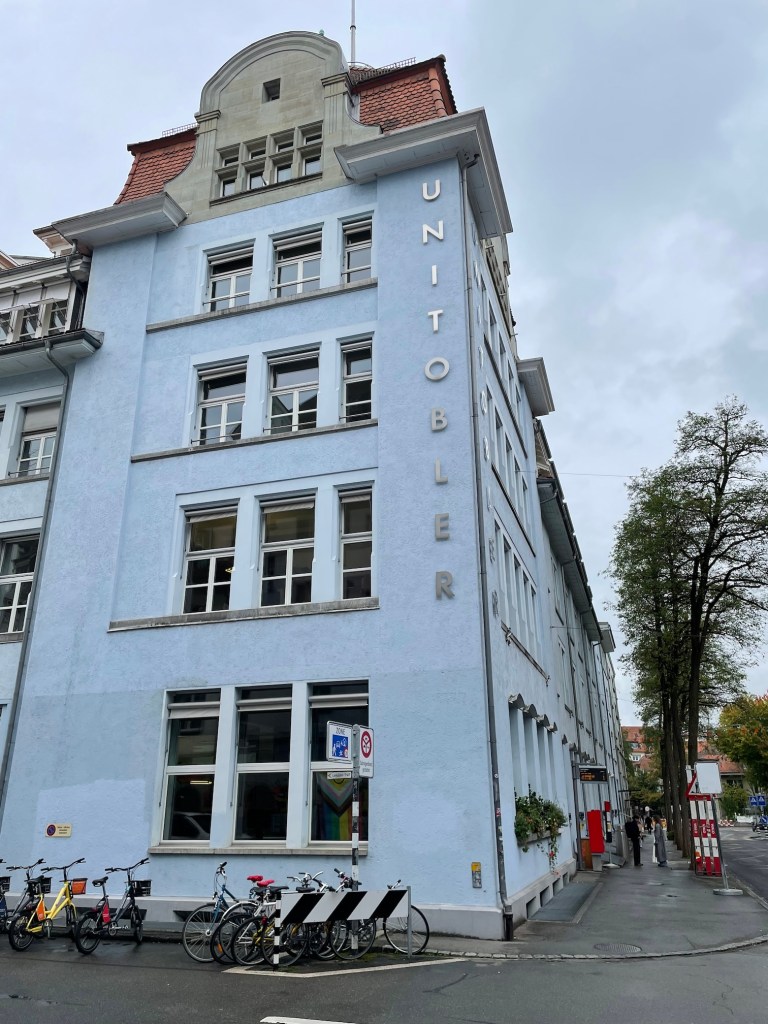
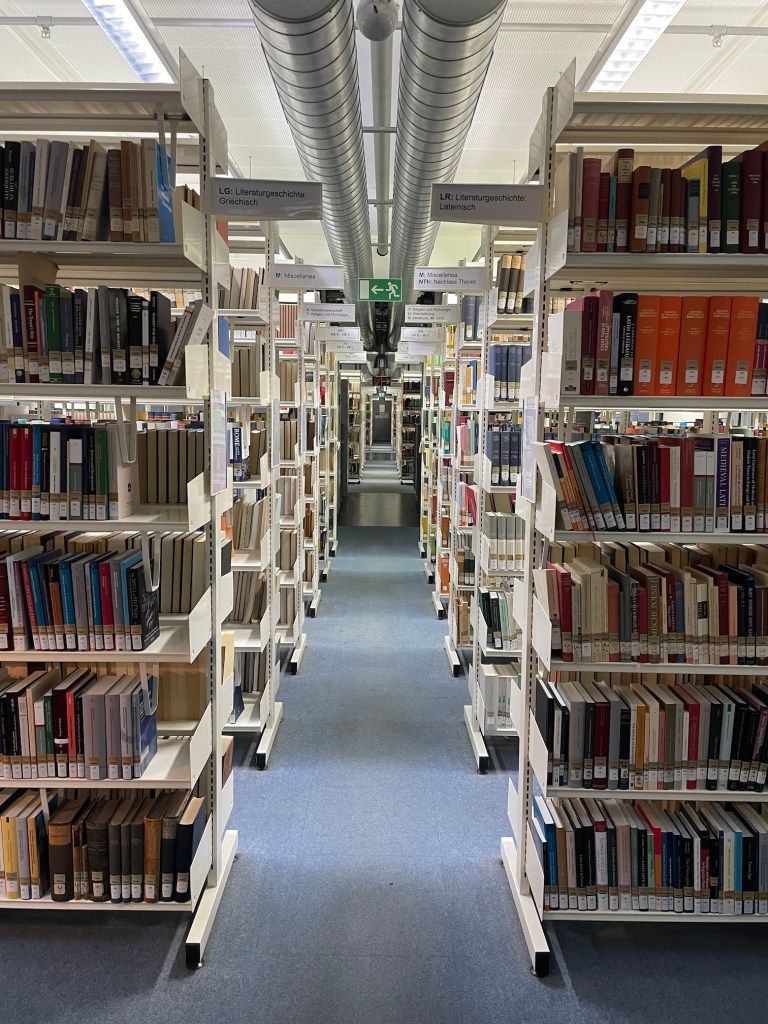

I was back in Paris for a few days in September, continuing work on Benveniste’s archives at the Bibliothèque nationale. I also made a short trip to Switzerland. Last year I went to Geneva and Fribourg, and this trip was to Bern, via Zurich. In Bern, I went to the Swiss Literary Archives, to look at letters from Georges Dumézil to Georges Redard, and some from Dumézil and Benveniste to Jean Bollack. (Benveniste’s letters to Redard are at the Collège de France.) The Dumézil-Redard correspondence is quite extensive, over thirty years, and helped with some details I was trying to track down. I also went to the Bern University library, which has Benveniste’s personal collection of books in the linguistic collection. Unlike some of the other book collections I’ve looked at, these books have been subsumed into the main library collection, and are on open shelves. There isn’t a list of the books currently available, so it was a bit trial and error through the catalogue and on the shelves to find books which once belonged to him. They have a sticker (or less often, writing) to say “Ex Libris Emile Benveniste”. Not worth a trip on its own, but combined with the Literary Archives it was interesting. I write about one of the dedications I found, from Jean de Menasce, here.
In October, I was pleased to have an invitation to Brown University, to give the 2025 Andrea Rosenthal Memorial Lecture in the Department of Comparative Literature. I gave a talk with the title “Émile Benveniste, the Second World War and the Making of the Vocabulary of Indo-European Institutions”, drawing on substantial parts of this book manuscript. It was a very nice event for me, and I’m grateful to Kenneth Haynes and his colleagues for the invitation and hospitality. I combined it with a few days in Cambridge to visit the Jakobson archives at MIT again, and the Gordon and Tina Wasson papers at the Harvard University Herbaria.
The archival work for this project is coming to an end. I am running out of funding and time, and am also getting very close to the limit of days I can be in the Schengen area (another reason to curse ‘Brexit’…). I’ll be back in Paris for a few days, trying to finish up the archival work I can. In early 2026 I will be spending two months at the European University Institute in Florence as a Fernand Braudel fellow, based in the History department. I’m hoping to take a complete draft of this book manuscript with me, and to return with a better one.
I’ve also been continuing the ‘Sunday Histories’ series of posts on this site, with ones on some archival sources for the story of Michel Foucault’s early English translations, on Roman Jakobson’s two series of 1972 lectures at the Collège de France and a mini-history of the Glyph: Johns Hopkins Textual Studies journal. Of these, the Jakobson piece connects most directly to this project. I also wrote about the story of Pierre Bourdieu and Erwin Panofsky in the light of a new book about them, more briefly and less seriously about Panofsky’s dog and Ernst Kantorowicz, and about the Collège de France administrator Étienne Wolff and the biology of monsters, including how philosophers like Bataille, Canguilhem and Foucault engaged with his work.
Wolff wrote two of his books which he was a prisoner of war in a camp in Austria, and I wrote about some of the other books written by French professors under these conditions, and the informal universities set up in some of the camps. There are a lot of stories to tell, and this might be the focus of some future pieces too.
I also have a piece on Benveniste’s limited reading of Derrida – rather than Derrida’s reading of Benveniste, which is extensive; and on Claude Lévi-Strauss, Georges Dumézil Benoîte Groul and the debate about feminine nouns for professions, both of which connect more directly to the Indo-European project.
Other pieces are more tangential – revisiting an older piece on Foucault and Peter Brown, in the light of newly published sources; a piece on Roman Jakobson’s research on Yiddish, and another piece on Jakobson and Nabokov. The Jakobson ones make use of things I was able to consult at MIT. I also wrote about the newly published manuscript by Foucault, Les Hermaphrodites, and about David Harvey’s writings on Paris, posted on his ninetieth birthday. I hope to have a couple of other things ready for specific anniversaries, which isn’t something I’ve done with this series before.
There are a few other pieces I’m developing for this series, including ones on Huguette Fugier and Clémence Ramnoux, and on Gordon and Tina Wasson [now here], which I expect will be out this year. I’m now confident I will hit the goal of an essay every week through 2025. The series has been fun for me, perhaps especially when writing this book manuscript has been challenging.
Previous updates on this project can be found here, along with links to some research resources and forthcoming publications. The re-edition of Georges Dumézil’s Mitra-Varuna is available open access. There is a lot more about the earlier Foucault work here. The final volume of the series is The Archaeology of Foucault, and the special issue of Theory, Culture & Society I co-edited on “Foucault before the Collège de France” has some important contributions on the earlier parts of Foucault’s career, and is partly available free to access. My recent articles include “Foucault, Dynastics and Power Relations” in Philosophy, Politics and Critique and “Foucault and Dumézil on Antiquity” in Journal of the History of Ideas (both require subscription, so ask if you’d like a copy); and “Alexandre Koyré and the Collège de France” in History of European Ideas (open access). The full chronological list of ‘Sunday histories’ is here, with a thematic ordering here.
Discover more from Progressive Geographies
Subscribe to get the latest posts sent to your email.


