Julia Welland, Pleasure and Depletion in Contemporary Militarism – Edinburgh University Press, March 2026
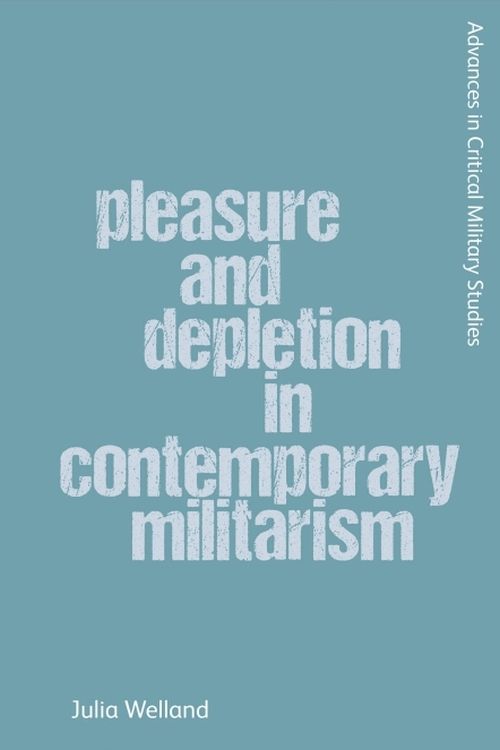
Why do so many US service members, veterans and military families continue to affectively invest in militarism when the physical and emotional costs are so high?
- Conceptualises militarism as felt, drawing on insights from feminist International Relations, feminist cultural studies and critical military studies
- Draws on, and adapts, the feminist political economy concept of ‘depletion’, locating it in the overarching structure of militarism as opposed to capitalism
- Explores how militarism is experienced both as sustaining (felt as love/support/comfort/solidarity) and depleting (as physical injury/emotional trauma/affective harms)
- Theorises both a structural and parasitic relationship between the pleasures and joys of militarism and its harms and depletions
- Uses three empirical sites (the Invictus Games, Warrior Games and Ms Veteran America) and draws on ethnographic reflections, non-participant observation, and in-depth qualitative interviews with military communities to build its theoretical and conceptual contributions
This book asks why US service members, veterans and military families continue to affectively invest in militarism – both as a structure of global politics and in their everyday lives – when they have experienced first-hand, its physical and emotional costs?
Drawing on in-depth qualitative interviews with military communities and ethnographic insights from a range of military sites, the book examines how those service members, veterans and military families who have been physically and emotionally depleted through their intimate relations to US militarism are the same individuals who have simultaneously experienced its concomitant pleasures, joys, and have built lives and worlds through their attachment to it.
Ultimately, the book argues these dual and contradictory experiences are central to militarism’s endurance in global politics; both through individuals continued affective investment in a militarised pathway and through the incremental and incomplete ways that militarism is reproduced in their everyday lives.
Discover more from Progressive Geographies
Subscribe to get the latest posts sent to your email.


