Every Sunday through 2025 I’ve posted a short essay to Progressive Geographies. They are tangential to my main research focus, a home for odd pieces which would not find a more formal place in print, but stories or ideas I thought were interesting enough to develop into these little pieces. They come with references and indications of further reading, and most of them will likely remain just as these fragments, rather than being developed into something else. A few though have had a life beyond this – one was extended into an article, a couple of others became the basis for a grant proposal for a future project. A handful of usually shorter pieces were posted mid-week.



So, if you want to know how Ernst Kantorowicz helped to buy a dog for Erwin Panofsky, why a linguist was asked to help with the disposal of nuclear waste, why Vladimir Nabokov and Roman Jakobson fell out, something about Hannah Arendt’s intellectual friendships, the murder of Ioan Culianu in the bathroom of the University of Chicago’s Divinity School, a Soviet historian with an interest in cryptozoology, or why Edward Said never wrote his planned book on Jonathan Swift, then some of these might be of interest.
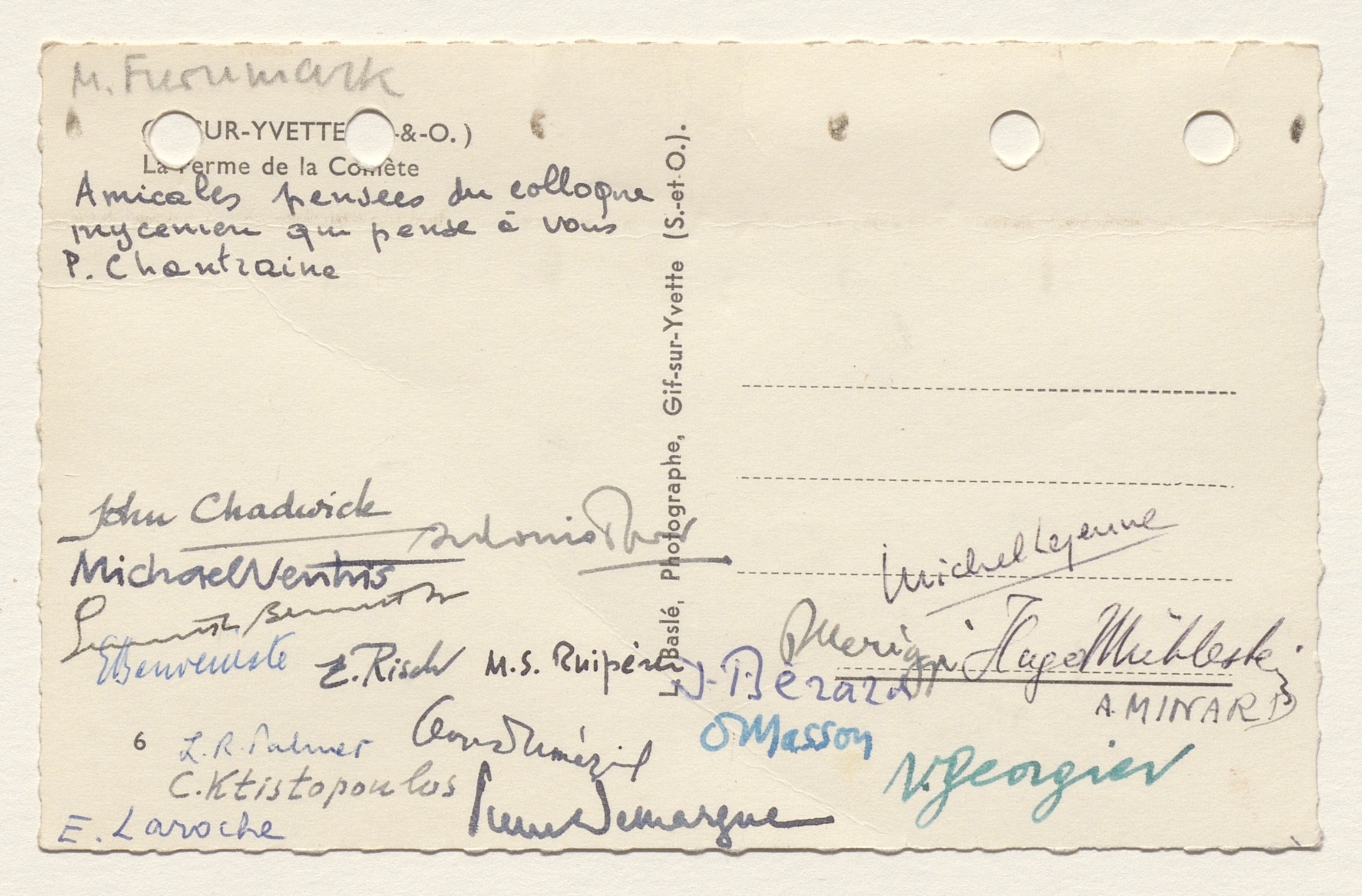
I also explore Claude Lévi-Strauss’s visiting lectures at the Collège de France about the wolverine, and why he and Georges Dumézil opposed French reforms about feminine names for professions; what we know about Michel Foucault’s early visits to North America, and his early English translations; or whether Émile Benveniste really did read Jacques Derrida’s Of Grammatology. I discuss a planned co-translation of Hegel’s Phenomenology by Henri Lefebvre and Alexandre Kojève, why Jacques Lacan thought the best image of the unconsciousness was Baltimore in the early morning, and why American Slavic Studies during the Cold War was partly funded by an investment banker who told the world about hallucinogenic mushrooms.
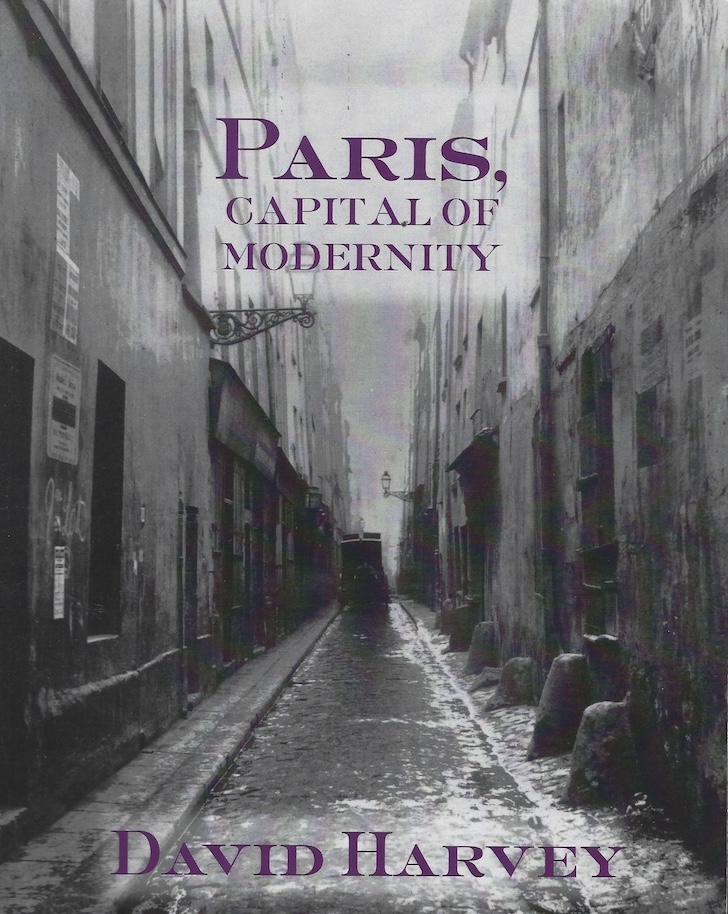
Along the way I say something about what Hegel’s great-grandson wrote about the Aryans, and his translation of Saussure; different aspects of Foucault’s project on sexuality, including his abandoned book on hermaphrodites; what Alexandre Koyré taught in New York and Cairo; how analysis of vocabulary can be helpful in understanding the history of territory; why David Harvey considered his book on Paris to be one of his two most important; and discuss the books written and lectures given by French professors while they were German prisoners of war.
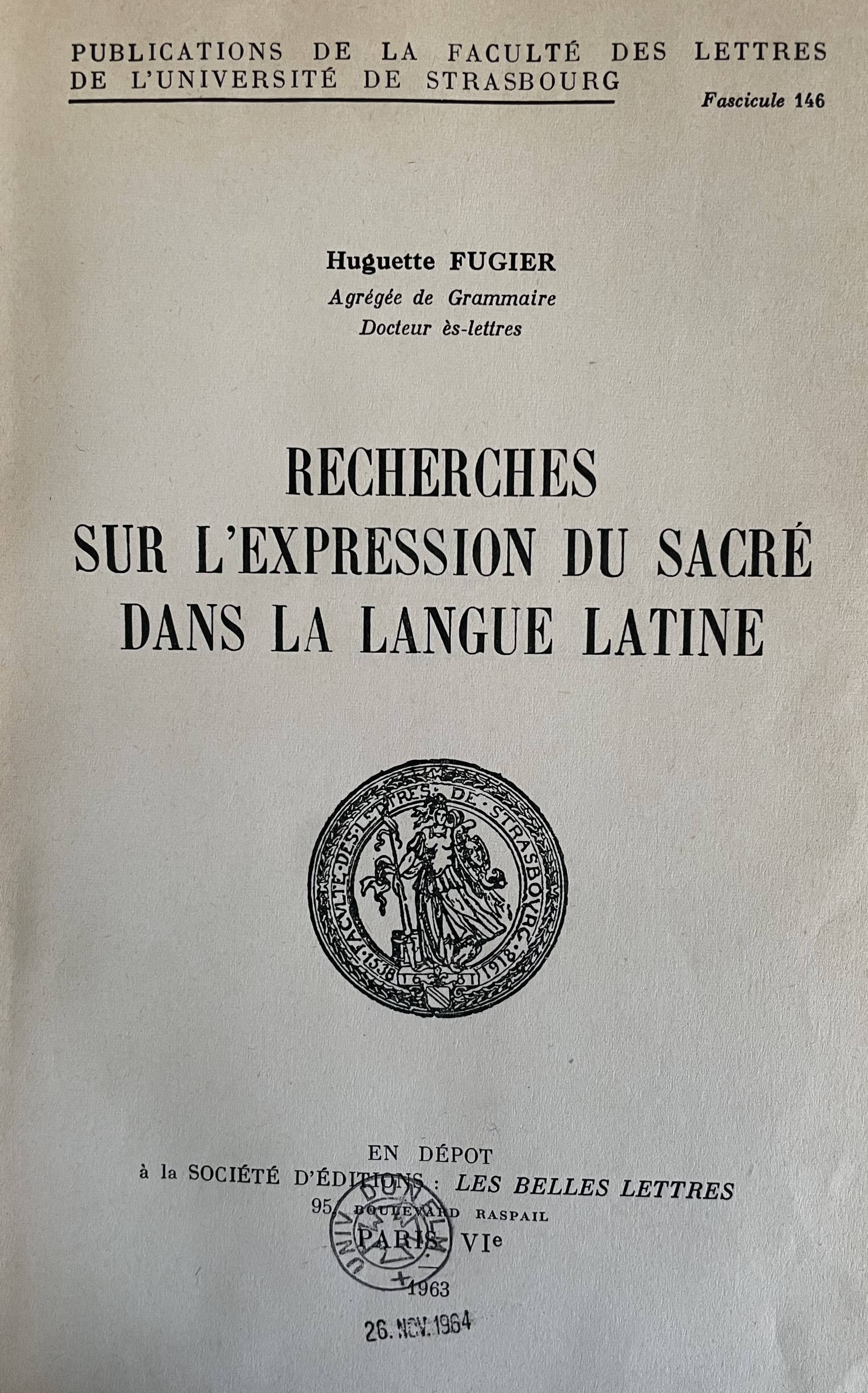
I’m well aware that there are a lot more posts about men than women – this is partly because of the relatively few women in academic posts, especially in France, in the periods I’m working on. But as well as two pieces on Hannah Arendt, I have written about Marie-Louise Sjoestedt’s work on Celtic language and myth, Elisabeth Raucq’s examination of Indo-European animal names, Elizabeth Palmer’s translations, Gillian Rose’s limited connection to the Indo-Europeanists, Huguette Fugier’s research on Latin words for the sacred, and I have ones planned on Clémence Ramnoux’s writings on the pre-Socratics and Marie-Madeleine Davy on mysticism.
There are lots more things discussed in these. There is a chronological listing here, and a thematic one here.
I began the year thinking I had ideas for a few of these, and said I’d try to keep to a regular schedule in February, when I felt reasonably confident I’d be able to do this for a few more months. In June, after six months, I said I was somewhat surprised that I’d managed one every week, but I’ve kept this up throughout the year. I’ve usually had a few in development at the same time, since most require a bit of library work to complete, and that can’t always be done immediately. I’ve returned to a few topics with a bit more detail – sometimes provided an update to an earlier piece, sometimes written a sequel.
I said at the outset that
These pieces are also a bit of a reaction against academic publishing – its slow processes, its costs, and its metrics. These pieces are posted when I’ve finished them, though they might be revised later; they are free to access (I have no plans to turn these into subscription-only); and they are not intended as ‘outputs’ in the tradition sense.
Those things all still apply – I’ve resisted the idea of turning these into a separate newsletter, so they appear interspersed with the more usual posts about interesting books, conferences and other links. I’ve long known that most people come to this blog because I provide what I hope is a useful service of sharing other people’s work, rather than because of an interest in mine. But hopefully these posts this year have given something else in addition.
It’s hard to know how these are being received, since the comments are relatively few. I don’t trust WordPress stats, since that obviously doesn’t distinguish between someone just landing on a page and actually reading it. I have definitely lost readers since I quit Twitter/X this year. There have been few comments or other indications of how they are being read. But occasionally I’ll get a message out of the blue of how someone chanced on a piece and it made a connection. And one time at a conference I was talking to someone who told me they’d read an interesting piece on a topic which… and I had to point out that I was its author.
I’m not sure I’ll be able to keep up this weekly frequency in 2026, but there will be at least a few more through the year. Thank you to anyone who has read one or more of these pieces.
Discover more from Progressive Geographies
Subscribe to get the latest posts sent to your email.


new interview with Martin J
https://newbooksnetwork.com/immanent-critiques
Pingback: My publications in 2025 – on Koyré, Foucault, Lefebvre and some reviews | Progressive Geographies