
Chandler D. Rogers, Merleau-Ponty and the Human-Animal Relation: From Eros to Environmental Responsibility – Edinburgh University Press, January 2026
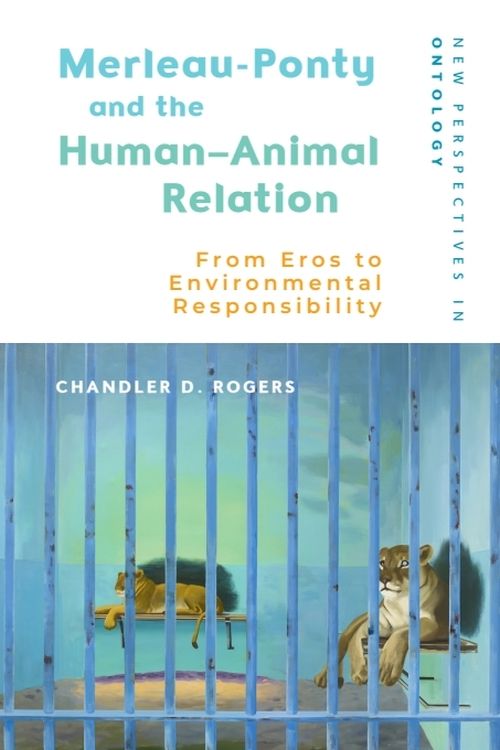
Draws on Merleau-Ponty’s account of the origins of animal desire and extends it, pushing the human-animal relationship toward more explicitly ethical conclusions than Merleau-Ponty himself proposed
- Addresses contemporary environmental problems in light of perennial ontological questions about the human place in the cosmos
- Offers a hermeneutical reading of Merleau-Ponty’s early works against the backdrop of the overall trajectory of Merleau-Ponty’s thought
- Combines relevant insights from phenomenology, environmental philosophy and psychoanalysis in an accessible manner
- Highlights two possible routes for ethico-psychological integration of the aggressive drives and instincts: the Nietzschean and the Schellingian
Contemporary environmental crises and general feelings of estrangement from the earth and its creatures can be traced, at least in part, to deficiencies in intimacy. This book begins from Merleau-Ponty’s descriptions of the origins of animal desire, then advocates for transformation of the human-animal relation in a manner that pushes further toward ethical conclusions than did Merleau-Ponty himself. Shifting from analysis first in an aesthetic, then in an ethical, and finally in an ethico-religious register, with contemporary environmental concerns in mind, it charts a path for healing the human-animal relation both within, with respect to one’s own animality, and without, with respect to animals of other species, based on the maturation of desire from eros to environmental responsibility.
Discover more from Progressive Geographies
Subscribe to get the latest posts sent to your email.


