
19 February 2026 marks the 10th anniversary of the death of Umberto Eco. I only heard Eco speak once, at a book reading in October 1995 for The Island of the Day Before. Mario Vargas Llosa was the other scheduled speaker, but at the event Salman Rushdie also appeared on stage and did a reading from The Moor’s Last Sigh. This was during the period when he was in hiding due to the fatwa, and his participation could not be preannounced. While I’ve read all Eco’s novels, and love some of them, I wish I’d also heard him speak more as an academic than as a novelist.
Eco is a figure who has long been on the margins of my research, as a friend and colleague of some of those I’m reading. In The Archaeology of Foucault I mentioned one time I know he met Foucault, when Foucault lectured on Manet in Milan (The Archaeology of Foucault, 56). Daniel Defert says this was in November 1967, and there is a video of a discussion involving them both here, about the Italian translation of Les Mots et les choses (The English translation The Order of Things came out in 1970 – see here). (Although Foucault speaks in French, he’s been dubbed into Italian.) The Italian translation of Foucault’s book was made by Emilio Panaitescu, though Louis Althusser had been trying to get Franca Madonia to do it. The translation also included Georges Canguilhem’s appreciative review of the book, originally in Critique (see The Archaeology of Foucault, 86-87 and its references).
At the moment, I am particularly intrigued by Eco’s connections to Roland Barthes, Émile Benveniste, Roman Jakobson, and Jacques Lacan. Eco spoke at some of the same conferences as Benveniste on linguistics and semiotics, and at his memorial event organised by Semiotext(e) and New York University in late 1976. In a more marginal connection, Georges Dumézil gave the opening address at a conference in Palermo in April 1970 where Eco and Italo Calvino were also participants. I wrote about one aspect of Eco’s friendship and collaboration with Thomas Sebeok in an earlier piece in this series – Thomas Sebeok, Umberto Eco and the Semiotics of Nuclear Waste. I also mentioned Eco’s take on the murder of Ioan Culianu in a piece on that tragic story.
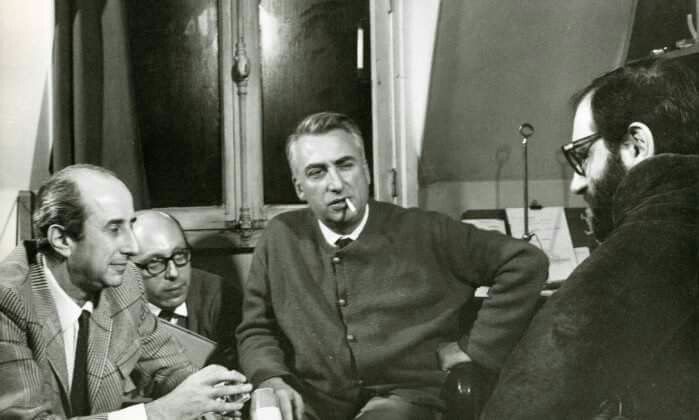
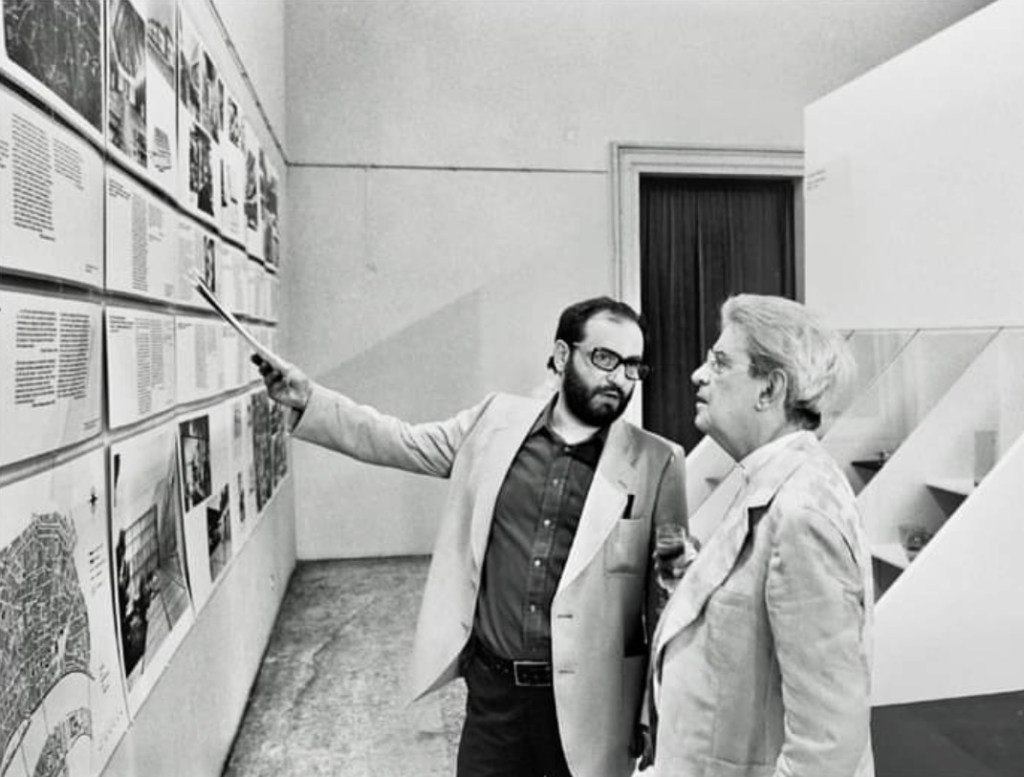
Eco was initially a medievalist, with a first book in 1956 on the aesthetics of Thomas Aquinas and a second in 1959 on Art and Beauty in the Middle Ages. He was clear about his transition from medievalist to semiotics: “I had three shocks, all of them around 1963: the ‘pensée sauvage’, by Lévi-Strauss, the essays of Jakobson published by Minuit, and the Russian formalists” (Opera Aperta, Italian introduction to 1976 edition, 29, quoted in Proni, “Umberto Eco: An Intellectual Biography”, 8; see Caesar, Umberto Eco, 48). La Pensée sauvage was published in 1962, Nicolas Ruwet’s translation of Jakobson’s essays in 1963. It’s interesting that Eco was reading Jakobson in French. I’m not sure of the specific reference for the formalists, as Tzvetan Todorov’s collection did not appear until 1965.
Eco wrote about “The Influence of Roman Jakobson on the Development of Semiotics” in a collection which appeared in 1977. Eco claims that “the entire history of philosophy could be re-read in a semiotic perspective” (p. 39), but only gives a sketch in this piece. He spends more time on the relation of linguistics to semiology, noting that: “Linguists have continued to recognise that, following Saussure, language should have been inserted into a more general framework” (p. 40). Saussure only hinted at this, Eco suggests, and while Louis Hjelmslev could have proposed “a general theoretical framework for a semiotic theory… his theory was too abstract, his examples concerning other semiotic systems very limited and rather parenthetical, and his glossematic jargon impenetrable” (p. 41).
Eco suggests that Jakobson is significant for this development, even though he rarely devoted himself to semiotics explicitly. He suggests “two fundamental essays which outline a semiotic landscape”, though they appear to be on linguistics (p. 42). One was “Language in Relation to Other Communication Systems” (Jakobson, Selected Writings, Vol II, 697-710) and the other simply entitled “Linguistics”, which appeared in Main Trends in the Science of Language and was a revised version of “Linguistics in Its Relation to Other Sciences” (Selected Writings, Vol II, 655-96). For Eco, “This last essay actually is a little treatise on semiotics, under a misleading title… Let me assume that Jakobson has never written a book on semiotics because his entire scientific existence has been a living example of a Quest for Semiotics” (p. 42). He notes that where Jakobson uses “semiotic” the now accepted term is “semiotics” (p. 55 n.1). The rest of this very interesting essay outlines “eight assumptions on which contemporary semiotic research is basically founded”, indicating “how the work of Jakobson has been of invaluable importance in making each of them widely accepted by the scientific milieu” (p. 44). The reading of Jakobson extends far beyond these two texts, and includes his work on literature, art and film. Towards the end he quotes Jakobson approvingly: “the subject matter of semiotic is the communication of any messages whatever, whereas the field of linguistics is confined to the communication of verbal messages” (Jakobson Selected Writings, Vol II, 662, quoted by Eco, “The Influence of Roman Jakobson”, p. 54).
While some elements of Eco’s work connect to Lévi-Strauss, not least in their shared use of Jakobson’s ideas in in a different field, Lévi-Strauss was quite critical, particularly around Eco’s idea of an ‘open work’. For Lévi-Strauss:
There is a remarkable book… The Open Work, which defends a formula that I absolutely cannot accept. What makes a work of art a work is not the fact that it is open but the fact that it is closed. A work of art is an object endowed with precise properties, which the analysis has to define. When Jakobson and myself tried to make a structural analysis of a sonnet by Baudelaire, we certainly did not approach it as an open work, in which we could find everything that has been filled in by the following epochs, but as an object which, once it has been created, had the stiffness, so to speak, of a crystal: therefore our function was only to bring into evidence its properties (in P. Caruso ed. Conversazioni con Lévi-Strauss, Foucault, Lacan, 81, cited in Farronato, Eco’s Chaosmos, 65-66).
I’ve not found a detailed intellectual biography of Umberto Eco, exploring his connections with philosophers, linguists, semioticians and mythologists. That’s a book I’d really like to read. Giampaolo Proni’s 1988 book chapter is quite good, but only looks at relatively early periods of Eco’s career, and the bibliography of his 2015 piece on Eco and Peirce suggests he didn’t pursue this work elsewhere. Peter Bondanella, Umberto Eco and the Open Text and Michael Caesar, Umberto Eco: Philosophy, Semiotics and the Work of Fiction are good, but do not have much detail on the topics in which I’m interested. Cristina Farronato, Eco’s Chaosmos has a bit more. Douglass Merrell’s study is interesting, but quite superficial on these questions. Rocco Capozzi has some interesting personal comments, but is explicit it is not an “academic essay”. At the Global Public Life site of Theory, Culture and Society, in a piece written shortly after Eco’s death Sunil Manghani has some good reflections on Eco’s legacy and, in particular, his connection to Barthes. Eco’s archives and personal library are being made available at the University of Bologna. A catalogue of some of the antique books from his collection was published in 2022; a foundation has been set up around his work. Surely someone must be working on a biography or intellectual history of Eco and his connections?
As Eco became more famous, as a novelist, columnist and media figure, his work on semiotics and language also became more popular. So, after the earlier The Open Work, A Theory of Semiotics and The Role of the Reader, there is the more accessible The Search for the Perfect Language or Kant and the Platypus. But Eco clearly retained an interest in his early concerns, which come through in different ways in his essays and, of course, his novels. One major late collection of texts, From the Tree to the Labyrinth: Historical Studies on the Sign and Interpretation, demonstrates an enduring interest in these questions. Even the posthumous On the Shoulders of Giants, a collection of late lectures at La Milanesiana, an annual cultural festival, shows his wide-ranging interests in, among other themes, medieval history, language, philosophy and signs.
Related posts
Thomas Sebeok, Umberto Eco and the Semiotics of Nuclear Waste – 2 February 2025
The Murder of Ioan Culianu – Eliade, Anton, Eco, Lincoln and the University of Chicago – 11 May 2025
References
Peter Bondanella, Umberto Eco and the Open Text: Semiotics, Fiction and Popular Culture, Cambridge: Cambridge University Press, 1997.
Rocco Capozzi, “Umberto Eco: Acute Observer of Our Social and Cultural History”, Italica 93 (1), 2016, 5-22.
Michael Caesar, Umberto Eco: Philosophy, Semiotics and the Work of Fiction, Cambridge: Polity, 1999.
Umberto Eco, Art and Beauty in the Middle Ages, trans. Hugh Bredin, New Haven, Yale University Press, 2002 [1986].
Umberto Eco, The Aesthetics of Thomas Aquinas, trans. Hugh Bredin, Cambridge, MA: Harvard University Press, 1988.
Umberto Eco, Opera Aperta, Milano: Bompiani, third edition, 1976 [1962]; The Open Work, trans. Anna Cancogni, Cambridge, MA: Harvard University Press, 1989.
Umberto Eco, “The Influence of Roman Jakobson on the Development of Semiotics”, in Daniel Armstrong and C. H. van Schooneveld eds. Roman Jakobson: Echoes of his Scholarship, Berlin and Boston: De Gruyter, 1977, 39-58.
Umberto Eco, A Theory of Semiotics, Bloomington: Indiana University Press, 1978.
Umberto Eco, The Role of the Reader: Explorations in the Semiotics of Texts, Bloomington: Indiana University Press, 1979.
Umberto Eco, Semiotics and the Philosophy of Language, Bloomington: Indiana University Press, 1986.
Umberto Eco, The Island of the Day Before, trans. William Weaver, Secker & Warburg, 1995.
Umberto Eco, The Search for the Perfect Language, trans. James Fentress, Oxford: Blackwell, 1995.
Umberto Eco, Kant and the Platypus: Essays on Language and Cognition, trans. Alastair McEwen, London: Secker & Warburg, 1999.
Umberto Eco, From the Tree to the Labyrinth: Historical Studies on the Sign and Interpretation, trans. Anthony Oldcorn, Cambridge, MA: Harvard University Press, 2014. [EUI]
Umberto Eco, On the Shoulders of Giants, trans. Alastair McEwen, Cambridge, MA: Harvard University Press, 2019.
Umberto Eco and Thomas A. Sebeok (eds.), The Sign of Three: Dupin, Holmes, Peirce, Bloomington: Indiana University Press, 1983.
Stuart Elden, The Archaeology of Foucault, Cambridge: Polity, 2023.
Cristina Farronato, Eco’s Chaosmos: From the Middle Ages to Postmodernity, Toronto: University of Toronto Press, 2003.
Roman Jakobson, Essais de linguistique générale, trans. Nicolas Ruwet, Paris: Minuit, two volumes, 1963-1973.
Roman Jakobson, “Language in Relation to Other Communication Systems” (1968), in Selected Writings II: Word and Language, The Hague: Mouton, 1971, 697-710.
Roman Jakobson, “Linguistics in Its Relation to Other Sciences” (1969), in Selected Writings II: Word and Language, The Hague: Mouton, 1971, 655-96.
Roman Jakobson, Main Trends in the Science of Language, London: Routledge, 1973.
Claude Lévi-Strauss, La pensée sauvage, Paris: Plon/Pocket, 1990 [1962]; Wild Thought, trans. Jeffrey Mehlman and John Leavitt, Chicago: University of Chicago Press, 2021.
Sunil Manghani, “The ‘Role’ of Umberto Eco”, Theory, Culture & Society, Global Public Life, 7 March 2016, https://www.theoryculturesociety.org/blog/sunil-manghani-on-the-role-of-umberto-eco
Douglass Merrell, Umberto Eco, The Da Vinci Code, and the Intellectual in the Age of Popular Culture, London: Palgrave Macmillan, 2017.
Giampaolo Proni, “Umberto Eco: An Intellectual Biography”, in Thomas A. Sebeok and Jean Umiker-Sebeok eds. The Semiotic Web 1987, Berlin and New York: De Gruyter Mouton, 1988, 3-22.
Giampaolo Proni, “Umberto Eco and Charles Peirce: A Slow and Respectful Convergence”, Semiotica 206, 2015, 13-35.
Charlotte Ross and Rochelle Sibley eds. Illuminating Eco: On the Boundaries of Interpretation, Aldershot: Ashgate, 2004.
Salman Rushdie, The Moor’s Last Sigh, Random House, 1995.
Tzvetan Todorov ed. and trans. Théorie de la littérature: Textes des Formalistes russes, Paris: Seuil, 1965.
This is the 59th post of a weekly series, posted every Sunday throughout 2025, and now entering a second year. The posts are short essays with indications of further reading and sources. They are not as formal as something I’d try to publish more conventionally, but are hopefully worthwhile as short sketches of histories and ideas. They are usually tangential to my main writing focus, a home for spare parts, asides, dead-ends and possible futures. I hope there is some interest in them. They are provisional and suggestions are welcome. A few, usually shorter, pieces in a similar style have been posted mid-week.
The full chronological list of ‘Sunday histories’ is here, with a thematic ordering here.
Discover more from Progressive Geographies
Subscribe to get the latest posts sent to your email.


Pingback: The Murder of Ioan Culianu – Eliade, Anton, Eco, Lincoln and the University of Chicago | Progressive Geographies
Pingback: Thomas Sebeok, Umberto Eco and the Semiotics of Nuclear Waste | Progressive Geographies
Pingback: Umberto Eco, Philosophers, Mythologists and Linguists – Sam Kinsley
Pingback: Hypomnemata: February 2026 | Toby Bennett