
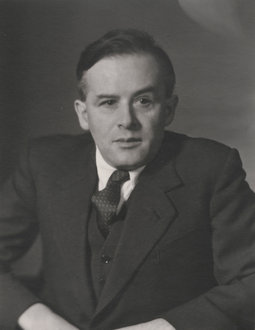
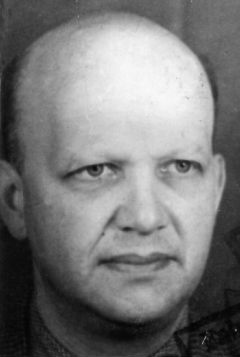
In 1949, the German born and naturalised British scholar Walter Bruno Henning wrote to the Iranian politician and diplomat Hassan Taqizadeh. In his letter, he shared his view of Franz Altheim’s Weltgeschichte Asiens im griechischen Zeitalter [World History of Asia in the Greek Era], describing it as “quite interesting, but very wrong in patches” (25 March 1949, in Scholars and Humanists, 76). Altheim was a German philologist, particularly known for his A History of Roman Religion, but is also notorious for being a researcher in Heinrich Himmler’s SS Ahnenerbe, a pseudo-scientific research institute on heritage, race and folklore.
Archaeology, history and the classics were all used by the Nazi regime to legitimise racial doctrines, and has been widely discussed by, for example, David Barrowclough, Digging for Hitler: The Nazi Archaeologists Search for an Aryan Past and Wolfgang Bialas and Anson Rabinbach’s collection Nazi Germany and the Humanities. The wider story of academics in the SS has been told by, for example, Bernard Mees in The Science of the Swastika and Christian Ingrao in Believe and Destroy, and one particular mission to Tibet is recounted by Christopher Hale in Himmler’s Crusade. Altheim is particularly discussed in Heather Pringle’s valuable The Master Plan (pp. 102-12).
Altheim’s affiliation seems to have helped his career during the Nazi period, becoming Professor of Classical Philology at the University of Halle. Although he lost his teaching position at the end of the war, he was reinstated, before moving to the Free University of Berlin in 1950.
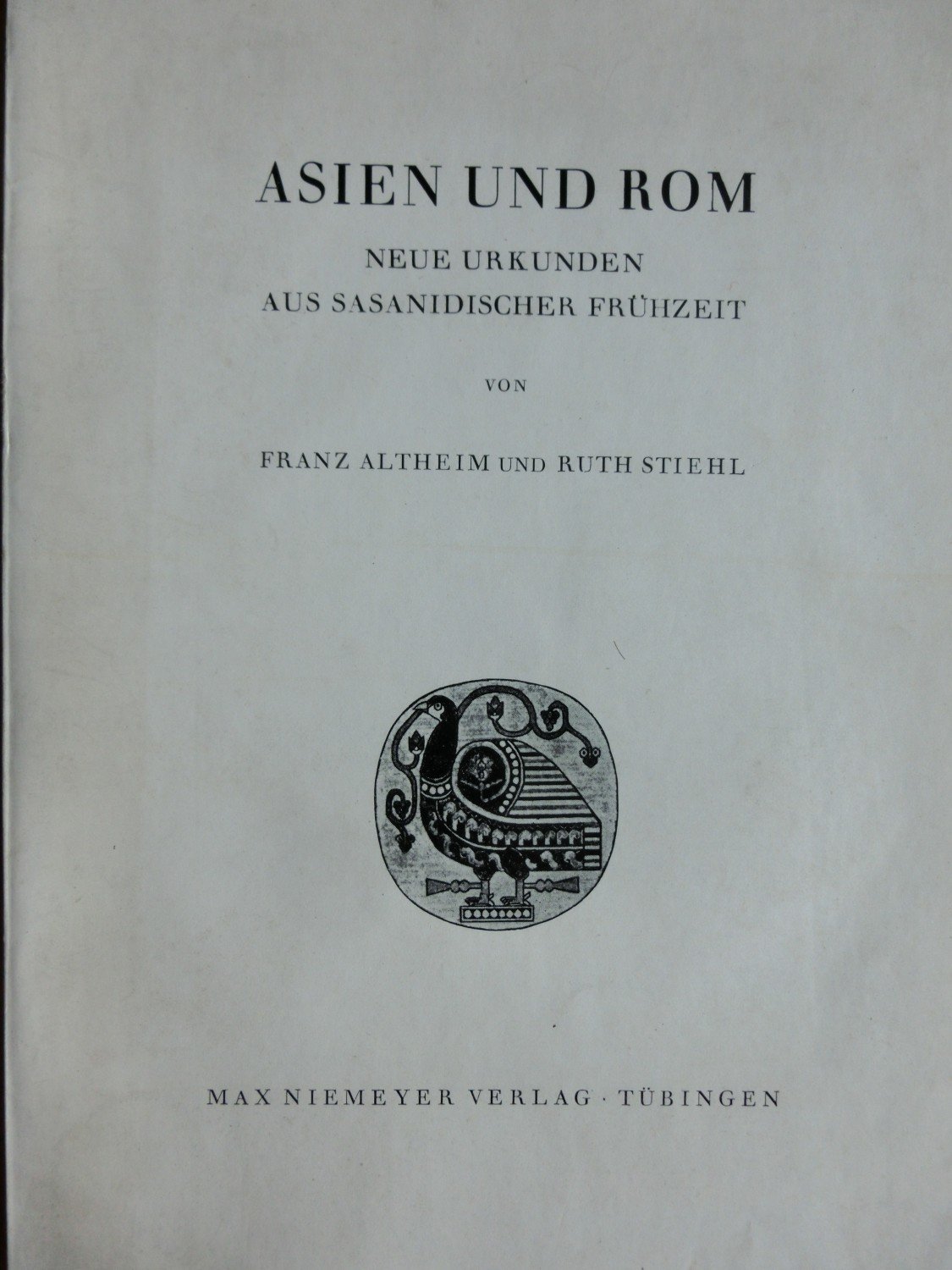
In 1955, André Piganiol, Professor of Roman Civilisation at the Collège de France, wrote a generally positive review of some books by Altheim in the UNESCO journal Diogène/Diogenes, edited by Roger Caillois. The key work being discussed was Altheim’s collaborative book with Ruth Stiehl, Asien und Rom: Neue Urkunden aus sasanidischer Frühzeit [Asia and Rome: New Documents from the Early Sassanid Period], published in 1952. (Stiehl was Altheim’s former student, frequent co-author, and later adopted as his daughter.)
Georges Dumézil contacted Caillois and suggested that an alternative view should be offered in the journal. (Copies of Dumézil’s letter and the subsequent exchanges concerning Caillois are in Dumézil’s archives.) On Dumézil’s suggestion, Caillois contacted Henning, saying that he thought that a more critical assessment of the work would be welcomed in the journal. Caillois noted that it was Dumézil’s idea to have the second review and that he’d suggested Henning’s name (Caillois to Henning, 27 April 1955). Although they had mutual friends, notably Émile Benveniste, Dumézil and Henning did not know each other well – they were only in sporadic contact from the correspondence I’ve seen.
Henning replied to say that he agreed that Piganiol’s review fundamentally misjudged the value of Altheim’s work. However, he felt that most of the content was outside of his research areas, and he didn’t feel he could offer a useful counterbalance. He suggested that it was only the Asien and Röm book which was really within his area, and he had already reviewed it for Gnomon (Henning to Caillois, 30 April 1955). That review in Gnomon is brutal, ending with the line “Rarely have scholars so grossly misjudged their limitations [Selten haben Gelehrte ihre Grenzen in so großzügiger Weise verkannt]”.
Henning suggested O.J. Maenchen of UC Berkeley as a better potential reviewer for Diogène, and Caillois wrote on the copy of the letter he gave Dumézil that he had written to Maenchen. As far as I can tell, Maenchen, who published as Maenchen-Helfen, never wrote such a piece, though he did review a couple of Altheim’s books – one before this exchange, and one after. These reviews, one also in Gnomon, and one in Journal of the American Oriental Society, are also highly critical. In the last these, Maenchen-Helfen indicates that Altheim was not adverse to expressing his disagreements with other scholars’ work: “he fills pages after pages with vehement polemics against scholars, mainly Iranists, who dared to disagree with him on questions which have not the slightest bearing on the subject of the book”. Among these digressive parts, Maenchen-Helfen notes the “criticisms of W. B. Henning’s reading of Middle Persian texts” (“Geschichte der Hunnen”, 295).
How much is this academic debate clouded by politics? It’s not surprising that Henning would be hostile to Altheim, nor that Maenchen would be. While Maenchen taught at the University of California, Berkeley, where Henning would join him in 1961, he was Austrian and left Europe after the Anschluß. He worked with the Marx-Engels research institute in Moscow before leaving Europe. Henning had left Nazi Germany in the 1930s because his fiancée was Jewish, and she was able to join him in London shortly afterwards. He taught at SOAS for several years, although was interned in the Isle of Man in the early years of the Second World War as a non-naturalised German subject resident in Britain. I wrote about a later period of Henning’s career previously in this series.
What is perhaps most intriguing to me in this brief exchange is that Dumézil was sufficiently motivated by the Piganiol review that he discussed it with Caillois, who also felt that a second view was desirable. There is a history here too: Piganiol had long been critical of Dumézil’s work and had been one of those trying to stop his election to the Collège de France in 1949.
Despite Altheim’s political positions, Cambridge Sanskrit Professor Harold Bailey and Altheim had correspondence from at least 1948 to 1954. This was initially from Halle in the Soviet sector of Germany after the war. The last card is from the newly established Freie Universität Berlin in the western sectors of the city – the old Friedrich Wilhelm University, renamed the Humboldt University, was in the Soviet sector. Bailey also had correspondence with Walther Wüst, both in the mid 1930s and mid-late 1950s, mainly technical details about Ossetic and Khotanese Saka. Wüst had served as the President of the Ahnenerbe during the Nazi period.
Bailey also had a long-standing correspondence with Benveniste, Henning and, to a lesser extent, Dumézil. Henning was one of the editors of a Festschrift for Taqizadeh, A Locust’s Leg, which had contributions by Bailey and Benveniste. What seems striking to me is the continuation of academic exchange – even if somewhat acrimonious in the case of Henning and Altheim – after the war.
References
Touraj Daryaee ed. Scholars and Humanists: Iranian Studies in W.B. Henning and S.H. Taqizadeh Correspondence, Costa Mesa: Mazda Publishers, 2009.
Franz Altheim, Römische Religionsgeschichte, Berlin: Walther de Gruyter, two volumes, 1956 [1931-33]; A History of Roman Religion, trans. Harold Mattingly, London: Methuen & Co, 1938.
Franz Altheim, Weltgeschichte Asiens im griechischen Zeitalter, Halle: Max Niemayer, two volumes, 1947-48.
Franz Altheim and Ruth Stiehl, Asien und Rom: Neue Urkunden aus sasanidischer Frühzeit, Tübingen: Max Niemeyer Verlag, 1952.
David Barrowclough, Digging for Hitler: The Nazi Archaeologists Search for an Aryan Past, Oxford: Fonthill, 2016.
Wolfgang Bialas and Anson Rabinbach (eds.), Nazi Germany and the Humanities, Oxford: Oneworld, 2007.
Christopher Hale, Himmler’s Crusade: The True Story of the 1938 Nazi Expedition into Tibet, Hoboken, NJ: John Wiley & Sons, 2003.
W.B. Henning, “Asien und Rom. Neue Urkunden aus sasanidischer Frühzeit by Franz Altheim and Ruth Stiehl: Das erste Auftreten der Hunnen. Das Alter der Jesaja-Rolle. Neue Urkunden aus Dura-Europos by Franz Altheim and Ruth Stiehl”, Gnomon 26 (7), 1954, 476-80.
W.B. Henning and E. Yarshater eds. A Locust’s Leg: Studies in Honour of S. H. Taqizadeh, London: Percy Lund, Humphries & Co, 1962.
Christian Ingrao, Believe and Destroy: Intellectuals in the SS War Machine, trans. Andrew Brown, Cambridge: Polity, 2013.
Charles King, “The Huns and Central Asia: A Bibliography of Otto J. Maenchen-Helfen”, Central Asiatic Journal 40 (2), 1996, 178-87.
Otto Maenchen-Helfen, “Franz Altheim: Attila und die Hunnen… H. Homeyer: Attila. Der Hunnenkönig von seinen Zeitgenossen dargestellt…”, Gnomon 24 (8), 1952, 500-504
Otto Maenchen-Helfen, “Geschichte der Hunnen, Erster Band by Franz Altheim”, Journal of the American Oriental Society 79 (4), 1959, 295-98.
Bernard Mees, The Science of the Swastika, Budapest: Central European University Press, 2008.
André Piganiol, “Rome et l’Asie”, Diogène 10, 1955, 136-44; “Rome and Asia”, Diogenes 3 (10), 1955, 113-22.
Heather Pringle, The Master Plan: Himmler’s Scholars and the Holocaust, London: Fourth Estate, 2006.
Archives
Fonds Georges Dumézil, Collège de France
Harold Walter Bailey papers, Ancient India and Iran Trust, Cambridge
This is the 62nd of a weekly series, posted every Sunday throughout 2025, and now entering a second year. The posts are short essays with indications of further reading and sources. They are not as formal as something I’d try to publish more conventionally, but are hopefully worthwhile as short sketches of histories and ideas. They are usually tangential to my main writing focus, a home for spare parts, asides, dead-ends and possible futures. I hope there is some interest in them. They are provisional and suggestions are welcome. A few, usually shorter, pieces in a similar style have been posted mid-week.
The full chronological list of ‘Sunday histories’ is here, with a thematic ordering here.
Discover more from Progressive Geographies
Subscribe to get the latest posts sent to your email.


Pingback: Walter B. Henning, Robert Oppenheimer, Ernst Kantorowicz, the Institute for Advanced Study and the Khwarezmian Dictionary Project | Progressive Geographies