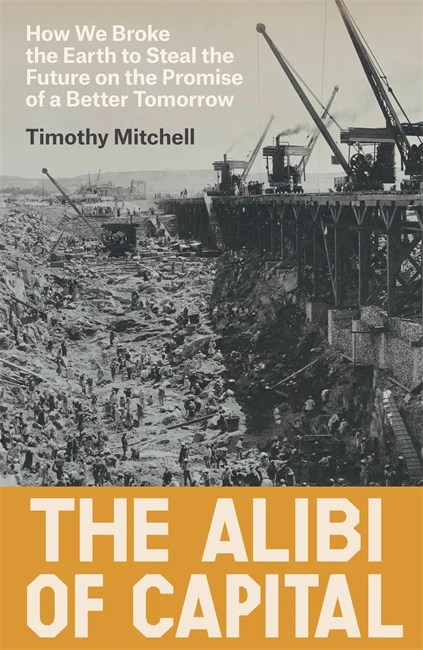
Stealing the future and concealing the theft – capitalism’s method, as examined by the author of the acclaimed Carbon Democracy
Today, extraordinary wealth seems to arrive from nowhere. The trick of conjuring this unearned wealth is, in fact, the key to understanding capitalism’s origins and a clue to why the catastrophe of climate collapse is upon us: value is created by consuming the future.
The Alibi of Capital explains how this came about through the imperial expansion of the West, encumbering today’s generations with repayments on earlier extractions. Timothy Mitchell identifies the forms of capitalisation, credit, and coercion that turn prospective assets into present income. Rejecting the common idea that claims on the future create only financial or fictitious capital, he traces the terraforming projects – the destruction of rivers, the colonising of territory, the expansion of infrastructure, and the burning of carbon – through which the future has been squandered. Terms such as finance, technology, the economy, and growth function as alibis that conceal this devastating form of extraction.
To celebrate International Women’s Day on 8 March, we are excited to showcase a selection of free-to-read journal articles from Deleuze and Guattari Studies, posts on the Edinburgh University Press blog and book chapters from Deleuze Connections. This special collection, exclusively authored by women, delves into the intersection of Deleuzian philosophy and feminist and queer theory.
In 1949, the German born and naturalised British scholar Walter Bruno Henning wrote to the Iranian politician and diplomat Hassan Taqizadeh. In his letter, he shared his view of Franz Altheim’s Weltgeschichte Asiens im griechischen Zeitalter [World History of Asia in the Greek Era], describing it as “quite interesting, but very wrong in patches” (25 March 1949, in Scholars and Humanists, 76). Altheim was a German philologist, particularly known for his A History of Roman Religion, but is also notorious for being a researcher in Heinrich Himmler’s SS Ahnenerbe, a pseudo-scientific research institute on heritage, race and folklore.
Archaeology, history and the classics were all used by the Nazi regime to legitimise racial doctrines, and has been widely discussed by, for example, David Barrowclough, Digging for Hitler: The Nazi Archaeologists Search for an Aryan Past and Wolfgang Bialas and Anson Rabinbach’s collection Nazi Germany and the Humanities. The wider story of academics in the SS has been told by, for example, Bernard Mees in The Science of the Swastika and Christian Ingrao in Believe and Destroy, and one particular mission to Tibet is recounted by Christopher Hale in Himmler’s Crusade. Altheim is particularly discussed in Heather Pringle’s valuable The Master Plan (pp. 102-12).
Altheim’s affiliation seems to have helped his career during the Nazi period, becoming Professor of Classical Philology at the University of Halle. Although he lost his teaching position at the end of the war, he was reinstated, before moving to the Free University of Berlin in 1950.
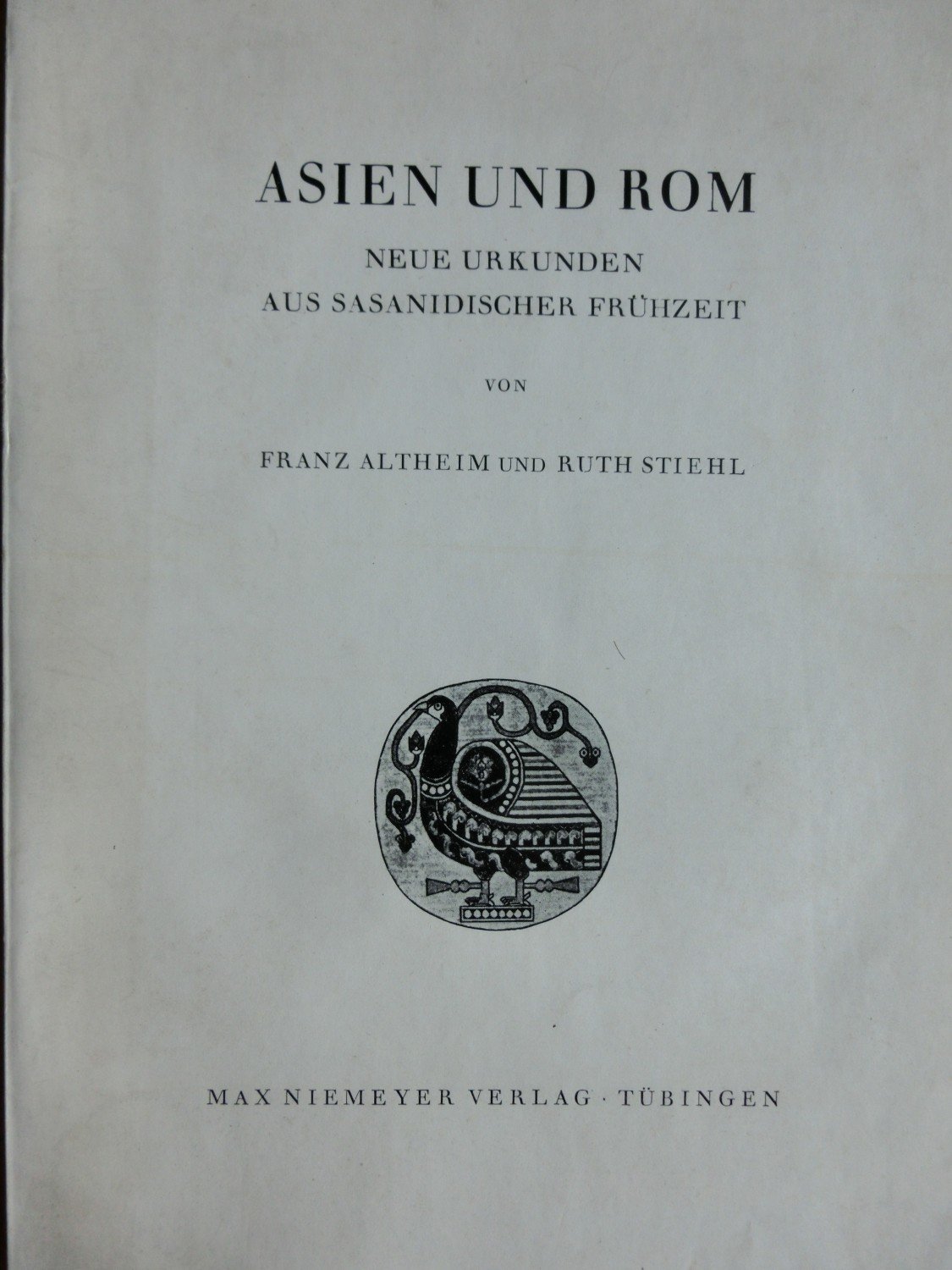
In 1955, André Piganiol, Professor of Roman Civilisation at the Collège de France, wrote a generally positive review of some books by Altheim in the UNESCO journal Diogène/Diogenes, edited by Roger Caillois. The key work being discussed was Altheim’s collaborative book with Ruth Stiehl, Asien und Rom: Neue Urkunden aus sasanidischer Frühzeit [Asia and Rome: New Documents from the Early Sassanid Period], published in 1952. (Stiehl was Altheim’s former student, frequent co-author, and later adopted as his daughter.)
Georges Dumézil contacted Caillois and suggested that an alternative view should be offered in the journal. (Copies of Dumézil’s letter and the subsequent exchanges concerning Caillois are in Dumézil’s archives.) On Dumézil’s suggestion, Caillois contacted Henning, saying that he thought that a more critical assessment of the work would be welcomed in the journal. Caillois noted that it was Dumézil’s idea to have the second review and that he’d suggested Henning’s name (Caillois to Henning, 27 April 1955). Although they had mutual friends, notably Émile Benveniste, Dumézil and Henning did not know each other well – they were only in sporadic contact from the correspondence I’ve seen.
Henning replied to say that he agreed that Piganiol’s review fundamentally misjudged the value of Altheim’s work. However, he felt that most of the content was outside of his research areas, and he didn’t feel he could offer a useful counterbalance. He suggested that it was only the Asien and Röm book which was really within his area, and he had already reviewed it for Gnomon (Henning to Caillois, 30 April 1955). That review in Gnomon is brutal, ending with the line “Rarely have scholars so grossly misjudged their limitations [Selten haben Gelehrte ihre Grenzen in so großzügiger Weise verkannt]”.
Henning suggested O.J. Maenchen of UC Berkeley as a better potential reviewer for Diogène, and Caillois wrote on the copy of the letter he gave Dumézil that he had written to Maenchen. As far as I can tell, Maenchen, who published as Maenchen-Helfen, never wrote such a piece, though he did review a couple of Altheim’s books – one before this exchange, and one after. These reviews, one also in Gnomon, and one in Journal of the American Oriental Society, are also highly critical. In the last these, Maenchen-Helfen indicates that Altheim was not adverse to expressing his disagreements with other scholars’ work: “he fills pages after pages with vehement polemics against scholars, mainly Iranists, who dared to disagree with him on questions which have not the slightest bearing on the subject of the book”. Among these digressive parts, Maenchen-Helfen notes the “criticisms of W. B. Henning’s reading of Middle Persian texts” (“Geschichte der Hunnen”, 295).
How much is this academic debate clouded by politics? It’s not surprising that Henning would be hostile to Altheim, nor that Maenchen would be. While Maenchen taught at the University of California, Berkeley, where Henning would join him in 1961, he was Austrian and left Europe after the Anschluß. He worked with the Marx-Engels research institute in Moscow before leaving Europe. Henning had left Nazi Germany in the 1930s because his fiancée was Jewish, and she was able to join him in London shortly afterwards. He taught at SOAS for several years, although was interned in the Isle of Man in the early years of the Second World War as a non-naturalised German subject resident in Britain. I wrote about a later period of Henning’s career previously in this series.
What is perhaps most intriguing to me in this brief exchange is that Dumézil was sufficiently motivated by the Piganiol review that he discussed it with Caillois, who also felt that a second view was desirable. There is a history here too: Piganiol had long been critical of Dumézil’s work and had been one of those trying to stop his election to the Collège de France in 1949.
Despite Altheim’s political positions, Cambridge Sanskrit Professor Harold Bailey and Altheim had correspondence from at least 1948 to 1954. This was initially from Halle in the Soviet sector of Germany after the war. The last card is from the newly established Freie Universität Berlin in the western sectors of the city – the old Friedrich Wilhelm University, renamed the Humboldt University, was in the Soviet sector. Bailey also had correspondence with Walther Wüst, both in the mid 1930s and mid-late 1950s, mainly technical details about Ossetic and Khotanese Saka. Wüst had served as the President of the Ahnenerbe during the Nazi period.
Bailey also had a long-standing correspondence with Benveniste, Henning and, to a lesser extent, Dumézil. Henning was one of the editors of a Festschrift for Taqizadeh, A Locust’s Leg, which had contributions by Bailey and Benveniste. What seems striking to me is the continuation of academic exchange – even if somewhat acrimonious in the case of Henning and Altheim – after the war.
References
Touraj Daryaeeed. Scholars and Humanists: Iranian Studies in W.B. Henning and S.H. Taqizadeh Correspondence, Costa Mesa: Mazda Publishers, 2009.
Franz Altheim, Römische Religionsgeschichte, Berlin: Walther de Gruyter, two volumes, 1956 [1931-33]; A History of Roman Religion, trans. Harold Mattingly, London: Methuen & Co, 1938.
Franz Altheim, Weltgeschichte Asiens im griechischen Zeitalter, Halle: Max Niemayer, two volumes, 1947-48.
Franz Altheim and Ruth Stiehl, Asien und Rom: Neue Urkunden aus sasanidischer Frühzeit, Tübingen: Max Niemeyer Verlag, 1952.
David Barrowclough, Digging for Hitler: The Nazi Archaeologists Search for an Aryan Past, Oxford: Fonthill, 2016.
Wolfgang Bialas and Anson Rabinbach (eds.), Nazi Germany and the Humanities, Oxford: Oneworld, 2007.
Christopher Hale, Himmler’s Crusade: The True Story of the 1938 Nazi Expedition into Tibet, Hoboken, NJ: John Wiley & Sons, 2003.
W.B. Henning, “Asien und Rom. Neue Urkunden aus sasanidischer Frühzeit by Franz Altheim and Ruth Stiehl: Das erste Auftreten der Hunnen. Das Alter der Jesaja-Rolle. Neue Urkunden aus Dura-Europos by Franz Altheim and Ruth Stiehl”, Gnomon 26 (7), 1954, 476-80.
W.B. Henning and E. Yarshater eds. A Locust’s Leg: Studies in Honour of S. H. Taqizadeh, London: Percy Lund, Humphries & Co, 1962.
Christian Ingrao, Believe and Destroy: Intellectuals in the SS War Machine, trans. Andrew Brown, Cambridge: Polity, 2013.
Charles King, “The Huns and Central Asia: A Bibliography of Otto J. Maenchen-Helfen”, Central Asiatic Journal 40 (2), 1996, 178-87.
Otto Maenchen-Helfen, “Franz Altheim: Attila und die Hunnen… H. Homeyer: Attila. Der Hunnenkönig von seinen Zeitgenossen dargestellt…”, Gnomon 24 (8), 1952, 500-504
Otto Maenchen-Helfen, “Geschichte der Hunnen, Erster Band by Franz Altheim”, Journal of the American Oriental Society 79 (4), 1959, 295-98.
Bernard Mees, The Science of the Swastika, Budapest: Central European University Press, 2008.
André Piganiol, “Rome et l’Asie”, Diogène 10, 1955, 136-44; “Rome and Asia”, Diogenes 3 (10), 1955, 113-22.
Heather Pringle, The Master Plan: Himmler’s Scholars and the Holocaust, London: Fourth Estate, 2006.
Archives
Fonds Georges Dumézil, Collège de France
Harold Walter Bailey papers, Ancient India and Iran Trust, Cambridge
This is the 62nd of a weekly series, posted every Sunday throughout 2025, and now entering a second year. The posts are short essays with indications of further reading and sources. They are not as formal as something I’d try to publish more conventionally, but are hopefully worthwhile as short sketches of histories and ideas. They are usually tangential to my main writing focus, a home for spare parts, asides, dead-ends and possible futures. I hope there is some interest in them. They are provisional and suggestions are welcome. A few, usually shorter, pieces in a similar style have been posted mid-week.
The full chronological list of ‘Sunday histories’ is here, with a thematic ordering here.
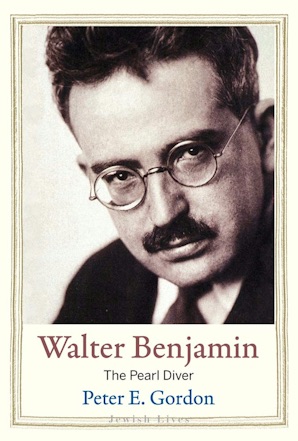
An accessible and authoritative biography of Walter Benjamin that guides the reader through the complexity of his intellectual legacy and the turbulence of his time
“A short, serene volume. . . . Gordon avoids treating his subject in allegorical terms, in part because Benjamin always resisted conscription into a story larger than his own.”—Anahid Nersessian, New Yorker
Walter Benjamin (1892–1940) is widely considered one of the most creative cultural critics of the twentieth century. Esteemed for his literary acumen and capacious imagination, he developed a unique style of criticism—his friend Hannah Arendt called it pearl-diving—that sought out fragments of redemption in the ruins of bourgeois civilization.
Award-winning author Peter E. Gordon tells Benjamin’s story in a vivid and poetic style, inviting the reader to look beyond the image of Benjamin as a tragic figure of German-Jewish history and portraying him as a complex personality of unique and multifaceted gifts. Tracing Benjamin’s life from his Berlin childhood to his Parisian exile, through the romanticism of the youth movements and the conflicts over modernism and Marxism, Gordon brings Benjamin to life.
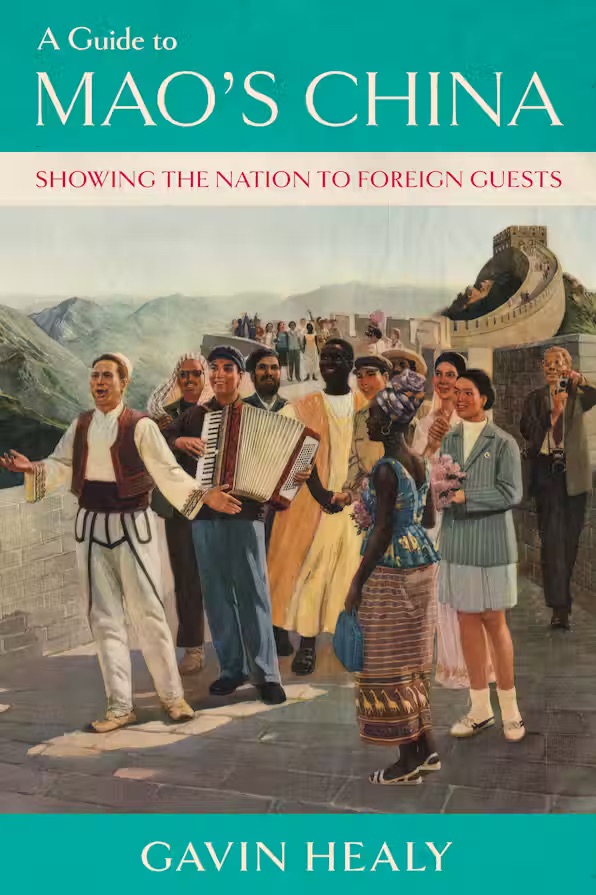
A Guide to Mao’s China explores how personnel within China’s state tourism bureaucracy during the Mao era struggled to balance inbound foreign tourism as a form of political, historical, and cultural representation with demands for developing a revenue-generating service industry in a socialist economy. The People’s Republic crafted its national narrative through tightly managed tours, and foreign visitors were led through model communes and factories by officials, guides, and service workers still negotiating what tourism meant within a socialist state.
Drawing on government archives, service worker manuals, firsthand tourist reports, and rare ephemera, Gavin Healy offers a human face to people-to-people diplomacy and shows how tourism workers shaped foreign impressions of Chinese socialism, while grappling with its meaning themselves. A Guide to Mao’s China offers a fresh view of Mao-era China as more globally engaged and performative than often remembered.
Studies the modern and contemporary French reception of Spinoza’s philosophy
Constitutes a key work for understanding Enlightenment rationality through a critical analysis of Spinoza’s philosophy
Presents the main forms of reappraisal and critique of Spinoza’s philosophy through the concept of the ‘system’ that contributed to the modern and contemporary epistemological debate
Offers an image of Spinoza’s philosophy that critically revises historiographic labels (radical Spinozism, pantheism, materialism, atheism, etc.)
This book contributes to the ongoing debate on the contemporary relevance of Enlightenment philosophy by examining – through the lens of the French reception of Spinoza in the Eighteenth century – crucial themes such as virtuous atheism, freedom of conscience, and the tension between the ‘spirit of system’ and the ‘systematic spirit.’
Diego Donna retraces the resistances, conflicts and interpretive ambiguities that the Enlightenment brought to bear on Spinoza’s work. These are all hallmarks of a philosophical freedom that rejects all systems and authorities in the name of a new systematic reason. Donna therefore presents the notion of ‘system’ as essential both for understanding the historical development of Spinozism and assessing the evolution of modern philosophical debate, from the encyclopaedic culture of the Eighteenth century to the systemic rationality of the twentieth century.
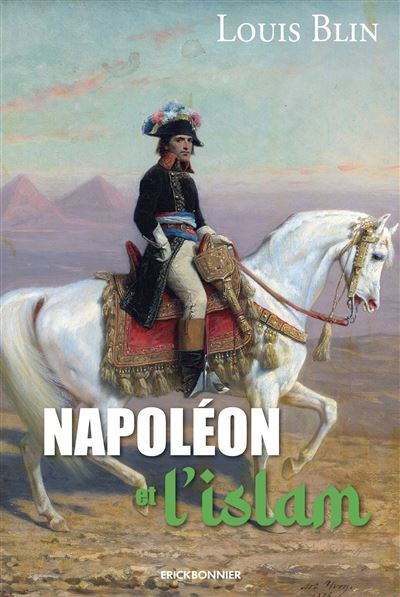
« La religion de Mahomet est la plus belle » ; « J’aime l’islam, vénère le Prophète, respecte le Coran » ; « J’aime mieux la religion de Mahomet. Elle est moins ridicule que la nôtre ».
Ainsi parla Napoléon, seul dirigeant français de l’histoire à avoir écrit et prononcé la profession de foi musulmane. Affabulateur ou sincère ? Chrétien ou musulman ?
C’est une étrange histoire tissée de séduction et de répulsion que conte ce livre. Récusée malgré les évidences, incomprise ou au contraire revendiquée, la fascination de l’Empereur pour l’islam fait de lui un révélateur des passions françaises au sujet de cette religion et de ses adeptes, qui résonne jusqu’à nos jours.
De la jeunesse à l’exil à Sainte-Hélène, Napoléon Bonaparte a subi la tentation de l’islam et de l’Orient. Il a concilié cette attirance avec son héritage catholique, sans toujours être compris par sa postérité. Son ambition de pouvoir, jamais assouvie, contredit sa tolérance religieuse. Cet admirateur de l’islam massacra les Égyptiens et les Palestiniens qui résistèrent à son invasion.
Louis Blin décrypte dans cet essai l’extraordinaire aventure musulmane de Napoléon, poursuivant la réflexion sur l’islam dans la culture française engagée dans ses ouvrages sur Victor Hugo, Alphonse de Lamartine et Alexandre Dumas.
Reassesses Henri Lefebvre’s enduring relevance to sociology, examining themes from Marxism to urban life and proposing new directions for Lefebvrian research on rhythm, embodiment and utopian thought
Henri Lefebvre’s work, particularly his theory of the production of space, has been remarkably influential historically within geographical research. While this extensive research has shown the continuing relevance of Lefebvre’s oeuvre for urban geographical research, Lefebvre’s contributions to sociology have been less explored. This is surprising and a missed opportunity, not least because Lefebvre’s writings on the urban, space and everyday life were fundamentally informed by and connected to his sociology. This volume responds to this lacuna in sociological engagements with Lefebvre’s work, bringing together leading scholars on Lefebvre’s sociological work who discuss elements from across his sociological oeuvre. This includes topics for which Lefebvre is well known such as space, rhythm-analysis and Marxism, through to lesser-known topics such as the rural, autogestion, the state and violence and finally to studies which push Lefebvre into new areas such as time, phenomenology and the environment. Therefore, this volume not only achieves a breadth of coverage but also provides fresh insights for those familiar with Lefebvre and new points of interest for those encountering his sociology for the first time. Our volume makes a critical addition to the long list of established and influential Anthem Companions to Sociology by adding a new volume on one of the most influential Marxist sociologists and philosophers of the twentieth century. An engagement with the work of Henri Lefebvre remains indispensable for sociology as this volume shows.
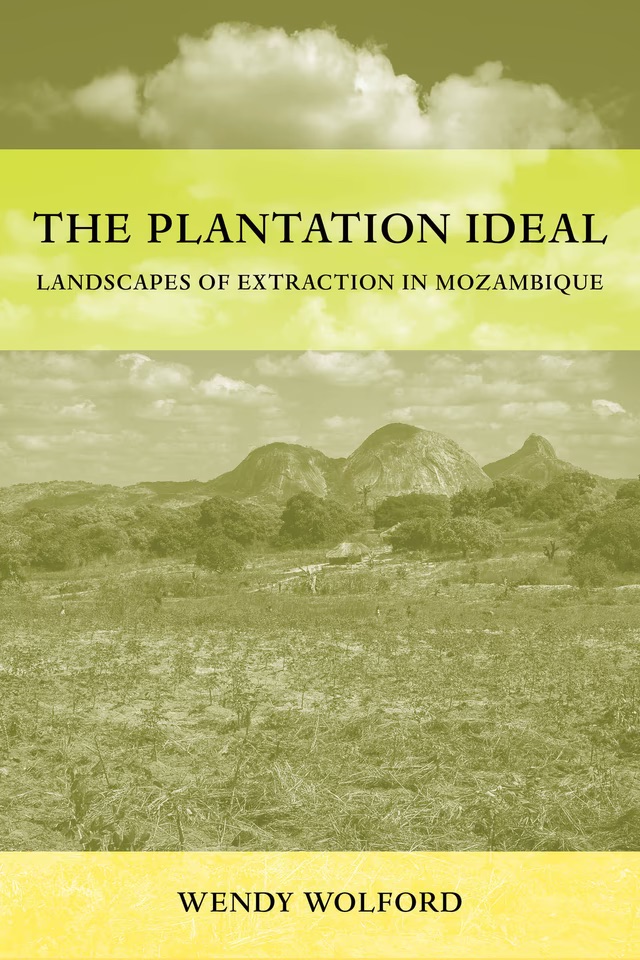
Plantations have been the privileged tool of colonial rule and extraction in Mozambique for more than one hundred years despite never having delivered sustained economic or social benefits. Drawing on extensive archival and qualitative contemporary research, The Plantation Ideal offers new insights into plantation economies, histories, and landscapes. Wendy Wolford tells the story of how the largely failed pursuit of plantation production has shaped agricultural science, government rule, life on the land, and community development in Mozambique from the harshest years of Portuguese colonization to the present.
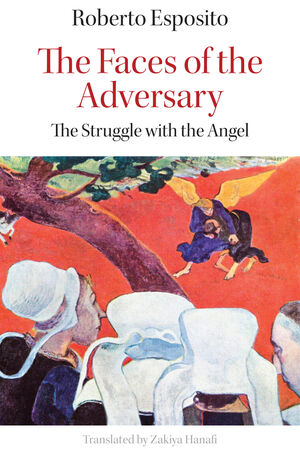
Roberto Esposito’s poetic and historically layered new book draws on a famous, and famously opaque, passage from the Old Testament to shed light on the vision of self and domination that has profoundly shaped western identity and left its mark on western culture.
These ten lines from Genesis tell the tale of Jacob wrestling with a mysterious adversary on a riverbank. But who exactly is Jacob wrestling with – the divine? Evil personified? Absolute otherness? Or his deepest, most subconscious self, repressed and projected? Who, in other words, is the adversary, and what is the enigmatic conflict that binds the two in perpetual conflict? Interchangeable and yet never resolved, these entwined adversaries speak to our great desire to come face to face with personal truth, even if only for an instant, while coming to terms with its impermanence.
Casting a wide net, Esposito connects his reading of Jacob and the Angel to the fundamental relationship between self and adversary inherited by the modern West and explores the extraordinary influence this story has had on western culture, from philosophy and theology to literature, politics and art.