David Lay Williams, The Greatest of All Plagues: How Economic Inequality Shaped Political Thought from Plato to Marx – Princeton University Press, Sept/Oct 2024

David Lay Williams, The Greatest of All Plagues: How Economic Inequality Shaped Political Thought from Plato to Marx – Princeton University Press, Sept/Oct 2024

Economic inequality is one of the most daunting challenges of our time, with public debate often turning to questions of whether it is an inevitable outcome of economic systems and what, if anything, can be done about it. But why, exactly, should inequality worry us? The Greatest of All Plagues demonstrates that this underlying question has been a central preoccupation of some of the most eminent political thinkers of the Western intellectual tradition.

David Lay Williams shares bold new perspectives on the writings and ideas of Plato, Jesus, Thomas Hobbes, Jean-Jacques Rousseau, Adam Smith, John Stuart Mill, and Karl Marx. He shows how they describe economic inequality as a source of political instability and a corrupter of character and soul, and how they view unchecked inequality as a threat to their most cherished values, such as justice, faith, civic harmony, peace, democracy, and freedom. Williams draws invaluable insights into the societal problems generated by what Plato called “the greatest of all plagues,” and examines the solutions employed through the centuries.

An eye-opening work of intellectual history, The Greatest of All Plagues recovers a forgotten past for some of the most timeless books in the Western canon, revealing how economic inequality has been a paramount problem throughout the history of political thought.

Posted in Uncategorized | Leave a comment

Louise Boyle, Anxious Geographies: Worlds of Social Anxiety – Routledge, June 2024

Louise Boyle, Anxious Geographies: Worlds of Social Anxiety – Routledge, June 2024

Anxious Geographies offers a unique perspective on social anxiety, framing it as both a social and spatial phenomenon. Through a meticulous exploration using online questionnaires and interviews, the book provides a crucial examination of the intricacies of anxious lives.

This book presents a critical intervention in the experience of mental health in 21st-century society and provides a compelling geographical account of the underpinnings of the anxious experience. The book pivots on the in-depth perspectives of people with social anxiety, diagnosed or “sub-clinical”, but with an academic commentary that relates their experience to the medicalisation of a disrupted relational life, offering lessons for all of us in modern societies. Each chapter considers a unique aspect of social anxiety accounting for the social, spatial, temporal, relational and embodied dynamics, a geographical approach that enriches our understanding of the contexts and conditions that exacerbate and sustain anxious distress. The phenomenological descriptions herein, capture how social anxiety can profoundly alter a person’s coherent, habitual and embodied sense of being in and navigating through their social and spatial worlds. Through the experiential accounts of anxious distress and by considering the social contexts in which they emerge, this book provides readers with crucial insights into the hidden lives of those living with social anxiety.

This book will be of appeal to academics, researchers and postgraduate students in the fields of human geography and across the social sciences and humanities. It will also provide useful insights for academics and health professionals in social psychiatry, social psychology, counselling studies and therapeutic practice.

Posted in Uncategorized | Leave a comment

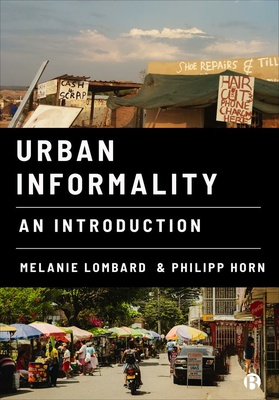
Melanie Lombard and Philipp Horn, Urban Informality: An Introduction – Bristol University Press, June 2024

Melanie Lombard and Philipp Horn, Urban Informality: An Introduction – Bristol University Press, June 2024

This book is the first to provide an introductory overview to the concept of ‘urban informality’, taking an international perspective across the global North and South. It explores theoretical understandings of the term, and looks at how it affects ways of living, such as land use, housing and basic services, working lives and politics. 

Using a broad range of material to bring the topic to life, including non-conventional sources – such as fiction, poetry, photography, interviews and other media – the book helps students, practitioners and scholars develop learning and research on this topic. The book also includes interjections from diverse voices of practitioners, community activists and regional experts.

Posted in Uncategorized | Leave a comment

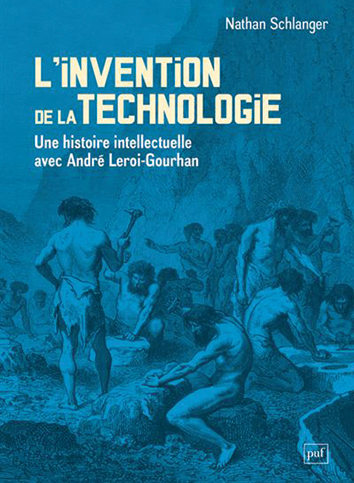
Nathan Schlanger, L’Invention de la technologie: Une histoire intellectuelle avec André Leroi-Gourhan – PUF, January 2023

Nathan Schlanger, L’Invention de la technologie: Une histoire intellectuelle avec André Leroi-Gourhan – PUF, January 2023

According to this interview with Stefanos Geroulanos, an English translation is forthcoming.

La technologie, entendue comme la discipline qui étudie les techniques, prend son essor au XXe siècle, grâce notamment à l’apport décisif d’André Leroi-Gourhan. Son œuvre foisonnante atteste d’une certaine « indiscipline » dans ses approches et ses thématiques. Aux côtés de ses démarches expérimentales et documentaires, il s’entoure de mots-clefs et de concepts tels la « tendance », l’« élan vital » ou la « libération ». Dans un premier temps, Leroi-Gourhan s’investit dans l’étude des « civilisations matérielles », fondée sur les objets, sous l’influence de Marcel Mauss et de Paul Rivet. Une inflexion décisive est donnée à sa pensée par L’Évolution créatrice d’Henri Bergson, et notamment par la figure de l’Homo faber, qui dominera désormais sa pensée technologique. Initialement conçu comme l’élément premier ou primitif d’une dyade paléontologique, l’Homo faber va gagner d’importance dès 1950, lorsque Leroi-Gourhan s’engage à « suivre les gestes, éclat par éclat » pour reconstruire la structure mentale des tailleurs de pierre du paléolithique. Le rapprochement qu’il opère alors entre la technicité humaine, la psychologie comparée et la biologie le mène aux notions de « comportement technique » et de « chaîne opératoire ». Fort de ses acquis scientifiques et de ses inspirations spirituelles, il conjecture une « continuité incrémentale » qui s’étend des premiers Australopithèques jusqu’à l’artisan Homo faber d’aujourd’hui, rapprochant ainsi la nostalgie du passé à la rédemption de l’avenir.

Posted in Uncategorized | Leave a comment

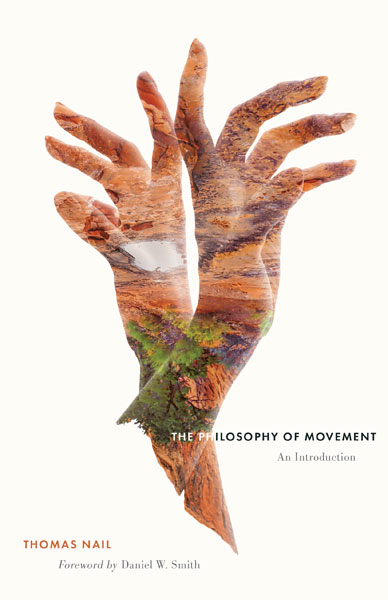
Thomas Nail, The Philosophy of Movement: An Introduction – University of Minnesota Press, September 2024

Thomas Nail, The Philosophy of Movement: An Introduction – University of Minnesota Press, September 2024

Why are city dwellers worldwide walking on average ten percent faster than they were a decade ago? Why are newcomer immigrant groups so often maligned when migration has always constituted civilization? To analyze and understand the depth of the reasons, Thomas Nail suggests that it serves us well to turn to a philosophy of movement. Synthesizing and extending many years of his influential work, The Philosophy of Movement is a comprehensive argument for how motion is the primary force in human and natural history.

Nail critiques the bias toward stasis at the core of Western thought, asking what a philosophy that began with the primacy of movement would look like. Interrogating the consequences of movement throughout history and in daily life in the twenty-first century, he draws connections and traces patterns between scales of reality, periods of history, and fields of knowledge. In our age of rapid movements shaped by accelerating climate change and ensuing mass global migration, as well as ubiquitous digital media, Nail provides a contemporary philosophy that helps us understand how we got here and how to grapple with these interlocking challenges.

With a foreword by philosopher Daniel W. Smith, The Philosophy of Movement: An Introduction is a must-read for scholars and students not only of philosophy but also history, anthropology, science and technology studies, mobility studies, and other fields across the humanities and social sciences.

Posted in Uncategorized | Leave a comment

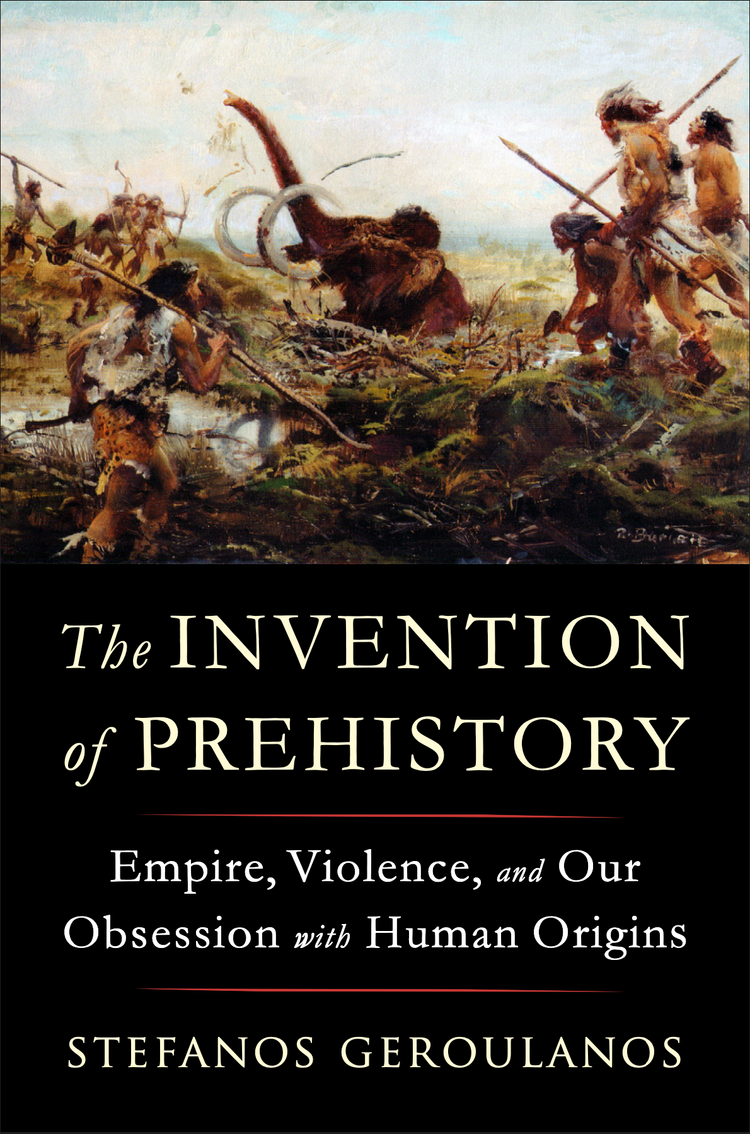
Journal of the History of Ideas – The Concepts that Made Prehistory: An Interview with Stefanos Geroulanos

Journal of the History of Ideas interview – The Concepts that Made Prehistory: An Interview with Stefanos Geroulanos

Stefanos Geroulanos is the Director of the Remarque Institute and Professor of History at New York University. At the center of Geroulanos’s work has been an interest in how the concept of the human has been made and remade in the past few centuries. Benjamin Diehl spoke with Geroulanos about his most recent book, The Invention of Prehistory: Empire, Violence, and Our Obsession with Human Origins (Liveright, 2024), which continues this work by examining how seemingly innocuous concepts drawn from prehistory have been used for political ends, often with devastating results.

Posted in Uncategorized | Leave a comment

Paul Muldoon, The Penitent State: Exposure, Mourning and the Biopolitics of National Healing – Oxford University Press, September 2023

Paul Muldoon, The Penitent State: Exposure, Mourning and the Biopolitics of National Healing – Oxford University Press, September 2023

This book asks a deceptively simple question: what are states actually doing when they do penance for past injustices? Why are these penitential gestures – especially the gesture of apology – becoming so ubiquitous and what implications do they carry for the way power is exercised? 

Drawing on the work of Schmitt, Foucault and Agamben, the book argues that there is more at stake in sovereign acts of repentance and redress than either the recognition of the victims or the legitimacy of the state. Driven, it suggests, by an interest in ‘healing’, such acts testify to a new biopolitical raison d’état in which the management of trauma emerges as a critical expression of attempts to regulate the life of the population. 

The Penitent State seeks to show that the key issue created by the ‘age of apology’ is not whether sovereign acts of repentance and redress are sincere or insincere, but whether the political measures licensed in the name of healing deserve to be regarded as either restorative or just.

Thanks to Foucault News for this link.

Posted in Uncategorized | Leave a comment

Henry Somers-Hall, Judgement and Sense in Modern French Philosophy – Cambridge University Press, paperback April 2024

Henry Somers-Hall, Judgement and Sense in Modern French Philosophy – Cambridge University Press, paperback April 2024

This book proposes a radical new reading of the development of twentieth-century French philosophy. Henry Somers-Hall argues that the central unifying aspect of works by philosophers including Sartre, Foucault, Merleau-Ponty, Deleuze and Derrida is their attempt to provide an account of cognition that does not reduce thinking to judgement. Somers-Hall shows that each of these philosophers is in dialogue with the others in a shared project (however differently executed) to overcome their inheritances from the Kantian and post-Kantian traditions. His analysis points up the continuing relevance of German idealism, and Kant in particular, to modern French philosophy, with novel readings of many aspects of the philosophies under consideration that show their deep debts to Kantian thought. The result is an important account of the emergence, and essential coherence, of the modern French philosophical tradition.

Posted in Uncategorized | 1 Comment

Quentin Skinner, Liberty as Independence: The Making and Unmaking of a Political Idea – Cambridge University Press, November 2024

Quentin Skinner, Liberty as Independence: The Making and Unmaking of a Political Idea – Cambridge University Press, November 2024

What does liberty entail? How have concepts of liberty changed over time? And what are the global consequences? This book surveys the history of rival views of liberty from antiquity to modern times. Quentin Skinner traces the understanding of liberty as independence from the classical ideal to early modern Britain, culminating in the claims of the Whig oligarchy to have transformed this idea into reality. Yet, with the Whig vision of a free state and civil society undermined by the American Revolution of 1776, Skinner explores how claims that liberty was fulfilled by an absence of physical or coercive restraint came to prominence. Liberty as Independence examines new dimensions of these rival views, considering the connections between debates on liberty and debates on slavery, and demonstrating how these ideas were harnessed in feminist discussions surrounding limitations on the liberty of women. The concept of liberty is inherently global, and Skinner argues strongly for the reinstatement of the understanding of liberty as independence.

Posted in Quentin Skinnner | Leave a comment

Foucault et le christianisme | Au Collège des Bernardins (2024)

event on 10 June on Foucault et le christianisme

Posted in Uncategorized | Leave a comment