Henri Lefebvre, Critique de la vie quotidienne (complete edition; three volumes in one) – L’Arche, April 2024

Henri Lefebvre, Critique de la vie quotidienne (complete edition; three volumes in one) – L’Arche, April 2024

In English translation, Verso have long had a complete edition in a single volume, but I think this is the first complete edition in French.

Where to start with reading Henri Lefebvre? remains a popular post in this site and gives some suggestions for where else you can go in reading Lefebvre.

En un sens, la vie quotidienne, c’est ce qu’il y a de plus simple, de plus évident. Comment vit-on ? S’il est difficile de répondre, la question n’en est pas moins claire. En un autre sens, c’est ce qu’il y a de plus insaisissable, de plus difficile à cerner et à déterminer. En un sens, rien de plus superficiel : c’est la banalité, la trivialité, le répétitif. En un autre sens, rien de plus profond. C’est l’existence et le « vécu » non transcrits spéculativement, dévoilés : ce qu’il faut changer et ce qu’il y a de plus difficile à changer.

En 1947, Henri Lefebvre publie le premier volume de sa Critique de la vie quotidienne, projet qu’il poursuit avec deux autres volumes en 1961 et 1981. Durant plus de trente ans, le philosophe cherche à répondre à cette question d’apparence simple : comment vit-on ? Face à une transformation accélérée des modes de vie, au développement des villes nouvelles, au sacrifice des familles prolétaires pour accéder à l’électro­ménager dans les années 1950 ou à l’ambivalence du capitalisme qui facilite certaines vies tout en ravageant le monde, le projet évolue et change, déviant des chemins annoncés mais cherchant toujours à comprendre l’aliénation à l’œuvre au quotidien.

Rédigé à la naissance du consumérisme d’après-guerre, ce grand texte a marqué la jeunesse révolutionnaire en France et reçu un écho considérable à l’étranger, influençant la constitution des études culturelles. Pour la première fois en un seul volume, cette nouvelle édition de la Critique de la vie quotidienne redonne à lire les interrogations d’une figure majeure du marxisme français.

Nouvelle édition intégrale contenant : vol. I : Introduction (1947), vol. II : Fondements d’une sociologie de la quotidienneté (1961), vol. III : De la modernité au modernisme (1981).

Préface de Kristin Ross, traduite par Étienne Dobenesque.
Posted in Henri Lefebvre | Leave a comment

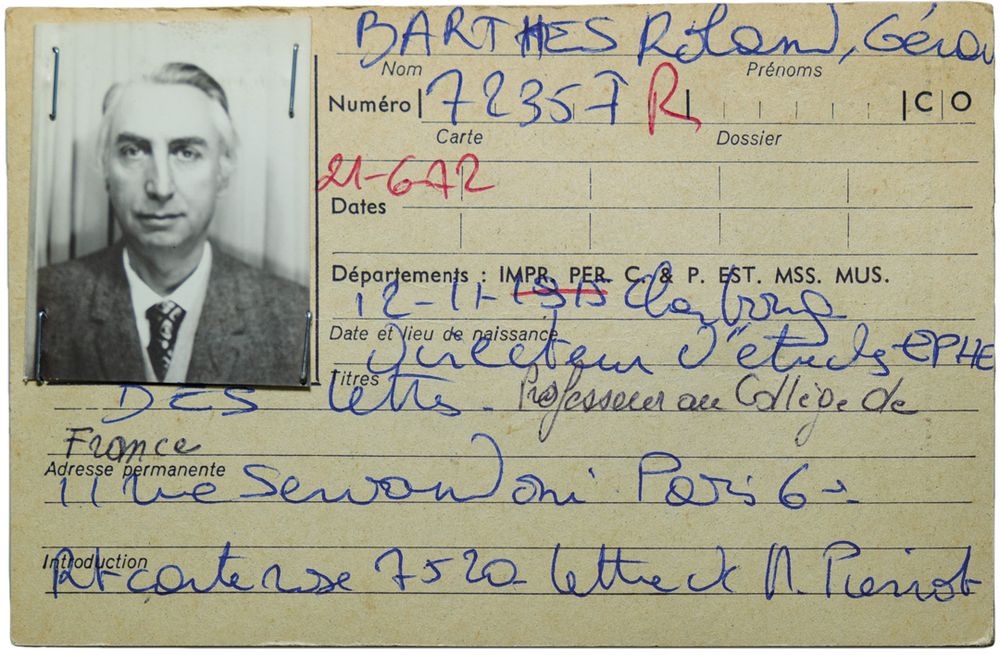
Bibliothèque nationale de France – famous reader cards, including Simone Weil, Léopold Sédar Senghor and Roland Barthes

Chroniques de la BnF 100 has some of the Bibliothèque Nationale’s famous reader’s cards

Simone Weil, Léopold Sédar Senghor and Roland Barthes are online at the link.

I previously shared Foucault’s card, with an attempt to decipher what it meant.

Here’s the one from Barthes

Posted in Michel Foucault, Roland Barthes | Leave a comment

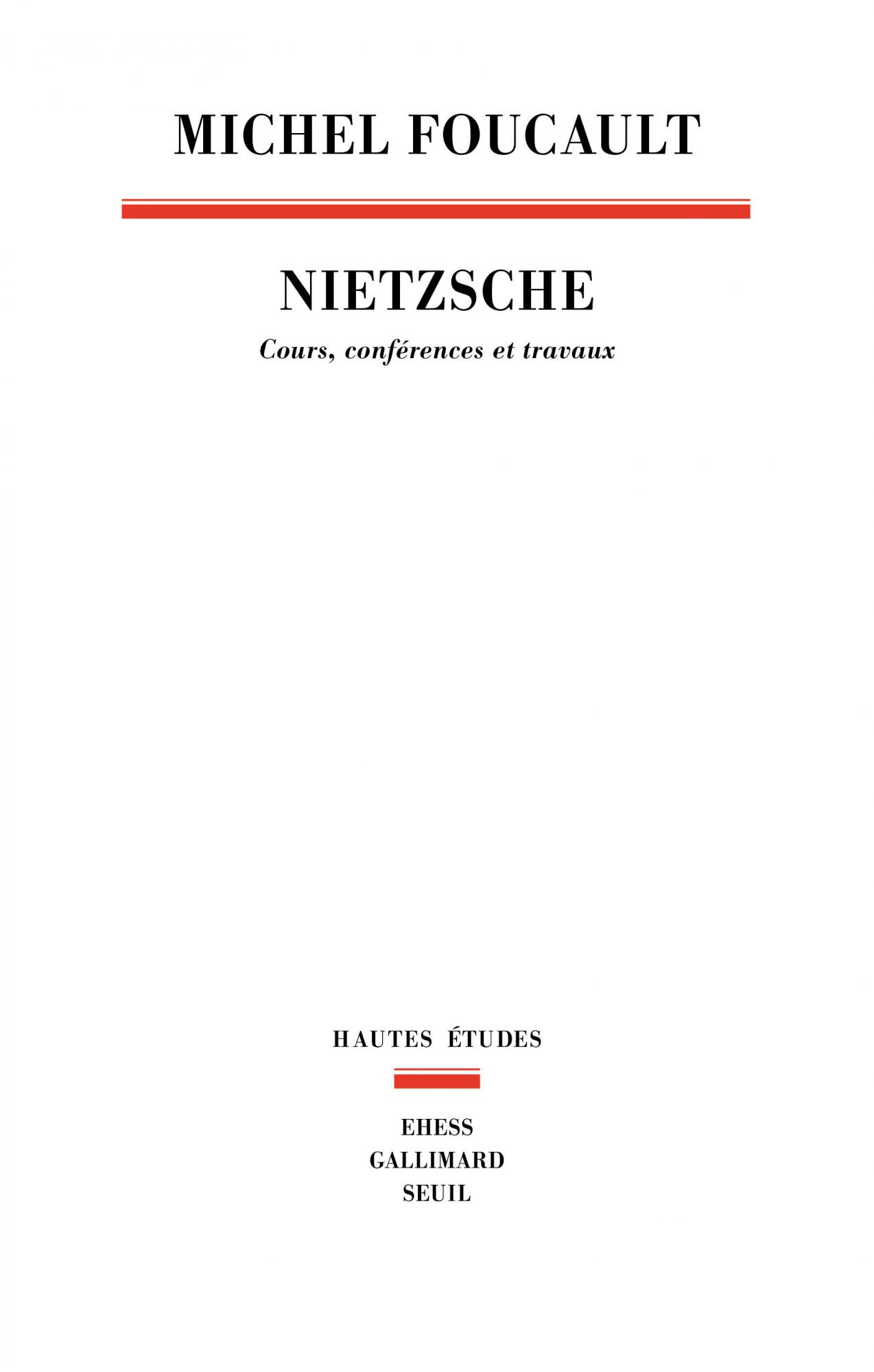
Michel Foucault, Nietzsche: Cours, conférences et travaux, ed. Bernard Harcourt – Seuil/Gallimard/EHESS, May 2024

Michel Foucault, Nietzsche: Cours, conférences et travaux, ed. Bernard Harcourt – Seuil/Gallimard/EHESS, May 2024

Out at the end of this month.

« Nietzsche et Heidegger, ça a été le choc philosophique ! Mais je n’ai jamais rien écrit sur Heidegger et je n’ai écrit sur Nietzsche qu’un tout petit article ; ce sont pourtant les deux auteurs que j’ai le plus lus », dira Michel Foucault à la fin de sa vie. Puis, il précise : « Je crois que c’est important d’avoir un petit nombre d’auteurs avec lesquels on pense, avec lesquels on travaille, mais sur lesquels on n’écrit pas. »
Les Cours, conférences et travaux sont des témoignages inédits du « travail » de Foucault avec Nietzsche. Ces textes datent des deux grandes périodes de sa vie intellectuelle : d’abord le début des années 1950, quand il s’intéresse à Hegel et à la phénoménologie, ainsi qu’au marxisme. Le jeune Foucault expérimente alors de nouvelles approches pour développer une philosophie fondée sur l’expérience et l’analyse du discours. Ensuite, après la publication des Mots et les Choses en 1966, lorsque Foucault revient avec élan à Nietzsche pour élaborer sa propre méthode généalogique, relançant ainsi son projet d’une histoire de la vérité et du dire vrai.
C’est à travers la confrontation avec Nietzsche que Foucault aura construit sa propre manière de philosopher. Ces Cours, conférences et travaux sont indispensables pour comprendre comment Foucault a lu Nietzsche, en particulier au moment décisif où il le découvre. Ils sont essentiels pour saisir le Nietzsche de Foucault.

Posted in Bernard E. Harcourt, Friedrich Nietzsche, Michel Foucault, Uncategorized | 1 Comment

Not everyone can afford open access monographs | Wonkhe

Not everyone can afford open access monographs | Wonkhe

Adding requirements for open access books and chapters to REF will massively increase costs – and there is no additional funding to cover these. Dawn Hibbert asks for a rethink

Some interesting thoughts about this challenge. You can agree with the overall idea, that research should be made more easily available to anyone interested, and still think the current plans are seriously flawed.

Update 21 May 2024: there is another piece about this question at the LSE blog – The REF consultation shows the need for a more plural perspective on OA Books

Posted in Uncategorized | 1 Comment

Mary Gilmartin, Phil Hubbard, Rob Kitchin & Sue Roberts (ed.), Key Thinkers on Space and Place, third edition – Sage, June 2024

Mary Gilmartin, Phil Hubbard, Rob Kitchin & Sue Roberts (ed.), Key Thinkers on Space and Place, third edition – Sage, June 2024

Space and place are at the heart of how geographers and sociologists think.  This updated edition of the essential undergraduate text will introduce you to the most influential thinkers in the tradition of social theory, with a new focus on the past fifty years.  This book is designed to engage with theoretical debates in human geography through the individuals who have made the most significant contributions to this field.  This will show you how ideas are shaped by contexts, and how those ideas in turn effect change. This book shows how theoretical understandings evolve, shift and change. It also highlights the connections between different thinkers, whose ideas are developed in collaboration with or in reaction to others. Spatial thought is never developed in a vacuum, but is always constructed by individuals and groups of people located in particular institutional and social structures, with their own sets of personal and political beliefs. The biographical approach of this book reveals how individual thinkers draw on a rich legacy of ideas from past and contemporary generations.

With increased coverage of international and female thinkers, as well as those who work against Eurocentric notions of space and place, this book reveals the exciting reorientation of Geography towards new ideas and methods in the last decade.  Each entry contextualises its subject within on-going (inter)disciplinary debates and important political moments, as well as highlighting connections between different thinkers. Together the chapters uncover the rich and diverse evolution of social theory, equipping you with the foundational ideas of geographical thought.  Each entry offers the following components:

i) a short biography
ii) an explanation of ideas
iii) an exploration of how their ideas have been used and critiqued
iv) a selective bibliography of key publications (and key publications which review or critique)

Posted in Uncategorized | 1 Comment

Alexandre Lefebvre, Liberalism as a Way of Life – Princeton University Press, June 2024

Alexandre Lefebvre, Liberalism as a Way of Life – Princeton University Press, June 2024

Where do you get your values and sensibilities from? If you grew up in a Western democracy, the answer is probably liberalism. Conservatives are right about one thing: liberalism is the ideology of our times, as omnipresent as religion once was. Yet, as Alexandre Lefebvre argues in Liberalism as a Way of Life, many of us are liberal without fully realizing it—or grasping what it means. Misled into thinking that liberalism is confined to politics, we fail to recognize that it’s the water we swim in, saturating every area of public and private life, shaping our psychological and spiritual outlooks, and influencing our moral and aesthetic values—our sense of what is right, wrong, good, bad, funny, worthwhile, and more. This eye-opening book shows how so many of us are liberal to the core, why liberalism provides the basis for a good life, and how we can make our lives better and happier by becoming more aware of, and more committed to, the beliefs we already hold.

A lively, engaging, and uplifting guide to living well, the liberal way, Liberalism as a Way of Life is filled with examples from television, movies, stand-up comedy, and social media—from Parks and Recreationand The Good Place to the Borat movies and Hannah Gadsby. Along the way, you’ll also learn about seventeen benefits of being a liberal—including generosity, humor, cheer, gratitude, tolerance, and peace of mind—and practical exercises to increase these rewards.

You’re probably already waist-deep in the waters of liberalism. Liberalism as a Way of Life invites you to dive in.

Posted in Uncategorized | Leave a comment

Foucault, writing and the contemporary university: a grim celebration, London, 19 June 2024

Posted in Uncategorized | Leave a comment

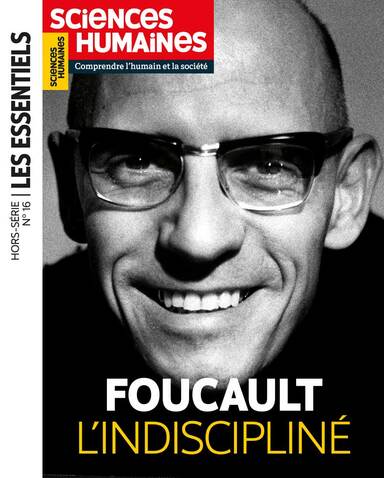
Foucault, l’indiscipliné – Sciences Humaines, hors-série Les Essentiels 16, April-May 2024

Foucault, l’indiscipliné – Sciences Humaines, Les Essentiels hors-série 16, April-May 2024

Il y a quarante ans, le 25 juin 1984, Michel Foucault disparaissait, emporté par le sida. Il avait 57 ans. Cette mort interrompait une existence prolifique et turbulente. Bâtir une œuvre philosophique et faire de sa vie une œuvre : ces deux desseins avaient fini par se confondre.

Aujourd’hui, il existe un nouveau Foucault. Des textes inédits ont été publiés. Cours au Collège de France, émissions de radio retranscrites, conférences dans des universités à travers le monde… 

Ses concepts circulent partout, ils sont brandis, branchés, mais il n’est pas certain que Foucault soit lu et compris autant qu’il est cité. Que faire aujourd’hui de cette pensée ? Quelle est sa cohérence, sa pertinence, sa portée ? Ce hors-série est animé par ces questions.

Posted in Michel Foucault | Leave a comment

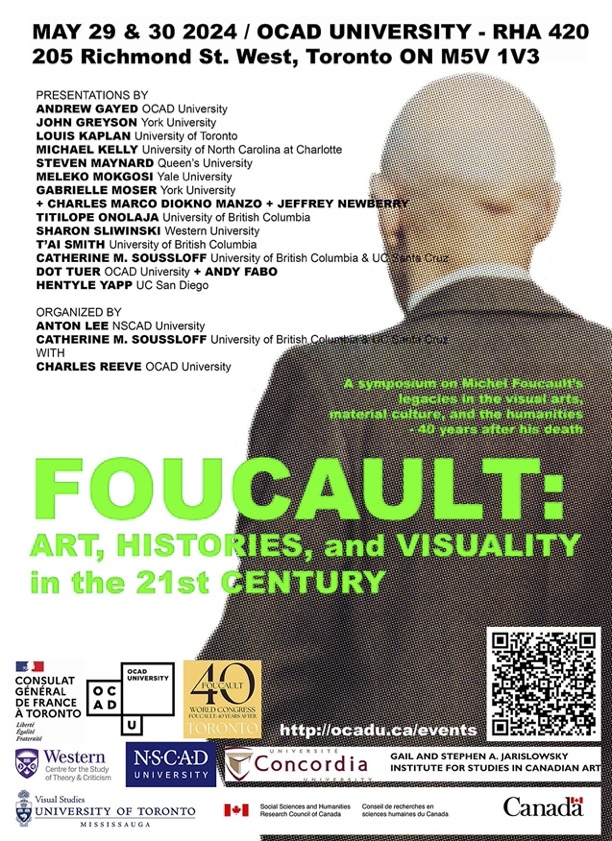
Foucault: Art, Histories, and Visuality in the 21st Century – Toronto, 29-30 May 2024

Foucault: Art, Histories, and Visuality in the 21st Century – Toronto, 29-30 May 2024

OCAD University is pleased to host the academic symposium Foucault: Art, Histories, and Visuality in the 21st Century, organized by Dr. Anton Lee, NSCAD University and Dr. Catherine M. Soussloff, UBC & University of California Santa Cruz, in collaboration with Dr. Charles Reeve, OCAD University. 

The French philosopher Michel Foucault’s (1926–84) work has greatly influenced artists and art scholars in many ways, from reimagining subjectivity to scrutinizing art institutions. Owing to the posthumous publications and archival discoveries, Foucault’s oeuvre continues to shape current discussions on methodological, political, and ethical assumptions regarding visualities and art histories. The symposium proposes to reassess Foucault’s legacies in the fields of art research and creation from critical perspectives informed by urgent issues, such as decolonization, race, gender, post-truth, artificial intelligence, and diaspora. We will ask: How has Foucault’s thinking—ultimately concerned with human existence in a time of crisis—emerged from and contributed to the visual arts and material culture?

The symposium is part of the World Congress “Foucault: 40 Years After,” a global series of events commemorating the fortieth anniversary of the philosopher’s death (https://foucault40.info). It promises to further collaboration across disciplines and institutions by bringing a diverse group of speakers from across Canada and the United States, who draw broadly from art history, museology, aesthetics, critical theory, media studies, visual culture, art education, and research-creation.

We thank the peoples of the Mississaugas of the Credit, the Haudenosaunee, the Anishinaabe, and the Huron-Wendat, on whose unceded lands the event will be held. The event is made possible by the generous support of sponsors: OCAD University, NSCAD University, Gail and Stephen A. Jarislowsky Institute for Studies in Canadian Art at Concordia University, the French Embassy in Canada, the Department of Visual Studies at the University of Toronto Mississauga, the Centre for the Study of Theory and Criticism at Western University, and the Social Sciences and Humanities Research Council of Canada.

* Note: We will post the final program and information on livestreaming here in the coming days. Please revisit this page to check out the updates.

Please register in advance on Eventbrite: Registration Form

Posted in Conferences, Michel Foucault | Leave a comment

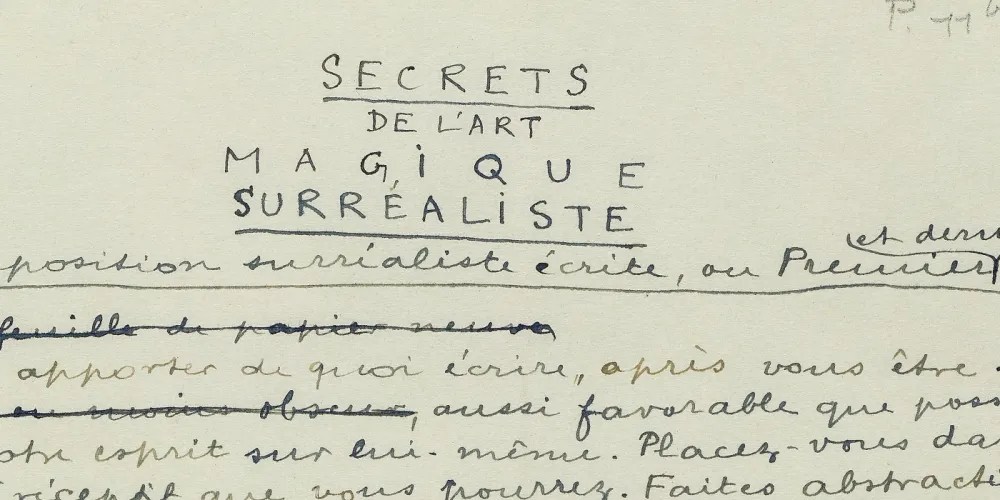
André Breton’s manuscripts freely accessible on Gallica

Les manuscrits d’André Breton librement accessibles sur Gallica, la bibliothèque numérique de la BnF

En partenariat avec l’Association Atelier André Breton, et grâce à la générosité exceptionnelle de Aube Elléouët-Breton, la fille du poète, la BnF diffuse sur Gallica depuis le 20 février 2024 l’ensemble des manuscrits d’André Breton présents dans ses collections, de façon libre et gratuite. Cette diffusion est une manière de célébrer le centenaire de la publication du Manifeste du surréalisme, en 1924.

L’œuvre d’André Breton (1896-1966) est toujours protégée au titre du droit d’auteur car elle ne tombera dans le domaine public qu’en 2037. La diffusion en ligne libre et gratuite d’un tel contenu est donc rarissime. Cette mise à disposition anticipée et  gratuite sur Gallica est rendue possible par l’accord généreux et exceptionnel d’Aube Elléouët-Breton, la fille du poète.

Posted in Uncategorized | 2 Comments