Nicholas Terpstra, Senses of Space in the Early Modern World – Cambridge University Press, February 2024 (print and open access) and New Books discussion
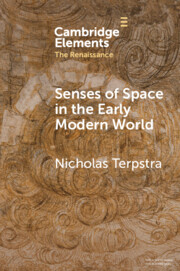
Nicholas Terpstra, Senses of Space in the Early Modern World – Cambridge University Press, February 2024 (print and open access)

New Books discussion with Miranda Melcher

How did early moderns experience sense and space? How did the expanding cultural, political, and social horizons of the period emerge out of those experiences and further shape them  This Element takes an approach that is both global expansive and locally rooted by focusing on four cities as key examples: Florence, Amsterdam, Boston, and Manila. They relate to distinct parts of European cultural and colonialist experience from north to south, republican to monarchical, Catholic to Protestant. Without attempting a comprehensive treatment, the Element aims to convey the range of distinct experiences of space and sense as these varied by age, gender, race, and class. Readers see how sensory and spatial experiences emerged through religious cultures which were themselves shaped by temporal rhythms, and how sound and movement expressed gathering economic and political forces in an emerging global order. This title is also available as Open Access on Cambridge Core.

thanks to dmf for the link

Posted in Uncategorized | Leave a comment

Judith Carney, “Planting Resistance: Botanical Legacies of the African Diaspora”, British Academy/Denis Cosgrove lecture, Royal Botanic Gardens, Kew, 28 May 2024, 6pm

Judith Carney, “Planting Resistance: Botanical Legacies of the African Diaspora”, British Academy/Denis Cosgrove lecture, Royal Botanic Gardens, Kew, 28 May 2024, 6pm

free, but booking required; part of the Denis Cosgrove lecture series

Delivered by the most outstanding academics in the UK and beyond, the British Academy’s flagship Lecture programme showcases the very best scholarship in the humanities and social sciences.

In the 21st century, the expansion of large-scale industrial agriculture across tropical landscapes in the Americas is threatening an Afrodescendant food system that has long prioritized agrobiodiversity and agroecological practices. These practices emerged during the plantation era of transatlantic slavery, when the enslaved leveraged subsistence precarity for the right to food plots, independent production, and partial autonomy over their labour. Historical continuities connect this much-ignored food system to agricultural practices maintained to this day in many Afrodescendant farming communities. Places exemplified by the plants, cultural knowledge, and social memories of these communities can be considered biocultural refugia – extending a concept from European heritage landscapes to tropical environments in the Americas.

Posted in Uncategorized | Leave a comment

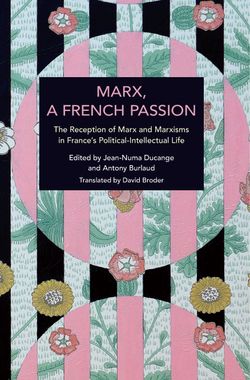
Marx, A French Passion: The Reception of Marx and Marxisms in France’s Political-Intellectual Life – ed. Antony Burlaud and Jean-Numa Ducange, trans. David Broder, Haymarket Books, March 2024

Marx, A French Passion: The Reception of Marx and Marxisms in France’s Political-Intellectual Life – ed. Antony Burlaud and Jean-Numa Ducange, trans. David Broder, Haymarket Books, March 2024

Despite the collapse of Soviet-style socialism, the spectre of Marx still haunts the French imagination. This is no accident, in a country whose intellectual life and political history have long been marked by his multiple presences. This volume offers a historical and sociological insight into the way his thought has been received in the French context, from his own lifetime to the present. Analysing Marx’s place and influence in the French intellectual, political and artistic debate – across the political spectrum and even in the French-speaking colonial world – it helps us understand the uses and misuses of an œuvre of paramount importance.

Posted in Uncategorized | Leave a comment

Michel Foucault, Nietzsche: Cours, conférences et travaux, ed. Bernard Harcourt – Seuil/Gallimard/EHESS, May 2024

Michel Foucault, Nietzsche: Cours, conférences et travaux, ed. Bernard Harcourt – Seuil/Gallimard/EHESS, May 2024

« Nietzsche et Heidegger, ça a été le choc philosophique ! Mais je n’ai jamais rien écrit sur Heidegger et je n’ai écrit sur Nietzsche qu’un tout petit article ; ce sont pourtant les deux auteurs que j’ai le plus lus », dira Michel Foucault à la fin de sa vie. Puis, il précise : « Je crois que c’est important d’avoir un petit nombre d’auteurs avec lesquels on pense, avec lesquels on travaille, mais sur lesquels on n’écrit pas. »
Les Cours, conférences et travaux sont des témoignages inédits du « travail » de Foucault avec Nietzsche. Ces textes datent des deux grandes périodes de sa vie intellectuelle : d’abord le début des années 1950, quand il s’intéresse à Hegel et à la phénoménologie, ainsi qu’au marxisme. Le jeune Foucault expérimente alors de nouvelles approches pour développer une philosophie fondée sur l’expérience et l’analyse du discours. Ensuite, après la publication des Mots et les Choses en 1966, lorsque Foucault revient avec élan à Nietzsche pour élaborer sa propre méthode généalogique, relançant ainsi son projet d’une histoire de la vérité et du dire vrai.
C’est à travers la confrontation avec Nietzsche que Foucault aura construit sa propre manière de philosopher. Ces Cours, conférences et travaux sont indispensables pour comprendre comment Foucault a lu Nietzsche, en particulier au moment décisif où il le découvre. Ils sont essentiels pour saisir le Nietzsche de Foucault.

Posted in Bernard E. Harcourt, Friedrich Nietzsche, Michel Foucault, Uncategorized | 1 Comment

Ten years on – Five apps I still find really useful for my writing and blogging

Ten years ago I wrote a post – Five apps I find really useful for my writing and blogging

I am really stuck in my ways! or, more charitably, I found what worked for me, and have continued with it.

In 2014 the five apps were – EvernoteDropboxSaneboxFeedlyWasteNoTime

I still use four of these on a daily basis; the exception is that I replaced the last with 1Focus. I can’t remember why I switched. A couple of these have become more expensive and so I’ve moved to more limited plans/features to reduce the cost.

I say a bit about why I use these in the original post, and most of the reasons hold true now as well. Alongside Dropbox I also use iCloud for my library of pdfs, partly because it only keeps recently used things offline on the laptop to save memory, but I can access anything wherever I have an internet connection.

(Please note the Sanebox link above gives $5 off if you subscribe, which also benefits me too.)

The ones I should probably add are Audacity – basic audio editing software, which I use when I’ve recorded a talk and want to tidy up the file – normalise volume, reduce noise, edit start and end of the recording, etc. and then convert to mp3 – and Todoist

The one I would probably most benefit from is some kind of project management app, but I’ve never really looked into those. Other suggestions welcome too.

Posted in Uncategorized | Leave a comment

James McElvenny, A History of Modern Linguistics: From the Beginnings to World War II – Edinburgh University Press, January 2024, and discussion at Language on the Move

James McElvenny, A History of Modern Linguistics: From the Beginnings to World War II – Edinburgh University Press, January 2024

The book is discussed at Language on the Move (partnered with New Books Network)

In this book, McElvenny offers a concise history of modern linguistics from its emergence in the early nineteenth century up to the end of World War II. Written as a collective biography of the field, it concentrates on the interaction between the leading figures of linguistics, their controversies, and the role of the social and political context in shaping their ideas and methods.

While A History of Modern Linguistics focuses on disciplinary linguistics, the boundaries of the account are porous: developments in neighbouring fields – in particular, philosophy, psychology and anthropology – are brought into the discussion where they have contributed to linguistic research.

Posted in Uncategorized | Leave a comment

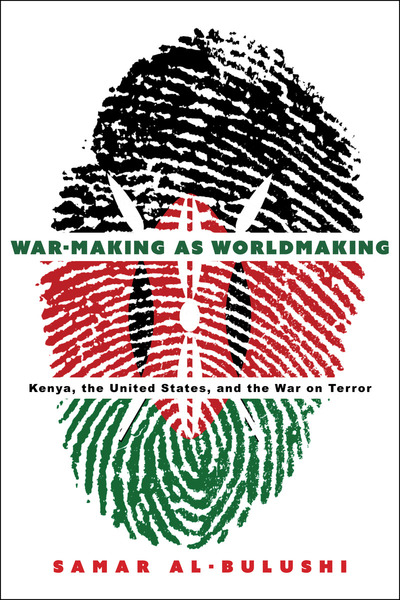
Samar Al-Bulushi, War-Making as Worldmaking: Kenya, the United States and the War on Terror – Stanford University Press, November 2024

Samar Al-Bulushi, War-Making as Worldmaking: Kenya, the United States and the War on Terror – Stanford University Press, November 2024

Since Kenya’s invasion of Somalia in 2011, the Kenyan state has been engaged in direct combat with the Somali militant group Al-Shabaab, conducting airstrikes in southern Somalia and deploying heavy-handed police tactics at home. As the hunt for suspects has expanded within Kenya, Kenyan Muslims have been subject to disappearances and extrajudicial killings at the hands of U.S.-trained Kenyan police.

War-Making as Worldmaking explores the entanglement of militarism, imperialism, and liberal-democratic governance in East Africa today. Samar Al-Bulushi argues that Kenya’s emergence as a key player in the “War on Terror” is closely linked—but not reducible to—the U.S. military’s growing proclivity to outsource the labor of war. Attending to the cultural politics of security, Al-Bulushi illustrates that the war against Al-Shabaab has become a means to produce new fantasies, emotions, and subjectivities about Kenya’s place in the world. Meanwhile, Kenya’s alignment with the U.S. provides cover for the criminalization and policing of the country’s Muslim minority population. 

How is life lived in a place that is not understood to be a site of war, yet is often experienced as such by its targets? This book weaves together multiple scales of analysis, asking what a view from East Africa can tell us about the shifting configurations and expansive geographies of post-9/11 imperial warfare.

Posted in Uncategorized | 1 Comment

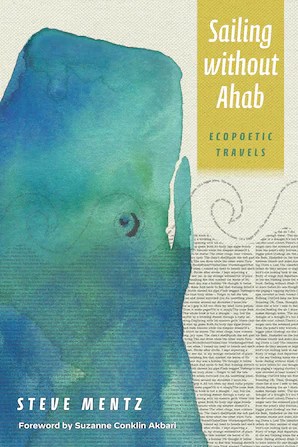
Steve Mentz, Sailing without Ahab: Ecopoetic Travels – Fordham University Press, April 2024, and New Books discussion

Steve Mentz, Sailing without Ahab: Ecopoetic Travels – Fordham University Press, 2024; foreword by Suzanne Conklin Akbari.

There is a New Books discussion with John Yargo here.

Navigate the Depths of a Timeless Classic, Reimagined.

Come sail with I.

We’re not taking the same trip, though you might recognize the familiarcourse. This time, the Pequod’s American voyage steers its course acrossthe curvature of the Word Ocean without anyone at the helm. We are leaving one man and his madness on shore. Our ship overflows with glorious plurality – multiracial, visionary, queer, conflicted, polyphonic, playful, violent. But on this voyage something is different. Today we sail headless without any Captain. Instead of binding ourselves to the dismasted tyrant’s rage, the ship’s crew seeks only what we will find: currents teeming with life, a blue-watered alien globe, toothy cetacean smiles from vasty deeps. Treasures await those who sail without.

This cycle of one hundred thirty-eight poems – one for each chapter in Moby-Dick, plus the Etymology, Extracts, and Epilogue – launches into oceanic chaos without the stabilizing mad focus of the Nantucket captain. Guided by waywardness and curiosity, these poems seek an alien ecopoetics of marine depths, the refraction of light, the taste of salt on skin. Directionless, these poems reach out to touch oceanic expanse and depth. It’s not an easy voyage, and not a certain one. It lures you forward. It has fixed its barbed hook in I.

Sailing without means relinquishing goals, sleeping at the masthead, forgetting obsessions. I. welcomes you to trace wayward ways through these poems. Read them any way you can – back to front, at random, sideways, following the obscure promptings of your heart. It’s the turning that matters. It’s a blue wonder world that beckons.

Steve reflects on writing the book here

Posted in Uncategorized | Leave a comment

Foucault: Genealogies for the Future – Rice University, 18-19 April 2024, with online option

Foucault: Genealogies for the Future – Rice University, 18-19 April 2024, with online option

news story about the event, organised by Niki Kasumi Clements, here

Posted in Uncategorized | 1 Comment

Douglas Porch, Resistance and Liberation: France at War 1942-1945 – Cambridge University Press, January 2024

Douglas Porch, Resistance and Liberation: France at War 1942-1945 – Cambridge University Press, January 2024

In Resistance and Liberation, Douglas Porch continues his epic history of France at war. Emerging from the debâcle of 1940, France faced the quandary of how to rebuild military power, protect the empire, and resuscitate its global influence. While Charles de Gaulle rejected the armistice and launched his offshore crusade to reclaim French honor within the Allied camp, defeatists at Vichy embraced cooperation with the victorious Axis. The book charts the emerging dynamics of la France libre and the Alliance, Vichy collaboration, and the swelling resistance to the Axis occupation. From the campaigns in Tunisia and Italy to Liberation, Douglas Porch traces how de Gaulle sought to forge a French army and prevent civil war. He captures the experiences of ordinary French men and women caught up in war and defeat, the choices they made, the trials they endured, and how this has shaped France’s memory of those traumatic years.

The sequel to Defeat and Division: France at War 1939-1942 – Cambridge University Press, August 2022

Defeat and Division launches a definitive new account of France in the Second World War. In this first volume, Douglas Porch dissects France’s 1940 collapse, the dynamics of occupation, and the rise of Charles de Gaulle’s Free France crusade, culminating in the November 1942 Allied invasion of French North Africa. He captures the full sweep of France’s wartime experience in Europe, Africa, and beyond, from soldiers and POWs to civilians-in-arms, colonial subjects, and foreign refugees. He recounts France’s struggles to reconstruct military power within the context of a global conflict, with its armed forces shattered into warring factions and the country under Axis occupation. Disagreements over the causes of the 1940 debacle and the subsequent requirement for the armistice mirrored long-standing fractures in politics, society, and the French military itself, as efforts to reconstitute French military power crumbled into Vichy collaboration, De Gaulle’s exile resistance, Alsace-Moselle occupation struggles, and a scuffle for imperial supremacy.

Posted in Uncategorized | Leave a comment