The Invention of Prehistory: A Dialogue with Stefanos Geroulanos

The Invention of Prehistory: A Dialogue with Stefanos Geroulanos

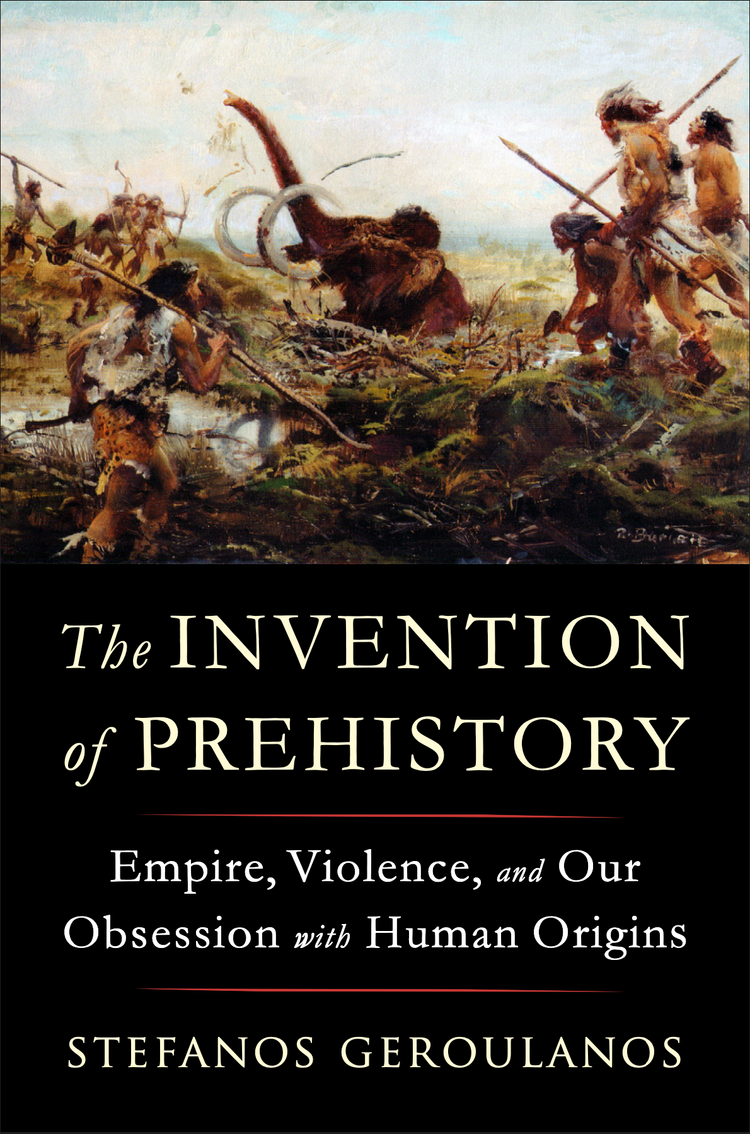
They are talking about his new book, The Invention of Prehistory: Empire, Violence, and our Obsession with Human Origins (Liveright, April 2024)

In this episode, Xavier Bonilla has a dialogue with Stefanos Geroulanos about the history of prehistory. They talk about why studying history is important and why it is not final, the emphasis on the nature of man, why Rousseau and Hobbes’ ideas still persist, human nature and equality, and the impact of Darwin. They also talk about the impact of Marx, Neanderthals, thin veneer, and the instincts, Freud’s contribution, Nazi party, how we continue to understand history, and many more topics. Stefanos Geroulanos is Director of the Remarque Institute and a professor of history at New York University. He has his BA from Princeton and his PhD from Johns Hopkins. From 2015-2017, he was Director of the Center for International Research in the Humanities and Social Sciences at NYU. His research focuses on histories of the concepts that weave together understanding of the human, of time, and of the body. He has written many books, including the most recent book, The Invention of Prehistory: Empire, Violence, and Our Obsession with Human Origins.

Posted in Uncategorized | 1 Comment

The Archaeology of Foucault reviewed by David Beer in The Times Literary Supplement

My 2023 book The Archaeology of Foucault is generously reviewed by David Beer in The Times Literary Supplement

The review requires subscription, but email me if you can’t access a copy through an institution.

Imagine Michel Foucault and Roland Barthes side by side at a wrestling match. The contrast between characters and setting might seem incongruous. Yet these towering figures of French intellectual life were regularly to be found ringside together during the 1960s. This is not simply biographical trivia: it is one of many surprising fragments that Stuart Elden uses to situate Foucault’s thinking, the roots of his ideas and the conditions that shaped them, including the intellectual circles in which he moved. His friendship with Barthes is also a sign of his involvement with the editorial teams behind the influential periodicals Tel Quel and Critique. It is through the accumulation of many such insights that Elden has meticulously created the most intricate account yet of the making of Foucault.

The Archaeology of Foucault is the final part of his four-volume project covering the philosopher’s entire career. This volume accounts for the 1960s, when Foucault startlingly “went from being a doctoral candidate to election to one of France’s most prestigious institutions at the age of just forty-three”. As well as dealing with the published books and articles, Elden has worked his way through reading notes, lecture scripts, office ephemera, teaching schedules, unpublished commissions, jottings on old manuscript pages and even slips of paper wrapped around other notes. This is primarily a book about Foucault’s thought, but it is also a study of the materiality of thinking. [continues here]

Update: Dave reflects on writing the piece on his blog, Half Thoughts.

Posted in Michel Foucault, Roland Barthes, The Archaeology of Foucault, Uncategorized | Leave a comment

Unintimidated Languages: Jameson at 90

Unintimidated Languages: Jameson at 90

In honor of Fredric Jameson‘s 90th birthday this month, we’re publishing a series of short essays focused on the major books in Jameson’s oeuvre. Here, Daniel Hartley revisits Jameson’s first book, Sartre: The Origins of a Style (1961).

Update: Christopher Breu discusses Marxism and Form (1971) – On Prophetic Form and the Whole Tangled, Dripping Mass of the Dialectic.

Matthew Beaumont on The Prison-House of Language (1972) – Intense Curiosity

Ian Buchanan on Fables of Aggression (1979) here

Philip E. Wegner on The Ideologies of Theory (1988/2008) – Deep Listening

Maria Elisa Cevasco on Political Unconscious (1981) – History is what hurts

The whole series can be found here

Posted in Fredric Jameson, Jean-Paul Sartre | Leave a comment

Andy Merrifield, ‘The Subaltern in Gramsci’

Andy Merrifield, ‘The Subaltern in Gramsci

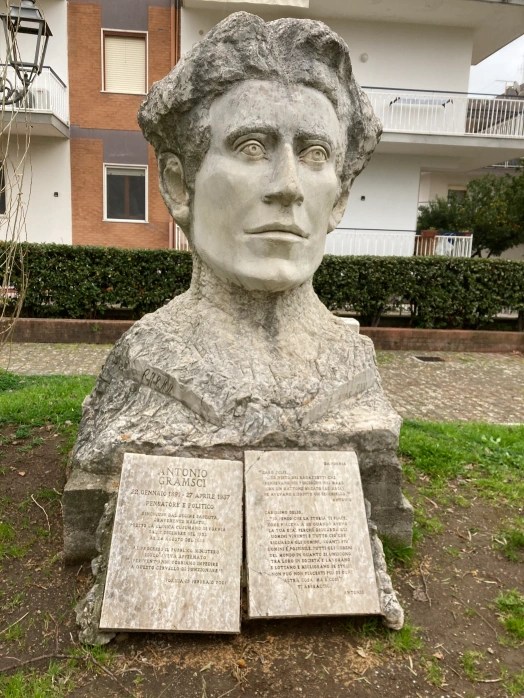
Gramsci saw the whole of the Italian “South” as a kind of goblin, as a character who got and keeps getting a bad rap, like Rumpelstiltskin. In late 1926, a month or so prior to his arrest, he was at work on a long essay about the Italian South, Alcuni temi della questione MeridionaleSome Aspects on the Southern Question. The piece was never completed; it was rudely interrupted; and while there’s a lot left dangling, there’s plenty for us still to glean. Gramsci was addressing his Marxist comrades, notably comrades from the north, in a tone that’s critical, enquiring, taking to task all camps, typically trying to get at the truth—warts and all. Gramsci chastised a Right northern bourgeoisie as well as a Left industrial proletariat, northern Marxists as well as southern liberals, workers from the north as well as a gentry from the south.

Point is that all this is voiced by a lad from the south. Gramsci’s political awakening occurred in the north, yet his cultural allegiances always rested with the south. He grew up in peasant society, spoke local Ghilarza dialect, and probably didn’t hear Italian itself until he reached grammar school; and then, in Turin, through his college professors. As a poor, set-apart kid, encountering official Italian was likely both a source of liberation and a lesson in officialdom, the tenor of a ruling class authority he was out to smash. [continues here]

Posted in Antonio Gramsci, Uncategorized | 1 Comment

On Book Reviews – Daily Nous, NDPR and more

The Daily Nous has a short piece about the decline in the number of book reviews at Notre Dame Philosophical Reviews (NDPR), with some comments about why this might be. Daily Nons will share news of open access book reviews, provided journals alert them.

I’ve noticed too that publishers are now reluctant to send physical copies of books to reviewers. Given that a copy of the book is the only recompense for the work of reviewing, I’ve refused to review a pdf or other e-format. I’ve also tried to avoid reviewing when the review would only be available to journal subscribers. But these seem to be losing battles.

(Update: I should clarify that I do sometimes review for subscriber-only outlets, but in those cases do try to make the review available easily by sharing a link along with contact details so people can ask me for the copy.)

Posted in Uncategorized | 5 Comments

Yousuf Al-Bulushi, Ruptures in the Afterlife of the Apartheid City – Palgrave Macmillan, 2024

Yousuf Al-Bulushi, Ruptures in the Afterlife of the Apartheid City – Palgrave Macmillan, 2024

How are poor people in South Africa confronting the persistent legacy of apartheid spatial segregation and anti-blackness? And what can movements across the world engaged in a global struggle against racial capitalism learn from the South African experience? This book explores the relationship between shack dwellers and the municipal government in South Africa. Grounded in the local realities of the struggle for housing and basic survival, the project makes broader interventions in national, continental and global debates about urban geography, African studies, social movements and race. The author argues that the shack settlement is emblematic of a democratic South Africa still profoundly shaped by apartheid’s afterlife.  


Posted in urban/urbanisation | 1 Comment

Mathieu Dejean, Henri Lefebvre: Dogmatism in Reverse – trans. David Fernbach, Verso blog 

Mathieu Dejean, Henri Lefebvre: Dogmatism in Reverse – trans. David Fernbach, Verso blog (open access)

In 1958, during the insurrectionary events that preceded General de Gaulle’s return to power, 57-year-old Henri Lefebvre faced two ‘comrades’ from the French Communist Party in an austere room. His request for minutes to be taken had just been curtly refused. The Commission central de contrôle politique was only there to question him about his ‘behaviour’.

The interview began: ‘Did you ask the Party’s permission to write an article about the Nouvelle Vague in L’Express?’ – ‘No.’ – ‘Did you ask the Party’s permission to write a response to André Philip in France-Observateur?’ – ‘No.’ After this comedy of an interrogation, the philosopher was expelled from the PCF, in which he had been an activist for thirty years. He was part of the first generation of Marxist philosophers, along with his friends Norbert Guterman (1900-84) and Georges Politzer (1903-42).

Originally published by Mediapart in 2023 (this requires subscription)

Posted in Henri Lefebvre, Uncategorized | Leave a comment

Aaron Clift, Anticommunism in French Society and Politics, 1945-1953 – Oxford University Press, 2023; and New Books interview

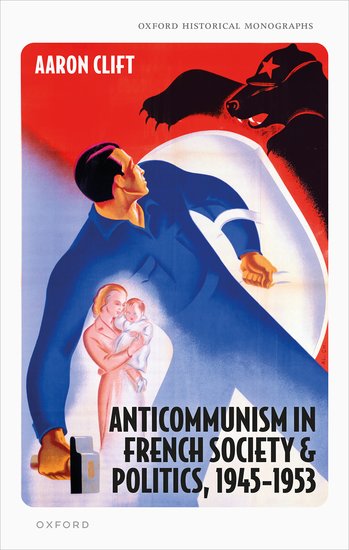
Aaron Clift, Anticommunism in French Society and Politics, 1945-1953 – Oxford University Press, 2023

Anticommunism in French Society and Politics, 1945-1953 evaluates the prevalence of anticommunism among the French population in 1945 to 1953, and examines its causes, character, and consequences through a series of case studies on different segments of French society. These include the scouting movement; family organisations; agricultural associations; middle-class groups; and trade unions and other working-class organisations. Aaron Clift contends that anticommunism was more widespread and deeply rooted than previously believed, and had a substantial impact on national politics and on these social groups and organisations. Furthermore, he argues that the study of anticommunism allows us a deeper understanding of the values they regarded as the most important to defend. 

Although anticommunism was a diverse phenomenon, this work identifies common discourses, including portrayals of communism as a threat to the nation; the colonial empire; the traditional family; private property; religion; the rural world; and Western civilisation. It also highlights common aims (such as the rehabilitation of wartime collaborators) and tactics (such as the invocation of apoliticism). While acknowledging the importance of the Cold War, it rejects the assumption that anticommunism was an American import or foreign to French society and demonstrates links between anticommunism and anti-Americanism. It concludes that anticommunism drew its strength from the connection or even conflation of communism with perceived negative social changes that were seen to threaten traditional French civilisation, interacting with the postwar international and domestic environment and the personal experiences of individual anticommunists.

There is a New Books interview with Michael Vann – thanks to dmf for the link

Posted in Uncategorized | Leave a comment

Peter E. Gordon, A Precarious Happiness: Adorno and the Sources of Normativity – University of Chicago Press, January 2024 (and podcast interview)

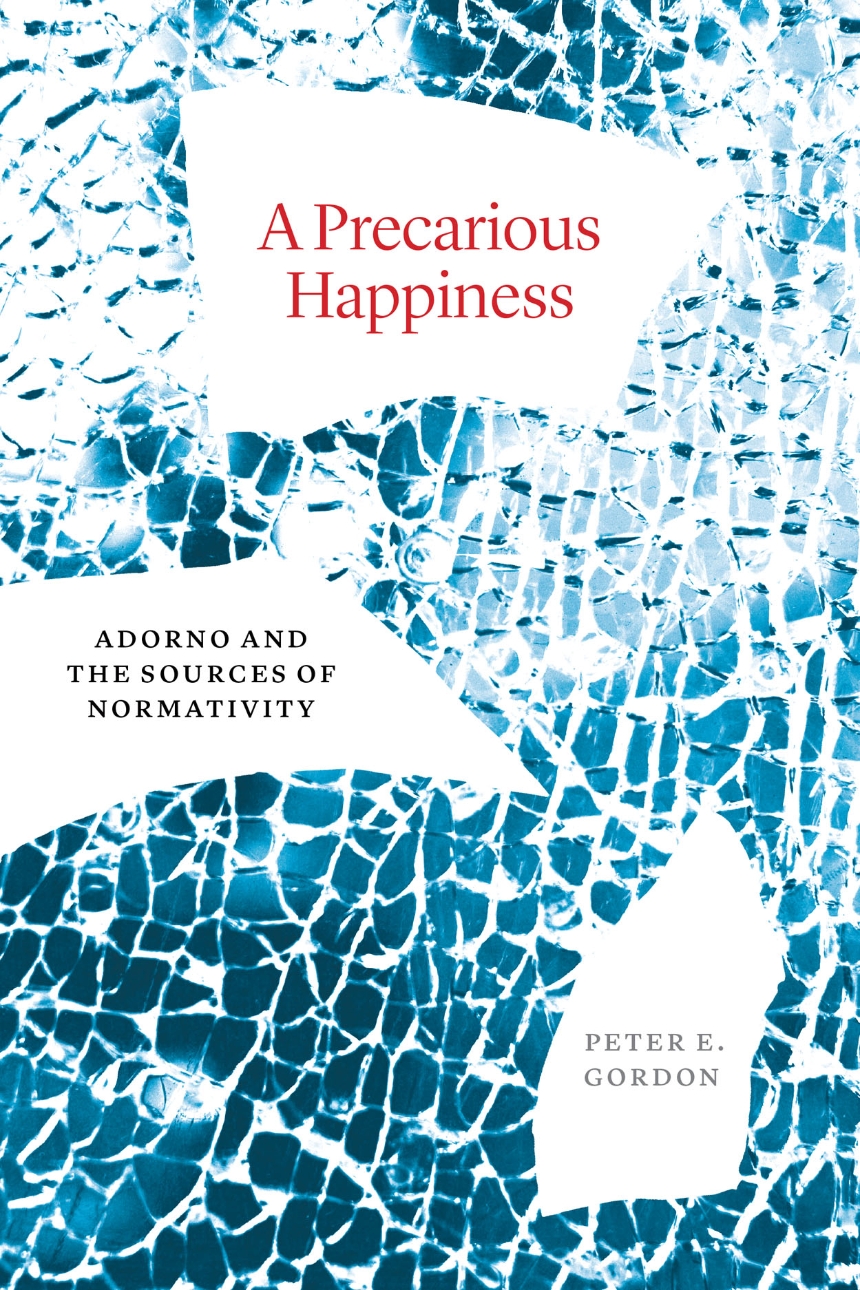
Peter E. Gordon, A Precarious Happiness: Adorno and the Sources of Normativity – University of Chicago Press, January 2024

A strikingly original account of Theodor Adorno’s work as a critique animated by happiness.

“Gordon’s confidently gripping and persistently subtle interpretation brings a new tone to the debate about Adorno’s negativism.”—Jürgen Habermas
 
Theodor Adorno is often portrayed as a totalizing negativist, a scowling contrarian who looked upon modern society with despair. Peter E. Gordon thinks we have this wrong: if Adorno is uncompromising in his critique, it is because he sees in modernity an unfulfilled possibility of human flourishing. In a damaged world, Gordon argues, all happiness is likewise damaged but not wholly absent. Through a comprehensive rereading of Adorno’s work, A Precarious Happiness recovers Adorno’s commitment to traces of happiness—fragments of the good amid the bad. Ultimately, Gordon argues that social criticism, while exposing falsehoods, must also cast a vision for an unrealized better world.

Update 28 June 2024: Marvin Esler interviews Peter Gordon at the Critical Theory in Context podcast. Thanks to dmf for this link.

Posted in Uncategorized | Leave a comment

“Translating China in the Changing Political Economy, 1920s-2020s”, Recordings of British Academy Symposium, March 25, 2024 – Julia Ng and others

Posted in Uncategorized | Leave a comment