Emily Herring, Herald of a Restless World: How Henri Bergson Brought Philosophy to the People – Basic Books, October 2024

Emily Herring, Herald of a Restless World: How Henri Bergson Brought Philosophy to the People – Hachette, October 2024

The first English-language biography of Henri Bergson, the French philosopher who defined individual creativity and transformed twentieth-century thought  
 
At the dawn of the twentieth century, Henri Bergson (1859–1941) became the most famous philosopher on earth. Where prior thinkers sketched out a deterministic, predictable universe, he asserted the transformative power of individual consciousness and creativity. An international celebrity, he made headlines around the world debating luminaries like Bertrand Russell and Albert Einstein about free will and time. The vision of creative evolution and freedom he presented was so disruptive that the New York Times branded him “the most dangerous man in the world.”   
 
In Herald of a Restless World, Emily Herring recovers how Bergson captivated a society in flux. She shows how his celebration of the time-bending uniqueness of individual experience struck a chord with those shaken by modern technological and social change. Long after he faded from public view, his insights into memory, time, laughter, and the creative continue to shape how we see the world around us.  
 
Herald of a Restless World is an electrifying portrait of a singular intellect. Bergson’s extraordinary insight into life’s fundamental questions remains urgent and relevant to this day. 

Posted in Uncategorized | Leave a comment

Swati Srivastava, Hybrid Sovereignty in World Politics – Cambridge University Press, March 2024

Swati Srivastava, Hybrid Sovereignty in World Politics – Cambridge University Press, March 2024

Cover of the book, with Olga Vladimirovna Rozanova’s painting King of Hearts

The idea of ‘hybrid sovereignty’ describes overlapping relations between public and private actors in important areas of global power, such as contractors fighting international wars, corporations regulating global markets, or governments collaborating with nongovernmental entities to influence foreign elections. This innovative study shows that these connections – sometimes hidden and often poorly understood – underpin the global order, in which power flows without regard to public and private boundaries. Drawing on extensive original archival research, Swati Srivastava reveals the little-known stories of how this hybrid power operated at some of the most important turning points in world history: spreading the British empire, founding the United States, establishing free trade, realizing transnational human rights, and conducting twenty-first century wars. In order to sustain meaningful dialogues about the future of global power and political authority, it is crucial that we begin to understand how hybrid sovereignty emerged and continues to shape international relations.

Posted in Uncategorized | Leave a comment

David Beer, Why do writers write?

David Beer, Why do writers write? (via his Half Thoughts blog)

For some reason, I’ve written a little piece about George Orwell’s four motives for writing.

The reason why writers write is mostly mysterious, even to the writers themselves. When occasionally invited to account for their work, the reflections usually tend toward the practical and the material. Take the podcasts dedicated to the craft of writing, questions of practice are commonly the focus. There is talk of daily schedules, desk spaces, locations, word counts, repeated routines, trusted productivity techniques, chapter plans, editing tips, promotional activities and the like. There are the occasional biographical tales too, often centred on how they got into writing. All are welcome insights into process. Writers often talk in interesting and amusing ways about their toils.

Posted in Uncategorized | 2 Comments

Books received – Martin, Specter, Trubetzkoy, Hoffman, Strauss (and Kojève), Lincoln

A photograph of the books described in the post

A collection of essays on Emile Benveniste; Matthew Specter, Habermas: An Intellectual Biography; Nicolai Trubetzkoy, The Legacy of Genghis Khan and Other Essays on Russia’s Identity; Marcelo Hoffman’s Foucault in Brazil: Dictatorship, Resistance, and Solidarity; Leo Strauss, On Tyranny, which also includes his correspondence with Alexandre Kojève; and Bruce Lincoln, Secrets, Lies and Consequences: A Great Scholar’s Hidden Past and his Protégé’s Unsolved Murder.

Marcelo generously sent me a copy of his book, which looks great. The others mostly connect in some way to the Indo-European thought project.

Posted in Alexandre Kojève, Emile Benveniste, Jürgen Habermas, Mapping Indo-European Thought in Twentieth Century France, Michel Foucault, Mircea Eliade | 1 Comment

Valentina Antoniol, Foucault critico di Schmitt. Genealogie e guerra – Rubbetino, March 2024

I’ve mentioned the French version before – Valentina Antoniol, Foucault et la guerre: À partir de Schmitt, contre Schmitt, Éditions Mimesis, November 2023 – but the Italian is now published, and I understand it is longer than the French:

Valentina Antoniol, Foucault critico di Schmitt. Genealogie e guerra – Rubbetino, March 2024

La nostra attualità ci interroga sulla comprensione della guerra e sullo statuto del suo rapporto con la politica. Questo libro si misura con tale questione e lo fa a partire dalle riflessioni di Michel Foucault sull’argomento, le quali vengono messe in relazione con le posizioni di Carl Schmitt: un confronto tra due diverse genealogie che è stato raramente praticato e sul quale la letteratura è all’oggi ancora esigua. Tenendo conto dei manoscritti inediti conservati presso gli archivi del Fonds Michel Foucault, viene mostrato che il modello polemocritico foucaultiano si costruisce sulla base di alcune rilevanti prossimità teoriche rispetto alla formulazione schmittiana della teoria del politico e si sviluppa come una critica radicale verso questa. Pensare Foucault come critico di Schmitt si rivela non solo importante ai fini della comprensione del pensiero del filosofo francese, ma anche fondamentale per indagare l’attualità dei due autori rispetto al tema della guerra.

There is an English lecture on the argument here:

Posted in Carl Schmitt, Michel Foucault, Uncategorized | Leave a comment

Marcelo Hoffman, Foucault in Brazil: Dictatorship, Resistance, and Solidarity – University of Pittsburgh Press, February 2024

Marcelo Hoffman, Foucault in Brazil: Dictatorship, Resistance, and Solidarity – University of Pittsburgh Press, February 2024

Now published

Philosopher Michel Foucault’s cultural criticism crosses disciplines and is well known as an influence on modern conceptions of knowledge and power. Less well known are the five trips he took to Brazil between 1965 and 1976. Although a coup in 1964 had installed a military dictatorship, Foucault kept his opinion on the Brazilian government largely to himself until October 23, 1975. On that date, he delivered a manifesto at a student assembly in São Paulo expressing his solidarity with students and professors protesting a wave of arrests and torture. This manifesto caught the government’s attention and became the focal point of the dictatorship’s surveillance of Foucault. Foucault in Brazil explores the production of the public antagonism between the philosopher and the dictatorship through a meticulous consideration of each of his visits to Brazil. Marcelo Hoffman connects history, philosophy, and political theory to open new ways of thinking about Foucault as a person and thinker and about Brazil and authoritarianism.

 Brilliant and chock-full of insights and impeccably researched historical portraits, Foucault in Brazil is a luminous, indispensable book in a range of fields, and constitutes a landmark for scholars interested in the French philosopher in the continent and beyond. 

Adam Joseph Shellhorse, Temple University

Foucault in Brazil develops a meticulous and riveting historical account of the philosopher’s trips through that country. Hoffman’s scholarship employs rigorous historical investigation to excavate nothing short of a model of what it can mean to marshal one’s social capital to contest power publicly. This work is outstanding and without peer. 

Kevin Thompson, DePaul University

This beautifully crafted account of Foucault’s political activities in Brazil in the 1970s is a tour de force. Foucault in Brazil not only illuminates rich archival details about the philosopher’s support of Brazilians fighting a military dictatorship but also brings much needed nuance to our understanding of how his distinct philosophical approach to power was driven by concrete acts of political solidarity. 

Lynne Huffer, author of Mad for Foucault

Posted in Michel Foucault | Leave a comment

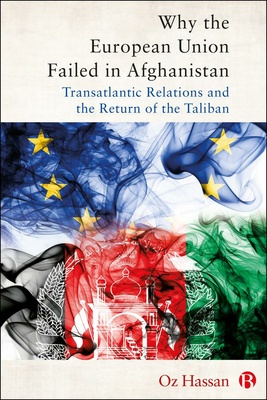
Oz Hassan, Why the European Union Failed in Afghanistan: Transatlantic Relations and the Return of the Taliban – Bristol University Press, September 2024

Oz Hassan, Why the European Union Failed in Afghanistan: Transatlantic Relations and the Return of the Taliban – Bristol University Press, September 2024

In August 2021, the US-led coalition withdrew from Afghanistan. The Taliban quickly returned to power leaving many wondering what 20-years’ worth of state-building efforts, and considerable loss of life and treasure, had been for. The EU had been a key actor in state-building activities, and, in 2022, the author was asked by the European Parliament’s Foreign Affairs Committee to undertake the first external evaluation of the EU’s efforts in Afghanistan. This book will publish the conclusions of this research, providing a critical analysis of the EU’s policies towards Afghanistan and offering evidence-based recommendations to address these failures, providing valuable lessons for future EU state-building efforts worldwide. It will show that the EU’s state-building exercises were inadequate and deeply flawed; failing to account for the growing insecurity within Afghanistan and changes within the US strategy. While the EU did have successes, such as the establishment of a peace deal that held for some time, corruption and working at cross-purposes with the USA’s shorter-term commitments hindered these successes.

Posted in Uncategorized | Leave a comment

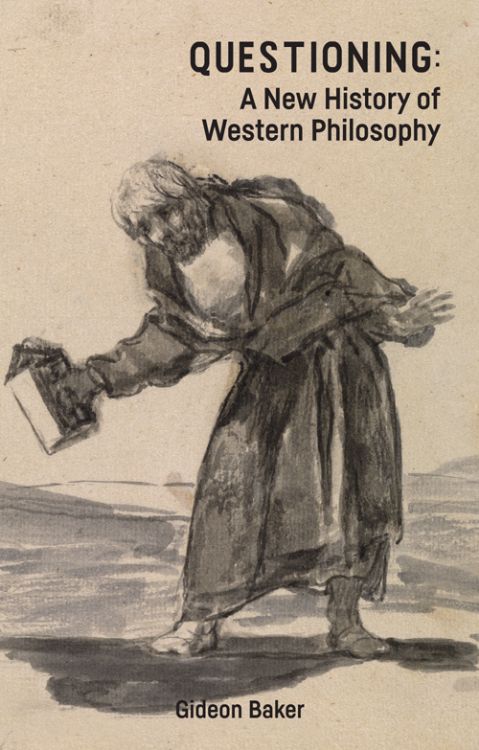
Gideon Baker, Questioning: A New History of Western Philosophy – Edinburgh University Press, paperback February 2024

Gideon Baker, Questioning: A New History of Western Philosophy – Edinburgh University Press, paperback February 2024

The cover of the book, with Francisco Goya’s ink and pencil image of a begging man (No lo encontraras – You will not find him)

Studies the questions of 18 ancient, medieval and modern philosophers, from Socrates to Judith Butler

  • Takes a new approach to the history of Western philosophy around the theme of questioning
  • Looks at an equal balance of ancient and modern philosophers (plus two medieval philosophers) showing how the ancient and the modern are connected
  • Questions Western philosophy without claiming a God’s-eye view from above it

Gideon Baker provides a gripping genealogy of Western philosophy as a history of questioning. As well as revealing the ancient in the modern, Baker reflects on newer questions in Western philosophy, including: is human being uniquely defined by questioning? And does the negativity of questioning lead to nihilistic despair? 

Staying faithful to his theme, Baker calls Western philosophy itself into question, asking why questioning should be seen as central to the true life. Is this not the same prejudice that led Socrates, at the beginning of Western philosophy, to ask whether the unexamined life is worth living?

Far from being timeless, the questioning that lies at the heart of Western philosophy has a strange and unsettling history that concerns us all.

Posted in Uncategorized | Leave a comment

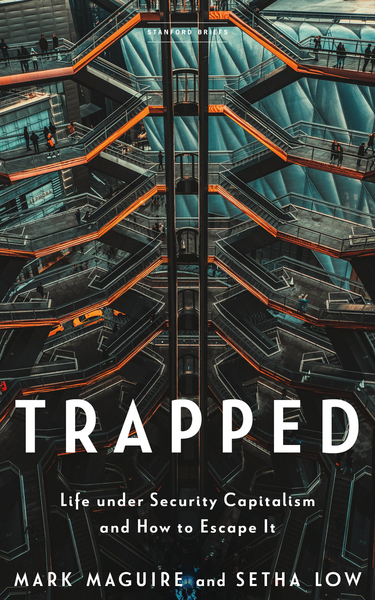
Mark Maguire and Setha Low, Trapped: Life under Security Capitalism and How to Escape It – Stanford University Press, March 2024

Mark Maguire and Setha Low, Trapped: Life under Security Capitalism and How to Escape It – Stanford University Press, March 2024

cover of the book with image of The Vessel at Hudson Yards in Manhattan

Exploring the pernicious influence of security capitalism on neighborhoods, airports, cities, and states.

Calls to defund the police or to stop brutal police violence, argue Mark Maguire and Setha Low, will never succeed as long as there are those who enjoy and take comfort in security capitalism. Security capitalism can be recognized by the marks it leaves on society, remaking public space in its own image—privatized, fortified, unequal, striated, and access-controlled. With a global and comparative lens that takes readers from Nairobi to New York City, Maguire and Low offer intimate portraits of the people behind security capitalism—the police, policy makers, and private contractors who agree that a price must be paid in blood to maintain public safety—and critique phenomena like the transfer of public funds to arms dealers via the militarization of police, securitized housing developments, and ineffectual counterterrorism efforts.

But more than just an exposé of the nefarious corporations, corrupt agencies, and incompetent governments, this book uniquely shines the spotlight on the ordinary citizens whose desires for safety drive these phenomena. Angela Davis has written of the challenge of persuading people that “safety, safeguarded by violence, is not really safety.” Maguire and Low aid us in thinking through the challenge, providing a common language to discuss security capitalism and offering ways to escape its clutches.

Posted in Uncategorized | 1 Comment

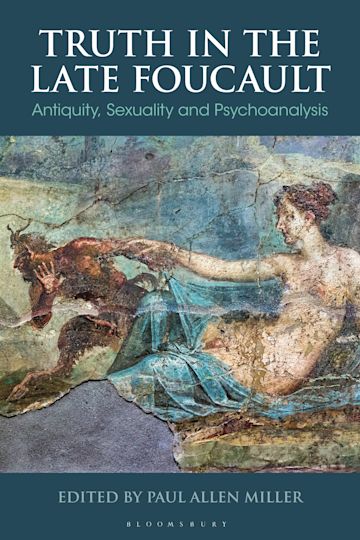
Paul Allen Miller (ed.), Truth in the Late Foucault: Antiquity, Sexuality, and Psychoanalysis – Bloomsbury, May 2024

Paul Allen Miller (ed.), Truth in the Late Foucault: Antiquity, Sexuality, and Psychoanalysis – Bloomsbury, May 2024

The first full treatment of truth as a core philosophical concept in the late Foucault, this volume examines his work on the ancient world and the early church. Each essay features a deep examination as to how the topics of truth and sexuality intersect with and focus on Foucault’s engagement with ancient philosophy and thought. Truth in the Late Foucault offers readings on Plato, Artemidorus, Cicero, Sophocles and the Stoics, and pays close attention to Cassian, Paulinus of Nola, and early Christian practices of confession.

With the publication of the long-awaited volume 4 of the History of Sexuality: Confessions of the Flesh, the shape of the final Foucault is now brought into stark relief. As well as looking at ancient thought, the contributors explore Foucault’s work in relation to philosophers such as Gadamer, Heidegger, Derrida and Descartes. Foucault’s long-running and often contentious dialogue with psychoanalysis, on the relation between truth and the subject, is also examined. Each essay not only makes an important statement, but also is part of an interconnected arc of topics and understanding, covering both the ancient and modern periods. This book reveals that Foucault’s concern with antiquity raises questions deeply pertinent to the present moment.

Posted in Uncategorized | Leave a comment