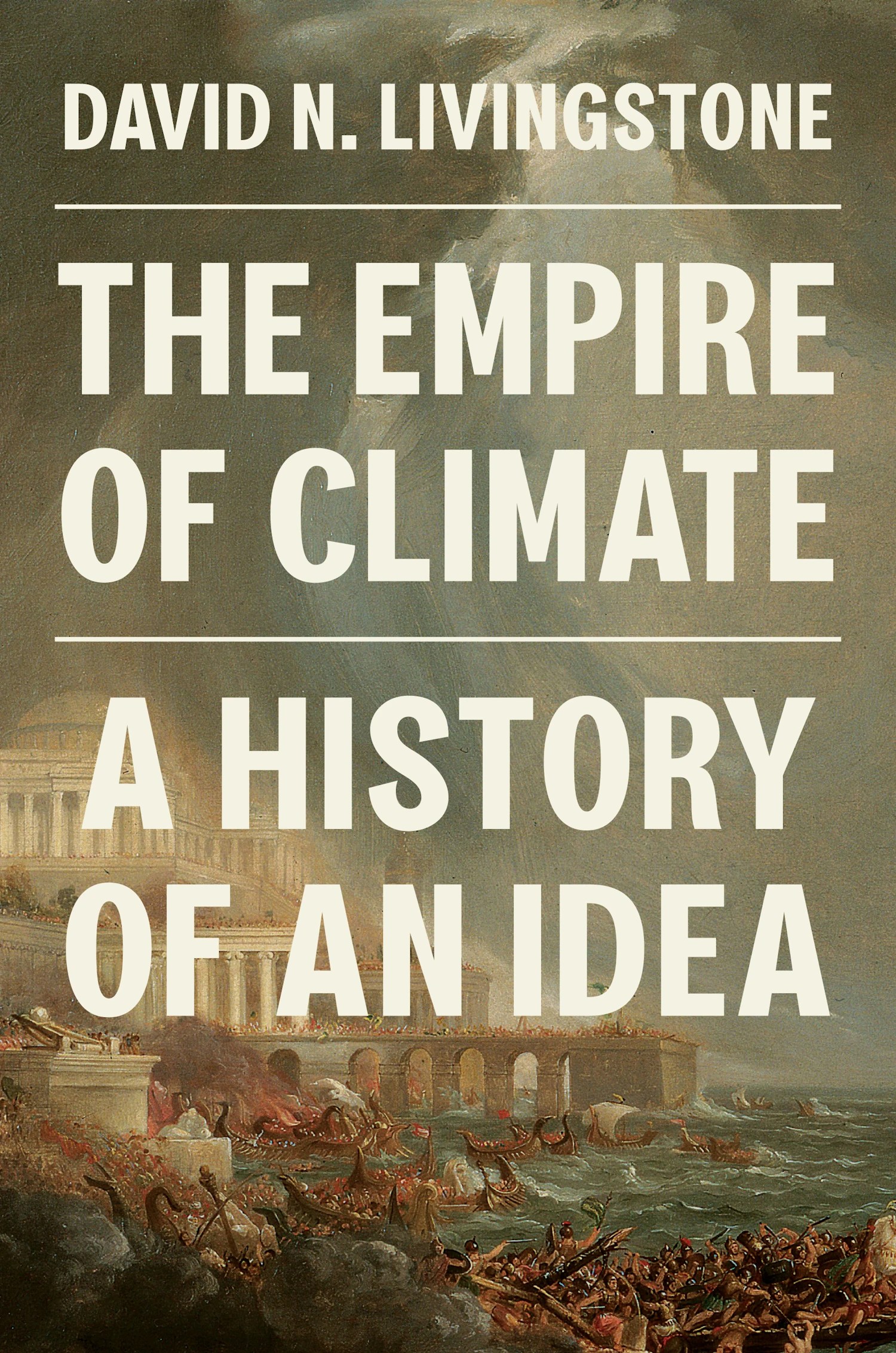
Scientists, journalists, and politicians increasingly tell us that human impacts on climate constitute the single greatest threat facing our planet and may even bring about the extinction of our species. Yet behind these anxieties lies an older, much deeper fear about the power that climate exerts over us. The Empire of Climate traces the history of this idea and its pervasive influence over how we interpret world events and make sense of the human condition, from the rise and fall of ancient civilizations to the afflictions of the modern psyche.
Taking readers from the time of Hippocrates to the unfolding crisis of global warming today, David Livingstone reveals how climate has been critically implicated in the politics of imperial control and race relations; been used to explain industrial development, market performance, economic breakdown; and served as a bellwether for national character and cultural collapse. He examines how climate has been put forward as an explanation for warfare and civil conflict, and how it has been identified as a critical factor in bodily disorders and acute psychosis.
A panoramic work of scholarship, The Empire of Climate maps the tangled histories of an idea that has haunted our collective imagination for centuries, shedding critical light on the notion that everything from the wealth of nations to the human mind itself are subject to climate’s imperial rule.
This week on the Thinking Global Podcast, Professor Quentin Skinner(Queen Mary, University of London – @QMHistory) speaks with the team about contextualism, Machiavelli, Hobbes, and more. Professor Skinner chats with Kieran (@kieranjomeara) and Tusharika (@Tusharika24) about what contextualism is as a methodological approach to political thought, how he applies this to Machiavelli and Hobbes, and how this relays back to what it is to think about global politics.
Quentin Skinner is Emeritus Professor of Humanities at Queen Mary, University of London (@QMHistory). Prof. Skinner has published on a number of philosophical themes, including the nature of interpretation and historical explanation, and on several issues in contemporary political theory, including the concept of political liberty and the character of the state. He has written extensively on questions about historical method and historical explanation, being a key figure in the ‘Cambridge’ contextualist school of political thought (@cambridge_cpt). Many of these essays have been collected in the volume, edited by James Tully, Meaning and Context: Quentin Skinner and his Critics (1988).
Some interesting thoughts from Dave Beer on making decisions about research plans – At a research junction
A few years ago I wrote a page for this site about how, largely retrospectively, I saw the main periods of my research – Social/Spatial Theory, Territory, and Foucault, and the beginning of the new project. Even there I noted the overlap, some abandoned ideas – usually because I didn’t get funding – and the things that didn’t fit. And that, of course, was a retrospective, imposing order on things which were not always as clear at the time.
One of the things that I would say that is perhaps a little different from Dave is that I seem to get committed to things a long way into the future, either because of the scale of books I take on, the good fortune I’ve had in getting a couple of three-year research fellowships, the linked volumes of certain projects (the Foucault and territory books, for example) or a combination of these. It was clear Foucault’s Last Decade was going to produce a second book The Birth of Power before I’d completed Last Decade, and when I decided in late 2016 to continue the series further back, I knew I needed two books to do it justice – The Early Foucault and The Archaeology of Foucault. Before that series, some parts of what became The Birth of Territory were written before Terror and Territory was even an idea, and even earlier, the material on calculation in Speaking Against Number was initially conceived of as a theoretical introduction to a project that then had the working title of The Geometry of the Political. And at the beginning of my career, Understanding Henri Lefebvre was a massive development of something that was initially a chapter in my PhD thesis, which got cut – the final thesis looked at only Nietzsche, Heidegger and Foucault, of which the Heidegger and Foucault material became Mapping the Present. (The Nietzsche stuff was cannibalised for that book, and a later book chapter.)
What this has meant, for me, is that I can’t really remember the last time I wasn’t writing a book, and can rarely think of a time when I didn’t know the book I would be working on after that. One of the consequences of this is that I am often impatient about delays in review, or production, or for other reasons, as I feel it isn’t just delaying the current project, but is having a knock on effect on things down the line.
In the past few years I’ve had to rethink quite a bit – initially during the period of pandemic restrictions, when I couldn’t get to archives and planned research leave was postponed, and my teaching changed a lot, which delayed the final two Foucault books; and more recently when my own health put things on pause for a period and has slowed me down considerably ever since. I’ve had to rethink the schedule for the Mapping Indo-European Thought in Twentieth-Century France project quite a bit, though still feel very behind.
Often with future projects, I try to write a short piece first, not so much as proof of concept – though they can be useful to build a case for funding, or to persuade a publisher you have experience in a new-for-you field – but more for proof of interest. Do I have the interest in the topic to continue? Usually I find so many interesting things to explore that I begin to convince myself I would like to do more on this. Might I have something distinctive to say? Sometimes though – and most recently, it was on political ceremony – I write something that makes me realise I don’t have much to say about a topic, and so I bring it to a close. I felt I ran out of new and hopefully interesting things to say about, for example, Heidegger, Lefebvre and territory at different times too. (Of course, none of this is to say there isn’t plenty of interesting work to be done by someone; just that it isn’t me.)
One thing I’ve learned from experience though, is that if I know too clearly what I need to do to write a book, then I should steer clear of writing it. Part of the appeal of writing a book is to discover, and if it becomes too mechanical a process, then I lose interest. Two of my books, in particular, are ones I associate with knowing far too soon in the process exactly what needed to be done to complete them, and while I did finish them, they were not pleasant writing experiences. Other books have been a much more generative process, where I didn’t know exactly what I had to say until quite late in the process, didn’t know how it would all fit together, and was still learning things until very late on. I much prefer this – it’s one of the reasons I’ve always steered clear of writing text-books – though this isn’t to say that I do not admire the people who can.
I might return to this question, and Dave’s reflections. I think one thing that is striking in what Dave says is the comment:
Another reason why the decisions seem important is that most of the things not chosen will never happen, there just isn’t enough time (and other ideas will come along that will prevent us from returning to the bypassed options).
I think this is absolutely right. Of the notional list of books I have which I’d like to write, being realistic I know not all of them will get written by me. That’s not just a question of time, or age, or health, but one of interest and because any good project I take on will likely generate other possible ideas…
(I should add, that, of course, my situation is different from many people who are on short-term contracts or other precarious situations. I had three one-year contracts at the start of my career, which I know changed how I thought about things, but have been in secure employment since. I appreciate that some of the long-term thinking I am able to do is a result of that situation, and that other decisions might be needed in different situations. This is one of the many reasons why the current state of academia is so terrible.)
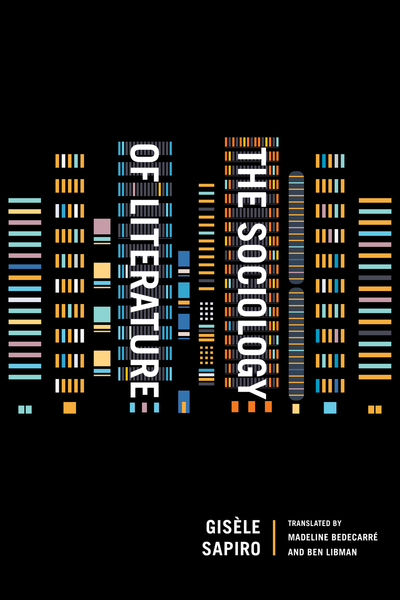
Gisèle Sapiro, The Sociology of Literature – trans. Madeline Bedecarré and Ben Libman, Stanford University Press, October 2023
The Sociology of Literature is a pithy primer on the history, affordances, and potential futures of this growing field of study, which finds its origins in the French Enlightenment, and its most salient expression as a sociological pursuit in the work of Pierre Bourdieu. Addressing the epistemological premises of the field at present, the book also refutes the common criticism that the sociology of literature does not take the text to be the central object of study. From this rebuttal, Gisèle Sapiro, the field’s leading theorist, is able to demonstrate convincingly one of the greatest affordances of the discipline: its in-built methods for accounting for the roles and behaviors of agents and institutions (publishing houses, prize committees, etc.) in the circulation and reception of texts. While Sapiro emphasizes the rich interdisciplinary nature of the approach on display, articulating the way in which it draws on literary history, sociology, postcolonial studies, book history, gender studies, and media studies, among others, the book also stands as a defense of the sociology of literature as a discipline in its own right.
Vulnerable Earth is a study of the literature of climate crisis. Building on the assumption that the crisis is planetary in scope even if differential and unequal in effects, it examines literary fiction, graphic novels, memoirs about toxic wastes and neo-slavery narratives, mostly from the contemporary decades, but touching upon select antecedents as well, and from all over the world. The study covers texts that fictionalize a ‘hydrocrisis’, those that are concerned with species extinction and experimental solutions such as rewilding, fiction and memoirs that are interested in exploring the conversations between and across species in multispecies encounters and, finally, texts that show the linkage between social justice and environmental justice. Focusing on aesthetics, narrative modes and constructions of damaged, wasted and at-risk worlds, this book shows how the literature of climate crisis foregrounds a feature that humans and nonhumans, the living and the non-living share, differentially, with the planet: vulnerability.
I recently wrote a book chapter on “Foucault and Structuralism” for The Foucauldian Mind, edited by my friend and former Warwick colleague Daniele Lorenzini. It’s been an interesting diversion from the other work. Contrary to my usual practice, where I write in all directions at once, and then try to impose some order on things when I know what I want to say, with this piece I worked out a fairly detailed plan, gave each section a word limit, and then wrote each in a fairly linear way. Some of the quotations and references draw from my books on Foucault, but the overall argument is distinct and clearer with this specific focus. And I know a lot more about Claude Lévi-Strauss and certainly Georges Dumézil as a result of recent work. It came together surprisingly easily.
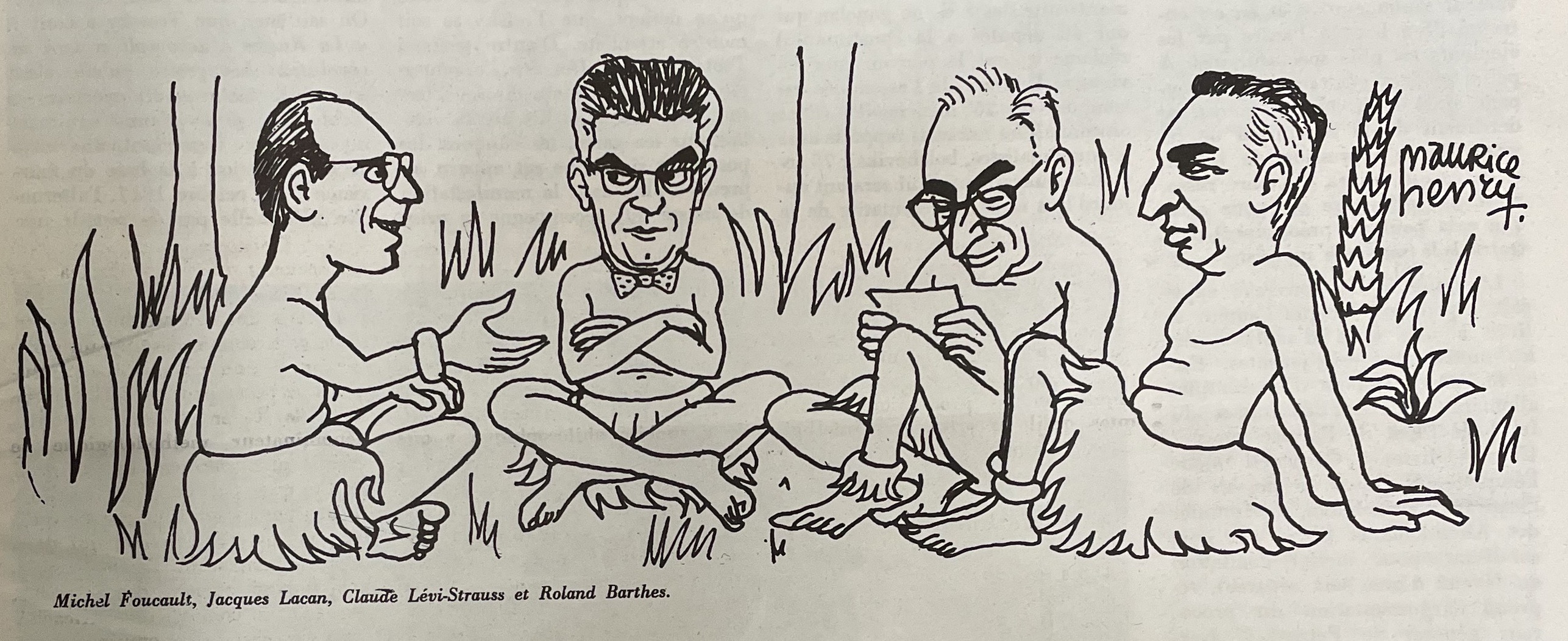
I don’t plan to use this image, but I do mention it, since it’s so iconic, and I thought it was a good one for the more visual media of this blog post. (The illustration is much more famous than the piece on structuralism by François Châtelet which it illustrated.) Foucault is holding forth with Lacan, Lévi-Strauss and Barthes. Someone (but I don’t remember who) said that the only reason Althusser wasn’t included, despite being discussed in the article, was that he was so cloistered in the ENS, no-one knew what he looked like.
Should Foucault have been included in this line-up? That’s the question I try to answer in this chapter.
Cartoon by Maurice Henry in La Quinzaine Littéraire, 1 July 1967 – left to right, Foucault, Lacan, Lévi-Strauss, Barthes
It’s not a long chapter, but I’ve tried to survey the relation through a few themes: the structural aspects of History of Madness and the first edition of Birth of the Clinic; the archaeology of structuralism in The Order of Things; and then more briefly Foucault’s engagement with linguistics in the 1960s and his discussion of Georges Dumézil especially in some 1970 lectures. The Introduction sets this up in relation to Foucault’s perceived association to French discussions of structuralism and his two most forceful refusals to be so assimilated; while the Conclusion looks at some of the ways he tried to obscure the historical record post-1970 with the revisions to two of his books.
The Foucauldian Mind is scheduled for 2026, the 100th anniversary of Foucault’s birth. I’ll share more news when it’s available. [Update February 2026: the book has a webpage and is scheduled for late summer 2026]
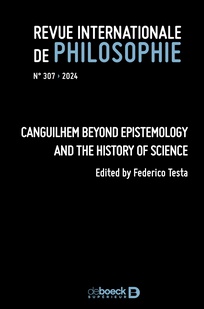
Congratulations to Federico for bringing this issue together – it has taken a long time, but as authors we think it is worth it. The pieces are all subscription only, unfortunately, but I’m happy to share my piece if you contact me by email – I’m sure the other authors are too.
In the original preface to his primary doctoral thesis Folie et déraison, Michel Foucault thanked three men as intellectual mentors and influences on his work. In his inaugural lecture at the Collège de France in December 1970 the same three names were invoked: Georges Canguilhem, Georges Dumézil and Jean Hyppolite. The relation between these figures individually with Foucault has been discussed in varying degrees of detail, but this article explores the intellectual affinities and tensions between the three older men. Canguilhem and Hyppolite had been contemporaries at the École normale supérieure in the 1920s, then colleagues in Strasbourg, and perhaps most visibly they took part in a television interview mediated by Alain Badiou and Dina Dreyfus in 1965. While Dumézil and Hyppolite were colleagues at the Collège de France, they appear never to have discussed each other’s work. Nor does Dumézil discuss Canguilhem, but Canguilhem importantly discusses both Dumézil and Hyppolite. The focus here is on Canguilhem’s review of Foucault’s Les mots et les choses, in which he indicates the understated importance of Dumézil to that book; and a report of a largely unknown seminar from autumn 1970 when Foucault discussed Dumézil’s work and Canguilhem responded. The article then moves to Canguilhem’s engagement with Hyppolite’s work, especially in his analysis of “Hegel en France,” and the tributes he wrote to his friend and colleague following Hyppolite’s 1968 death. Exploring his reading of two of his great contemporaries helps to resituate Canguilhem within wider philosophical debates in the mid-20th century.
While written for this issue, I also see ‘Canguilhem, Dumézil, Hyppolite’ as part of an informal trilogy of articles which bridge the Foucault and Canguilhem books, on the one hand, and my new project on Indo-European thought in twentieth-century France, on the other. The other two pieces are on Foucault and Dumézil, one on their understandings of sovereignty was published last year in the Handbook on Governmentality; the other on antiquity is coming out in Journal of the History of Ideas later this year. “The Yoke of Law and the Lustre of Glory: Foucault and Dumézil on Sovereignty” can be found at the official Edward Elgar site here, or a pre-print is available at Warwick’s WRAP site if you don’t have library access. I’ll share a link to the second when it’s available.
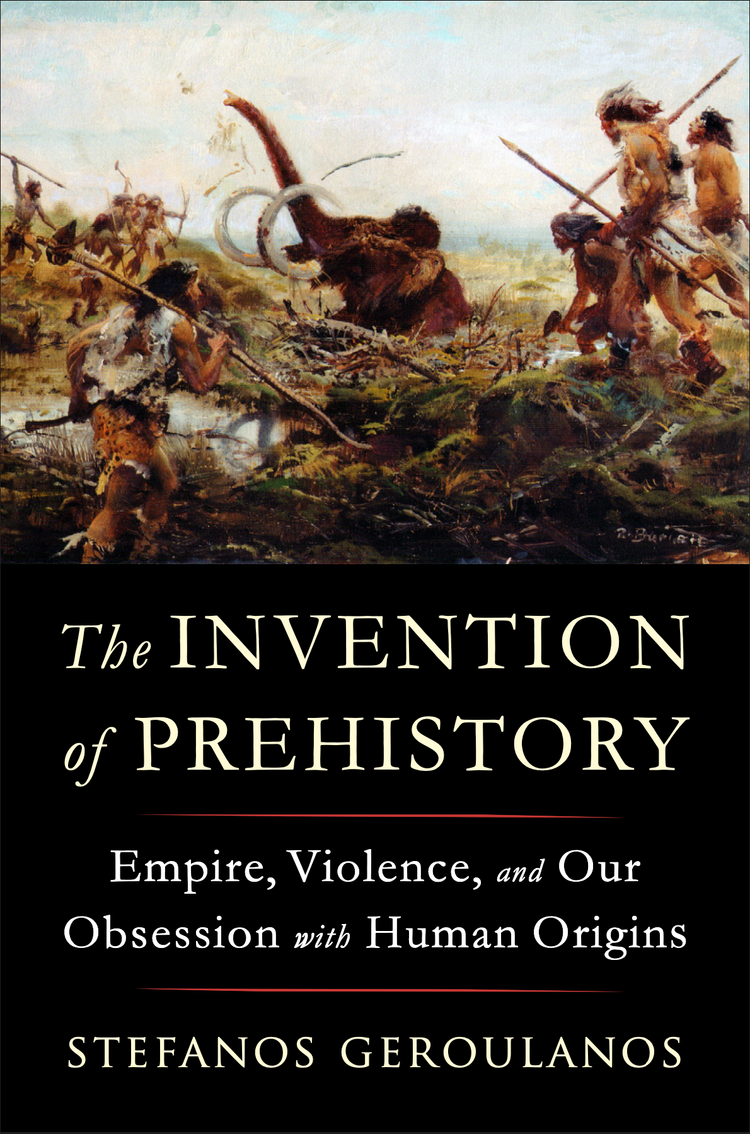
In this episode, Xavier Bonilla has a dialogue with Stefanos Geroulanos about the history of prehistory. They talk about why studying history is important and why it is not final, the emphasis on the nature of man, why Rousseau and Hobbes’ ideas still persist, human nature and equality, and the impact of Darwin. They also talk about the impact of Marx, Neanderthals, thin veneer, and the instincts, Freud’s contribution, Nazi party, how we continue to understand history, and many more topics. Stefanos Geroulanos is Director of the Remarque Institute and a professor of history at New York University. He has his BA from Princeton and his PhD from Johns Hopkins. From 2015-2017, he was Director of the Center for International Research in the Humanities and Social Sciences at NYU. His research focuses on histories of the concepts that weave together understanding of the human, of time, and of the body. He has written many books, including the most recent book, The Invention of Prehistory: Empire, Violence, and Our Obsession with Human Origins.
The review requires subscription, but email me if you can’t access a copy through an institution.
Imagine Michel Foucault and Roland Barthes side by side at a wrestling match. The contrast between characters and setting might seem incongruous. Yet these towering figures of French intellectual life were regularly to be found ringside together during the 1960s. This is not simply biographical trivia: it is one of many surprising fragments that Stuart Elden uses to situate Foucault’s thinking, the roots of his ideas and the conditions that shaped them, including the intellectual circles in which he moved. His friendship with Barthes is also a sign of his involvement with the editorial teams behind the influential periodicals Tel Quel and Critique. It is through the accumulation of many such insights that Elden has meticulously created the most intricate account yet of the making of Foucault.
The Archaeology of Foucault is the final part of his four-volume project covering the philosopher’s entire career. This volume accounts for the 1960s, when Foucault startlingly “went from being a doctoral candidate to election to one of France’s most prestigious institutions at the age of just forty-three”. As well as dealing with the published books and articles, Elden has worked his way through reading notes, lecture scripts, office ephemera, teaching schedules, unpublished commissions, jottings on old manuscript pages and even slips of paper wrapped around other notes. This is primarily a book about Foucault’s thought, but it is also a study of the materiality of thinking. [continues here]
Update: Dave reflects on writing the piece on his blog, Half Thoughts.