Ten years on – Five apps I still find really useful for my writing and blogging

Ten years ago I wrote a post – Five apps I find really useful for my writing and blogging

I am really stuck in my ways! or, more charitably, I found what worked for me, and have continued with it.

In 2014 the five apps were – EvernoteDropboxSaneboxFeedlyWasteNoTime

I still use four of these on a daily basis; the exception is that I replaced the last with 1Focus. I can’t remember why I switched. A couple of these have become more expensive and so I’ve moved to more limited plans/features to reduce the cost.

I say a bit about why I use these in the original post, and most of the reasons hold true now as well. Alongside Dropbox I also use iCloud for my library of pdfs, partly because it only keeps recently used things offline on the laptop to save memory, but I can access anything wherever I have an internet connection.

(Please note the Sanebox link above gives $5 off if you subscribe, which also benefits me too.)

The ones I should probably add are Audacity – basic audio editing software, which I use when I’ve recorded a talk and want to tidy up the file – normalise volume, reduce noise, edit start and end of the recording, etc. and then convert to mp3 – and Todoist

The one I would probably most benefit from is some kind of project management app, but I’ve never really looked into those. Other suggestions welcome too.

Posted in Uncategorized | Leave a comment

James McElvenny, A History of Modern Linguistics: From the Beginnings to World War II – Edinburgh University Press, January 2024, and discussion at Language on the Move

James McElvenny, A History of Modern Linguistics: From the Beginnings to World War II – Edinburgh University Press, January 2024

The book is discussed at Language on the Move (partnered with New Books Network)

In this book, McElvenny offers a concise history of modern linguistics from its emergence in the early nineteenth century up to the end of World War II. Written as a collective biography of the field, it concentrates on the interaction between the leading figures of linguistics, their controversies, and the role of the social and political context in shaping their ideas and methods.

While A History of Modern Linguistics focuses on disciplinary linguistics, the boundaries of the account are porous: developments in neighbouring fields – in particular, philosophy, psychology and anthropology – are brought into the discussion where they have contributed to linguistic research.

Posted in Uncategorized | Leave a comment

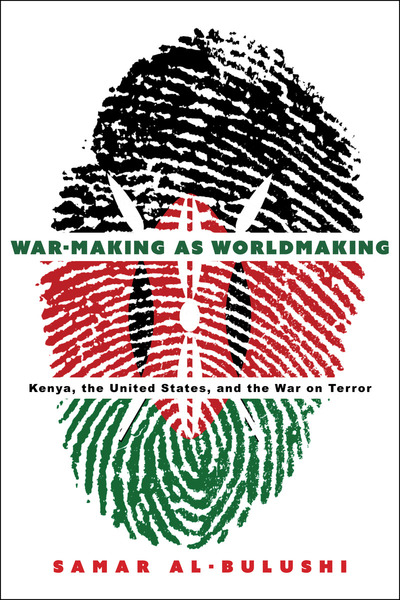
Samar Al-Bulushi, War-Making as Worldmaking: Kenya, the United States and the War on Terror – Stanford University Press, November 2024

Samar Al-Bulushi, War-Making as Worldmaking: Kenya, the United States and the War on Terror – Stanford University Press, November 2024

Since Kenya’s invasion of Somalia in 2011, the Kenyan state has been engaged in direct combat with the Somali militant group Al-Shabaab, conducting airstrikes in southern Somalia and deploying heavy-handed police tactics at home. As the hunt for suspects has expanded within Kenya, Kenyan Muslims have been subject to disappearances and extrajudicial killings at the hands of U.S.-trained Kenyan police.

War-Making as Worldmaking explores the entanglement of militarism, imperialism, and liberal-democratic governance in East Africa today. Samar Al-Bulushi argues that Kenya’s emergence as a key player in the “War on Terror” is closely linked—but not reducible to—the U.S. military’s growing proclivity to outsource the labor of war. Attending to the cultural politics of security, Al-Bulushi illustrates that the war against Al-Shabaab has become a means to produce new fantasies, emotions, and subjectivities about Kenya’s place in the world. Meanwhile, Kenya’s alignment with the U.S. provides cover for the criminalization and policing of the country’s Muslim minority population. 

How is life lived in a place that is not understood to be a site of war, yet is often experienced as such by its targets? This book weaves together multiple scales of analysis, asking what a view from East Africa can tell us about the shifting configurations and expansive geographies of post-9/11 imperial warfare.

Posted in Uncategorized | 1 Comment

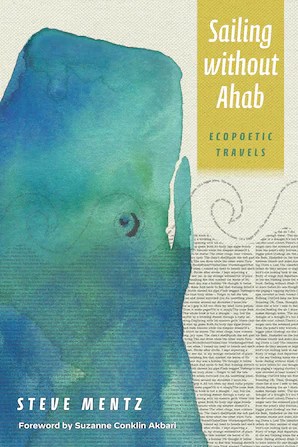
Steve Mentz, Sailing without Ahab: Ecopoetic Travels – Fordham University Press, April 2024, and New Books discussion

Steve Mentz, Sailing without Ahab: Ecopoetic Travels – Fordham University Press, 2024; foreword by Suzanne Conklin Akbari.

There is a New Books discussion with John Yargo here.

Navigate the Depths of a Timeless Classic, Reimagined.

Come sail with I.

We’re not taking the same trip, though you might recognize the familiarcourse. This time, the Pequod’s American voyage steers its course acrossthe curvature of the Word Ocean without anyone at the helm. We are leaving one man and his madness on shore. Our ship overflows with glorious plurality – multiracial, visionary, queer, conflicted, polyphonic, playful, violent. But on this voyage something is different. Today we sail headless without any Captain. Instead of binding ourselves to the dismasted tyrant’s rage, the ship’s crew seeks only what we will find: currents teeming with life, a blue-watered alien globe, toothy cetacean smiles from vasty deeps. Treasures await those who sail without.

This cycle of one hundred thirty-eight poems – one for each chapter in Moby-Dick, plus the Etymology, Extracts, and Epilogue – launches into oceanic chaos without the stabilizing mad focus of the Nantucket captain. Guided by waywardness and curiosity, these poems seek an alien ecopoetics of marine depths, the refraction of light, the taste of salt on skin. Directionless, these poems reach out to touch oceanic expanse and depth. It’s not an easy voyage, and not a certain one. It lures you forward. It has fixed its barbed hook in I.

Sailing without means relinquishing goals, sleeping at the masthead, forgetting obsessions. I. welcomes you to trace wayward ways through these poems. Read them any way you can – back to front, at random, sideways, following the obscure promptings of your heart. It’s the turning that matters. It’s a blue wonder world that beckons.

Steve reflects on writing the book here

Posted in Uncategorized | Leave a comment

Foucault: Genealogies for the Future – Rice University, 18-19 April 2024, with online option

Foucault: Genealogies for the Future – Rice University, 18-19 April 2024, with online option

news story about the event, organised by Niki Kasumi Clements, here

Posted in Uncategorized | 1 Comment

Douglas Porch, Resistance and Liberation: France at War 1942-1945 – Cambridge University Press, January 2024

Douglas Porch, Resistance and Liberation: France at War 1942-1945 – Cambridge University Press, January 2024

In Resistance and Liberation, Douglas Porch continues his epic history of France at war. Emerging from the debâcle of 1940, France faced the quandary of how to rebuild military power, protect the empire, and resuscitate its global influence. While Charles de Gaulle rejected the armistice and launched his offshore crusade to reclaim French honor within the Allied camp, defeatists at Vichy embraced cooperation with the victorious Axis. The book charts the emerging dynamics of la France libre and the Alliance, Vichy collaboration, and the swelling resistance to the Axis occupation. From the campaigns in Tunisia and Italy to Liberation, Douglas Porch traces how de Gaulle sought to forge a French army and prevent civil war. He captures the experiences of ordinary French men and women caught up in war and defeat, the choices they made, the trials they endured, and how this has shaped France’s memory of those traumatic years.

The sequel to Defeat and Division: France at War 1939-1942 – Cambridge University Press, August 2022

Defeat and Division launches a definitive new account of France in the Second World War. In this first volume, Douglas Porch dissects France’s 1940 collapse, the dynamics of occupation, and the rise of Charles de Gaulle’s Free France crusade, culminating in the November 1942 Allied invasion of French North Africa. He captures the full sweep of France’s wartime experience in Europe, Africa, and beyond, from soldiers and POWs to civilians-in-arms, colonial subjects, and foreign refugees. He recounts France’s struggles to reconstruct military power within the context of a global conflict, with its armed forces shattered into warring factions and the country under Axis occupation. Disagreements over the causes of the 1940 debacle and the subsequent requirement for the armistice mirrored long-standing fractures in politics, society, and the French military itself, as efforts to reconstitute French military power crumbled into Vichy collaboration, De Gaulle’s exile resistance, Alsace-Moselle occupation struggles, and a scuffle for imperial supremacy.

Posted in Uncategorized | Leave a comment

Angharad Closs Stephens, National Affects: The Everyday Atmospheres of Being Political – Bloomsbury, September 2022, paperback March 2024

Angharad Closs Stephens, National Affects: The Everyday Atmospheres of Being Political – Bloomsbury, September 2022, now in paperback

Identity is widely acknowledged to be a felt experience, yet questions of atmosphere, mood and public sentiments are rarely made central to understanding the global politics of nationalism. This book asks what difference it makes when we address national identity as principally an affective force? National Affects traces how ideas about ‘us and them’ take form in ordinary spaces, in ways that are both deeply felt and hardly noticeable, in studies of global events that range from the London 2012 Olympic Games to responses to acts of terror, the European refugee crisis and ‘Brexit’. 

In this timely intervention, Angharad Closs Stephens addresses the affective dimensions of being together to open new angles in the study of nationalism and global politics. She asks how the nation is felt in everyday life, as well as differently experienced, and investigates different forms of enacting being together to generate new insights in the study of national identity. National Affects draws on academic theories in the study of Politics, International Relations and Human Geography, as well as stories, performance works and novels, to establish a new tone of critical enquiry. Informed by longstanding critical interrogations of the politics of ‘us and them’, this book argues that these ideas are not as stable as they are often made to seem.  

Drawing on a combination of artistic and academic interventions, this book offers a refreshing approach to conceptualising the politics of nationalism, identity and citizenship. In its focus on everyday atmospheres, it identifies new registers for intervening politically. Overall, National Affects outlines other ways of imagining and practising being political together, beyond the exclusionary politics of nationalism. 

Posted in Uncategorized | 1 Comment

Philippe Chevallier, Michel Foucault et le christianisme: Nouvelle édition revue et augmentée – ENS éditions, April 2024

Philippe Chevallier, Michel Foucault et le christianisme: Nouvelle édition revue et augmentée – ENS éditions, April 2024

This excellent book is updated in the light of newly available material since the pioneering 2011 first edition.

Des rites antiques à la confession moderne, le christianisme fut pour Foucault une interrogation constante, aiguillée par notre actualité : quel destin cette religion a-t-elle eu dans nos vies, dans la manière de nous conduire, de connaître notre désir, de chercher notre salut ? Ce livre propose la première synthèse de l’ensemble des lectures chrétiennes de Foucault, d’Histoire de la folie au grand livre posthume Les aveux de la chair, enrichie par la consultation de ses archives. Écartant les conclusions hâtives, ce parcours épouse la logique d’un travail que Foucault voulut autant historique que philosophique : une certaine manière de lire les textes anciens et d’inciser notre passé. Loin des lieux communs d’un christianisme ascétique et intransigeant, Foucault définit l’originalité chrétienne comme la reconnaissance d’un rapport précaire à la vérité.

Initialement publié en 2011, cet ouvrage pionnier bénéficie d’une mise à jour intégrale, qui tient compte des découvertes les plus récentes que permet l’archive.

« Cette enquête remarquable nous offre l’aperçu le plus complet et le mieux informé d’un nouveau terrain de recherche. Toute personne intéressée par l’œuvre de Foucault doit le lire. » (Colin Gordon, Foucault News)

Posted in Uncategorized | Leave a comment

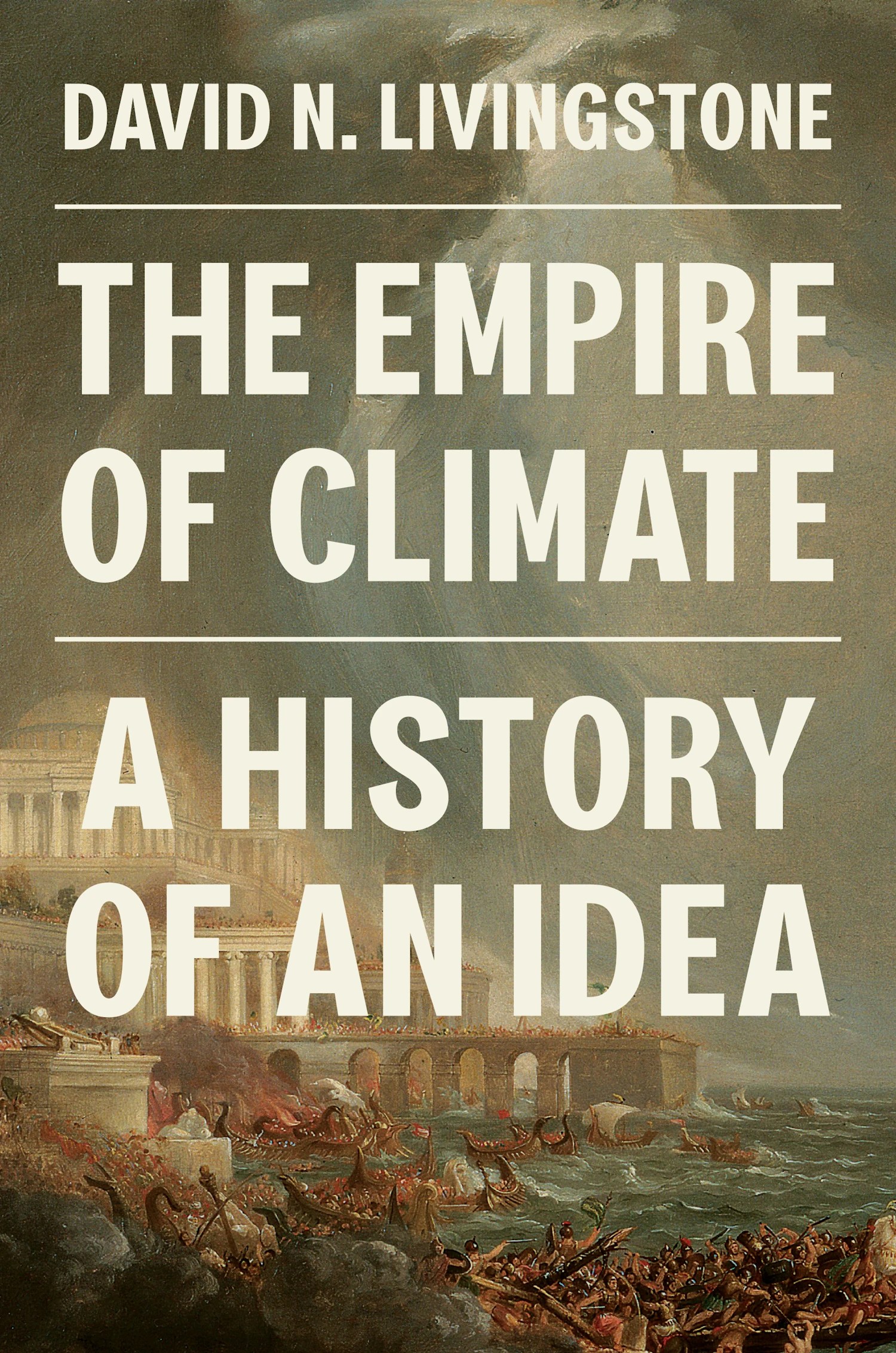
David N. Livingstone, The Empire of Climate: A History of an Idea – Princeton University Press, April 2024 (USA); June 2024 (UK)

David N. Livingstone, The Empire of Climate: A History of an Idea – Princeton University Press, April 2024 (USA); June 2024 (UK)

Scientists, journalists, and politicians increasingly tell us that human impacts on climate constitute the single greatest threat facing our planet and may even bring about the extinction of our species. Yet behind these anxieties lies an older, much deeper fear about the power that climate exerts over us. The Empire of Climate traces the history of this idea and its pervasive influence over how we interpret world events and make sense of the human condition, from the rise and fall of ancient civilizations to the afflictions of the modern psyche.

Taking readers from the time of Hippocrates to the unfolding crisis of global warming today, David Livingstone reveals how climate has been critically implicated in the politics of imperial control and race relations; been used to explain industrial development, market performance, economic breakdown; and served as a bellwether for national character and cultural collapse. He examines how climate has been put forward as an explanation for warfare and civil conflict, and how it has been identified as a critical factor in bodily disorders and acute psychosis.

A panoramic work of scholarship, The Empire of Climate maps the tangled histories of an idea that has haunted our collective imagination for centuries, shedding critical light on the notion that everything from the wealth of nations to the human mind itself are subject to climate’s imperial rule.

Posted in Uncategorized | 1 Comment

Thinking Global Podcast – Quentin Skinner at E-International Relations

Thinking Global Podcast – Quentin Skinner at E-International Relations

This week on the Thinking Global Podcast, Professor Quentin Skinner (Queen Mary, University of London – @QMHistory) speaks with the team about contextualism, Machiavelli, Hobbes, and more. Professor Skinner chats with Kieran (⁠⁠⁠@kieranjomeara⁠⁠⁠) and Tusharika (⁠@Tusharika24⁠) about what contextualism is as a methodological approach to political thought, how he applies this to Machiavelli and Hobbes, and how this relays back to what it is to think about global politics.

Quentin Skinner is Emeritus Professor of Humanities at Queen Mary, University of London (@QMHistory). Prof. Skinner has published on a number of philosophical themes, including the nature of interpretation and historical explanation, and on several issues in contemporary political theory, including the concept of political liberty and the character of the state. He has written extensively on questions about historical method and historical explanation, being a key figure in the ‘Cambridge’ contextualist school of political thought (@cambridge_cpt). Many of these essays have been collected in the volume, edited by James Tully, Meaning and Context: Quentin Skinner and his Critics (1988). 

His historical research centres on early-modern Europe, and one of his principal interests lies in the Italian Renaissance. He has  published books on Machiavelli, on early Renaissance political painting, on ideals of civic virtue, and has edited Machiavelli’s The Prince. These include Machiavelli: A Very Short Introduction (2000), Machiavelli (1981) and more. The other main focus of his research concerns seventeenth century England, writing on the relations between rhetoric and philosophy, including a book on Shakespeare’s use of classical rhetoric – Forensic Shakespeare(2014) – and on debates about political liberty in the English revolution – Liberty Before Liberalism(1998). He has also published three books on the philosophy of Thomas Hobbes – Hobbes and Republican Liberty (2008), Reason and Rhetoric in The Philosophy of Hobbes (2010), From Humanism to Hobbes (2018) and more. His best-known multi-volume works, The Foundations of Modern Political Thought (1978) and Visions of Politics (2002)attempt to span his insight into the whole early-modern period. This is without mentioning a host of influential articles, such as his famous ‘Meaning and Understanding in the History of Ideas’ (1969).

Posted in Quentin Skinnner, Uncategorized | 1 Comment