Indo-European Thought in Twentieth-Century France update 18: further work on Benveniste and more archives in Paris

In the last update on this project, I talked about the Paris archival work I’d done in early February. There were a few loose ends of references when I got back from Paris, most of which I was able to resolve at Warwick or Oxford libraries. The notes I’d taken from the Fonds Lucien Tesnière helped with situating a couple of discussions of Benveniste’s Origines, published in the Bulletin de la Faculté des Lettres de Strasbourg in 1937. A few letters in the Fonds Alexandre Kojève, one of which was from Henri Lefebvre, spurred me to write a very short piece on a collaborative project that never was. It doesn’t really have a connection to this project, but I wrote a little piece setting out what I could find here. I’ve also started writing another only tangentially connected piece, about Alexandre Koyré’s unsuccessful attempt to get elected to the Collège de France, based on archival materials, which will need a bit more work.

I’ve followed up a few leads about Benveniste’s exclusion from the Collège de France during the war, because of the 1940 Vichy law on Jewish people not holding certain professions. I know this is also going to need a bit more digging. Other Jewish professors took early retirement, including Marcel Mauss, but Benveniste was only in his mid-thirties at the time. The prohibition was rescinded after the liberation, but I’m somewhat amazed by the idea that he could just return and work with people, particularly the administrator, who had put this exclusion into practice. Benveniste’s movements in the war is a fascinating topic, and while the sources I’m drawing on, at least so far, have been used by others, I think I’m able to join some dots in an interesting way.

Although Benveniste didn’t publish anything for four years during the war, and lost his working notes when his apartment was ransacked during the Occupation, he quickly resumed writing in the second half of the 1940s. His essay on the first, second and third persons of the verb was reprinted in his Problems of General Linguistics in 1966, and some other essays from this period are in the posthumous Langues, cultures, religions collection. “Le jeu comme structure [Play as structure]” and some on Indo-European social relations – medicine, social classes and the oath – are perhaps the most interesting of these. When Noms d’agent et noms d’action en indo-européen was published in 1948, the Avant-Propos briefly acknowledges the author’s delay due to “other publications, the interruption of the war, the loss of all his working manuscripts and the need to reconstitute the entire documentation” (p. 5 n. 1).

I also did a bit of work on Benveniste’s 1947 fieldtrip to Persia and Afghanistan, which is mentioned in accounts of his life and his teaching record. A day-by-day account was published by Mohammad Nabi Kohzad, who accompanied Benveniste on the trip. Benveniste’s notebooks from this work are in the archives, and there were plans for a book on the topic of vocabulary across dialects, which he never completed. Georges Redard planned to edit the material after Benveniste’s death, and listed the book as forthcoming. It never appeared, though there are some indications in Redard’s hand of what it could have contained. There is a report on the fieldwork in his archives, which I don’t think was ever published. 

I then went back in Paris for two more weeks, working on quite a lot of different things. I looked at a few letters in the Fonds Raymond Aron, some of Georges Bataille’s working notes for lectures on religion, which show his engagement with Mircea Eliade, and a few manuscripts in the Fonds Roland Barthes which discuss Benveniste, all at the Bibliothèque nationale. Some of those Barthes texts are published, but there are a couple of lectures in courses which are not. I’m not sure what I will do with this material, but it was interesting to look at. I also looked at the manuscript of one of Foucault’s Collège de France courses; one of the first to be published, for which they just used the recordings. The manuscript is quite different in places, and has some interesting moments, though much is missing. In particular, I found it interesting for having material he presented in the parallel seminar. As I’ve said before, when providing a list of the topics of Foucault’s seminars, we still know relatively little about what they did in those sessions – with the exception of the Pierre Rivière dossier, and some individual pieces in, for example, The Foucault Effect.

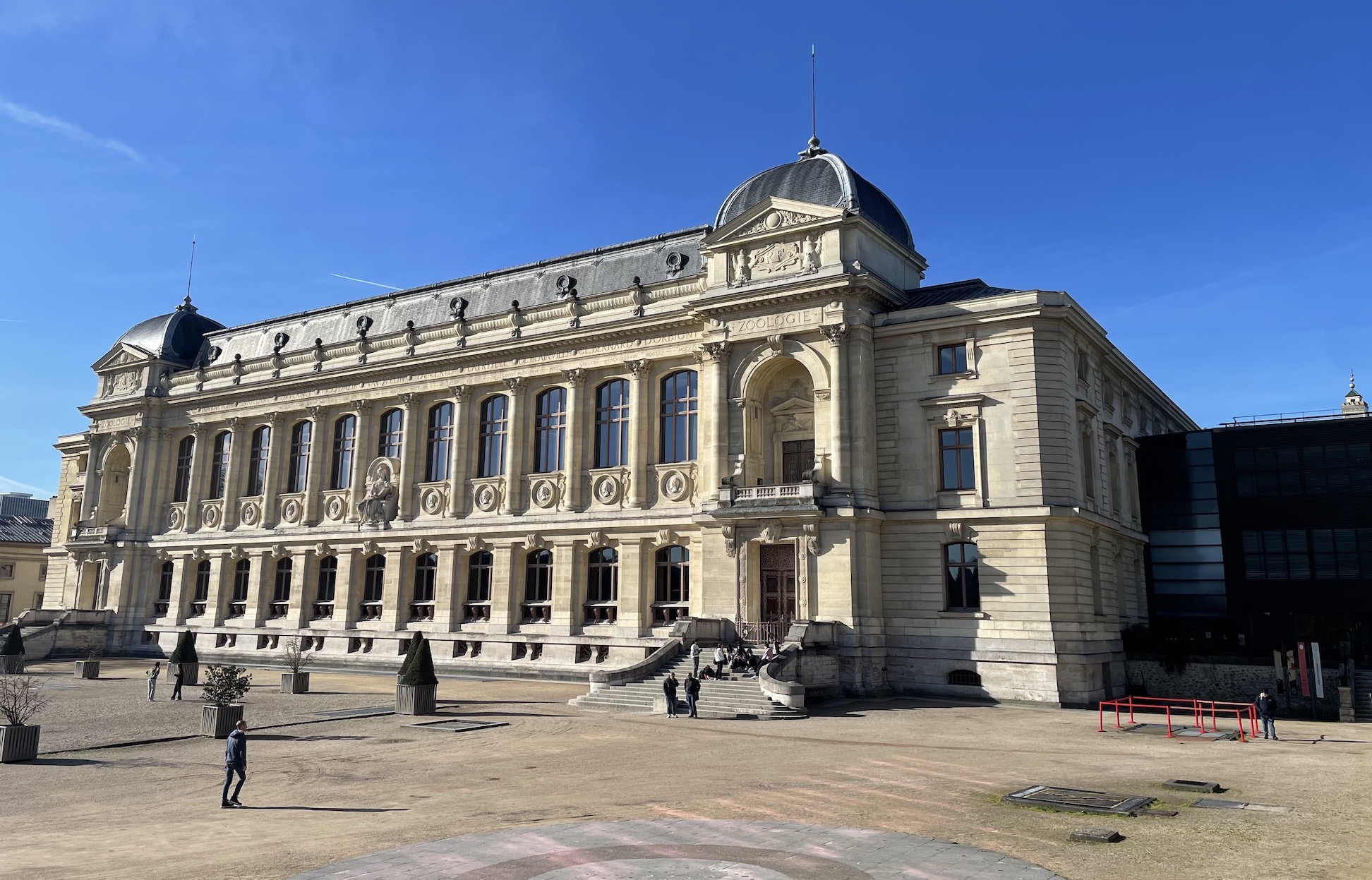
At the Muséum national d’Histoire naturelle I looked at some things in the Paul Rivet papers, including Claude Lévi-Strauss’s extensive letters to him, and some letters from Dumézil to Marcel Mauss. I had discovered that they had some of the Mauss archive there by chance – the other and much larger part is at the Collège de France, along with the Henri Hubert papers. (The latter collection comprises the papers which, like those of Dumézil and some other Collège de France professors, used to be at IMEC.) I also got a card for the fairly new Humathèque Condorcet, which has some records from the EPHE and the EHESS. I took an initial look at some of the EPHE papers, which include a few student notes from Benveniste courses for which I don’t think there is another record beyond the brief reports in the Annuaire.

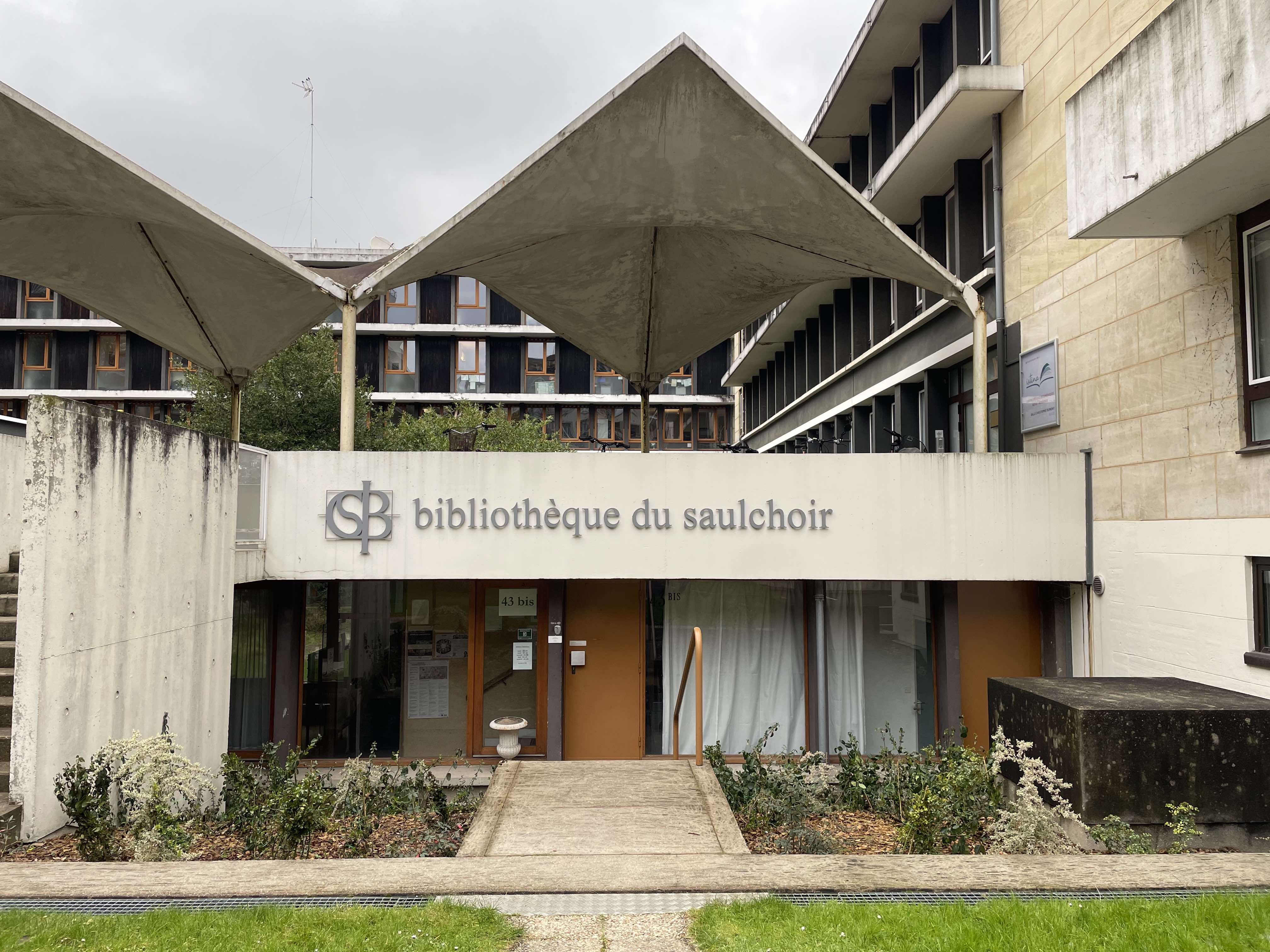
I also made a visit to the Bibliothèque du Saulchoir, a Dominican library which Foucault used for his research on antiquity in the last five years of his life. I’d never had a reason to go before – it once held the collection of the Centre Michel Foucault, but that moved to IMEC a long time ago. There is a short piece about Foucault’s use of the library by the former librarian Frère Michel Albaric here. It’s a nice quiet place to work, looking onto a little garden. I was there to look at some letters from Dumézil and, especially, Benveniste, to Jean de Menasce. As the last update said, other parts of de Menasce’s archive are at the Bibliothèque universitaire des langues et civilisations (BULAC), which I’ve also consulted. There are other things at the Saulchoir which I might request to look at on a future visit.

I also continued work on the Benveniste and Dumézil archives at the Collège de France, and have completed an initial survey of most of the material they have. I also went through some of the administrative papers for the Assemblies of Professors when key decisions were taken, such as elections. As I usually do, I also made use of the main Bibliothèque nationale site to look at some things which are hard to find in the UK. Across the last three trips to Paris I’ve managed to complete a lot of the work I wasn’t able to do last year. I should be back next in late May. There are a few things at the Archives Nationales for which I’ve requested authorisation, and one file is in a store which is being treated for asbestos, so isn’t currently accessible. 

The main thing in Paris which I haven’t even begun to work with is the Benveniste archive at the Bibliothèque nationale, though as far as I can tell, most of that material relates to later parts of his career. I haven’t yet looked at other potentially interesting archives held at the Collège de France, including the Mauss-Hubert, Paul Pelliot and Antoine Meillet ones. I’m going to need to have a plan for a targeted approach with these, given the scale of what they hold, and how much time it would require to even do an initial survey. (The Meillet inventory I have is 300 pages long; the Mauss-Hubert over 1000.) There is some work I’d like to do in Switzerland, and at some point I’d like to get to IMEC for a few things. I’m not sure if I’ll get to places further afield – there are small things which might be interesting to do in several other European cities, but in such a range of places it’s hard to think of a way to do this that isn’t a lot of individual trips. There are other archives in and around Paris, or elsewhere in France which might hold some interesting things. There is always more, of course, but I feel in a few areas I am actually finishing tasks, rather than what has often felt like completing one thing only meant there were four more to do.

I am grateful to Ian Klinke and Jean-François Drolet for an invitation to respond to Ishan Ashutosh’s paper at the “Geopolitics and the Critique of Liberal Order” workshop at St. John’s College, Oxford. While the focus was the contemporary far-right, it was thoroughly informed by the history of ideas and led to some very helpful conversations. 

I am now very close to completing a draft of the chapter on Benveniste in the 1930s and 1940s, which has taken far longer than I planned, and is very long. I might have to split this chapter or move material elsewhere. There are a few unresolved things for which I need to consult archives in Switzerland, but I really need to leave Benveniste behind for now and turn back to Dumézil in the 1930s and 1940s for the parallel chapter.

Previous updates on this project can be found here, along with links to some research resources and forthcoming publications, including the still-delayed reedition of Georges Dumézil’s Mitra-Varuna. There is a lot more about the earlier Foucault work here. The final volume of the series, The Archaeology of Foucault, and the special issue of Theory, Culture & Society I co-edited on “Foucault before the Collège de France” are both now published.

Posted in Alexandre Kojève, Alexandre Koyré, Claude Lévi-Strauss, Emile Benveniste, Georges Bataille, Georges Dumézil, Henri Lefebvre, Mapping Indo-European Thought in Twentieth Century France, Marcel Mauss, Michel Foucault, Mircea Eliade, Uncategorized | 5 Comments

Sharad Chari, Apartheid Remains – Duke University Press, 2024 (open access introduction)

Sharad Chari, Apartheid Remains – Duke University Press, May 2024

In Apartheid Remains, Sharad Chari explores how people handle the remains of segregation and apartheid in South Africa as witnessed through portals in an industrial-residential landscape in the Indian Ocean city of Durban. Through long-term historical and ethnographic research, Chari portrays South Africa’s twentieth century as a palimpsest that conserves the remains of multiple pasts, including attempts by the racial state to remake territory and personhood while instead deepening spatial contradictions and struggles. When South Durban’s denizens collectively mobilized in various ways—through Black Consciousness politics and other attempts at refusing the ruinous articulation of biopolitics, sovereignty, and capital—submerged traditions of the Indian Ocean and the Black Atlantic offered them powerful resources. Of these, Chari reads Black documentary photography as particularly insightful audiovisual blues critique. At the tense interface of Marxism, feminism, and Black study, he offers a method and form of geography attentive to the spatial and embodied remains of history. Apartheid Remains looks out from South Durban to imaginations of abolition of all forms of racial capitalism and environmental suffering that define our planetary predicament.

The introduction is open access here

Update October 2024: New Books discussion with Geoffrey Gordon – thanks to dmf for this link

Posted in Uncategorized | 2 Comments

Philipp Felsch, How Nietzsche Came in from the Cold – Polity, trans. Daniel Bowles, March 2024

Philipp Felsch, How Nietzsche Came in from the Cold: Tale of a Redemption – trans. Daniel Bowles, Polity, March 2024

I’ve mentioned the German Wie Nietzsche aus der Kälte kam before, along with the interview with Felsch at the Journal of the History of Ideas blog, by Isabel Jacobs (part Ipart II). His earlier book, The Summer of Theory: History of a Rebellion, 1960-1990 was translated by Tony Crawford for Polity in 2021.

Nietzsche’s reputation, like much of Europe, lay in ruins in 1945. Giving a platform to a philosopher venerated by the Nazis was not an attractive prospect for Germans eager to cast off Hitler’s shadow. It was only when two ambitious antifascist Italians, Giorgio Colli and Mazzino Montinari, began to comb through the archives that anyone warmed to the idea of rehabilitating Nietzsche as a major European philosopher. 

Their goal was to interpret Nietzsche’s writings in a new way and free them from the posthumous falsification of his work. The problem was that 10,000 barely legible pages were housed behind the Iron Curtain in the German Democratic Republic, where Nietzsche had been officially designated an enemy of the state. In 1961, Montinari moved from Tuscany to the home of actually existing socialism to decode the “real” Nietzsche under the watchful eyes of the Stasi. But he and Colli would soon realize that the French philosophers making use of their edition were questioning the idea of the authentic text and of truth itself.

Felsch retraces the journey of the two Italian editors and their edition, telling a gripping and unlikely story of how one of Europe’s most controversial philosophers was resurrected from the baleful clutch of the Nazis and transformed into an icon of postmodern thought.

Posted in Uncategorized | Leave a comment

Books received – Binswanger & Warburg, Auffret, Foucault, Dumézil, Benveniste et. al, and Derrida

Photo of the books described in the post

Some recently-bought books, mostly in Paris, including Foucault’s very early La constitution d’un transcendantal historique dans la Phénoménologie de l’esprit de Hegel: Mémoire du diplôme d’études supérieures de philosophie and the most recently published seminar from Jacques Derrida, Répondre – du secret. Séminaire (1991-1992). The oldest book here, La civilisation iranienne, has contributions from Dumézil and Benveniste, among others. Although I don’t think it’s mentioned in the book, the contributions were originally broadcast on RTF in the late 1950s.

Posted in Emile Benveniste, Georges Dumézil, Jacques Derrida, Ludwig Binswanger, Michel Foucault, Uncategorized | Leave a comment

Enrique Dussel, The Theological Metaphors of Marx – trans. Camilo Pérez-Bustillo, foreword Eduardo Mendieta, Duke University Press, April 2024

Enrique Dussel, The Theological Metaphors of Marx – trans. Camilo Pérez-Bustillo, foreword Eduardo Mendieta, Duke University Press, April 2024

the introduction is open access here

In The Theological Metaphors of Marx, Enrique Dussel provides a groundbreaking combination of Marxology, theology, and ethical theory. Dussel shows that Marx unveils the theology of capitalism in his critique of commodity fetishization. Capitalism constitutes an idolatry of the commodity that undergirds the capitalist expropriation of labor. Dussel examines Marx’s early writings on religion and fetishism and proceeds through what Dussel refers to as the four major drafts of Capital, ultimately situating Marx’s philosophical, economic, ethical, and historical insights in relation to the theological problems of his time. Dussel notes a shift in Marx’s underlying theological schema from a political critique of the state to an economic critique of the commodity fetish as the Devil, or anti-God, of modernity. Marx’s thought, impact, and influence cannot be fully understood without Dussel’s historic reinterpretation of the theological origins and implications of Marx’s critiques of political economy and politics.

Posted in Eduardo Mendieta, Enrique Dussel, Karl Marx, Uncategorized | Leave a comment

Bruce O’Neill, Underground: Dreams and Degradations in Bucharest – Penn Press, April 2024

Bruce O’Neill, Underground: Dreams and Degradations in Bucharest – Penn Press, April 2024

This book gets to the bottom of the twenty-first-century city, literally. Underground moves beneath Romania’s capital, Bucharest, to examine how the demands of global accumulation have extended urban life not just upward into higher skylines, and outward to ever more distant peripheries, but also downward beneath city sidewalks. Underground details how developers and municipal officials have invested tremendous sums of money to gentrify and expand Bucharest’s constellation of subterranean Metro stations and pedestrian pathways, basements and cellars, bunkers and crypts to provide upwardly mobile residents with space to live, work, and play in an overcrowded and increasingly unaffordable city center. In this sense, the repurposed underground facilitates dreams of middle-class ascendancy. This sense of optimism, the book shows, invariably gives way to ambivalence as the middle classes confront the indignities of being incorporated into the city from below.

Bruce O’Neill argues that these loosely coordinated efforts have not only introduced novel forms of social fragmentation but also a new aesthetics of inequality that are fundamentally shaping where and how the middle classes fit in the city. Pushing urban studies beyond a cartographic perspective—with its horizontal focus upon centers and peripheries, walls and gates—O’Neill brings into focus the vertical dynamics of gentrification that place some “on the bottom” and others “on top” of the city. As cities around the world extend further downward in the name of development and sustainability, Underground makes clear that scholars and practitioners of the twenty-first-century city will need to become ever more attuned to the cultural politics of urban verticality, asking not just who is included in the city and who has been pressed outside of it, but also who is on top and who is placed on the bottom.

Posted in Uncategorized | 1 Comment

La Toupie folle – The Pragmatic Genealogy of Concepts

La Toupie folle – The Pragmatic Genealogy of Concepts

Our research project, The Pragmatic Genealogy of Concepts funded by a Small Grant from the British Academy and Leverhulme Trust, concerns, as its primary object, an issue of the journal Recherches(number 13) from December 1973, which bears the title La Généalogie du capital: les équipments du pouvoir. The issue is the result of a working group of the organisation CERFI (Centre d’études, de recherches et de formation institutionelles), established by French activist, psychiatrist and philosopher Félix Guattari in 1965.

The project is a collaboration between Susana Caló, Patrick ffrench and Daniel Nemenyi. Much more at the project website.

This journal issue was one of the collaborative projects with which Foucault was involved. More on those here.

Posted in Uncategorized | 1 Comment

Gillian Rose, Tips for planning research leave

The geographer Gillian Rose with some Tips for planning research leave

Posted in Uncategorized | Leave a comment

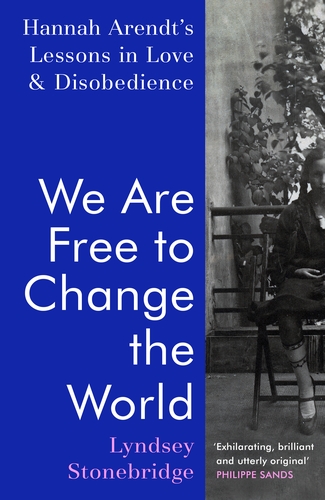
Lyndsey Stonebridge about the writing and research behind a new book on the work of Hannah Arendt

I’ve learnt from Arendt the necessity – as well as dangers – of speaking your mind.

Thanks to Dave Beer for the link.

The book being discussed is Lyndsey Stonebridge, We are Free to Change the World: Hannah Arendt’s Lessons in Love and Disobedience – Penguin, January 2024 (USUK).

Posted in Uncategorized | Leave a comment

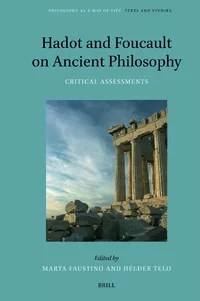
Marta Faustino and Hélder Telo (eds.) Hadot and Foucault on Ancient Philosophy: Critical Assessments – Brill, March 2024

Marta Faustino and Hélder Telo (eds.) Hadot and Foucault on Ancient Philosophy: Critical Assessments – Brill, March 2024

Some interesting looking chapters from a good range of people, but a terrible price, where the e-book is even more expensive than the physical one. Presumably because of VAT, but there are obviously many other costs associated with a physical book.

The affinities between Pierre Hadot’s and Michel Foucault’s interpretations of ancient philosophy, as well as their impact, are well-known. However, these interpretations have been criticized in several crucial points. This book provides the first extensive critical assessment of these interpretations. It brings together specialists in ancient philosophy, as well as Hadot and Foucault scholars, in order both to explore criticisms and clarify Hadot’s and Foucault’s accounts.

In doing so, it not only offers an overview of the main trends in Philosophy as a Way of Life, but also recasts the debate and opens new paths of inquiry in the field.

Posted in Uncategorized | 1 Comment