“Foucault and Structuralism” – a book chapter for Daniele Lorenzini’s collection The Foucauldian Mind

I recently wrote a book chapter on “Foucault and Structuralism” for The Foucauldian Mind, edited by my friend and former Warwick colleague Daniele Lorenzini. It’s been an interesting diversion from the other work. Contrary to my usual practice, where I write in all directions at once, and then try to impose some order on things when I know what I want to say, with this piece I worked out a fairly detailed plan, gave each section a word limit, and then wrote each in a fairly linear way. Some of the quotations and references draw from my books on Foucault, but the overall argument is distinct and clearer with this specific focus. And I know a lot more about Claude Lévi-Strauss and certainly Georges Dumézil as a result of recent work. It came together surprisingly easily.

I don’t plan to use this image, but I do mention it, since it’s so iconic, and I thought it was a good one for the more visual media of this blog post. (The illustration is much more famous than the piece on structuralism by François Châtelet which it illustrated.) Foucault is holding forth with Lacan, Lévi-Strauss and Barthes. Someone (but I don’t remember who) said that the only reason Althusser wasn’t included, despite being discussed in the article, was that he was so cloistered in the ENS, no-one knew what he looked like.

Should Foucault have been included in this line-up? That’s the question I try to answer in this chapter.
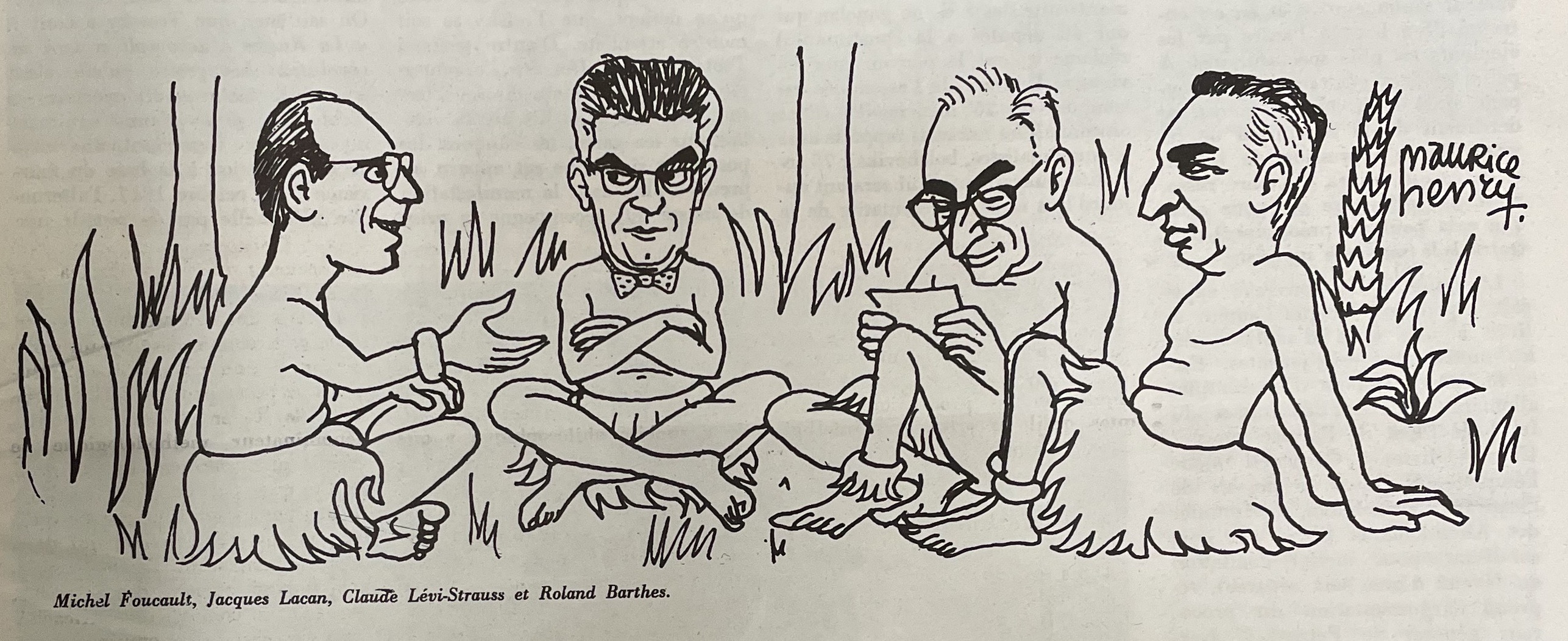
Cartoon by Maurice Henry in La Quinzaine Littéraire, 1 July 1967 – left to right, Foucault, Lacan, Lévi-Strauss, Barthes

It’s not a long chapter, but I’ve tried to survey the relation through a few themes: the structural aspects of History of Madness and the first edition of Birth of the Clinic; the archaeology of structuralism in The Order of Things; and then more briefly Foucault’s engagement with linguistics in the 1960s and his discussion of Georges Dumézil especially in some 1970 lectures. The Introduction sets this up in relation to Foucault’s perceived association to French discussions of structuralism and his two most forceful refusals to be so assimilated; while the Conclusion looks at some of the ways he tried to obscure the historical record post-1970 with the revisions to two of his books.

This piece is loosely connected to the Indo-European thought project, but more to the pieces I’ve been writing on Foucault and Dumézil, and the one on Canguilhem, Dumezil and Hyppolite – a series which I see as distinct from the planned Indo-European book.

The Foucauldian Mind is scheduled for 2026, the 100th anniversary of Foucault’s birth. I’ll share more news when it’s available. [Update February 2026: the book has a webpage and is scheduled for late summer 2026]

Posted in Claude Lévi-Strauss, Georges Canguilhem, Georges Dumézil, Jacques Lacan, Jean Hyppolite, Louis Althusser, Mapping Indo-European Thought in Twentieth Century France, Michel Foucault, The Archaeology of Foucault, The Early Foucault, Uncategorized | 2 Comments

Marcelo Hoffman, Foucault in Brazil: Dictatorship, Resistance, and Solidarity (University of Pittsburgh Press, 2024) – book launch 16 April 2024, Pace University

Marcelo Hoffman, Foucault in Brazil: Dictatorship, Resistance, and Solidarity (University of Pittsburgh Press, 2024) – book launch 16 April 2024, Pace University

Posted in Michel Foucault, Uncategorized | Leave a comment

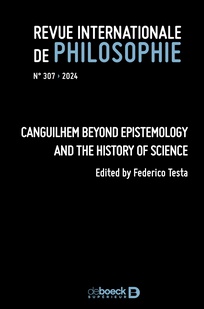
Canguilhem beyond Epistemology and the History of Science – special issue of Revue Internationale de Philosophie, No 307, 2024

Canguilhem beyond Epistemology and the History of Science – special issue of Revue Internationale de Philosophie, edited by Federico Testa, No 307, 2024

Congratulations to Federico for bringing this issue together – it has taken a long time, but as authors we think it is worth it. The pieces are all subscription only, unfortunately, but I’m happy to share my piece if you contact me by email – I’m sure the other authors are too.

Federico Testa, “Introduction: A Neglected Philosopher—Canguilhem Beyond Epistemology and the History of Science

Stuart Elden, “Canguilhem, Dumézil, Hyppolite: Georges Canguilhem and his Contemporaries

Giuseppe Bianco, “Georges Canguilhem’s first reading of Auguste Comte (1926) and positivism’s fortune in the French philosophical field (1830-1930)

Cristina Chimisso, “Individuals and their Environments in Georges Canguilhem’s Philosophy of Medicine

Charles Wolfe, “A Note on the Situation of Biological Philosophy

Samuel Talcott, “Canguilhem following Canguilhem: History of a Philosophical Engagement with Error

Maria Muhle, “Temptations of the Milieu

Here’s the abstract for my piece:

In the original preface to his primary doctoral thesis Folie et déraison, Michel Foucault thanked three men as intellectual mentors and influences on his work. In his inaugural lecture at the Collège de France in December 1970 the same three names were invoked: Georges Canguilhem, Georges Dumézil and Jean Hyppolite. The relation between these figures individually with Foucault has been discussed in varying degrees of detail, but this article explores the intellectual affinities and tensions between the three older men. Canguilhem and Hyppolite had been contemporaries at the École normale supérieure in the 1920s, then colleagues in Strasbourg, and perhaps most visibly they took part in a television interview mediated by Alain Badiou and Dina Dreyfus in 1965. While Dumézil and Hyppolite were colleagues at the Collège de France, they appear never to have discussed each other’s work. Nor does Dumézil discuss Canguilhem, but Canguilhem importantly discusses both Dumézil and Hyppolite. The focus here is on Canguilhem’s review of Foucault’s Les mots et les choses, in which he indicates the understated importance of Dumézil to that book; and a report of a largely unknown seminar from autumn 1970 when Foucault discussed Dumézil’s work and Canguilhem responded. The article then moves to Canguilhem’s engagement with Hyppolite’s work, especially in his analysis of “Hegel en France,” and the tributes he wrote to his friend and colleague following Hyppolite’s 1968 death. Exploring his reading of two of his great contemporaries helps to resituate Canguilhem within wider philosophical debates in the mid-20th century.

While written for this issue, I also see ‘Canguilhem, Dumézil, Hyppolite’ as part of an informal trilogy of articles which bridge the Foucault and Canguilhem books, on the one hand, and my new project on Indo-European thought in twentieth-century France, on the other. The other two pieces are on Foucault and Dumézil, one on their understandings of sovereignty was published last year in the Handbook on Governmentality; the other on antiquity is coming out in Journal of the History of Ideas later this year. “The Yoke of Law and the Lustre of Glory: Foucault and Dumézil on Sovereignty” can be found at the official Edward Elgar site here, or a pre-print is available at Warwick’s WRAP site if you don’t have library access. I’ll share a link to the second when it’s available.

Posted in Canguilhem (book), Georges Canguilhem, Georges Dumézil, Jean Hyppolite, The Archaeology of Foucault, The Early Foucault, Uncategorized | 3 Comments

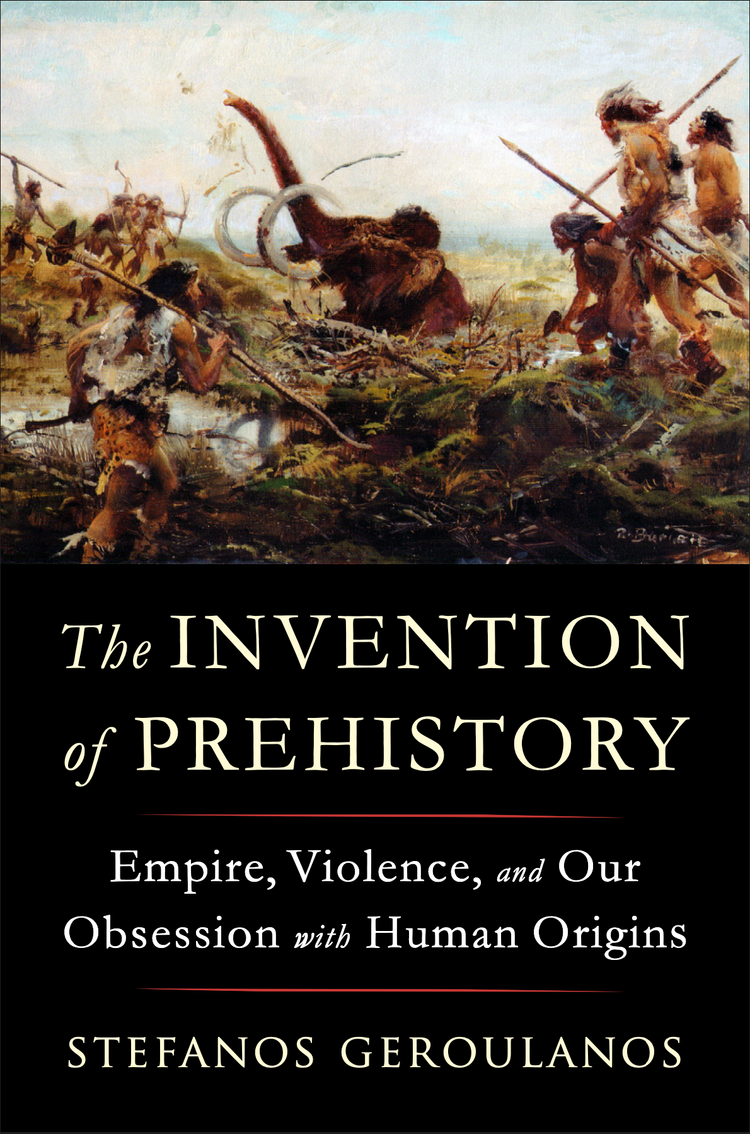
The Invention of Prehistory: A Dialogue with Stefanos Geroulanos

The Invention of Prehistory: A Dialogue with Stefanos Geroulanos

They are talking about his new book, The Invention of Prehistory: Empire, Violence, and our Obsession with Human Origins (Liveright, April 2024)

In this episode, Xavier Bonilla has a dialogue with Stefanos Geroulanos about the history of prehistory. They talk about why studying history is important and why it is not final, the emphasis on the nature of man, why Rousseau and Hobbes’ ideas still persist, human nature and equality, and the impact of Darwin. They also talk about the impact of Marx, Neanderthals, thin veneer, and the instincts, Freud’s contribution, Nazi party, how we continue to understand history, and many more topics. Stefanos Geroulanos is Director of the Remarque Institute and a professor of history at New York University. He has his BA from Princeton and his PhD from Johns Hopkins. From 2015-2017, he was Director of the Center for International Research in the Humanities and Social Sciences at NYU. His research focuses on histories of the concepts that weave together understanding of the human, of time, and of the body. He has written many books, including the most recent book, The Invention of Prehistory: Empire, Violence, and Our Obsession with Human Origins.

Posted in Uncategorized | 1 Comment

The Archaeology of Foucault reviewed by David Beer in The Times Literary Supplement

My 2023 book The Archaeology of Foucault is generously reviewed by David Beer in The Times Literary Supplement

The review requires subscription, but email me if you can’t access a copy through an institution.

Imagine Michel Foucault and Roland Barthes side by side at a wrestling match. The contrast between characters and setting might seem incongruous. Yet these towering figures of French intellectual life were regularly to be found ringside together during the 1960s. This is not simply biographical trivia: it is one of many surprising fragments that Stuart Elden uses to situate Foucault’s thinking, the roots of his ideas and the conditions that shaped them, including the intellectual circles in which he moved. His friendship with Barthes is also a sign of his involvement with the editorial teams behind the influential periodicals Tel Quel and Critique. It is through the accumulation of many such insights that Elden has meticulously created the most intricate account yet of the making of Foucault.

The Archaeology of Foucault is the final part of his four-volume project covering the philosopher’s entire career. This volume accounts for the 1960s, when Foucault startlingly “went from being a doctoral candidate to election to one of France’s most prestigious institutions at the age of just forty-three”. As well as dealing with the published books and articles, Elden has worked his way through reading notes, lecture scripts, office ephemera, teaching schedules, unpublished commissions, jottings on old manuscript pages and even slips of paper wrapped around other notes. This is primarily a book about Foucault’s thought, but it is also a study of the materiality of thinking. [continues here]

Update: Dave reflects on writing the piece on his blog, Half Thoughts.

Posted in Michel Foucault, Roland Barthes, The Archaeology of Foucault, Uncategorized | Leave a comment

Unintimidated Languages: Jameson at 90

Unintimidated Languages: Jameson at 90

In honor of Fredric Jameson‘s 90th birthday this month, we’re publishing a series of short essays focused on the major books in Jameson’s oeuvre. Here, Daniel Hartley revisits Jameson’s first book, Sartre: The Origins of a Style (1961).

Update: Christopher Breu discusses Marxism and Form (1971) – On Prophetic Form and the Whole Tangled, Dripping Mass of the Dialectic.

Matthew Beaumont on The Prison-House of Language (1972) – Intense Curiosity

Ian Buchanan on Fables of Aggression (1979) here

Philip E. Wegner on The Ideologies of Theory (1988/2008) – Deep Listening

Maria Elisa Cevasco on Political Unconscious (1981) – History is what hurts

The whole series can be found here

Posted in Fredric Jameson, Jean-Paul Sartre | Leave a comment

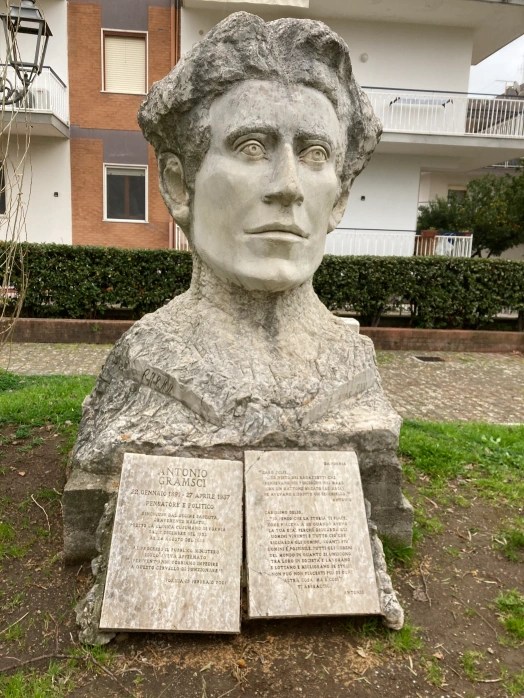
Andy Merrifield, ‘The Subaltern in Gramsci’

Andy Merrifield, ‘The Subaltern in Gramsci

Gramsci saw the whole of the Italian “South” as a kind of goblin, as a character who got and keeps getting a bad rap, like Rumpelstiltskin. In late 1926, a month or so prior to his arrest, he was at work on a long essay about the Italian South, Alcuni temi della questione MeridionaleSome Aspects on the Southern Question. The piece was never completed; it was rudely interrupted; and while there’s a lot left dangling, there’s plenty for us still to glean. Gramsci was addressing his Marxist comrades, notably comrades from the north, in a tone that’s critical, enquiring, taking to task all camps, typically trying to get at the truth—warts and all. Gramsci chastised a Right northern bourgeoisie as well as a Left industrial proletariat, northern Marxists as well as southern liberals, workers from the north as well as a gentry from the south.

Point is that all this is voiced by a lad from the south. Gramsci’s political awakening occurred in the north, yet his cultural allegiances always rested with the south. He grew up in peasant society, spoke local Ghilarza dialect, and probably didn’t hear Italian itself until he reached grammar school; and then, in Turin, through his college professors. As a poor, set-apart kid, encountering official Italian was likely both a source of liberation and a lesson in officialdom, the tenor of a ruling class authority he was out to smash. [continues here]

Posted in Antonio Gramsci, Uncategorized | 1 Comment

On Book Reviews – Daily Nous, NDPR and more

The Daily Nous has a short piece about the decline in the number of book reviews at Notre Dame Philosophical Reviews (NDPR), with some comments about why this might be. Daily Nons will share news of open access book reviews, provided journals alert them.

I’ve noticed too that publishers are now reluctant to send physical copies of books to reviewers. Given that a copy of the book is the only recompense for the work of reviewing, I’ve refused to review a pdf or other e-format. I’ve also tried to avoid reviewing when the review would only be available to journal subscribers. But these seem to be losing battles.

(Update: I should clarify that I do sometimes review for subscriber-only outlets, but in those cases do try to make the review available easily by sharing a link along with contact details so people can ask me for the copy.)

Posted in Uncategorized | 5 Comments

Yousuf Al-Bulushi, Ruptures in the Afterlife of the Apartheid City – Palgrave Macmillan, 2024

Yousuf Al-Bulushi, Ruptures in the Afterlife of the Apartheid City – Palgrave Macmillan, 2024

How are poor people in South Africa confronting the persistent legacy of apartheid spatial segregation and anti-blackness? And what can movements across the world engaged in a global struggle against racial capitalism learn from the South African experience? This book explores the relationship between shack dwellers and the municipal government in South Africa. Grounded in the local realities of the struggle for housing and basic survival, the project makes broader interventions in national, continental and global debates about urban geography, African studies, social movements and race. The author argues that the shack settlement is emblematic of a democratic South Africa still profoundly shaped by apartheid’s afterlife.  


Posted in urban/urbanisation | 1 Comment

Mathieu Dejean, Henri Lefebvre: Dogmatism in Reverse – trans. David Fernbach, Verso blog 

Mathieu Dejean, Henri Lefebvre: Dogmatism in Reverse – trans. David Fernbach, Verso blog (open access)

In 1958, during the insurrectionary events that preceded General de Gaulle’s return to power, 57-year-old Henri Lefebvre faced two ‘comrades’ from the French Communist Party in an austere room. His request for minutes to be taken had just been curtly refused. The Commission central de contrôle politique was only there to question him about his ‘behaviour’.

The interview began: ‘Did you ask the Party’s permission to write an article about the Nouvelle Vague in L’Express?’ – ‘No.’ – ‘Did you ask the Party’s permission to write a response to André Philip in France-Observateur?’ – ‘No.’ After this comedy of an interrogation, the philosopher was expelled from the PCF, in which he had been an activist for thirty years. He was part of the first generation of Marxist philosophers, along with his friends Norbert Guterman (1900-84) and Georges Politzer (1903-42).

Originally published by Mediapart in 2023 (this requires subscription)

Posted in Henri Lefebvre, Uncategorized | Leave a comment