Rok Benčin, Rethinking the Concept of World: Towards Transcendental Multiplicity – Edinburgh University Press, print and open access, January 2024

Rok Benčin, Rethinking the Concept of World: Towards Transcendental Multiplicity – Edinburgh University Press, print and open access, January 2024
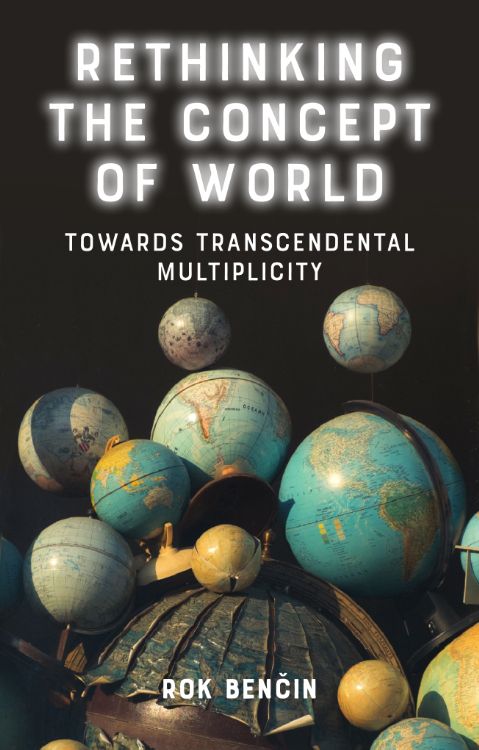
Explores the idea that reality is structured as a multiplicity of divergent, yet coexisting worlds
  • Maps different concepts of world in contemporary philosophy and traces their genealogies
  • Critically examines the ideas on the multiplicity of worlds in contemporary continental philosophy
  • Rethinks the concept of world as a transcendental framework
  • Contrasts political cosmopolitanism with Rancière’s conception of politics as a conflict of worlds in order to reframe discussions about current political crises

Proposes a Leibnizian approach to contemporary aesthetics by understanding artworks as monadic objects, which reconfigure the transcendental coordinates of experience

By engaging with the work of modern and contemporary philosophers and writers, in particular G. W. Leibniz, Alain Badiou, Gilles Deleuze, Jacques Rancière and Marcel Proust, Rok Benčin proposes a new understanding of these worlds as overlapping transcendental frameworks consisting of fictional structures that frame ontological multiplicity.

Examining political conflicts and aesthetic interferences that exist between divergent worlds today, he reconsiders the way political and artistic practices reconfigure contemporary experiences of worldliness.

Posted in Uncategorized | 1 Comment

Domenico Losurdo, Democracy or Bonapartism: Two Centuries of War on Democracy – trans. David Broder, Verso, April 2024

Domenico Losurdo, Democracy or Bonapartism: Two Centuries of War on Democracy – trans. David Broder, Verso, April 2024

The history of universal suffrage is best understood as a conflict between liberal elites and democractic workers’ movements, according to Domenico Losurdo. John Stuart Mill, for example, argued that electoral influence should be more pronounced among the educated – and wealthy – than among those working with their hands. Every vote ought not to be counted the same. Countries with deep liberal roots have historically been quick to restrain the spread of the franchise, persisting in discrimination based on property, race, and gender. In this context, the rise of popular presidents and premiers, vested with extraordinary powers, has served to stimy attempts to associate politically and mobilize for meaningful change.

This is modern Bonapartism, a soft authoritarianism in which popularity, stirred up by a news media dominated by the interests of the rich, replaces true democratic expression. As alternatives to this system drift toward the horizon, Bonapartism is set to become the dominant political regime of our era. Understanding the history of its development and the contradictory forces behind it may permit us to move towards true democracy.

Posted in Uncategorized | Leave a comment

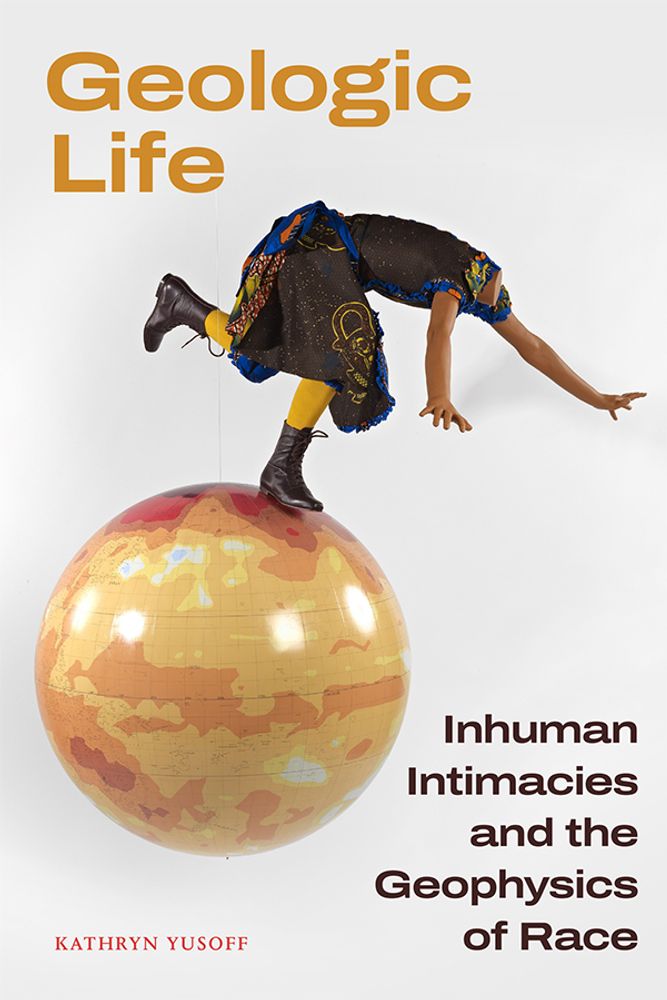
Kathryn Yusoff, Geologic Life: Inhuman Intimacies and the Geophysics of Race – Duke University Press, May 2024

Kathryn Yusoff, Geologic Life: Inhuman Intimacies and the Geophysics of Race – Duke University Press, May 2024

The Introduction is open access

In Geologic Life, Kathryn Yusoff theorizes the processes by which race and racialization emerged geologically. Examining both the history of geology as a discipline and ongoing mineral and resource extraction, Yusoff locates forms of imperial geology embedded in Western and Enlightenment thought and highlights how it creates anti-Black, anti-Indigenous, and anti-Brown environmental and racial injustices. Throughout, she outlines how the disciplines of geology and geography—and their conventions: surveying, identifying, classifying, valuing, and extracting—established and perpetuated colonial practices that ordered the world and people along a racial axis. Examining the conceptualization of the inhuman as political, geophysical, and paleontological, Yusoff unearths an apartheid of materiality as distinct geospatial forms. This colonial practice of geology organized and underpinned racialized accounts of space and time in ways that materially made Anthropocene Earth. At the same time, Yusoff turns to Caribbean, Indigenous, and Black thought to chart a parallel geologic epistemology of the “earth-bound” that challenges what and who the humanities have chosen to overlook in its stories of the earth. By reconsidering the material epistemologies of the earth as an on-going geotrauma in colonial afterlives, Yusoff demonstrates that race is as much a geological formation as a biological one.

Posted in Uncategorized | 1 Comment

Henri Bergson, Freedom: Lectures at the Collège de France, 1904–1905 – edited by Nils F. Schott and Alexandre Lefebvre, translated by Leonard Lawlor, Bloomsbury, May 2024

Henri Bergson, Freedom: Lectures at the Collège de France, 1904–1905 – edited by Nils F. Schott and Alexandre Lefebvre, translated by Leonard Lawlor, Bloomsbury, May 2024

For 15 years, Henri Bergson, the most important French philosopher of the early 20th-century, taught at the Collège de France. Speaking without notes, most of his classes are now lost to history, but records of a handful of courses fortuitously survived thanks to stenographic transcripts. Conveying Bergson’s very voice, these extraordinary documents are finally presented here in English.

The 1904–1905 lectures are dedicated to the topic of freedom, or as Bergson put it, “the evolution of the problem of freedom.” Building on the philosophy of freedom from his first book, Time and Free Will, he proposes that freedom is not only a fundamental human experience but characteristic of all life as such. By retracing how ancient and modern philosophers have dealt with the delicate question of freedom, Bergson demonstrates the necessity, and also the radically new character, of his own theory of freedom.

Bergson’s lectures are a feast for many audiences. For philosophers, they give a fuller picture of his thought and contain deep reflections on many core topics in philosophy today, from the nature of time to the difference between brain and mind, the relation between memory and perception, and the vindication of freedom over determinism. For intellectual historians, the lectures are a treasure trove: as a slice of the living thought of a great thinker; as an extended analysis of the natural and human sciences of his day; and as a rich commentary on the history of ancient and modern philosophy. Finally, for cultural historians and literary scholars, the lectures were the cultural capital of Belle Époque France, consumed by elites and a vast educated public. They are also part of an exceedingly rare genre in modern philosophy: spoken, not written, lectures and expressed as a veritable stream of philosophical consciousness that is remarkably structured and analytically lucid.

Posted in Uncategorized | Leave a comment

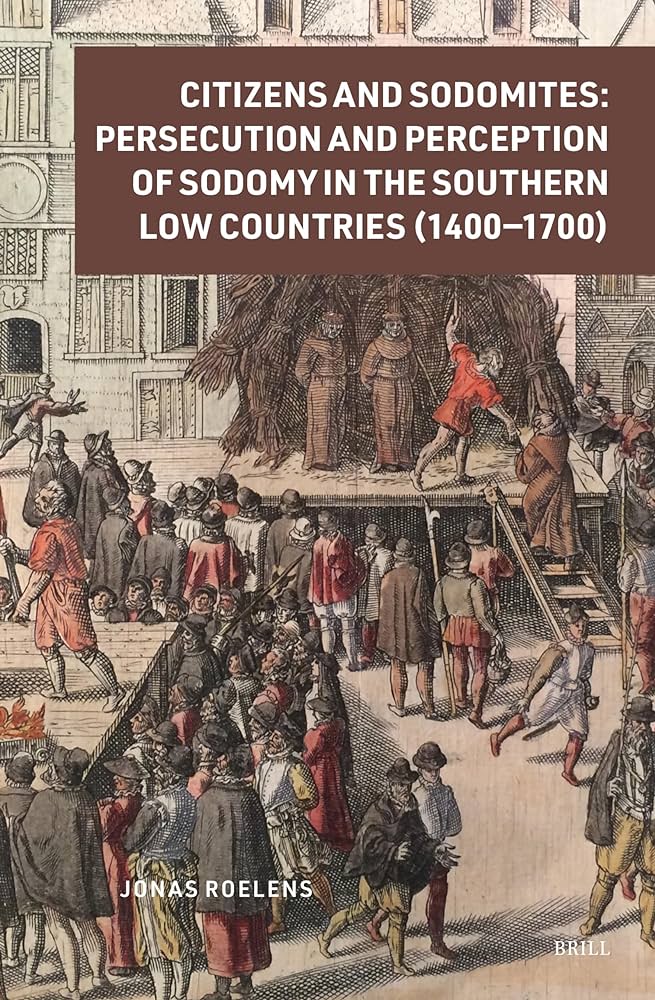
Jonas Roelens, Citizens and Sodomites: Persecution and Perception of Sodomy in the Southern Low Countries (1400–1700) – Brill, February 2024

Jonas Roelens, Citizens and Sodomites: Persecution and Perception of Sodomy in the Southern Low Countries (1400–1700) – Brill, February 2024

The Southern Low Countries were among Europe’s core regions for the repression of sodomy during the late medieval period. As the first comprehensive study on sodomy in the Southern Low Countries, this book charts the prosecution of sodomy in some of the region’s leading cities, such as Bruges, Ghent and Antwerp, from 1400 to 1700 and explains the reasons behind local differences and variations in the intensity of prosecution over time. Through a critical examination of a range of sources, this study also considers how the urban fabric perceived sodomy and provides a broader interpretive framework for its meaning within the local culture.

Posted in Uncategorized | Leave a comment

Robert T. Tally Jr., The Fiction of Dread: Dystopia, Monstrosity, and Apocalypse – Bloomsbury Academic, December 2023

Robert T. Tally Jr., The Fiction of Dread: Dystopia, Monstrosity, and Apocalypse – Bloomsbury Academic, December 2023

A history and examination of dystopia and angst in popular culture that speaks to our current climate of dread.

At the dawn of the 20th century, a wide-ranging utopianism dominated popular and intellectual cultures throughout Europe and America. However, in the aftermathof the World Wars, with such canonical examples as Brave New World and Nineteen-Eighty-Four, dystopia emerged as a dominant genre, in literature and in social thought. The continuing presence and eventual dominance of dystopian themes in popular culture-e.g., dismal authoritarian future states, sinister global conspiracies, post-apocalyptic landscapes, a proliferation of horrific monsters, and end-of-the-world fantasies-have confirmed the degree to which the 21st is also a dystopian century.

Drawing on literature as varied as H.G. Wells’s The Time Machine, Neil Gaiman’s American Gods, and Suzanne Collins’s The Hunger Games, and on TV and film such as The Walking Dead, Black Mirror, and The Last of Us, Robert T. Tally Jr. explores the landscape of angst created by the monstrous accumulation of dystopian material. The Fiction of Dread provides an innovative reading of contemporary culture and offers an alternative vision for critical theory and practice at a moment when, as has been famously observed, it is easier to imagine the end of the world than the end of capitalism.

Posted in Uncategorized | Leave a comment

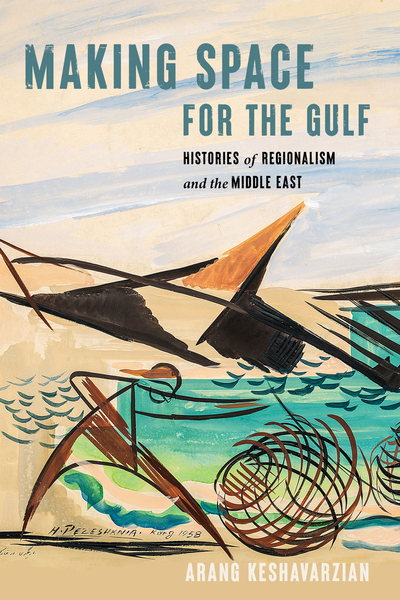
Arang Keshavarzian, Making Space for the Gulf: Histories of Regionalism and the Middle East – Stanford University Press, April 2024

Arang Keshavarzian, Making Space for the Gulf: Histories of Regionalism and the Middle East – Stanford University Press, April 2024

The Persian Gulf has long been a contested space—an object of imperial ambitions, national antagonisms, and migratory dreams. The roots of these contestations lie in the different ways the Gulf has been defined as a region, both by those who live there and those beyond its shore. Making Space for the Gulf reveals how capitalism, empire-building, geopolitics, and urbanism have each shaped understandings of the region over the last two centuries. Here, the Gulf comes into view as a created space, encompassing dynamic social relations and competing interests.

Arang Keshavarzian writes a new history of the region that places Iran, Iraq, and the Arabian Peninsula together within global processes. He connects moments more often treated as ruptures—the discovery of oil, the Iranian Revolution, the rise and decline of British empire, the emergence of American power—and crafts a narrative populated by a diverse range of people—migrants and ruling families, pearl-divers and star architects, striking taxi drivers and dethroned rulers, protectors of British India and stewards of globalized American universities. Tacking across geographic scales, Keshavarzian reveals how the Gulf has been globalized through transnational relations, regionalized as a geopolitical category, and cleaved along national divisions and social inequalities. 

When understood as a process, not an object, the Persian Gulf reveals much about how regions and the world have been made in modern times. Making Space for the Gulf offers a fresh understanding of this globally consequential place.

Posted in Uncategorized | Leave a comment

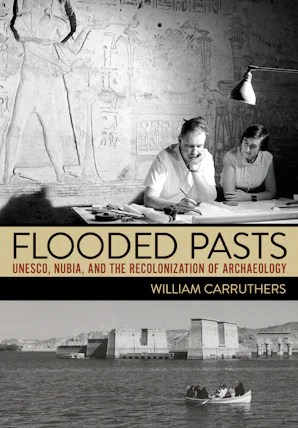
William Carruthers, Flooded Pasts: UNESCO, Nubia and the Recolonization of Archaeology – Cornell University Press, December 2022

William Carruthers, Flooded Pasts: UNESCO, Nubia and the Recolonization of Archaeology – Cornell University Press, December 2022

I missed this when it came out, but looks interesting

Flooded Pasts examines a world famous yet critically underexamined event—UNESCO’s International Campaign to Save the Monuments of Nubia (1960–80)—to show how the project, its genealogy, and its aftermath not only propelled archaeology into the postwar world but also helped to “recolonize” it. In this book, William Carruthers asks how postwar decolonization took shape and what role a colonial discipline like archaeology—forged in the crucible of imperialism—played as the “new nations” asserted themselves in the face of the global Cold War.

As the Aswan High Dam became the centerpiece of Gamal Abdel Nasser’s Egyptian revolution, the Nubian campaign sought to salvage and preserve ancient temples and archaeological sites from the new barrage’s floodwaters. Conducted in the neighboring regions of Egyptian and Sudanese Nubia, the project built on years of Nubian archaeological work conducted under British occupation and influence. During that process, the campaign drew on the scientific racism that guided those earlier surveys, helping to consign Nubians themselves to state-led resettlement and modernization programs, even as UNESCO created a picturesque archaeological landscape fit for global media and tourist consumption. 

Flooded Pasts describes how colonial archaeological and anthropological practices—and particularly their archival and documentary manifestations—created an ancient Nubia severed from the region’s population. As a result, the Nubian campaign not only became fundamental to the creation of UNESCO’s 1972 World Heritage Convention but also exposed questions about the goals of archaeology and heritage and whether the colonial origins of these fields will ever be overcome.

Posted in Uncategorized | Leave a comment

British library – February 2024 update ‘Restoring our Services’

British library – February 2024 update ‘Restoring our Services

Posted in Uncategorized | Leave a comment

Matthew Guariglia, Police and the Empire City: Race and the Origins of Modern Policing in New York – Duke University Press, November 2023

Matthew Guariglia, Police and the Empire City: Race and the Origins of Modern Policing in New York – Duke University Press, November 2023

The Introduction is available open access here

During the years between the Civil War and World War II, police in New York City struggled with how to control a diverse metropolis. In Police and the Empire City Matthew Guariglia tells the history of the New York Police Department to show how its origins were built upon and inseparably entwined with the history of race, ethnicity, and whiteness in the United States. Guariglia explores the New York City Police Department through its periods of experimentation and violence as police experts imported tactics from the US occupation of the Philippines and Cuba, devised modern bureaucratic techniques to better suppress Black communities, and infiltrated supposedly unknowable immigrant neighborhoods. Innovations ranging from recruiting Chinese, Italian, and German police to form “ethnic squads” to the use of deportation and federal immigration restrictions to control local crime—even the introduction of fingerprinting—were motivated by attempts to govern a multiracial city. Campaigns to remake the police department created an urban landscape where power, gender, sexuality, race, ethnicity, crime, and bodies collided and provided a foundation for the supposedly color-blind, technocratic, federally backed, and surveillance-based policing of today.

Posted in Uncategorized | Leave a comment