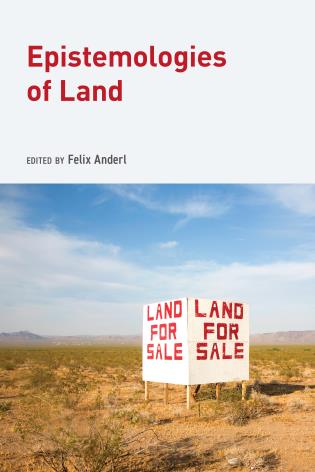
Land is at the centre of crucial public debates ranging from climate adaptation to housing and development, to agriculture and indigenous peoples’ rights. These debates frequently become stuck, though, because the meaning of land in different contexts is poorly understood. Bringing together specialists of epistemology and land, this volume is a landmark contribution to understanding land knowledge as a complex factor in these debates.
Land has been known in astonishingly different ways throughout history, but in recent decades one particular understanding of land as commodity has become increasingly hegemonic globally. This understanding has enormously destructive effects, not only for many people and animals living on and from the land that is increasingly grabbed for extractivist purposes, but also for possible imaginations of how humans can relate to land in the future.
In Epistemologies of Land, scholars reconstruct how the understanding of land has come to be reduced to “land as commodity” historically, what the consequences of this epistemological transformation have been, and what alternative ways of understanding land could help establish intellectually abundant and ecologically sustainable ways of relating to the land we live on. Particularly, the book shows how a change in perspective – thinking society through land – can lay the foundation not only for knowing more about land, but for a different kind of environmental and social knowledge that could recover forgotten wisdom of how humans and animals have historically related to land, and by that transform the ways in which land contributes to our daily life beyond its diminished meaning as an economic resource.
Contributors include: Eloisa Berman Arevalo, Shailaja Fennell, Inanna Hamati-Ataya, Katarina Kusic, Maarten Meijer, David Nally, Sakshi, Leo Steeds, and Anna Wolkenhauer.
Clare O’Farrell shares some passages from Foucault’s draft of his lecture ‘What is Critique?’ which are included in the recently translated critical edition of the text.
In Citizen Marx, Bruno Leipold argues that, contrary to certain interpretive commonplaces, Karl Marx’s thinking was deeply informed by republicanism. Marx’s relation to republicanism changed over the course of his life, but its complex influence on his thought cannot be reduced to wholesale adoption or rejection. Challenging common depictions of Marx that downplay or ignore his commitment to politics, democracy, and freedom, Leipold shows that Marx viewed democratic political institutions as crucial to overcoming the social unfreedom and domination of capitalism. One of Marx’s principal political values, Leipold argues, was a republican conception of freedom, according to which one is unfree when subjected to arbitrary power.
Placing Marx’s republican communism in its historical context—but not consigning him that context—Leipold traces Marx’s shifting relationship to republicanism across three broad periods. First, Marx began his political life as a republican committed to a democratic republic in which citizens held active popular sovereignty. Second, he transitioned to communism, criticizing republicanism but incorporating the republican opposition to arbitrary power into his social critiques. He argued that although a democratic republic was not sufficient for emancipation, it was necessary for it. Third, spurred by the events of the Paris Commune of 1871, he came to view popular control in representation and public administration as essential to the realization of communism. Leipold shows how Marx positioned his republican communism to displace both antipolitical socialism and anticommunist republicanism. One of Marx’s great contributions, Leipold argues, was to place politics (and especially democratic politics) at the heart of socialism.
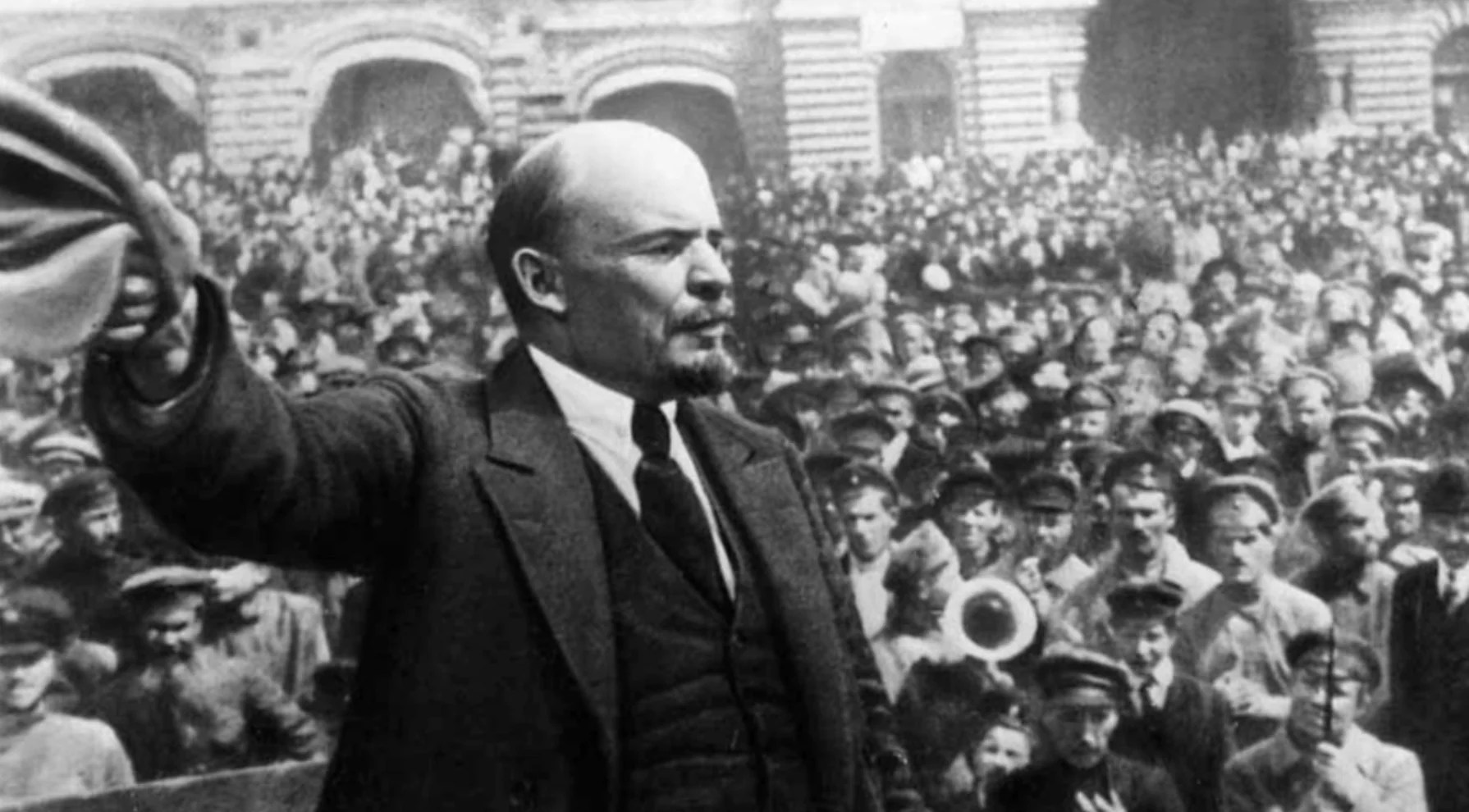
The Lenin Quintet – a series of works published to mark the centenary of his death
The Lenin Quintet includes new editions of Lenin’s work, including The State and Revolution, Not By Politics Alone, and Imperialism and the National Question, with contributions from Ruth Wilson Gilmore, Tariq Ali, and Antonio Negri. See all the books here.
As the Journal of Urban Cultural Studies (JUCS) closes its tenth year of publication, this second instalment of a two-part editorial turns towards questions regarding the nature of scholarly journals. Building from Part 1’s exploration of comics artist Chris Ware’s tactile puzzle Building Stories: Vortex of Anamnesis, the central metaphor of journal as an intellectual puzzle is considered. Specific aspects of time and collaboration are addressed as fundamental concerns for the puzzle of journal editing. After considering, in passing, challenges to editing in the twenty-first century, final comments address the notion of closure, drawn from comics theory.
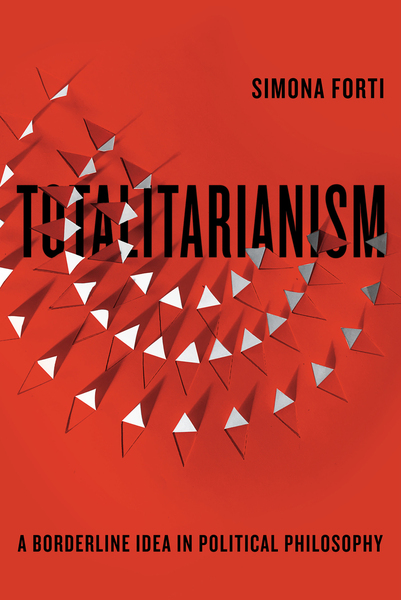
In the last decade, we have witnessed the return of one of the most controversial terms in the political lexicon: totalitarianism. What are we talking about when we define a totalitarian political and social situation? When did we start using the word as both adjective and noun? And, what totalitarian ghosts haunt the present?
Philosopher Simona Forti seeks to answer these questions by reconstructing not only the genealogy of the concept, but also by clarifying its motives, misunderstandings, and the controversies that have animated its current resurgence. Taking into account political theories and historical discussions, Totalitarianism especially focuses on philosophical reflections, from the question of totalitarian biopolitics to the alleged totalitarian drifts of neoliberalism. The work invites the relentless formulation of a radical question about the democratic age: the possibilities it has opened up, the voids it leaves behind, the mechanisms it activates, and the “voluntary servitude” it produces. Forti argues that totalitarianism cannot be considered an external threat to democracy, but rather as one of the possible answers to those questions posed by modernity which democracies have not been able to solve. Her investigation of the uses and abuses of totalitarianism as one of the fundamental categories of the twentieth and twenty-first centuries promises to provoke much-needed discussion and debate among those in philosophy, politics, ethics, and beyond.
The voluminous work of the late J. G. A. Pocock (1924-2023) challenged, redefined, and fashioned multiple fields of study, offering successive moments of transformation in scholarship. The book that emerged from Pocock’s doctorate, The Ancient Constitution and the Feudal Law (1957), was a landmark contribution that affirmed the pivotal role of historiography to politics, as he demonstrates in the debates of seventeenth-century England. Pocock is perhaps most famous for his theoretical and historical challenge to liberalism and capitalism, most notably in his commanding chef-d’oeuvre on civic humanism, the republican tradition, and political economy, The Machiavellian Moment (1975), a work inextricably tied to the co-creation and development of a contextualist history of political thought as well as a revived interest in republicanism within contemporary political theory. This self-reflexive ‘Cambridge method’ to investigating the past, orientated towards context and sensitive to theory, language, and historicity, has also been associated with Quentin Skinner, John Dunn, Peter Laslett, and others. Pocock’s own contribution was groundbreaking in its scope, but also in its stress on the essential role of temporality in the history of political thinking and its discourse.
Resistance to Christianity: A Chronological Encyclopaedia of Heresy from the Beginning to the Eighteenth Century is a revisionary account of the forms of thought and belief that have been rejected or suppressed by orthodox Christianity over the course of the centuries. Formidably erudite without ever drifting into dry scholasticism, Resistance to Christianityranges from the origins of the Bible to the fraught doctrinal controversies of the fourth century to the Levellers and Jansenists of the early modern period, thereby revealing the too-little-known history that lies behind the modern world’s theological horizons.
Resistance to Christianity is far more, however, than a study of religious movements and ideas; indeed, Vaneigem is bracingly unapologetic in his ambition “to examine the resistance that the inclination to natural liberty has, for nearly twenty centuries, opposed to . . . Christian oppression.” The story of how men and women have again and again resisted the authoritarian implications of religious orthodoxy is, above all, a crucial strand of the history of human freedom.
Bill Brown’s translation makes available in English a major work by one of the preeminent thinkers of our time. A remarkable feat of historical scholarship that deserves to be widely read, Resistance to Christianityrepresents radical thought at its most exciting, incisive, and compelling.