William Carruthers, Flooded Pasts: UNESCO, Nubia and the Recolonization of Archaeology – Cornell University Press, December 2022

William Carruthers, Flooded Pasts: UNESCO, Nubia and the Recolonization of Archaeology – Cornell University Press, December 2022
I missed this when it came out, but looks interesting

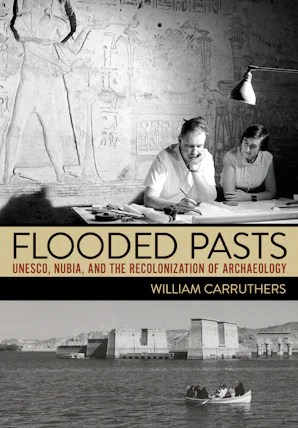
Flooded Pasts examines a world famous yet critically underexamined event—UNESCO’s International Campaign to Save the Monuments of Nubia (1960–80)—to show how the project, its genealogy, and its aftermath not only propelled archaeology into the postwar world but also helped to “recolonize” it. In this book, William Carruthers asks how postwar decolonization took shape and what role a colonial discipline like archaeology—forged in the crucible of imperialism—played as the “new nations” asserted themselves in the face of the global Cold War.

As the Aswan High Dam became the centerpiece of Gamal Abdel Nasser’s Egyptian revolution, the Nubian campaign sought to salvage and preserve ancient temples and archaeological sites from the new barrage’s floodwaters. Conducted in the neighboring regions of Egyptian and Sudanese Nubia, the project built on years of Nubian archaeological work conducted under British occupation and influence. During that process, the campaign drew on the scientific racism that guided those earlier surveys, helping to consign Nubians themselves to state-led resettlement and modernization programs, even as UNESCO created a picturesque archaeological landscape fit for global media and tourist consumption. 

Flooded Pasts describes how colonial archaeological and anthropological practices—and particularly their archival and documentary manifestations—created an ancient Nubia severed from the region’s population. As a result, the Nubian campaign not only became fundamental to the creation of UNESCO’s 1972 World Heritage Convention but also exposed questions about the goals of archaeology and heritage and whether the colonial origins of these fields will ever be overcome.

Posted in Uncategorized | Leave a comment

British library – February 2024 update ‘Restoring our Services’

British library – February 2024 update ‘Restoring our Services

Posted in Uncategorized | Leave a comment

Matthew Guariglia, Police and the Empire City: Race and the Origins of Modern Policing in New York – Duke University Press, November 2023

Matthew Guariglia, Police and the Empire City: Race and the Origins of Modern Policing in New York – Duke University Press, November 2023

The Introduction is available open access here

During the years between the Civil War and World War II, police in New York City struggled with how to control a diverse metropolis. In Police and the Empire City Matthew Guariglia tells the history of the New York Police Department to show how its origins were built upon and inseparably entwined with the history of race, ethnicity, and whiteness in the United States. Guariglia explores the New York City Police Department through its periods of experimentation and violence as police experts imported tactics from the US occupation of the Philippines and Cuba, devised modern bureaucratic techniques to better suppress Black communities, and infiltrated supposedly unknowable immigrant neighborhoods. Innovations ranging from recruiting Chinese, Italian, and German police to form “ethnic squads” to the use of deportation and federal immigration restrictions to control local crime—even the introduction of fingerprinting—were motivated by attempts to govern a multiracial city. Campaigns to remake the police department created an urban landscape where power, gender, sexuality, race, ethnicity, crime, and bodies collided and provided a foundation for the supposedly color-blind, technocratic, federally backed, and surveillance-based policing of today.

Posted in Uncategorized | Leave a comment

Mark Sinclair & Daniel Whistler (eds.), The Oxford Handbook of Modern French Philosophy – Oxford University Press, June 2024

Mark Sinclair & Daniel Whistler (eds.), The Oxford Handbook of Modern French Philosophy – Oxford University Press, June 2024

Expensive hardback only, of course. Thanks to Tim Howles for the link.

French philosophy is an internationally celebrated national philosophical tradition, and this Oxford Handbook offers a comprehensive approach to its history since 1800. The Handbook features essays written by renowned international specialists, illuminating key movements and positions, themes and thinkers in nineteenth-, twentieth- and even twenty-first-century French philosophy. The volume takes into account developments in recent historical scholarship by broadening the notion of Modern French Philosophy in two ways. Whereas recent approaches in the field have often ignored early nineteenth-century developments, this volume offers comprehensive treatment of French thought of this period in order to grasp better later developments. Moreover, the volume extends the canon at the other end of the period of Modern French Philosophy by including work on philosophers who have come to prominence only in the last ten or twenty years. The volume takes ‘French philosophy’ in a broad sense to include all philosophy carried out in France over the last 200 years, and it illuminates the institutional and cultural background of this national philosophical tradition in such a way as to provide a fuller and more comprehensive understanding of its unity and of its more famous moments in the twentieth century.

Posted in Uncategorized | 1 Comment

Benjamin Bourcier & Mikko Jakonen (eds.), British Modern International Thought in the Making: Politics and Economy from Hobbes to Bentham – Palgrave Macmillan, February 2024

Benjamin Bourcier & Mikko Jakonen (eds.), British Modern International Thought in the Making: Politics and Economy from Hobbes to Bentham – Palgrave Macmillan, February 2024

This book articulates international political theory in dialogue with economics on several questions. It asks: how has modern international theory been adjusted and nourished by economic ideas, theories and practices? How far has the distinctive contribution of some theorists to international theory been informed by their views on economy? What has been the impact of the theory of the state for economic and international theory? What sort of economic thinking has led to revise the debates constitutive for the modern international realm? How have economic debates been rhetorically connected to political debates in the field of international relations?

Posted in Uncategorized | Leave a comment

David Beer, The Tensions of Algorithmic Thinking: Automation, Intelligence and the Politics of Knowing – Bristol University Press, November 2022, paperback February 2024

David Beer, The Tensions of Algorithmic Thinking: Automation, Intelligence and the Politics of Knowing – Bristol University Press, November 2022, paperback February 2024

The paperback is now published.

We are living in algorithmic times. 

From machine learning and artificial intelligence to blockchain or simpler newsfeed filtering, automated systems can transform the social world in ways that are just starting to be imagined.

Redefining these emergent technologies as the new systems of knowing, pioneering scholar David Beer examines the acute tensions they create and how they are changing what is known and what is knowable. Drawing on cases ranging from the art market and the smart home, through to financial tech, AI patents and neural networks, he develops key concepts for understanding the framing, envisioning and implementation of algorithms. 

This book will be of interest to anyone who is concerned with the rise of algorithmic thinking and the way it permeates society.

Posted in Uncategorized | Leave a comment

Michel Foucault, Nietzsche: Cours, conférences et travaux, ed. Bernard Harcourt – Seuil/Gallimard/EHESS, May 2024

Michel Foucault, Nietzsche: Cours, conférences et travaux, ed. Bernard Harcourt – Seuil/Gallimard/EHESS, May 2024

This is starting to appear in online bookshops (i.e. Decitre), but I can’t yet find a publisher page. It’s the next volume in the collection of Foucault’s Cours et travaux before the Collège de France – a course at Vincennes, lectures in North America, and essays. I’ll update when I can find more information.

Update 19 April 2024 – the publisher page is here.

Posted in Uncategorized | 1 Comment

Andy Merrifield, Gramsci’s Goblin – on the notebooks and his translations of the Brothers Grimm fairytales

Andy Merrifield, Gramsci’s Goblin

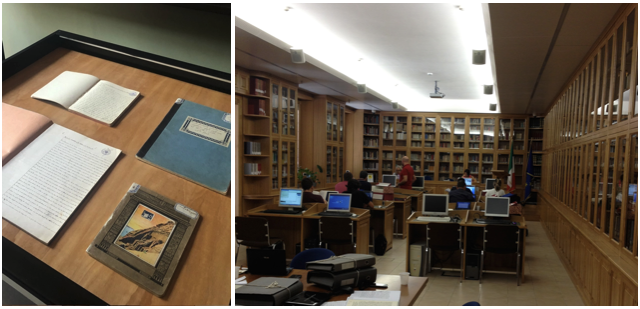
It’s easy to miss the Fondazione Gramsci, tucked away off the street in a little building along via Sebino, at number 43A, in Rome’s Trieste neighborhood. Its glass door entrance lies at the end of a discreet courtyard, modestly beyond the gaze of any undiscerning passersby. On the afternoon of my visit–a mild, gray, late January day–things were brightened by the warm welcome I’d received. I said I was a big Gramsci fan, had written a few things about him, and came curious about the Fondazione’s resources. I’d heard about their extensive library, crammed with every Left book under the sun, in scores of languages, which I now saw filling the glass cabinets on the walls of the main biblioteca. I said I wanted to tap Gramsci’s digital archive as well, especially those legendary prison notebooks, whose real thing, I knew, were housed in a special vault somewhere on the Fondazione’s premises…

I saw the notebooks when they were in London in 2017.

Posted in Antonio Gramsci, Uncategorized | 1 Comment

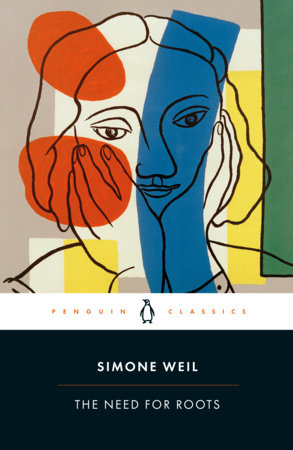
Simone Weil, The Need for Roots: Prelude to a Declaration of Obligations towards the Human Being – Penguin, February 2024

Simone Weil, The Need for Roots: Prelude to a Declaration of Obligations towards the Human Being – trans. Ros Schwartz, introduction by Kate Kirkpatrick, Penguin, February 2024

French philosopher Simone Weil’s best known work that promotes mindful living and instructs readers how they can once again feel rooted, in a cultural and spiritual sense, to their environment

One of the foremost French philosophers of the last century, Simone Weil has been described by André Gide as “the patron saint of all outsiders” and by Albert Camus as “the only great spirit of our time.” In this, her most famous work, she diagnoses the malaise at the heart of modern life: uprootedness, from the past and from community. Written towards the end of World War II for the Free French Army, Weil’s work is an indispensable and perpetually intriguing text for readers and students of philosophy everywhere. The book discusses the political, cultural and spiritual currents that ought to be nurtured so that people have access to sources of energy which will help them lead fulfilling, joyful and morally good lives.

Posted in Uncategorized | 1 Comment

Gail Lythgoe, The Rebirth of Territory – Cambridge University Press, March 2024

Gail Lythgoe, The Rebirth of Territory – Cambridge University Press, March 2024

The concept of territory is central in international law, but a detailed analysis of how the concept is used in both discourse and practice has been lacking until now. Rather than reproducing the established understanding of territoriality within the international legal order, this study suggests that the discipline of international law relies on an outmoded spatial paradigm. Gail Lythgoe argues for a complete update and overhaul of our understanding of territory and space, to engage more effectively with key processes, structures and actors relevant to contemporary global governance. In this new theoretical account of an essential aspect of public international law, she argues that territory is a dynamic social reality created by the exercise of power. Territories are constituted by the practices of a more diverse array of actors than is acknowledged. As a result, functions are re-assembling in territories constituted by state and non-state actors alike.

Posted in Uncategorized | Leave a comment