Thomas Nail, Matter and Motion: A Brief History of Kinetic Materalism – Edinburgh University Press, December 2023

Thomas Nail, Matter and Motion: A Brief History of Kinetic Materalism – Edinburgh University Press, December 2023

Tells a new history of materialism – from prehistory to the present – that resists stasis, heirarchy and domination
  • Traces a lineage of thinkers who have philosophically integrated ideas of matter, motion, indeterminacy, relationality and process
  • Discusses thinkers drawn from the ancient to the modern – from the Bronze Age to quantum physics – who each offer their own kind of evidence for a world without metaphysics or hierarchy
  • Shows that the established hierarchies that govern Western thought and society are contingent and performative – there is no ontologically legitimate justification for social, aesthetic or scientific domination

Thomas Nail traces an alternative history of ancient and modern thinkers who share a radically different understanding of the nature of matter and motion within the Euro-Western tradition. From Archaic Greek poetry and Bronze Age Minoan religion to the Roman poet Lucretius, and from German philosopher Karl Marx and English writer Virginia Woolf to contemporary physicists Carlo Rovelli and Karen Barad, Nail identifies a minor tradition of what he calls kinetic materialism and its three central ideas: indeterminacy, relationality and process.

For the most part, Western thinkers have considered matter and motion to be inferior to more formal and static principles. Philosophers placed metaphysical categories such as eternity, God, the soul, forms and essences at the ‘top’ of a hierarchy that secured and ordered the movement at the bottom. This has real consequences in our world. By placing stasis above motion, this hierarchy places form above matter, life above death, God above humans, humans above nature, men above women, white skin above brown skin, the first world over the third world, citizens above migrants, straight above queer… The result? Patriarchy, capitalism, racism, homophobia, ecocide. Nail seeks to undermine this inherited hierarchy and the notion that matter and motion are inferior. There are no fixed authorities. This new history of matter and motion leaves the good life up to us, whoever we may become.

Posted in Uncategorized | 1 Comment

Md Azmeary Ferdoush, Sovereign Atonement: Citizenship, Territory, and the State at the Bangladesh-India Border – Cambridge University Press, May 2024

Md Azmeary Ferdoush, Sovereign Atonement: Citizenship, Territory, and the State at the Bangladesh-India Border – Cambridge University Press, May 2024

The former border enclaves of Bangladesh and India existed as extra-territorial spaces since 1947. They were finally exchanged and merged as host state territories in 2015. Sovereign Atonement focuses on the protracted territorial exchange and experiences of the newly accepted Bangladeshi citizens. It grapples with one broad question: why did the state assume an active role in smoothing the once excluded population’s experiences into their inclusion within the sovereign project? The book dives deep into an ethnographic and historical reading of the everyday state, land and territory, informality, (non)state actors, and performance of sovereignty. Furthermore, it troubles the often taken-for-granted understanding of exception, governance, and citizenship. As such, Ferdoush offers a retake on the two seemingly contradictory concepts -‘sovereign’ and ‘atonement’- to demonstrate that bridged together these concepts as sovereign atonement enables a novel way of appreciating geopolitical narratives, political geographies, and nationalistic discourse in South Asia and beyond.

Posted in Uncategorized | Leave a comment

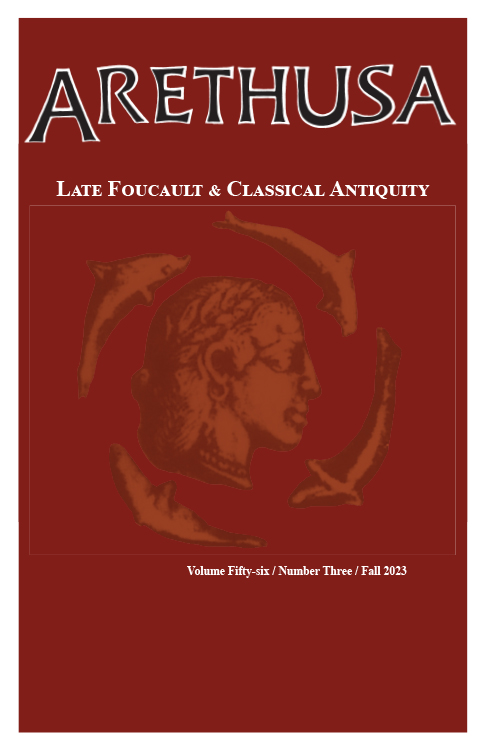
Late Foucault & Classical Antiquity – special issue of Arethusa 2023

Late Foucault & Classical Antiquity – special issue of Arethusa 2023 (requires subscription)

From the Editor: Foucault and Arethusa

Roger D. Woodard

Introduction

Simon Goldhill

A Self-Interested Reader? Foucault and Imperial Greek Technical Texts

Claire Hall

Elephants, Christians, and Pagans in the History of Sexuality

Niki Kasumi Clements

Foucault’s Epicureanism: Parrhēsia, Confession, and the Genealogy of the Self

Federico Testa

The Cynics With and Without Foucault

James I. Porter

The Power of Oedipus: Michel Foucault with Hannah Arendt

Miriam Leonard

Medea in the Courtroom: Foucault, Alice Diop, and Abolition

Mario Telò

Posted in Hannah Arendt, Michel Foucault | Leave a comment

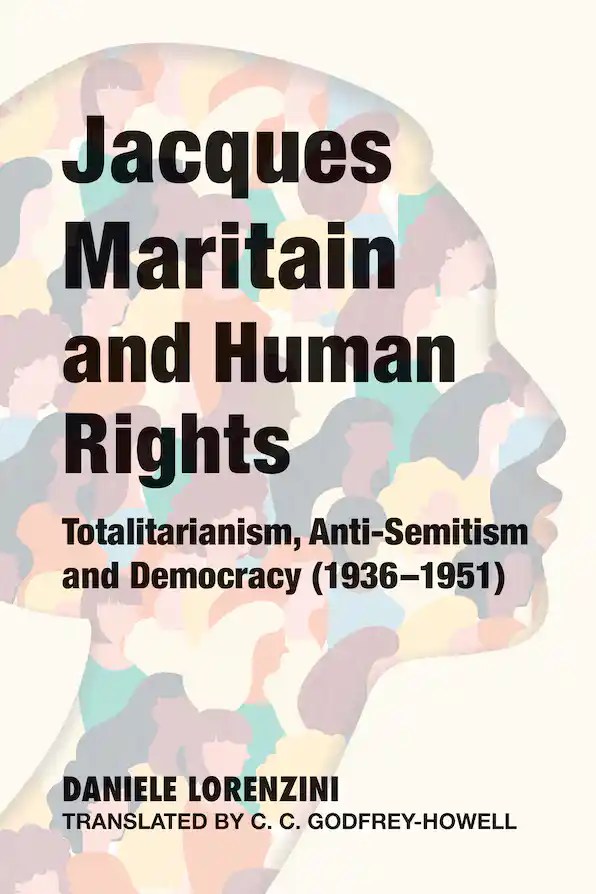
Daniele Lorenzini, Jacques Maritain and Human Rights: Totalitarianism, Anti-semitism and Democracy (1936–1951) – St Augustine’s Press, March 2024

Daniele Lorenzini, Jacques Maritain and Human Rights: Totalitarianism, Anti-semitism and Democracy (1936–1951) – trans. C. C. Godfrey-Howell, St Augustine’s Press, March 2024

The influence of Jacques Maritain in the post-war era’s embrace of human rights is undeniable. Scholars, however, overlook a major shift in his use of language. Daniele Lorenzini argues the turn from Maritain’s use of the expression “rights of the person” to ”the rights of man” is packed with meaning. Reconstructing the historical context in which this shift occurred is key to fully grasping what Maritain accomplished. It is also essential if one seeks to defend Maritain against accusation that he enacted a victory of the American and French modern revolutionary spirit over ecclesiastical teaching when he legitimized “the rights of man.”

The notion that Maritain may have taken up the cause of the civic-secular citizen when these secularly articulated rights were consciously never embraced by Catholic magisterium (that instead promulgated the rights of the person) merits serious attention. Lorenzini reconstructs Maritain’s historical context and theoretical trajectory shaped by particular circumstances––most evidently World War II, but also his time in the United States and his work with the Committee of Catholics for Human Rights. Lorenzini is not suggesting that Maritain staged a siege of Catholic thought, but that he did in fact lay the foundations for turning the conversation away from the tenets upheld by ecclesiastical authority on the concept of rights toward an articulation that more pointedly connects such rights to the actual possession and protection. 

How and why this happens, Lorenzini demonstrates, is “grasped only if critically situated in the union of history of history and biography that makes this possible and encourages it, as does Maritain’s residency in the United States––an exile that obliged the French philosopher to render a deep seated account of the unbelievable (and tragic) political and intellectual panorama.” In short, Maritain set in motion the innovative redefinition of the elements that would soon be known as the human rights. But to Maritain these elements were always proper to the new ideal of the “vitally Christian” political city, the city “founded essentially on the two ‘pillars’ of democracy and the safeguarding of the rights of man.”

What originally began as a purely linguistic investigation of Maritain’s use of terminology has led Lorenzini to ask whether Maritain himself was won over from the act of conversing of rights associated with personhood to the real-time struggle for these rights, an evolution not just of Maritain’s language but of the man himself.  

Lorenzini’s work is a formidable contribution to the literature pertaining to the period of post-war thought and Maritain on human rights. In his labors to carefully digest the full span of Maritain’s intellectual trajectory on rights, Lorenzini brings Jacques Maritain alive both as a man of vision but also fervent action, and defends him from critics and historians that accuse him of spurning Church teaching and papal authority. As Lorenzini’s study shows, the human rights of the secular-civic world––whose lineage scholars attribute in large part to Maritain––were always derived from Catholic teaching and intended for use in constructing the truly Christian city. 

This work stands out in a vast repertoire of work on the subject of Jacques Maritain, and accomplishes both high level philosophical and historical sleuthing. It is of particular interest to American readers who may not fully realize the depth of Maritain’s maturation of thought during his residency in the United States. This is an astounding read for historians, scholars of political philosophy, and students of Jacques Maritain.

Posted in Uncategorized | 1 Comment

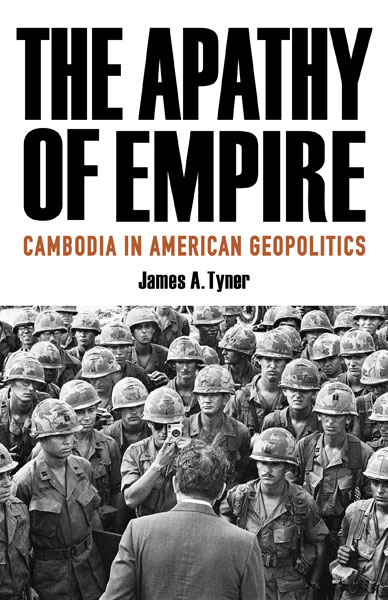
James A. Tyner, The Apathy of Empire: Cambodia in American Geopolitics – University of Minnesota Press, March 2024

James A. Tyner, The Apathy of Empire: Cambodia in American Geopolitics – University of Minnesota Press, March 2024

The Apathy of Empire reveals just how significant Cambodia was to U.S. policy in Indochina during the Vietnam War, broadening the lens to include more than the often-cited incursion in 1970 or the illegal bombing after the Paris Peace Accords in 1973. This theoretically informed and thoroughly documented case study argues that U.S. military intervention in Cambodia evinced America’s efforts to construct a hegemonic spatial world order. 

James A. Tyner documents the shift of America’s post-1945 focus from national defense to national security. He demonstrates that America’s expansionist policies abroad, often bolstered by military power, were not so much about occupying territory but instead constituted the construction of a new normal for the exercise of state power. During the Cold War, Vietnam became the geopolitical lodestar of this unfolding spatial order. And yet America’s grand strategy was one of contradiction: to build a sovereign state (South Vietnam) based on democratic liberalism, it was necessary to protect its boundaries—in effect, to isolate it—through both covert and overt operations in violation of Cambodia’s sovereignty. The latter was deemed necessary for the former. 

Questioning reductionist geopolitical understandings of states as central or peripheral, Tyner explores this paradox to rethink the formulation of the Cambodian war as sideshow, emphasizing instead that it was a crucial site for the formation of this new normal.

Posted in Uncategorized | Leave a comment

Angela Y. Davis, Abolition: Politics, Practices, Promises, Vol. 1 – Haymarket, January 2024

Angela Y. Davis, Abolition: Politics, Practices, Promises, Vol. 1 – Haymarket, January 2024

A major collection of essays and  speeches from pioneering freedom fighter Angela Y. Davis

For over fifty years, Angela Y. Davis has been at the forefront of collective movements for abolition and feminism and the fight against state violence and oppression. Abolition: Politics, Practices, Promises, the first of two important new volumes, brings together an essential collection of Davis’s writing over the years, showing how her thinking has sharpened and evolved even as she has remained uncompromising in her commitment to collective liberation. In pieces that address the history of abolitionist practice and thought in the United States and globally, the unique contributions of women to abolitionist struggles, and stories and lessons of organizing inside and beyond the prison walls, Davis is always curious, always incisive, and always learning.

Rich and rewarding, Abolition: Politics, Practices, Promises will appeal to fans of Davis, to students and scholars reflecting on her life and work, and to readers new to feminism, abolition, and struggles for liberation.

Posted in Uncategorized | Leave a comment

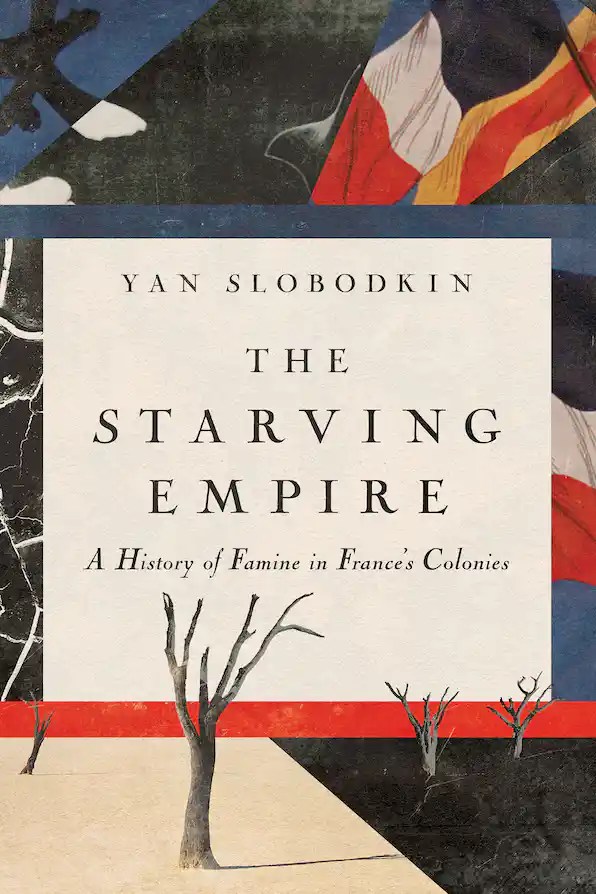
Yan Slobodkin, The Starving Empire: A History of Famine in France’s Colonies – Cornell University Press, November 2023

Yan Slobodkin, The Starving Empire: A History of Famine in France’s Colonies – Cornell University Press, November 2023

The Starving Empire traces the history of famine in the modern French Empire, showing that hunger is intensely local and sweepingly global, shaped by regional contexts and the transnational interplay of ideas and policies all at once. By integrating food crises in Algeria, West and Equatorial Africa, and Vietnam into a broader story of imperial and transnational care, Yan Slobodkin reveals how the French colonial state and an emerging international community took increasing responsibility for subsistence, but ultimately failed to fulfill this responsibility. 

Europeans once dismissed colonial famines as acts of god, misfortunes of nature, and the inevitable consequences of backward races living in harsh environments. But as Slobodkin recounts, drawing on archival research from four continents, the twentieth century saw transformations in nutrition, scientific racism, and international humanitarianism that profoundly altered ideas of what colonialism could accomplish. A new confidence in the ability to mitigate hunger, coupled with new norms of moral responsibility, marked a turning point in the French Empire’s relationship to colonial subjects—and to nature itself. 

Increasingly sophisticated understandings of famine as a technical problem subject to state control saddled France with untenable obligations. The Starving Empire not only illustrates how the painful history of colonial famine remains with us in our current understandings of public health, state sovereignty, and international aid, but also seeks to return food—this most basic of human needs—to its central place in the formation of modern political obligation and humanitarian ethics.

Posted in Uncategorized | Leave a comment

Geotheory book series with Edinburgh University Press

Geotheory book series with Edinburgh University Press

Editors: Paul Kingsbury and Arun Saldanha

The earth is a hot topic. Accelerating crises have steadily replaced the fantasy of a global village with dreadful anticipation of the geographies of destitution, paranoia and oblivion to come. For most, modernity has already been a cruelly enticing catastrophe. There has accordingly been a surge of investigations into topics such as blackness, decolonisation, sexuality and revolution, which have reinvigorated theorisation in geography. Geotheory publishes work across geography, philosophy, critical theory, environmental humanities and cultural studies, wresting from the convulsions of the 21st century ways of spatial thinking that could yet reorient collective life. Perhaps the pervasive dread can be traversed with a newfound love of this old earth.

Posted in Uncategorized | Leave a comment

Adam Kotsko, ‘Things I’d like to work on before the world ends’ at An und für sich

Adam Kotsko, Things I’d like to work on before the world ends at An und für sich

Posted in Uncategorized | Leave a comment

Andy Merrifield, Gramsci’s Animality

Andy Merrifield, Gramsci’s Animality

“I want to plunge into animality to draw from it new vigor” — Gramsci, New Year’s Day, 1916

One of the central “living” attractions of Testaccio’s Non-Catholic cemetery is its stray cats, a colony of twenty-five or so semi-feral moggies. We know from old paintings of the nearby Pyramid, especially those by the Roman artist Bartolomeo Pinelli, that cats have freely roamed the area for over 150 years. Nowadays, tourists and locals alike come to see the cemetery’s gatti, longtime beneficiaries of well-wisher donations and skilled volunteer caregivers, cat men and women who regularly nourish and tend the cat colony’s veterinarian needs. (The most famous of the cemetery’s felines is the late “Romeo,” a three-legged tabby who passed away in 2006, laid to rest in his own mini-tomb not far from Gramsci’s.)

Posted in Uncategorized | 1 Comment