The situation of internally displaced persons has been a matter of international concern – and legal debate – since at least the late 1990s and early 2000s, and its salience has only increased in the context of extreme weather events produced by intensifying climate change. Research in political philosophy, however, has so far barely touched on this issue, despite its close connection to and relevance for lively and expansive debates on migration, refugees, territorial rights, state sovereignty, and climate change. This volume aims to set the philosophical agenda for articulating a political ethics of internal displacement, and to highlight the importance of the phenomenon for these wider theoretical issues. Across 12 chapters that explore different aspects of internal displacement, authors working at the forefront of these debates construct a compelling research agenda for the political philosophy of internal displacement.
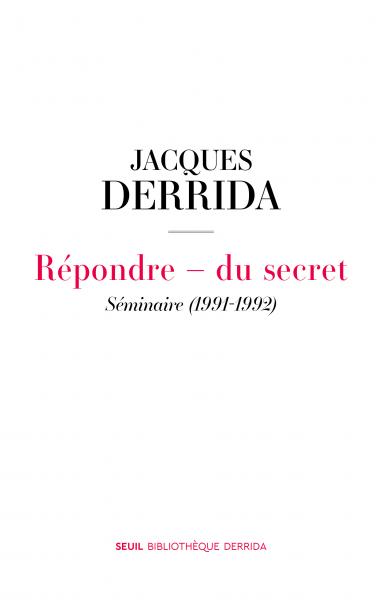
«Le secret, dit-on, c’est ce qui ne se dit pas » : c’est sur cette phrase que s’ouvre le séminaire Répondre – du secret, le tout premier de la série « Questions de responsabilité » que Jacques Derrida donnera à l’École des hautes études en sciences sociales (EHESS) de 1991 à 2003. Ce cycle de recherches portant sur les enjeux actuels du concept de responsabilité (philosophique, littéraire, éthique, juridique, psychanalytique, politique) privilégie d’entrée de jeu le thème du secret puis celui du témoignage, qui sera déployé de 1992 à 1995.
Qu’est-ce qu’un secret et comment se lie-t-il à un appel à la responsabilité ? Pour répondre à ces questions, Jacques Derrida examine d’abord la sémantique du secret à travers divers registres (scientifique, technique, social, politique et religieux), où le secret trouble l’opposition entre le privé et le public. Suivant la généalogie du cryptique ou de l’hermétique dans différentes familles de langues (grecque, latine, allemande), il explore l’histoire et les valeurs culturelles qui lui sont associées (secret d’État ou militaire, secret professionnel, société secrète), analyse la thématique et les « effets » de secret dans certaines œuvre littéraires (notamment celles de Melville, de Baudelaire, de James et de Poe), puis élabore une problématique de la « curiosité » et du « souci » à partir de textes de Freud et de Heidegger.
Explorant trois « logiques » entrelacées du secret (le cogito cartésiano-kantien, le sujet de l’inconscient freudien, l’être-caché de la dissimulation heideggérienne comme vérité), Jacques Derrida s’engage ensuite dans une lecture approfondie du secret abrahamique dans les Essais hérétiques… de Patočka et Crainte et Tremblement de Kierkegaard, où se découvre la figure par excellence du secret comme mort donnée. Il poursuit également le « dialogue fictif », amorcé en 1975-1976 dans son séminaire La Vie la mort, entre Freud et Heidegger au sujet du concept de l’Unheimlichkeit, tout en interrogeant les effets de la pulsion secrétariale à l’œuvre dans son propre enseignement.
Le texte de ce séminaire a été établi par Ginette Michaud et Nicholas Cotton.
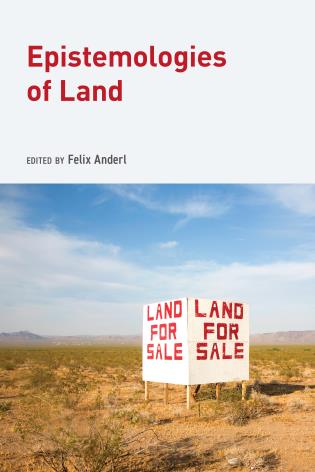
Land is at the centre of crucial public debates ranging from climate adaptation to housing and development, to agriculture and indigenous peoples’ rights. These debates frequently become stuck, though, because the meaning of land in different contexts is poorly understood. Bringing together specialists of epistemology and land, this volume is a landmark contribution to understanding land knowledge as a complex factor in these debates.
Land has been known in astonishingly different ways throughout history, but in recent decades one particular understanding of land as commodity has become increasingly hegemonic globally. This understanding has enormously destructive effects, not only for many people and animals living on and from the land that is increasingly grabbed for extractivist purposes, but also for possible imaginations of how humans can relate to land in the future.
In Epistemologies of Land, scholars reconstruct how the understanding of land has come to be reduced to “land as commodity” historically, what the consequences of this epistemological transformation have been, and what alternative ways of understanding land could help establish intellectually abundant and ecologically sustainable ways of relating to the land we live on. Particularly, the book shows how a change in perspective – thinking society through land – can lay the foundation not only for knowing more about land, but for a different kind of environmental and social knowledge that could recover forgotten wisdom of how humans and animals have historically related to land, and by that transform the ways in which land contributes to our daily life beyond its diminished meaning as an economic resource.
Contributors include: Eloisa Berman Arevalo, Shailaja Fennell, Inanna Hamati-Ataya, Katarina Kusic, Maarten Meijer, David Nally, Sakshi, Leo Steeds, and Anna Wolkenhauer.
Clare O’Farrell shares some passages from Foucault’s draft of his lecture ‘What is Critique?’ which are included in the recently translated critical edition of the text.
In Citizen Marx, Bruno Leipold argues that, contrary to certain interpretive commonplaces, Karl Marx’s thinking was deeply informed by republicanism. Marx’s relation to republicanism changed over the course of his life, but its complex influence on his thought cannot be reduced to wholesale adoption or rejection. Challenging common depictions of Marx that downplay or ignore his commitment to politics, democracy, and freedom, Leipold shows that Marx viewed democratic political institutions as crucial to overcoming the social unfreedom and domination of capitalism. One of Marx’s principal political values, Leipold argues, was a republican conception of freedom, according to which one is unfree when subjected to arbitrary power.
Placing Marx’s republican communism in its historical context—but not consigning him that context—Leipold traces Marx’s shifting relationship to republicanism across three broad periods. First, Marx began his political life as a republican committed to a democratic republic in which citizens held active popular sovereignty. Second, he transitioned to communism, criticizing republicanism but incorporating the republican opposition to arbitrary power into his social critiques. He argued that although a democratic republic was not sufficient for emancipation, it was necessary for it. Third, spurred by the events of the Paris Commune of 1871, he came to view popular control in representation and public administration as essential to the realization of communism. Leipold shows how Marx positioned his republican communism to displace both antipolitical socialism and anticommunist republicanism. One of Marx’s great contributions, Leipold argues, was to place politics (and especially democratic politics) at the heart of socialism.
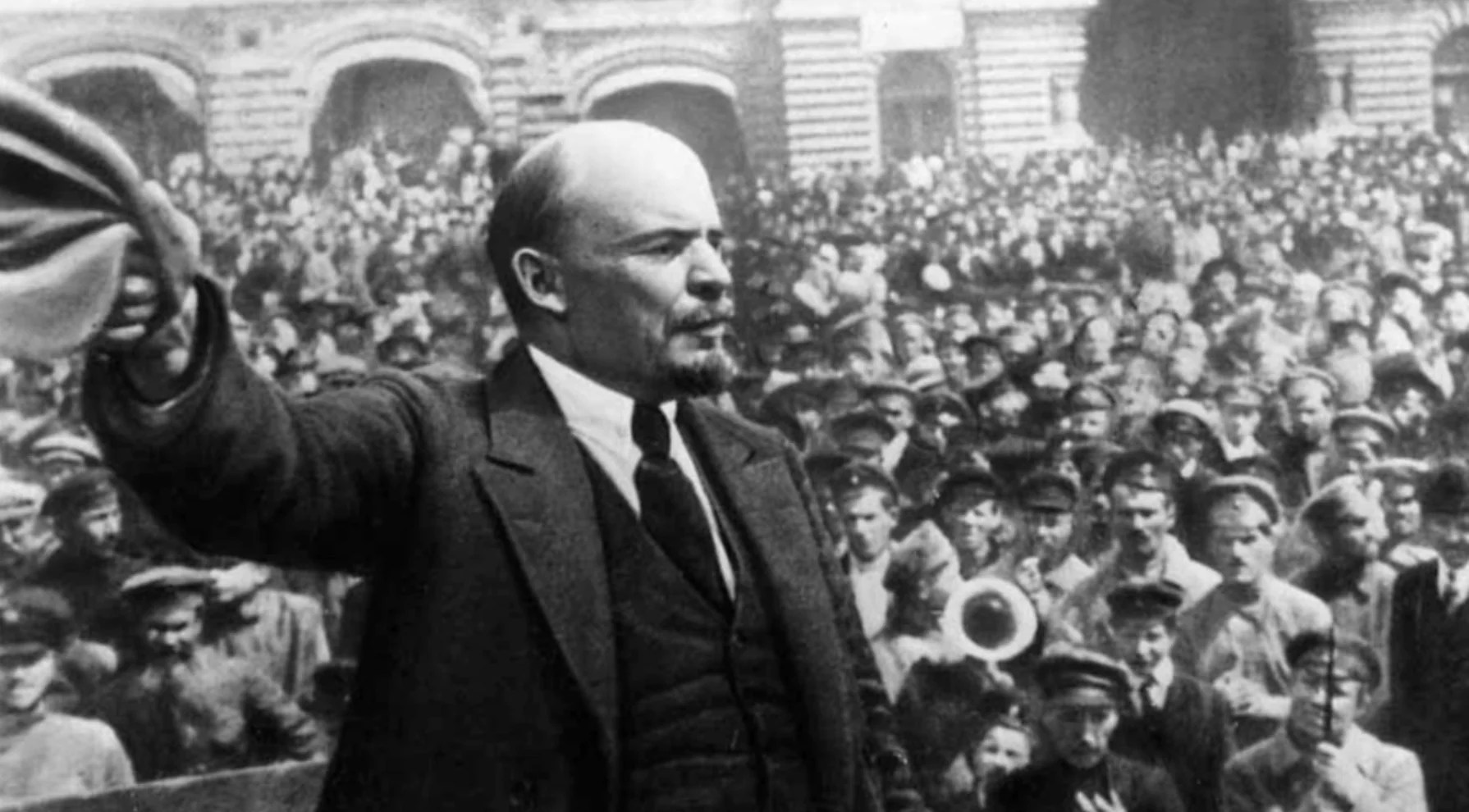
The Lenin Quintet – a series of works published to mark the centenary of his death
The Lenin Quintet includes new editions of Lenin’s work, including The State and Revolution, Not By Politics Alone, and Imperialism and the National Question, with contributions from Ruth Wilson Gilmore, Tariq Ali, and Antonio Negri. See all the books here.
As the Journal of Urban Cultural Studies (JUCS) closes its tenth year of publication, this second instalment of a two-part editorial turns towards questions regarding the nature of scholarly journals. Building from Part 1’s exploration of comics artist Chris Ware’s tactile puzzle Building Stories: Vortex of Anamnesis, the central metaphor of journal as an intellectual puzzle is considered. Specific aspects of time and collaboration are addressed as fundamental concerns for the puzzle of journal editing. After considering, in passing, challenges to editing in the twenty-first century, final comments address the notion of closure, drawn from comics theory.