Peter Sloterdijk, Out of the World – Stanford University Press, May 2024
In this essential early work, the preeminent European philosopher Peter Sloterdijk offers a cross-cultural and transdisciplinary meditation on humanity’s tendency to refuse the world.
Developing the first seeds of his anthropotechnics, Sloterdijk develops a theory of consciousness as a medium, tuned and retuned over the course of technological and social history. His subject here is the “world-alien” in man that was formerly institutionalized in religions, but is increasingly dealt with in modern times through practices of psychotherapy. Originally written in 1993, this almost clairvoyant work examines how humans seek escape from the world in cross-cultural and historical context, up to the mania and world-escapism of our cybernetic network culture. Chapters delve into the artificial habitats and forms of intoxication we develop, from early Christian desert monks to pharmaco-theology through psychedelics. In classic form, Sloterdijk recalibrates and reinvents concepts from the ancient Greeks to Heidegger to develop an astonishingly contemporary philosophical anthropology.
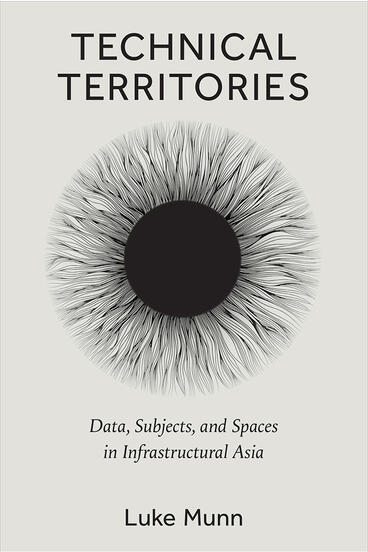
Territory is shifting. No longer defined by the dotted line of the border or the national footprint of soil, today’s territories are enacted through data infrastructures. From subsea cables to server halls, these infrastructures underpin new forms of governance, shaping subjects and their everyday lives. Technical Territories moves from masked protestors in Hong Kong to asylum-seekers in Christmas Island and sand miners in Singapore, exploring how these territories are both political and visceral, altering the experience of their inhabitants. Infrastructures have now become geopolitical, strategic investments that advance national visions, extend influence, and trigger trade wars. Yet at the same time, these technologies also challenge sovereignty as a bounded container, enacting a more distributed and decoupled form of governance. Such “technical territories” construct new zones where subjects are assembled, rights are undermined, labor is coordinated, and capital is extracted. The stable line of the border is replaced by more fluid configurations of power. Luke Munn stages an interdisciplinary intervention over six chapters, drawing upon a wide range of literature from technical documents and activist accounts, and bringing insights from media studies, migration studies, political theory, and cultural and social studies to bear on these new sociotechnical conditions.
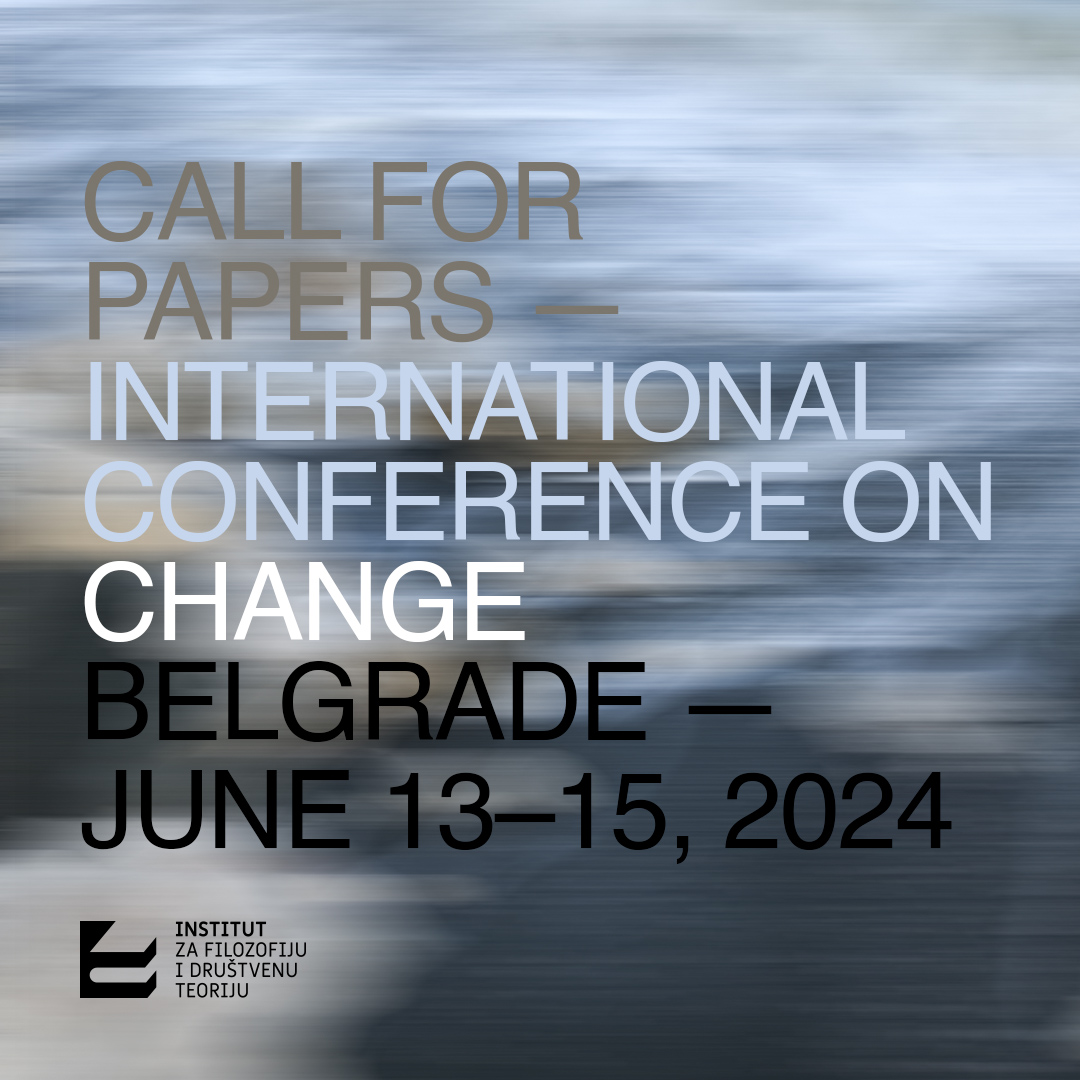
With the confirmed participation of Étienne Balibar, Axel Honneth, and Jonathan Wolff.
Change is one of those fundamental notions in social sciences and humanities that appears intuitively intelligible until one tries to provide a clear definition of the term. What constitutes change? To what extent is change the ‘other’ of being? When is change possible and is it always desirable? Do people crave certainty and stability or is “love of change a weakness and imperfection of our nature,” as John Ruskin famously said? Is change possible, or was the epigram right: Plus ça change, plus c’est la même chose?
One significant aspect of change is its inherent complexity. While the causes of change may sometimes be easy to identify, the actual trajectory and outcomes are most often not unilinear and are difficult to foresee. Social systems are so intricately interconnected that a seemingly minor alteration of rules can trigger a cascading series of effects that reverberate through the entire fabric of society. Navigating change requires a nuanced understanding of the interplay between the initial factors and the ripple effects they may generate.
One way of approaching the theme of change within social systems is through the optic of systemic contradictions, but the most fruitful discussions arise when we contemplate change as the product of human agency. Political movements, revolutions and technological innovations are marked by reflexive decision-making of individual and collective actors directed towards changing societal norms, often experienced as unjust or dysfunctional. The driver of change is social engagement, the articulation of a shared understanding of what the most pressing societal problems are and how to overcome them. Not all forms of engagement are progressive in the usual sense – some aim to institutionalize authoritarian norms or restore traditionalist and conservative ones. On the other hand, not all calls for restoring “old” norms must mean conservative change – witness contemporary leftists struggling to restore discarded elements of the post-war welfare state.
The study of change demands a serious (re)consideration of, among others, the following issues:
What is the fundamental nature of change? This question seeks to explore the ontological status of change and whether it is an inherent and universal aspect of reality.
What are the underlying causes and catalysts of engaging in and for social change?
How can we effectively mobilize and engage diverse communities in supporting and driving social change? What constitutes the cognitive and emotional common ground that enables us to articulate a project of (social) change?
What potential challenges and obstacles might arise during the process of realizing social change? What types of social domination – suppression of systemic contradictions and social engagement – exist today and how does one challenge them?
What constitutes a conservative vision of social change, as opposed to a progressive one? Are these terms helpful or are they obfuscating reality? How about other binaries, such as reformist/revolutionary, radical/moderate and procedural/substantive change?
Our present order is sometimes seen as resting upon an ideology of constant change which protects the fundamental structures from real change. Can one engage in changing the “tyranny of change” in a manner that doesn’t call for restoring old norms?
We welcome papers that address these and related questions. We invite both theoretical and empirical papers, employing a comparative or case study perspective, coming from all disciplines of the social sciences and humanities.
Please send proposals (up to 300 words; submissions for presentations of up to 15 minutes) to conference@ifdt.bg.ac.rsby Jan 31 2024. Applicants will be notified of their submission status by Feb 29 2024.
Abstracts should be sent in a Word document. The document should include the presentation title, abstract, and the applicant’s full name, institutional affiliation, and contact information.
The conference will be held in Belgrade, Serbia on June 13-15, 2024. For additional information, please contact conference@ifdt.bg.ac.rs
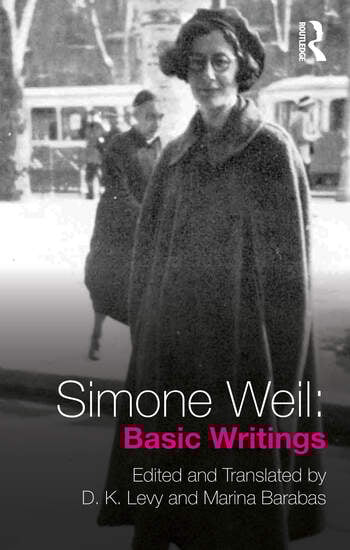
Simone Weil, Basic Writings, eds. D.K. Levy and Marina Barabas, Routledge, December 2023
Simone Weil is one of the most profound and thought-provoking thinkers of the 20th century. A teacher, factory and farm labourer, a political activist at home and abroad, a loving friend, daughter and sister—all these manifest a life devoted to the good in its many forms. Her writings explore the good open to us and the various routes to it, spanning philosophy, politics, science and spirituality. While she saw her vocation primarily as a philosopher—examining questions concerning human faculties, action and thought, the limits of language and our need of mediation, suffering and beauty for contact with reality—her startlingly original thought is often obscured by her having been too readily categorized as a Christian mystic.
Simone Weil: Basic Writings is an expertly edited anthology of Weil’s most important writings, presenting her philosophy as it relates to the architecture of human nature, politics, work, necessity, beauty, goodness and God. Working from the definitive French edition of Weil’s complete writings, D. K. Levy and Marina Barabas have translated the essays anew or for the first time, adding important notes and references absent from existing English language editions of Weil’s work.
Following an extensive introduction that gives an overview of Weil’s life and thought, each part opens with a short preface situating the selected essays within Weil’s oeuvre.
Simone Weil: Basic Writings provides an excellent entry point to Weil’s philosophy, as well as a reference for students and scholars of Weil’s thought in philosophy and related disciplines.
This volume provides the first English translation of Nietzsche’s unpublished notes from late 1879 to early 1881, the period in which he authored Dawn, the second book in the trilogy that began with Human, All Too Human and concluded with The Joyful Science.
In these fragments, we see Nietzsche developing the conceptual triad of morals, customs, and ethics, which undergirds his critique of morality as the reification into law or dogma of conceptions of good and evil. Here, Nietzsche assesses Christianity’s role in the determination of moral values as the highest values and of redemption as the representation of humanity’s highest aspirations. These notes show the resulting tension between Nietzsche’s contrasting thoughts on modernity, which he critiques as an unrecognized aftereffect of the Christian worldview, but also views as the springboard to “the dawn” of a transformed humanity and culture. The fragments further allow readers insight into Nietzsche’s continuous internal debate with exemplary figures in his own life and culture—Napoleon, Schopenhauer, and Wagner—who represented challenges to hitherto existing morals and culture—challenges that remained exemplary for Nietzsche precisely in their failure.
Presented in Nietzsche’s aphoristic style, Dawn is a book that must be read between the lines, and these fragments are an essential aid to students and scholars seeking to probe this work and its partners.
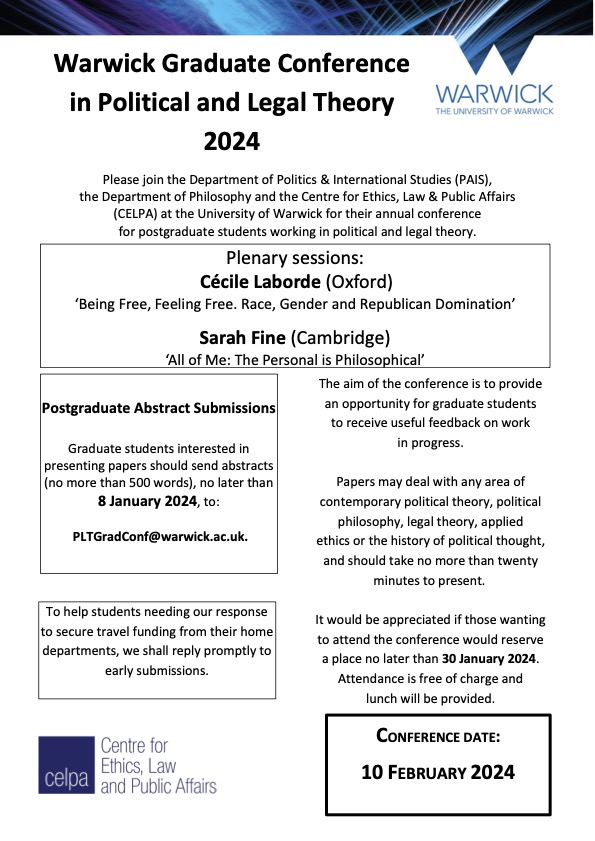
Call for Abstracts: Warwick Graduate Conference in Political and Legal Theory
Please join the Department of Politics and International Studies (PAIS), the Department of Philosophy and the Centre for Ethics, Law and Public Affairs (CELPA) at the University of Warwick for their annual conference for postgraduate students working in political and legal theory.
Sarah Fine (Cambridge): ‘All of Me: The Personal is Philosophical’.
The aim of the conference is to provide an opportunity for graduate students to receive useful feedback on work in progress. Papers may deal with any area of contemporary political theory, political philosophy, legal theory, applied ethics, or the history of political thought, and should take no more than twenty minutes to present.
Graduate students interested in presenting papers should send abstracts (no more than 500 words) to PLTGradConf@warwick.ac.uk by no later than 8 January 2024.
To help students needing our response to secure travel funding from their home departments, we shall reply promptly to early submissions with our decisions.
Those wanting to attend the conference should register by no later than 30 January 2024 via email. Attendance is free of charge. Lunch and refreshments will be provided.
For any enquiries, please feel free to contact the conference organisers using the email address: PLTGradConf@warwick.ac.uk.
The British Library has a new temporary site up, with much more information available since I last checked. But in their FAQ they are anticipating ‘several months’ to assess and repair, and indicate similar organisations have taken over 12 months to get back up and running: www.bl.uk/cyber-incident
Edited above – the site says ‘over 12 months’, rather than ’12 months’. This expectation management is fair enough, but ‘over 12 months’ and ‘several months’ are obviously very vague. It’s over 12 months since the Battle of Waterloo, so this really doesn’t say anything. We are probably at a stage where PhDs, post-docs, research projects etc. which are dependent on BL collections are going to need reassessment and institutional support.