Julien Larregue, Hereditary: The Persistence of Biological Theories of Crime – Stanford University Press, January 2024

Julien Larregue, Hereditary: The Persistence of Biological Theories of Crime – Stanford University Press, January 2024
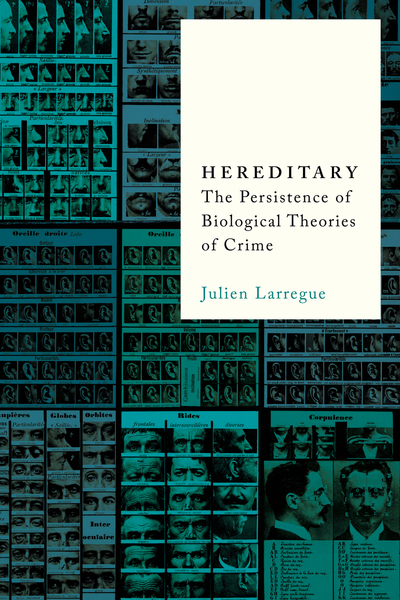
Since the 1990s, a growing number of criminal courts around the world have been using expert assessments based on behavioral genetics and neuroscience to evaluate the responsibility and dangerousness of offenders. Despite this rapid circulation, however, we still know very little about the scientific knowledge underlying these expert evaluations. Hereditary traces the historical development of biosocial criminology in the United States from the 1960s to the present, showing how the fate of this movement is intimately linked to that of the field of criminology as a whole. In claiming to identify the biological and environmental causes of so-called “antisocial” behaviors, biosocial criminologists are redefining the boundary between the normal and the pathological. Julien Larregue examines what is at stake in the development of biosocial criminology. Beyond the origins of delinquency, Larregue addresses the reconfiguration of expertise in contemporary societies, and in particular the territorial struggles between the medical and legal professions. For if the causes of crime are both biological and social, its treatment may call for medical as well as legal solutions.
Posted in Uncategorized | Leave a comment

Jeffrey Ahlman, Ghana: A Political and Social History – Bloomsbury, November 2023

Jeffrey Ahlman, Ghana: A Political and Social History – Bloomsbury, November 2023

Few African countries have attracted the international attention that Ghana has. In the late-nineteenth and early twentieth centuries, the then-colonial Gold Coast emerged as a key political and intellectual hub for British West Africa. Half a century later, when Ghana became the first sub-Saharan state to emerge from European colonial rule, it became a key site for a burgeoning, transnational, African anticolonial politics that drew activists, freedom fighters, and intellectuals from around the world. As the twentieth century came to a close, Ghana also became an international symbol of the putative successes of post-Cold-War African liberalization and democratization projects. 

Here Jeffrey Ahlman narrates this rich political history stretching from the beginnings of the very idea of the “Gold Coast” to the country’s 1992 democratization, which paved the way for the Fourth Republic. At the same time, he offers a rich social history stretching that examines the sometimes overlapping, sometimes divergent nature of what it means to be Ghanaian through discussions of marriage, ethnicity, and migration; of cocoa as a cultural system; of the multiple meanings of chieftaincy; and of other contemporary markers of identity. Throughout it all, Ahlman distills decades of work by other scholars while also drawing on a wide array of archival, oral, journalistic, and governmental sources in order to provide his own fresh insights.

For its clear, comprehensive coverage not only of Ghanaian history, but also of the major debates shaping nineteenth- and twentieth-century African politics and society more broadly, Ghana: A Political and Social History is a must-read for students and scholars of African Studies.

Posted in Uncategorized | Leave a comment

Joseph Albernaz, Common Measures: Romanticism and the Groundlessness of Community – Stanford University Press, August 2024

Joseph Albernaz, Common Measures: Romanticism and the Groundlessness of Community – Stanford University Press, August 2024

What happens to the experience of community when the grounds of communal life collapse? The Romantic period’s upheaval cast both traditional communal organizations of life and outgrowths of the new revolutionary age into crisis. In this context, Joseph Albernaz argues that Romantic writers articulate a vital conception of “groundless community,” while following this idea through its aesthetic, ecological, political, and philosophical registers into the present.

Amidst the violent expropriation of the commons, Romantic writers including the Wordsworths, Clare, Hölderlin, and the revolutionary abolitionist Robert Wedderburn reimagined the forms of their own lives through literature to conceive community as groundless, a disposition toward radically open forms of sharing—including with nonhuman beings—without recourse to any collective identity. Both a poetics and ethics, groundless community names an everyday sociality that surges beneath and against the enclosures of property and identity, binding us to the movements of the earth.

Unearthing Romanticism’s intersections with the history of communism and the general strike, Albernaz also demonstrates how Romantic literature’s communal imagination reverberates through later theories of community in Bataille, Derrida, Nancy, Moten, and others. With sharp close readings, new historical constellations, and innovative theoretical paradigms, Common Measures recasts the relationship of the Romantic period to the basic terms of modernity.

Posted in Uncategorized | 1 Comment

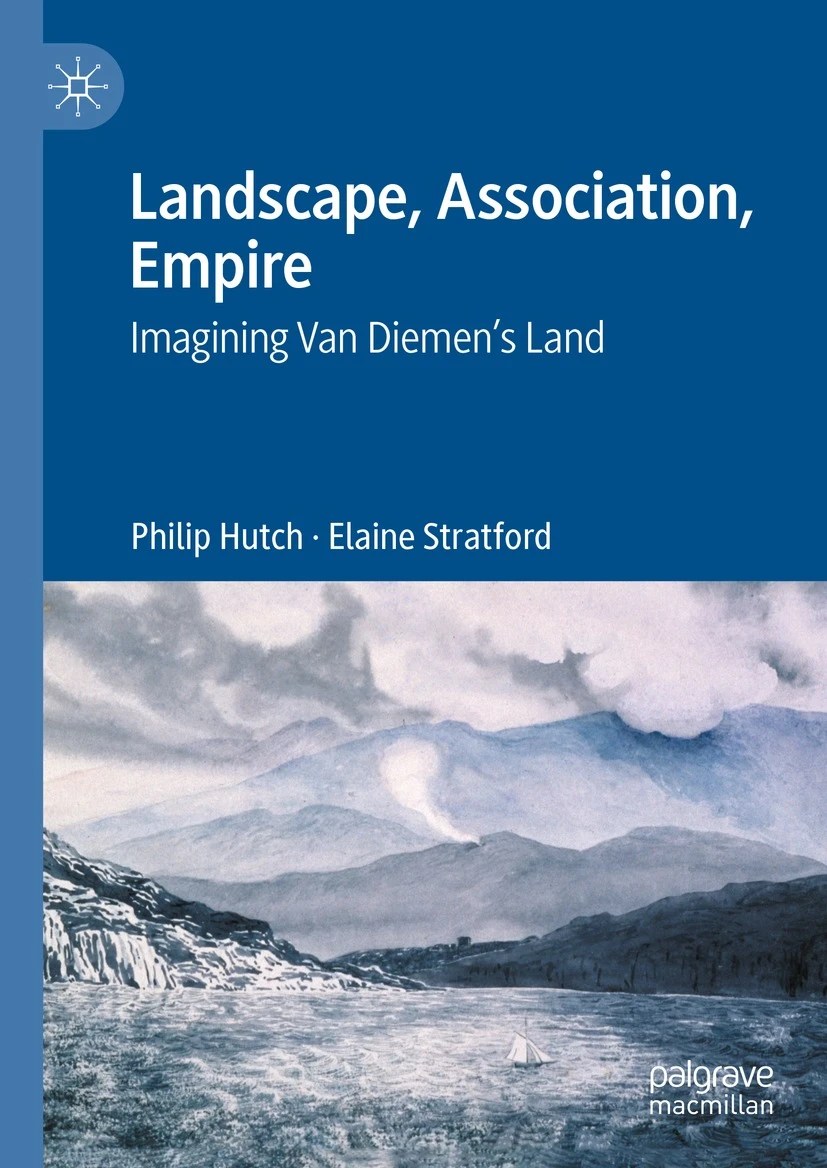
Philip Hutch and Elaine Stratford, Landscape, Association, Empire: Imagining Van Diemen’s Land – Palgrave Macmillan, 2023

Philip Hutch and Elaine Stratford, Landscape, Association, Empire: Imagining Van Diemen’s Land – Palgrave Macmillan, 2023

This book tells a compelling story about invasion, settler colonialism, and an emergent sense of identity in place, as seen through topographical and landscape images by seven fascinating artists. Their ways of imagining the Vandemonian landscape are part of a much larger story about how aesthetic forces shaped empire and colony, place and migration, and people’s lives. They remain intriguing through-lines of global significance and local meaning.

Posted in Uncategorized | Leave a comment

Foucault News Info wanted: What fountain pen did Foucault write with?

At Foucault News, Clare O’Farrell asks for information – What fountain pen did Foucault write with?

EditorI have recently developed an interest in fountain pens and was wondering if anybody knew what brand of fountain pen Foucault used? He may have used a biro (like Ian Fleming) but most writers at the time he was writing would have used fountain pens. 

From the biographies and from those currently working in the archives we know he wrote by hand and that his writing is no easy matter to decypher. He had a secretary who was expert in decyphering his writing and typing up his work for publication.

For those of you curious about the writing instruments used by other philosophers and Martin Heidegger in particular, there is an interesting discussion on the Fountain Pen Network concerning Heidegger’s writing instruments and a most informative article by Richard Polt titled ‘Heidegger’s Typewriter’ published in 2022. (With thanks to Stuart Elden for both these references.) 

If you have any information, feel free to leave a comment on this post or to email me directly.

Posted in Michel Foucault, Uncategorized | Leave a comment

The 13/13 Essays – material linked to the seminars of The Columbia Center for Contemporary Critical Thought

For several years Bernard Harcourt and colleagues at The Columbia Center for Contemporary Critical Thought have been running a series of 13/13 seminars. The seminars usually have short essays by participants available online, and now they are being collected on a single site – The 13/13 Essays. Includes the sessions on Foucault, Nietzsche, Critique, Revolution, Praxis, Utopia, Abolition Democracy and the current series on Coöperism.

Posted in Bernard E. Harcourt, Friedrich Nietzsche, Michel Foucault | 1 Comment

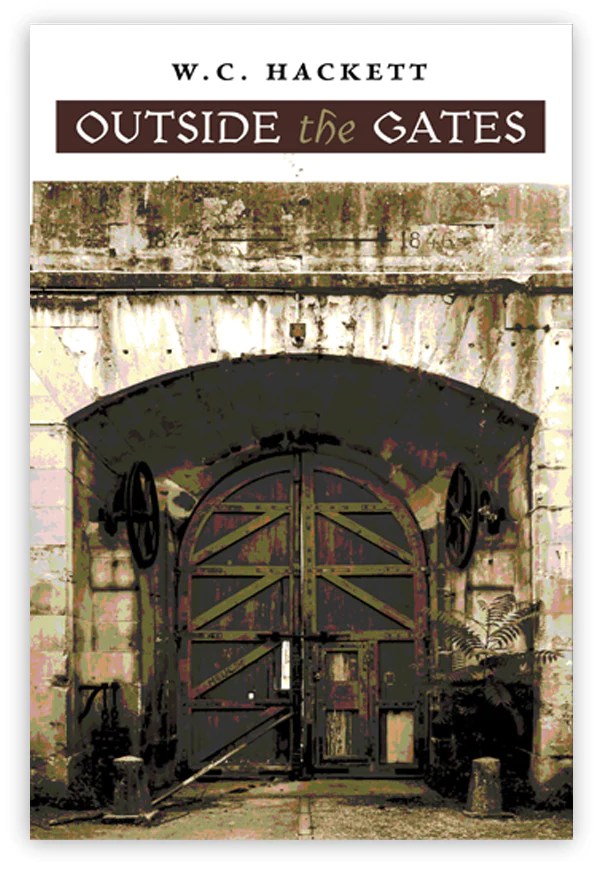
W.C. Hackett, Outside the Gates – Angelico, 2021 (historical novel about Jean Wahl)

W.C. Hackett, Outside the Gates – Angelico, 2021

The gates of Drancy Internment Camp in the northeast suburbs of Paris served as a holding pen for thousands of Jews during the German occupation of France in World War II. Jean Wahl, philosophy professor, poet, bachelor at the top of Parisian society before his arrest, was among those very few who escaped. 

In this searing historical novel by W. C. Hackett, the story is told in Wahl’s own voice, from the moment he passed beyond the gates of the camp to his harrowing flight for the Free Zone in the south. Based on extensive archival research, Outside the Gates binds by spell in a work of vast interior proportions, bringing the reader face to face with the defining mortal questions Jean Wahl himself faces recollecting his year of trial.

Posted in Uncategorized | Leave a comment

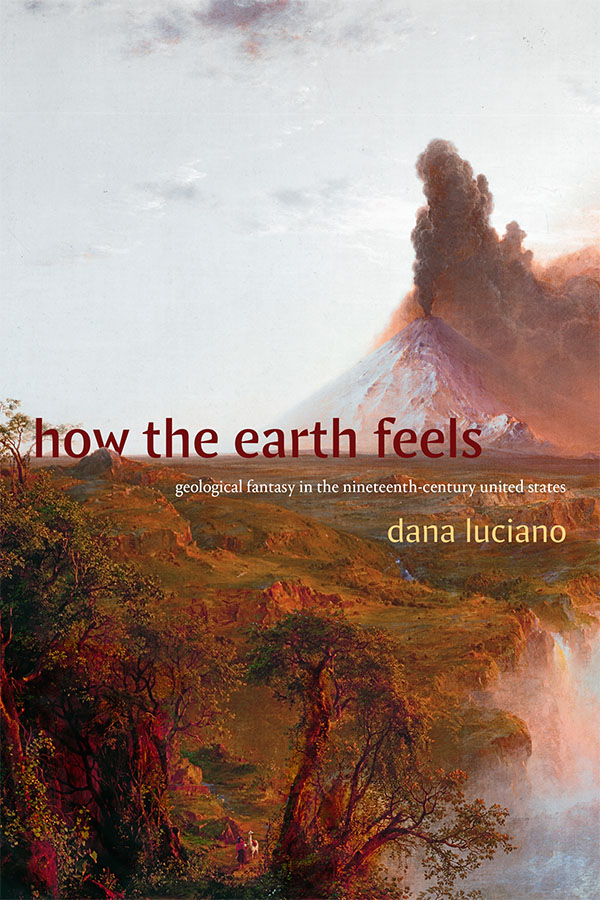
Dana Luciano, How The Earth Feels: Geological Fantasy in Nineteenth-Century America – Duke UP, January 2024 (open access introduction)

Dana Luciano, How The Earth Feels: Geological Fantasy in Nineteenth-Century America – Duke University Press, January 2024

The introduction is available open access here

In How the Earth Feels Dana Luciano examines the impacts of the new science of geology on nineteenth-century US culture. Drawing on early geological writings, Indigenous and settler accounts of earthquakes, African American antislavery literature, and other works, Luciano reveals how geology catalyzed transformative conversations regarding the intersections between humans and the nonhuman world. She shows that understanding the earth’s history geologically involved confronting the dynamic nature of inorganic matter over vast spans of time, challenging preconceived notions of human agency. Nineteenth-century Americans came to terms with these changes through a fusion of fact and imagination that Luciano calls geological fantasy. Geological fantasy transformed the science into a sensory experience, sponsoring affective and even erotic connections to the matter of the earth. At the same time, it was often used to justify accounts of evolution that posited a modern, civilized, and Anglo-American whiteness as the pinnacle of human development. By tracing geology’s relationship with biopower, Luciano illuminates how imagined connections with the earth shaped American dynamics of power, race, and colonization. 

Posted in Uncategorized | Leave a comment

Karl Marx, Capital: Critique of Political Economy, Volume I – trans. Paul Reitter, ed. Paul Reitter and Paul North, preface by Wendy Brown, afterword by William Clare Roberts – Princeton University Press, September 2024

Karl Marx, Capital: Critique of Political Economy, Volume I – trans. Paul Reitter, ed. Paul Reitter and Paul North, preface by Wendy Brown, afterword by William Clare Roberts – Princeton University Press, September 2024

Karl Marx (1818–1883) was living in exile in England when he embarked on an ambitious, multivolume critique of the capitalist system of production. Though only the first volume saw publication in Marx’s lifetime, it would become one of the most consequential books in history. This magnificent new edition of Capital is a translation of Marx for the twenty-first century. It is the first translation into English to be based on the last German edition revised by Marx himself, the only version that can be called authoritative, and it features extensive commentary and annotations by Paul North and Paul Reitter that draw on the latest scholarship and provide invaluable perspective on the book and its complicated legacy. At once precise and boldly readable, this translation captures the momentous scale and sweep of Marx’s thought while recovering the elegance and humor of the original source.

For Marx, our global economic system is relentlessly driven by “value”—to produce it, capture it, trade it, and most of all, to increase it. Lifespans are shortened under the demand for ever-greater value. Days are lengthened, work is intensified, and the division of labor deepens until it leaves two classes, owners and workers, in constant struggle for life and livelihood. In Capital, Marx reveals how value came to tyrannize our world, and how the history of capital is a chronicle of bloodshed, colonization, and enslavement.

With a foreword by Wendy Brown and an afterword by William Clare Roberts, this is a critical edition of Capital for our time, one that faithfully preserves the vitality and directness of Marx’s German prose and renders his ideas newly relevant to modern readers.

Posted in Uncategorized | 1 Comment

David Storey, Territories: The Claiming of Space – new edition, Routledge, May 2024

David Storey, Territories: The Claiming of Space – new edition, Routledge, May 2024

(The Routledge description says second edition, but there was one before their first with a different press.)

Territories are more than simply bounded spaces; they reflect the ways in which we think of geographic space. Territoriality, or laying claim to territory, can be seen as the spatial expression of power, with borders dividing those inside from those outside. The book provides an introduction to the concept of territory, the ways in which ideologies and social practices are manifested in space, the deployment of territorial strategies and the geographical outcomes of these.

This revised and updated third edition focuses on both macro-scale examples and those less obvious micro-scale ones, and it explores how territorial strategies are used in the maintaining of power, or as a means of resistance. Throughout the book, key questions emerge concerning geographic space. Who is ‘allowed’ to be in particular spaces and who is excluded or discouraged from being there? How are territorial practices utilized in conflicts concerned with socio-political power and identity and how are ideologies transposed onto space?

Written from a geographical perspective, the book is interdisciplinary, drawing on ideas and material from a range of academic disciplines including, history, political science, sociology, international relations, cultural studies. Theoretical underpinnings are supported by a variety of historical and contemporary examples, drawn from a range of geographic contexts.

Posted in Uncategorized | Leave a comment