
Indo-European Thought in Twentieth-Century France update 15: A first trip to the Paris archives since the spring and more archive work in the UK

I’m now back at work full time, though very grateful to be free of teaching and administrative duties, and I am feeling much better and more like myself. I was in Paris for two weeks this month, which was the first trip I’d made there since April, with a couple of planned trips cancelled due to surgery and recovery. It was great to get back, and it felt like a significant step in the recovery.

I was mainly working at the Collège de France with the Dumézil archive. Although before all this I’d been working box by box through the files relating to his publications (and before that, all his surviving courses), on this trip I decided to jump ahead and look at the boxes of correspondence. This was on the thinking that the correspondence might be more interesting, and that I wasn’t sure how often I would be able to get back. If I could only make limited visits, I was thinking, then I’d better look at the most important stuff first. But this trip went without incident, so I do hope I can continue to go through much more of the Georges Dumézil material, at least as an initial pass through. I already knew that a lot of Dumézil’s correspondence was filed with his teaching, year by year, but that’s also the way some of the boxes just of correspondence are organised. There are only two boxes of correspondence filed by correspondent, but letters from those people are also elsewhere in the collection. For me, with Dumézil as one of the key figures I’m interested in, that’s fine, as I just have to take good notes to be able to work out where things are for future visits. But if you were primarily interested in, for example, Stig Wikander, you’d need to look in lots of different places – some of which are not obvious. I found one letter by Foucault in the files which I recognised because of the handwriting, signed fairly illegibly as MF, which I suspect many people would pass by. But it’s really just a brief note from Uppsala complaining about the snow.

I’m fortunate because most of the people I am interested in because they were a contact of Émile Benveniste or Dumézil have their own correspondence filed by sender, and more targeted requests can yield almost everything. So for Harold Bailey or Ignace Meyerson, for example, where I am mostly interested in them because of their correspondence with Benveniste, it’s nearly all in a single file. But sometimes working through things systematically has other benefits: you can find things you didn’t know you were looking for, or discover things in a place that was unexpected. One nice moment in the Dumézil archive was when I came across a copy of a letter and supplementary note that is in typescript and unsigned. From its content and date I recognised it as a letter mentioned in a biography of Marcel Mauss, where the author didn’t give a precise archive reference. I had imagined trying to find the original would take forever in the Hubert-Mauss archives, and then I chanced upon it, almost certainly a copy of what the biographer had seen elsewhere. So the biography helps me to identify its author; but now I’ve seen the whole text, rather than just the bit the biographer quoted.

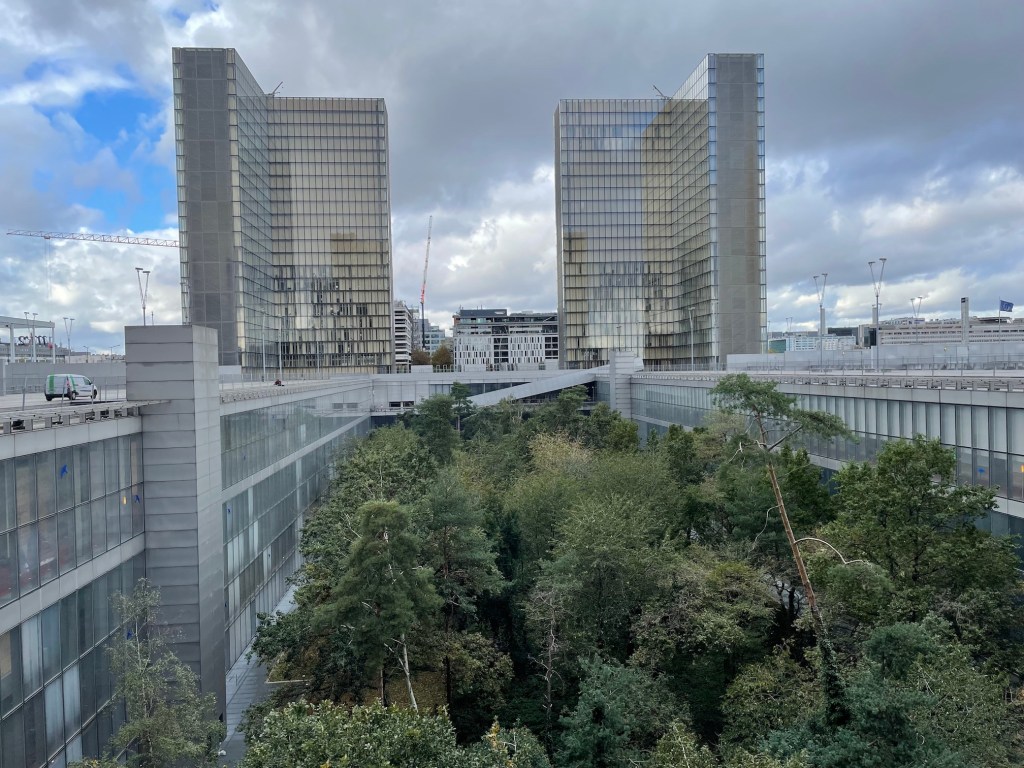
I made shorter visits to the Richelieu and Mitterand sites of the Bibliothèque nationale as well as to the Archives Nationales. At the BnF archives I wanted to check two things in the Foucault collection relating to Dumézil, and to take a look at some of the correspondence in the Georges Bataille papers. There are two bound volumes of correspondence, both of which are extraordinary. I say a bit about what is there here. There are some other things at the BnF archives which have to wait for another visit – there are a few things in the Aron, Barthes, and Kojève files I’d like to see, and perhaps to look at some more of the Lévi-Strauss papers.

The Mitterand site of the Bibliothèque nationale is great for things I couldn’t find in London. There is a lot more on open shelves here than there is in London, so not everything needs to be ordered from the stores. Some things do though, and equally some are not available in print as a copy has been made. Fortunately this time I didn’t have to fight the microfiche readers, as they have a digital copy. Perhaps the most interesting of these were material relating to the careers of Émile Benveniste and Alexandre Koyré, produced as part of their applications for teaching posts. The Collège de France has quite a bit of archival material relating to Koyré’s failed application for a chair there, about which I might write something at some point. At the Archives Nationales I wanted to look at some of the records of the teaching careers of Benveniste, Dumézil, and Robert Gauthiot. There are varying amounts here, but nearly all interesting. And I was able to look at a file of correspondence which is restricted access, after going through what felt like a rather byzantine set of procedures some months ago. I think I know what I’m doing for other restricted materials there now.

Back in the UK, I went back to the Ancient India and Iran Trust in Cambridge, to look at a few more things in the Harold Bailey papers, and to Oxford, hopefully the last visit to use the Aurel Stein archives. It would be so easy to get caught up in this interesting material – I say a bit about why here. I’m sure I’ll be back in Oxford for other things. Following the Stein lead took me to the Royal Asiatic Society, right next to the High Speed 2 building site near Euston station. They have a large photographic archive from Stein’s expeditions. Many of these photographs are in Stein’s published accounts, but still interesting to see the originals. The Royal Asiatic Society also currently has an exhibition at the Brunei Gallery of SOAS, Extraordinary Endeavours, celebrating their bicentenary. It’s quite interesting if you’re in the area, and is open until mid-December. 

As some people will know, the British Library online catalogue and ordering system have been unavailable for a month now, following a ransomware attack. (They are updating a blog with developments.) It’s surprising that this has not received more attention – or, as the joke goes, it’s not surprising librarians kept that quiet. With ordering material from offsite stores not possible, and onsite material only available via paper catalogues and handwritten requests, I only spent a few hours there, working with some of the material on the open shelves of the Asian and African Studies reading room. I also went to see Kenneth Branagh’s King Lear. I’m hardly the first to say this, but it was disappointing. Cut heavily and played quickly, running for a bit less than two hours, it just felt hurried and somewhat lifeless. 

I am hoping to get to a lot of US archive collections next year, or maybe early 2025, but I’ve been in touch with a few archives which are further apart where I don’t need to see much, and have generously been sent some scanned material. I’d rather see things in person, of course, but logistically some of it is just too challenging, and I’m hugely grateful for what people will do if you ask nicely.

I have a couple of other London trips in December, though with the British Library still out of action, I’m thinking of which other libraries to use. I have realised just how much I use the BL online catalogue, as a first place to check whether they have something, and adding to the basket or making lists of future things to consult. Worldcat is coming in useful for finding where else might have something – I’m fortunate in having library cards for many of the London university libraries. I am still trying to work on the chapter on Benveniste in the 1930s and 1940s, which is opening up some interesting questions. In particular, I’m doing some reading on Jean de Menasce, who was a student of Benveniste’s and helped get him out of France after the German occupation. I’ve also just finished reading the second volume of Rosemary Lévy Zumwalt’s remarkable biography of Franz Boas, after reading the first part earlier this year. That was mainly for background interest, though there are some useful bits on Claude Lévi-Strauss which connect to the story I’m trying to tell, and I particularly liked the parts about the network of thinkers of which Boas was such a central figure.

Previous updates on this project can be found here, along with links to some research resources and forthcoming publications, including the still-delayed reedition of Georges Dumézil’s Mitra-Varuna. There is a lot more about the earlier Foucault work here. The final volume of the series, The Archaeology of Foucault, is now out worldwide. The special issue of Theory, Culture & Society I co-edited on “Foucault before the Collège de France” is also now published.
Posted in Alexandre Koyré, Aurel Stein, Emile Benveniste, Georges Bataille, Georges Dumézil, Mapping Indo-European Thought in Twentieth Century France, Marcel Mauss, Michel Foucault, Roland Barthes, William Shakespeare | Leave a comment

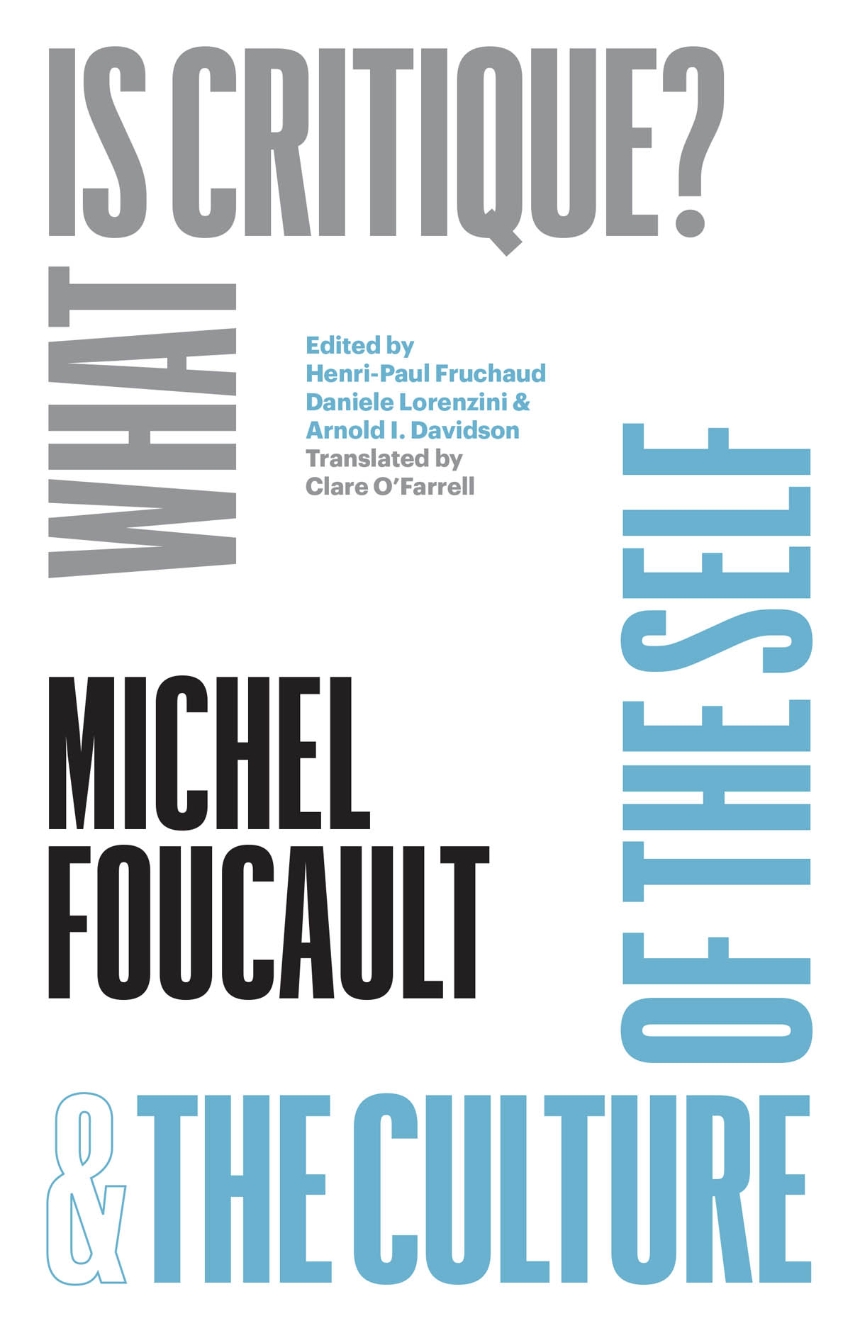
Michel Foucault, What Is Critique? & The Culture of the Self, edited by Henri-Paul Fruchaud, Daniele Lorenzini, and Arnold I. Davidson, translated by Clare O’Farrell, University of Chicago Press, January 2024

Michel Foucault, What Is Critique? & The Culture of the Self, edited by Henri-Paul Fruchaud, Daniele Lorenzini, and Arnold I. Davidson, translated by Clare O’Farrell, University of Chicago Press, January 2024.

Newly published lectures by Foucault on critique, Enlightenment, and the care of the self.

On May 27, 1978, Michel Foucault gave a lecture to the French Society of Philosophy where he redefined his entire philosophical project in light of Immanuel Kant’s 1784 text “What Is Enlightenment?” Foucault strikingly characterizes critique as the political and moral attitude consisting in the “art of not being governed like this,” one that performs the function of destabilizing power relations and creating the space for a new formation of the self within the “politics of truth.”

This volume presents the first critical edition of this crucial lecture alongside a previously unpublished lecture about the culture of the self and three public debates with Foucault at the University of California, Berkeley, in April 1983. There, for the first time, Foucault establishes a direct connection between his reflections on the Enlightenment and his analyses of Greco-Roman antiquity. However, far from suggesting a return to the ancient culture of the self, Foucault invites his audience to build a “new ethics” that bypasses the traditional references to religion, law, and science.

Posted in Uncategorized | Leave a comment

The Theory Variations: An Interview with Fredric Jameson by Jason Demers

The Theory Variations: An Interview with Fredric Jameson by Jason Demers (open access)

Thanks to Robert Tally for the link. Some interesting discussion of the early days of ‘French theory’ in the United States.

Posted in Fredric Jameson | Leave a comment

Dave Beer, Reading Critical Data Studies – virtual book, 2023

At his relatively new Half Thoughts blog, Dave Beer has assembled a number of pieces into a virtual book, some of which are open access.

Over several years I’ve been working on a little background project that I’ve called ‘Reading Critical Data Studies’. The idea was quite simple. I tried to read and write about books in the field that I thought would be useful for teaching or that might help with research. It wasn’t possible to write about every book I encountered, there’s never enough time, so I picked out things that seemed important in some way or that covered a range of issues. In the pieces I wrote, I tried to respond to the ideas and perspectives in the books, offering thoughts and questions too. Together these pieces would hopefully add something to the debates.

I thought about it as a kind of book that would never actually be a book. So, instead, I’ve created a contents page below with links to the pieces. I’ve not included all the reviews I’ve done over the last few years, instead I’ve picked out eleven pieces that capture different issues in critical data studies (broadly conceived) and that might work alongside one another. Each chapter aims to find a way into the field through a focus on one book.

The full contents and links to all the pieces are here.

Posted in Uncategorized | Leave a comment

Andreas Malm on Palestine, Climate Activism and over-shooting 1.5 °C – interview on video

Andreas Malm on Palestine, Climate Activism and over-shooting 1.5 °C – interview on video with Sebastian Budgen

Andreas Malm is a Swedish climate activist, associate professor of human ecology at Lund University, and author of the best-selling How to Blow Up a Pipeline: Learning to Fight in a World on Fire. Naomi Klein describes him as “one of the most original thinkers on the subject” of climate change.

In this interview with his Verso editor, Sebastian Budgen, he discusses the origins of his climate activism, strategic failures of the climate movement, his pro-Palestinian politics, and eco-socialism.

You can find all his work, including How to Blow Up a Pipeline, here: https://www.versobooks.com/en-gb/blog…

Posted in Uncategorized | 1 Comment

Jean-Numa Ducange  and Anthony Burlaud (eds.), Marx, A French Passion: The Reception of Marx and Marxisms in France’s Political-Intellectual Life – trans. David Broder, Brill, 2023

Jean-Numa Ducange  and Anthony Burlaud (eds.), Marx, A French Passion: The Reception of Marx and Marxisms in France’s Political-Intellectual Life – trans. David Broder, Brill, 2023

Paperback after 12 months with Haymarket

Despite the collapse of Soviet-style socialism, the spectre of Marx still haunts the French imagination. This is no accident, in a country whose intellectual life and political history have long been marked by his multiple presences.
This volume offers a historical and sociological insight into the way his thought has been received in the French context, from his own lifetime to the present. Analysing Marx’s place and influence in the French intellectual, political and artistic debate – across the political spectrum and even in the French-speaking colonial world – it helps us understand the uses and misuses of an œuvre of paramount importance.

Posted in Uncategorized | Leave a comment

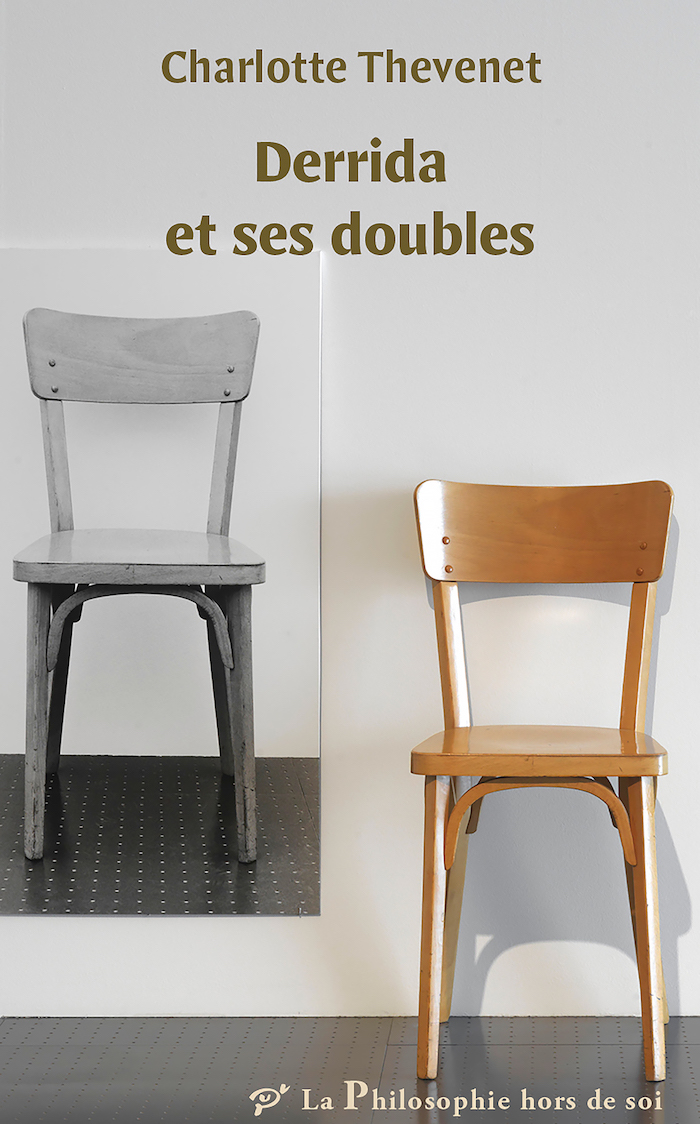
Charlotte Thevenet, Derrida et ses doubles – Presses Universitaires de Vincennes, November 2023

Charlotte Thevenet, Derrida et ses doubles – Presses Universitaires de Vincennes, November 2023

Qu’on la pourfende, la déplore ou la célèbre, l’obscurité du style de Derrida semble mettre d’accord disciples et adversaires du philosophe. Plutôt que de prendre parti, ce livre prend à la lettre la fameuse illisibilité derridienne pour la comprendre comme l’un des effets d’une rhétorique singulière.
Afin de comprendre au mieux l’opacité déployée par Derrida dans toute son œuvre, ce livre s’est attaché à l’étude de cas-limites : Glas, livre en deux colonnes consacré à Hegel et Genet, mais aussi d’autres textes et livres du philosophe mettant en œuvre la division de la page (Tympan et La double séance). Analyser le discours philosophique avec les outils de la rhétorique rend la philosophie à sa nature textuelle, souvent oubliée au profit de la doctrine, et permet d’en proposer une lecture.

Posted in Jacques Derrida, Uncategorized | Leave a comment

Call for Papers: Global Histories of International Thought and Geopolitical Concepts, University of Groningen, 23-24 May 2024

Call for Papers 2023: Global Histories of International Thought and Geopolitical Concepts

RUG-NUPI Research Workshop in the History and Theory of International Relations

Keynote speaker: Prof. Lucian Ashworth 

Location: University of Groningen, 9712 CP Netherlands

Date: Thursday 23th – Friday 24th, May 2024

full details in pdf below

Posted in Uncategorized | Leave a comment

Mathias Albert, Dina Brode-Roger, Lisbeth Iversen (eds.), Svalbard Imaginaries: The Making of an Arctic Archipelago – Palgrave Macmillan, November 2023

Mathias Albert, Dina Brode-Roger, Lisbeth Iversen, Svalbard Imaginaries: The Making of an Arctic Archipelago – Palgrave Macmillan, November 2023

Hardback and e-book at present; paperback due in December 2024

By drawing on a broad range of disciplinary backgrounds, this book illustrates the immense complexities of Svalbard as a place, point of reference, or social concept. It portrays the multiple, situated perspectives that characterize understandings and imaginings of Svalbard, and brings together contributions from academic fields that rarely interact with each other.

Svalbard Imaginaries contributes to a number of research contexts, ranging from a broadly conceived, multi-disciplinary field of ‘Arctic Studies’ to more disciplinary specific debates on how places are reworked at the interstices of various global flows and vice versa. It assembles contributions on imaginaries that cover a wide array of issues, including—but not limited to—Svalbard as a geopolitical site, a landscape, an image, a (mining) heritage assemblage, a tourist destination, a wilderness, a built environment, a site of knowledge production, a site of artistic engagement, and projections of the future. It deliberately assembles analyses that refer to a variety of timescales and covers representations of the past, the present, and possible futures of Svalbard.

Posted in Uncategorized | Leave a comment

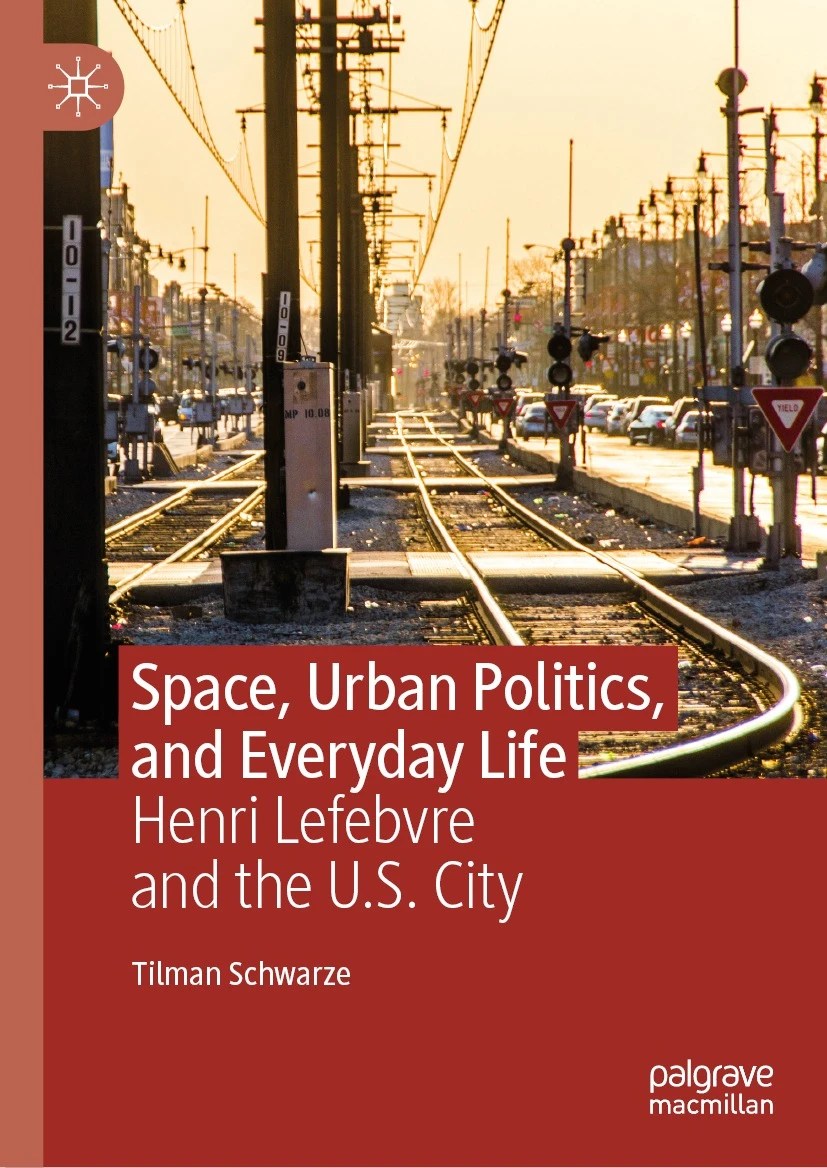
Tilman Schwarze, Space, Urban Politics, and Everyday Life: Henri Lefebvre and U.S. City – Springer, November 2023

Tilman Schwarze, Space, Urban Politics, and Everyday Life: Henri Lefebvre and U.S. City – Springer, November 2023

This Book develops a novel and innovative methodological framework for operationalising Henri Lefebvre’s work for empirical research on the U.S. city. Building on ethnographic research on Chicago’s South Side, Tilman Schwarze explores the current situation of urbanisation and urban life in the U.S. city through a critical reading and application of Lefebvre’s writings on space, everyday life, the urban, the state, and difference. Focusing on territorial stigmatisation, public housing transformation, and urban redevelopment, this book makes an important contribution to critical urban scholarship, foregrounding the relevance and applicability of Henri Lefebvre’s work for geographical and sociological research on urban politics and everyday life.

Posted in Henri Lefebvre, Uncategorized, urban/urbanisation | 2 Comments