David O’Sullivan, Computing Geographically: Bridging Giscience and Geography – Guilford Press, January 2024

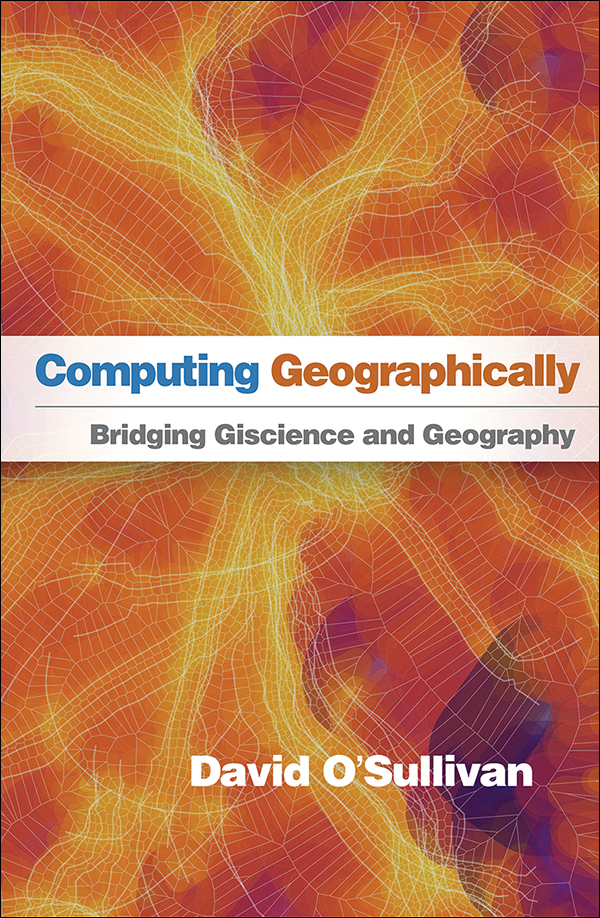
David O’Sullivan, Computing Geographically: Bridging Giscience and Geography – Guilford Press, January 2024

Geographic information science (GISc) and systems (GIS) have grown rapidly in recent decades, increasingly on a separate track from geographic thought. As geography’s “big ideas”—such as space, place, boundaries, scale, process, and relationality—have evolved, what does this mean for their computational representation? This book considers how key concepts have developed in geography and are represented (or not) in GISc, with a view to bridging gaps between the two. David O’Sullivan shows how revisiting the theoretical underpinnings of geography offers insights on enduring GIS challenges—including map projections, the modifiable areal unit problem, scale and map generalization, and the nature of space and place—while also enriching geographic thought. The book uses examples from across geography’s subdisciplines to promote understanding. Chapters are self-contained essays that can easily form the basis of classroom discussions.

Posted in Uncategorized | Leave a comment

Rachael Squire and Anna Jackman, Political Geography: Approaches, Concepts, Futures – Sage, November 2023

Rachael Squire and Anna Jackman, Political Geography: Approaches, Concepts, Futures – Sage, November 2023

This innovative and thought-provoking text will teach you about the diverse and increasingly expansive sub-discipline of geopolitics. Divided into three sections, Political Geography draws on case studies from a diverse range of scales, contexts, and demographics, to introduce you to the key approaches, concepts, and futures of geopolitics. 

You will cover an extensive range of key topics in Political Geography, from feminist geopolitics to non-human worlds, and nationalism to peace and resistance. Throughout this first edition you will apply various theoretical lenses, utilise a wide range of examples both past and present, and draw on cutting edge scholarship to reinvigorate your understanding of important themes such as the state, borders, and territory.

Based on the award-winning course at RHUL, Political Geography includes a variety of sites, spaces, materials, and images alongside ‘In the field’ tips, ideas for practical dissertation research, and tasks to facilitate active follow-on learning. Case studies, key terms, key questions and learning exercises, and annotated readings are included throughout every chapter to aid understanding and help you to engage and reflect on the content.

Designed as a core text for undergraduates and an introductory text for postgraduates with an interest in Political Geography.

Posted in Uncategorized | 1 Comment

David W. Bates, An Artificial History of Natural Intelligence: Thinking with Machines from Descartes to the Digital Age – University of Chicago Press, April 2024

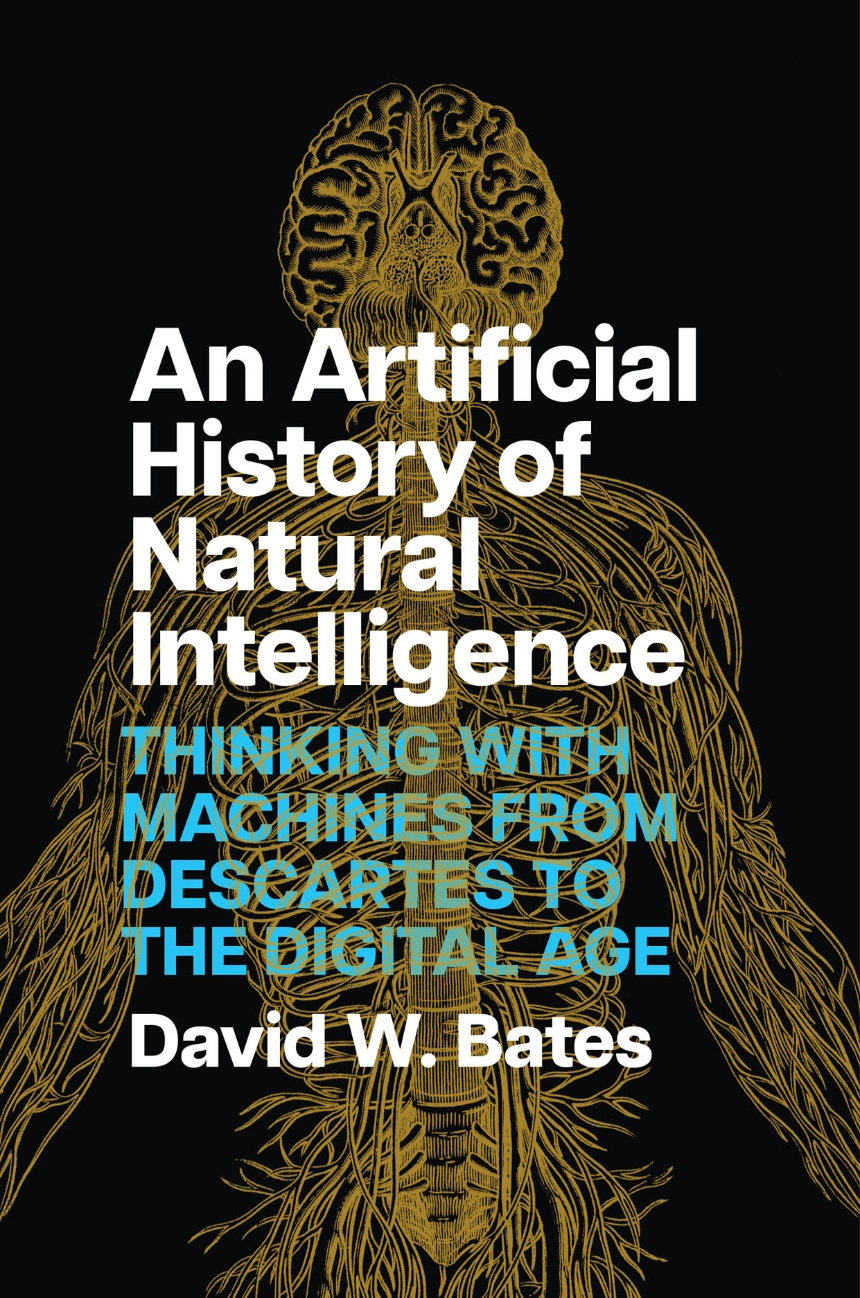
David W. Bates, An Artificial History of Natural Intelligence: Thinking with Machines from Descartes to the Digital Age – University of Chicago Press, April 2024

A revolutionary history of human intelligence that argues that humans know themselves by knowing their machines.

We imagine that we are both in control of and controlled by our bodies—autonomous and yet automatic. This entanglement, according to David W. Bates, emerges in the seventeenth century when humans first built and compared themselves with machines. Reading varied thinkers from Descartes to Kant to Turing, Bates reveals how time and time again technological developments offered new ways to imagine how the body’s automaticity worked alongside the mind’s autonomy. Tracing these evolving lines of thought, An Artificial History of Natural Intelligence offers a new theorization of the human as a being that is dependent on technology and produces itself as an artificial automaton without a natural, outside origin.

Posted in Uncategorized | Leave a comment

Stefanos Geroulanos, The Invention of Prehistory: Empire, Violence, and our Obsession with Human Origins – Liveright, April 2024

Stefanos Geroulanos, The Invention of Prehistory: Empire, Violence, and our Obsession with Human Origins – Liveright, April 2024

There is more info about the book and related essays on the author’s website.

Books about the origins of humanity dominate bestseller lists, while major newspapers present breathless accounts of new archaeological findings and speculation about what those findings might tell us about ourselves. We are obsessed with prehistory―and, in this respect, our current era is no different from any other in the last three hundred years. In this coruscating history of prehistory, Stefanos Geroulanos moves from Rousseau’s “state of nature” and Romantic notions of virtuous German barbarians to theories about Neanderthals, killer apes, and a matriarchal paradise where women ruled. Yet as he shows, such ideas became, for the most part, the ideological foundations of repressive regimes and globe-spanning empires. Accounts of prehistory tell us more about the moment when they are proposed than about the deep past, Geroulanos argues―and if we hope to start improving our future, we would be better off setting aside the search for how it all started.

Posted in Uncategorized | Leave a comment

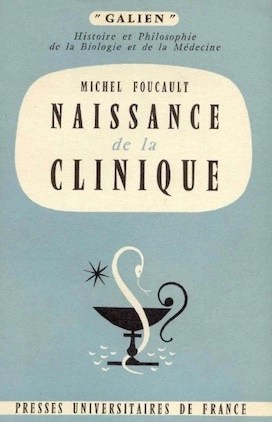
A new translation and critical edition of Michel Foucault’s Birth of the Clinic – edited by Stefanos Geroulanos and Stuart Elden, translated by Marie Satya McDonough – beginning a new project

I’m very happy to be working with Tony Bruce at Routledge, Stefanos Geroulanos (as co-editor) and Marie Satya McDonough (as translator) on a new translation and critical edition of Michel Foucault’s classic book Birth of the Clinic.

This will be a translation of the 1972 second edition of Naissance de la clinique, with all the variant passages from the 1963 first edition in notes or appendices. We will check, complete and correct Foucault’s references, add some supplementary material by Foucault and others, and write an editorial introduction. 

The existing translation by Alan Sheridan is wholly unreliable, a hybrid of parts of the first edition and parts of the second, often switching in the same paragraph or even sentence. The English is a book Foucault never wrote. I have complained about this before.

There are also problems of how the text is translated, especially with medical and philosophical terminology, voice and style. We began work thinking we could amend the existing translation but decided that a fresh version was needed as the basis for the new edition. We believe that through this process the text can become both more accurate and more readable. 

It will take a while to bring Birth of the Clinic: An Archaeology of the Medical Gaze together, but should be a really interesting project.

Posted in Michel Foucault, Stefanos Geroulanos | Tagged , | 13 Comments

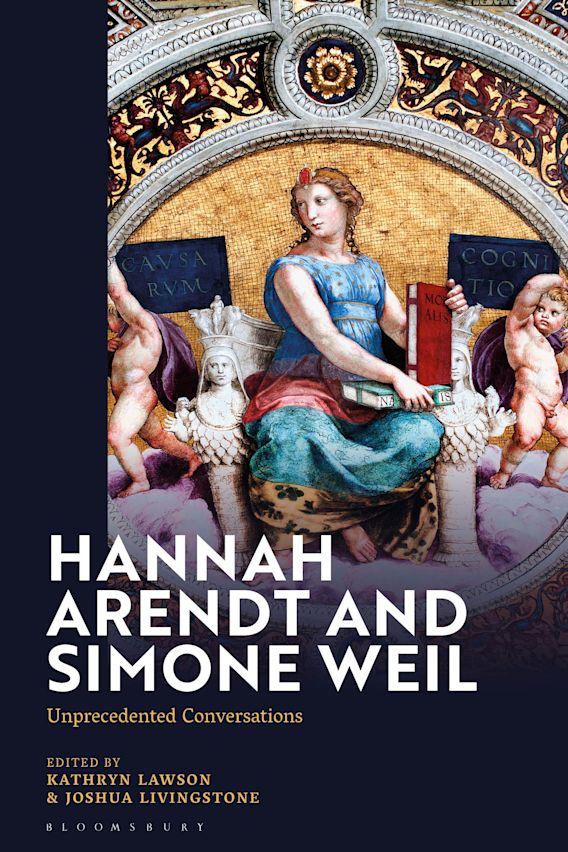
Kathryn Lawson and Joshua Livingstone (eds), Hannah Arendt and Simone Weil: Unprecedented Conversations – Bloomsbury, February 2024

Kathryn Lawson and Joshua Livingstone (eds), Hannah Arendt and Simone Weil: Unprecedented Conversations – Bloomsbury, February 2024

Hannah Arendt and Simone Weil were two of the most compelling political thinkers of the 20th century who, despite having similar life-experiences, developed radically distinct political philosophies. This unique dialogue between the writings of Arendt and Weil highlights Arendt’s secular humanism, her emphasis on heroic action, and her rejection of the moral approach to politics, contrasted starkly with Weil’s religious approach, her faith in the power of divine Goodness, and her other-centric ethic of suffering and affliction. The writings here respect the profound differences between Arendt and Weil whilst pulling out the shared preoccupations of power, violence, freedom, resistance, responsibility, attention, aesthetics, and vulnerability. Without shying away from exploring the more difficult concepts in these philosophers’ works, Hannah Arendt and Simone Weil also aims to pull out the relevance of their writings for contemporary issues.

Introduction

Part I: Power and Violence
1. Weil and Arendt on the Nature of Power, Lissa McCullough (California State University, USA) 
2. Hannah Arendt and Simone Weil on the Power of Words, Ian Rhoad (American University, USA)
3. Political Violence: A Contradiction in Terms, Rose Owen (University of Chicago, USA)

Part II: Political Evil and Resistance
4. Living in Dark Times: The Seduction of Totalitarian Evil, Marie Meaney (International Theological Institute, Austria)
5. Simone Weil, Humiliation and Epistemic Injustice, Sophie Bourgault (University of Ottawa, Canada)

Part III: Freedom and Attention
6. Attention as a Contested Political Resource: Simone Weil and Hannah Arendt on the Inner Origins of Freedom, Paolo Monti (Università degli Studi di Milano Bicocca, Italy)
7. Tyranny Without a Tyrant: Hannah Arendt and Simone Weil on Bureaucracy, Marina Lademacher (University of Sussex, UK)

Part IV: Action and Aesthetics
8. We Come and Go, the World is Here to Stay: Hannah Arendt’s Political Thought in Action, Elvira Roncalli (Carroll College)
9. The Political Role of Storytelling in the Thought of Simone Weil and Hannah Arendt: Expanding the Conception of the World to What was Invisible, Pascale Devette (Université de Montréal)
10. Beauty and Contemporary Politics in Weil and Arendt, Sara McDonald (Huron University, Canada)

Part V: Responsibility and Vulnerability
11. Finding Refuge in Rootedness: Hannah Arendt and Simone Weil on Subjectivity, Migration, Borders, and Boundaries”, Scott B. Ritner (Temple University, USA)
12. Decreation and Collective Responsibility: The Sketchings of Prison Abolition in Simone Weil and Hannah Arendt, Samuel Elias Sokolsky-Tiff (Purdue University, USA)
13. Politics of Vulnerability: The Meaning of Showing Weakness in Hannah Arendt and Simone Weil, Thomas Sojer (Universität Erfurt, Germany) and Miriam Metze (Universität Regensburg, Germany)

Posted in Uncategorized | Leave a comment

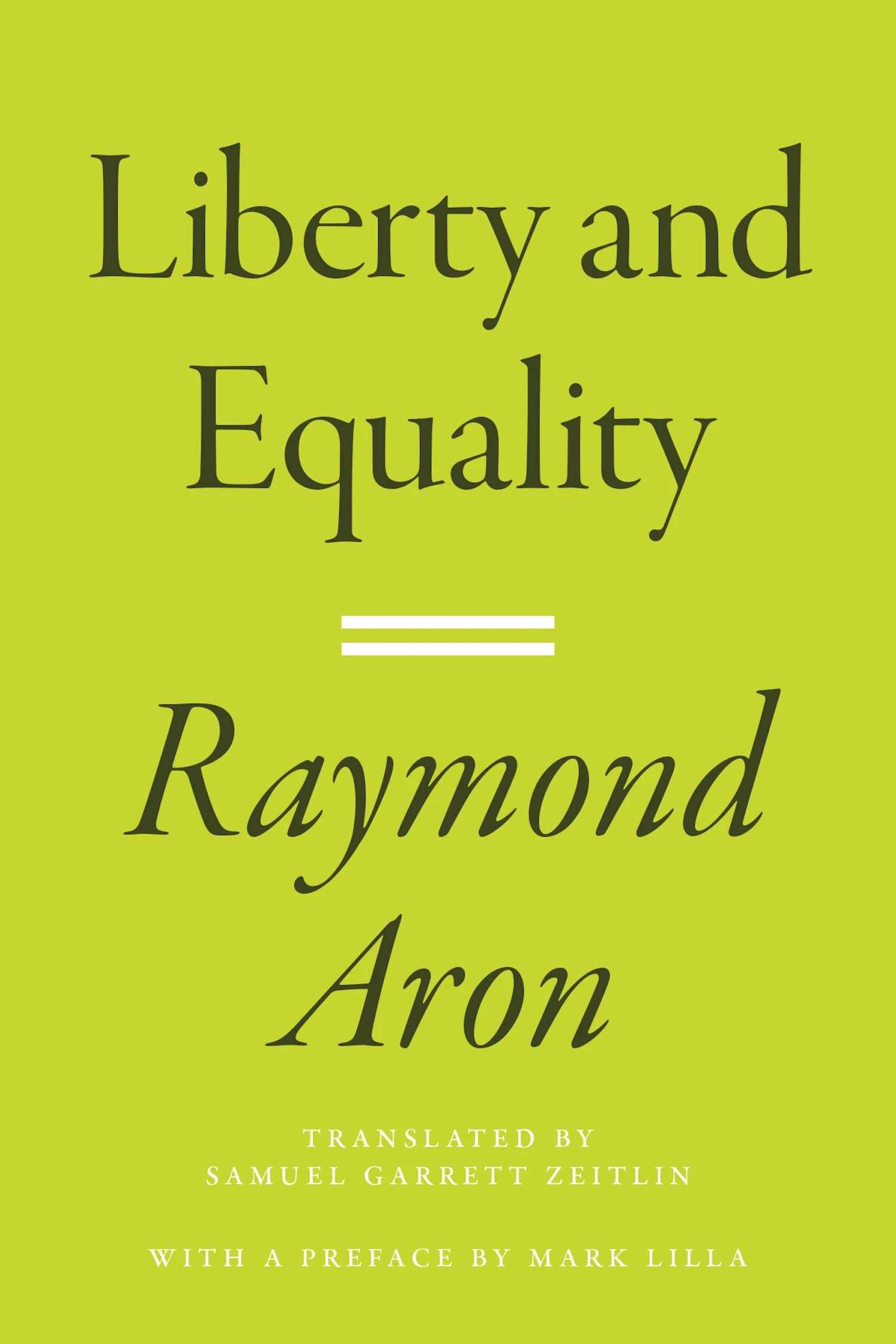
Raymond Aron, Liberty and Equality, trans. Samuel Garrett Zeitlin – Princeton University Press, November 2023

Raymond Aron, Liberty and Equality, trans. Samuel Garrett Zeitlin – Princeton University Press, November 2023

Liberty and Equality is the first English translation of the last lecture delivered at the Collège de France by Raymond Aron, one of the most influential political and social thinkers of the twentieth century. In this important work, the most prominent French liberal intellectual of the Cold War era presents his views on the core values of liberal democracy: liberty and equality. At the same time, he provides an ideal introduction to key aspects of his thought.

Ranging from Soviet ideology to Watergate, Aron reflects on root concepts of democracy and representative government, articulates a notion of liberty or freedom as equal right as distinct from equal outcome, and discusses different kinds of liberties: personal, political, religious, and social. In search of a common truth or at least a common good, and analyzing what he perceives as the crisis of liberal democracies, Aron opens a space for reexamining the relation between liberty and equality.

Posted in Uncategorized | Leave a comment

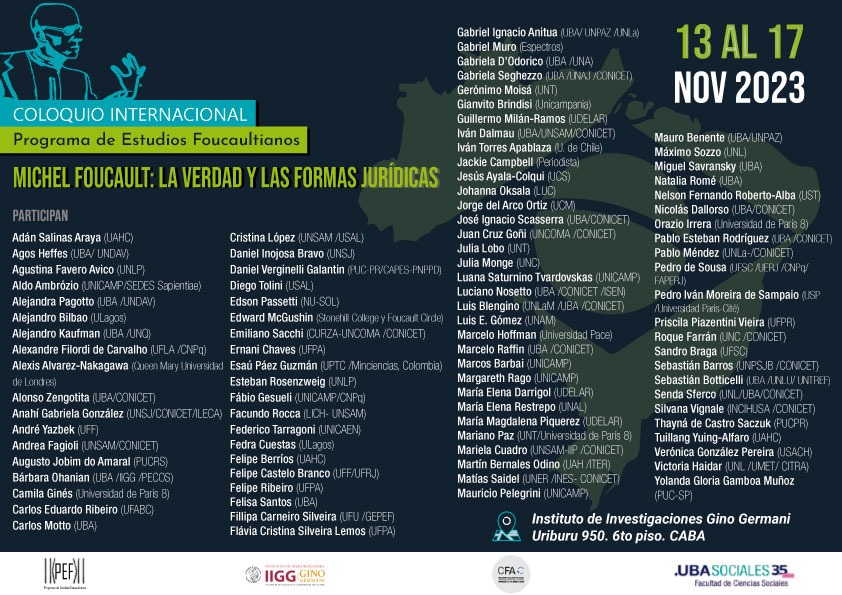
Foucault’s ‘Truth and Juridical Forms’ lectures, 50 years on – conference in Buenos Aires, 13-17 November 2023

Buenos Aires conference next week on Foucault’s ‘Truth and Juridical Forms’ lectures, 50 years on. Apologies for not having a link to a conference website – happy to update if anyone knows of one.

[Update: Foucault News has a pdf of the programme]

Posted in Michel Foucault | Leave a comment

Sarah Hall interviews Louise Amoore on the ethical challenges of AI

Sarah Hall interviews Louise Amoore on the ethical challenges of AI – The UK in a Changing Europe Podcast

In the week of the UK’s AI Safety Summit, Professor Sarah Hall talks to Professor Louise Amoore about responding to the ethical challenges posed by different types of artificial intelligence, regulatory differences between the UK and the EU and the role of tech companies in ensuring the safe use of AI.

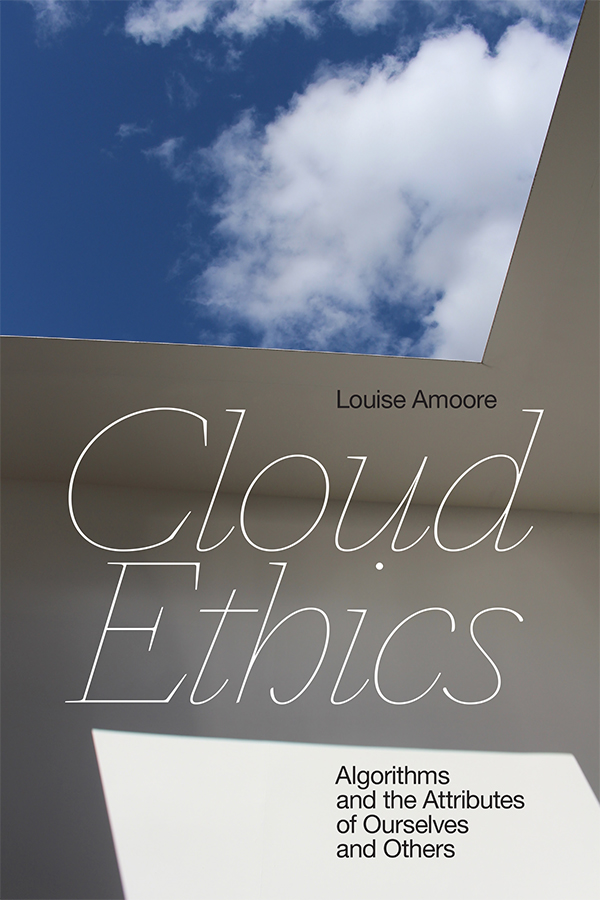
Louise Amoore’s book Cloud Ethics: Algorithms and the Attributes of Ourselves and Others was published by Duke University Press in 2020.

In Cloud Ethics Louise Amoore examines how machine learning algorithms are transforming the ethics and politics of contemporary society. Conceptualizing algorithms as ethicopolitical entities that are entangled with the data attributes of people, Amoore outlines how algorithms give incomplete accounts of themselves, learn through relationships with human practices, and exist in the world in ways that exceed their source code. In these ways, algorithms and their relations to people cannot be understood by simply examining their code, nor can ethics be encoded into algorithms. Instead, Amoore locates the ethical responsibility of algorithms in the conditions of partiality and opacity that haunt both human and algorithmic decisions. To this end, she proposes what she calls cloud ethics—an approach to holding algorithms accountable by engaging with the social and technical conditions under which they emerge and operate.

Posted in Uncategorized | Leave a comment

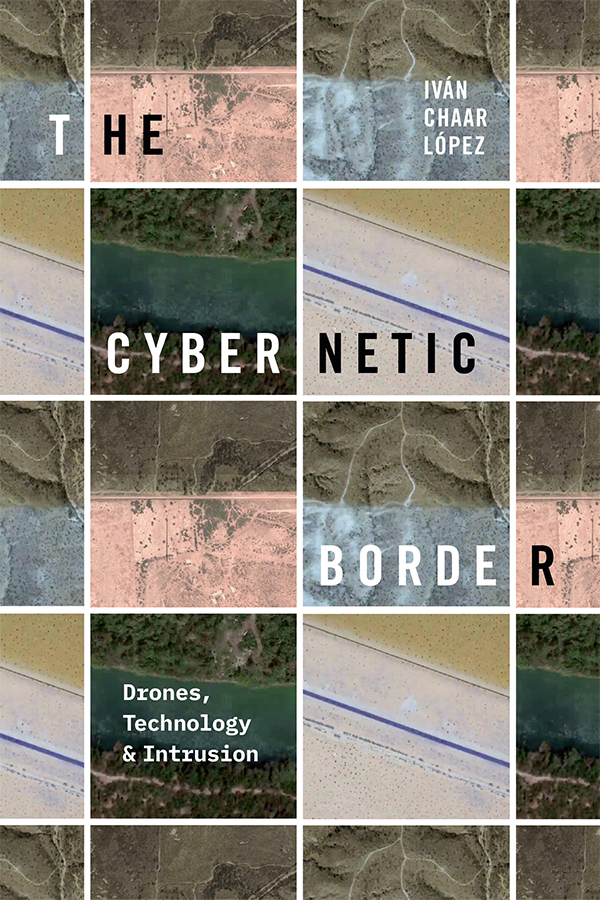
Iván Chaar López, The Cybernetic Border: Drones, Technology, and Intrusion – Duke University Press, March 2024

Iván Chaar López, The Cybernetic Border: Drones, Technology, and Intrusion – Duke University Press, March 2024

In The Cybernetic Border, Iván Chaar López argues that the settler US nation requires the production and targeting of a racialized enemy that threatens the empire. The cybernetic border is organized through practices of data capture, storage, processing, circulation, and communication that police bodies and constitute the nation as a bounded, territorial space. Chaar López historicizes the US government’s use of border enforcement technologies on Mexicans, Arabs, and Muslims from the mid-twentieth century to the present, showing how data systems are presented as solutions to unauthorized border crossing. Contrary to enduring fantasies of the purported neutrality of drones, smart walls, artificial intelligence, and biometric technologies, the cybernetic border represents the consolidation of calculation and automation in the exercise of racialized violence. Chaar López draws on corporate, military, and government records, promotional documents and films, technical reports, news reporting, surveillance footage, and activist and artist practices. These materials reveal how logics of enmity are embedded into information infrastructures that shape border control and modern sovereignty.

Posted in Uncategorized | Leave a comment