Valentina Antoniol, Foucault et la guerre: À partir de Schmitt, contre Schmitt – Éditions Mimesis, November 2023

Valentina Antoniol, Foucault et la guerre: À partir de Schmitt, contre Schmitt – Éditions Mimesis, November 2023

Cet essai est consacré aux analyses de Michel Foucault sur la guerre, un sujet qui n’a pas toujours reçu l’attention qu’il mérite et qui joue pourtant un rôle déterminant dans l’œuvre de l’auteur. Les réflexions de Foucault sont ici mises en relation avec celles de Carl Schmitt – une comparaison rarement établie, et sur laquelle la littérature critique reste encore faible aujourd’hui.

Update December 2023: There is a video of a lecture in English here (via Foucault News):

Society Must Be Defended. Society Must Be Attacked: Foucault as a Critic of Schmitt

Update 2: The Italian version is now published – Valentina Antoniol, Foucault critico di Schmitt. Genealogie e guerra, Rubbetino, March 2024

Posted in Carl Schmitt, Michel Foucault | 1 Comment

Georges Bataille correspondence – taking a look at the bound volumes at the Bibliothèque nationale de France

A lot of letters to and from Georges Bataille have been published (for example, here), but the two bound volumes of correspondence at the Bibliothèque nationale are still something to behold. Given how much of his library and correspondence has been sold and scattered, it’s great to see so many letters in one place.

Image from https://www.edition-originale.com/en/literature/signed-books-inscribed/bataille-lettre-autographe-signee-a-denise-1943-60699

There are letters from and some to an extraordinary range of people – Axelos, Bachelard, Blanchot, Caillois, Camus, René Char, Marguerite Duras, Eliade, Max Ernst, Jaspers, Klossowski, Koyré, Kojève… Lacan, Lévi-Strauss, Magritte, Malraux, Merleau-Ponty, Jean Piel, Eric Weil…

The full listing is here – volume I and volume II.

Magritte’s letters are accompanied by an ink sketch of a scene of daylight and clouds, with a door opening to darkness and a crescent moon. He entitles this “Le Savoir”, dates it to 1961 and dedicates it “à Georges Bataille”. It’s a version of this painting.

The Lacan postcard is from Sils Maria, showing the Nietzsche plaque:

Image from https://www.reisereporterin.de/literaturreise-schweiz/nietzsche-sils-maria/

It’s signed both by Jacques and Sylvia, who used to be Bataille’s wife before she married Lacan.

There were only a couple of things in here which I really wanted to look at for my current work, but this was certainly an interesting collection – and absolutely priceless.

Posted in Albert Camus, Alexandre Koyré, Claude Lévi-Strauss, Friedrich Nietzsche, Gaston Bachelard, Georges Bataille, Jacques Lacan, Karl Jaspers, Kostas Axelos, Maurice Blanchot, Maurice Merleau-Ponty, Mircea Eliade, Pierre Klossowski, Roger Caillois, Uncategorized | 3 Comments

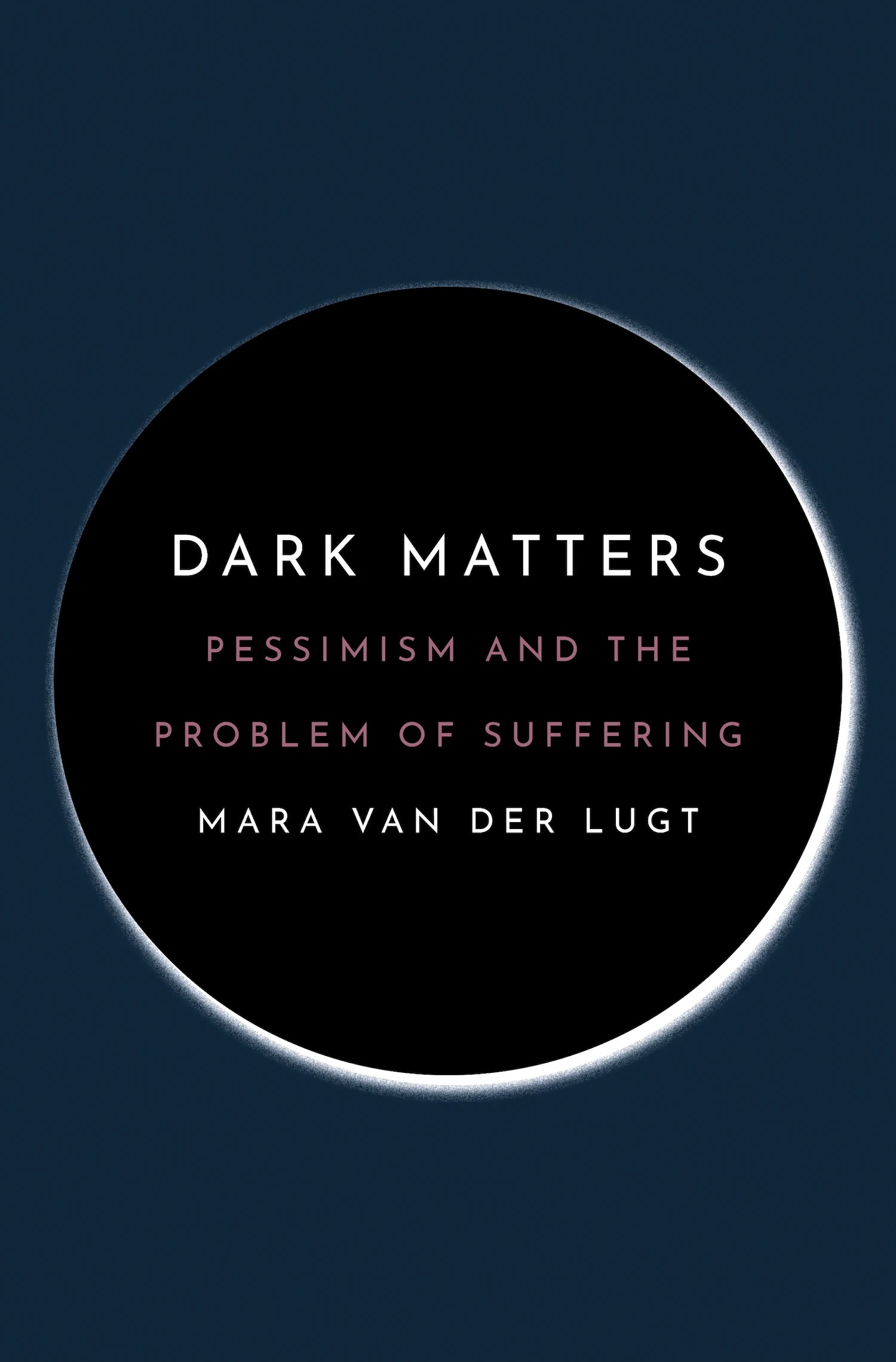
Mara van der Lugt, Dark Matters: Pessimism and the Problem of Suffering – Princeton University Press, paperback September 2023

Mara van der Lugt, Dark Matters: Pessimism and the Problem of Suffering – Princeton University Press, paperback September 2023

In the seventeenth and eighteenth centuries, philosophers engaged in heated debates on the question of how God could have allowed evil and suffering in a creation that is supposedly good. Dark Matters traces how the competing philosophical traditions of optimism and pessimism arose from early modern debates about the problem of evil, and makes a compelling case for the rediscovery of pessimism as a source for compassion, consolation, and perhaps even hope.

Bringing to life one of the most vibrant eras in the history of philosophy, Mara van der Lugt discusses legendary figures such as Leibniz, Hume, Voltaire, Rousseau, Kant, and Schopenhauer. She also introduces readers to less familiar names, such as Bayle, King, La Mettrie, and Maupertuis. Van der Lugt describes not only how the earliest optimists and pessimists were deeply concerned with finding an answer to the question of the value of existence that does justice to the reality of human suffering, but also how they were fundamentally divided over what such an answer should look like.

A breathtaking work of intellectual history by one of today’s leading scholars, Dark Matters reveals how the crucial moral aim of pessimism is to find a way of speaking about suffering that offers consolation and does justice to the fragility of life.

Posted in Uncategorized | Leave a comment

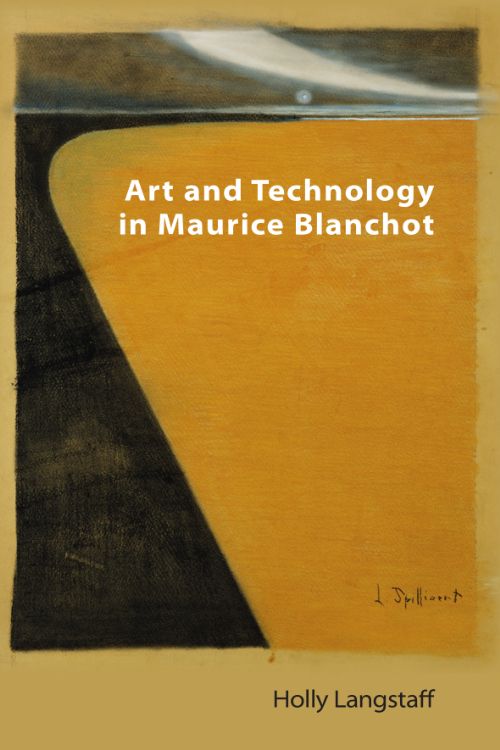
Holly Langstaff, Art and Technology in Maurice Blanchot – Edinburgh University Press, October 2023 (print and open access e-book)

Holly Langstaff, Art and Technology in Maurice Blanchot – Edinburgh University Press, October 2023 (print and open access e-book)

Demonstrates Blanchot’s ongoing importance for contemporary philosophical debate about technology, the post-human, and ecological thinking
  • Demonstrates a considerable shift in Blanchot’s thinking from 1940s to 1980s
  • Highlights the significance of Blanchot for important figures of twentieth-century French thought such as Jacques Derrida, Michel Foucault, and Bernard Stiegler
  • Argues for the continued relevance of Blanchot to twenty first-century debates in literary theory and criticism

Holly Langstaff reappraises the influential French thinker Maurice Blanchot’s writing from the 1940s to his late work in the 1980s, demonstrating how Blanchot’s exploration of the question of technology remains decisive throughout his career.

She situates Blanchot’s fictional and critical work in the context of his thinking of art as techne – as it develops out of Martin Heidegger’s philosophy. While Blanchot follows Heidegger in the view that writing is a form of techne, he never appeals for salvation from the menace of technology in the modern era. Rather, he sees in all forms of technology the opportunity for a new way of thinking beyond value. This, Blanchot calls an entirely different sort of affirmation.

Posted in Maurice Blanchot, Uncategorized | 1 Comment

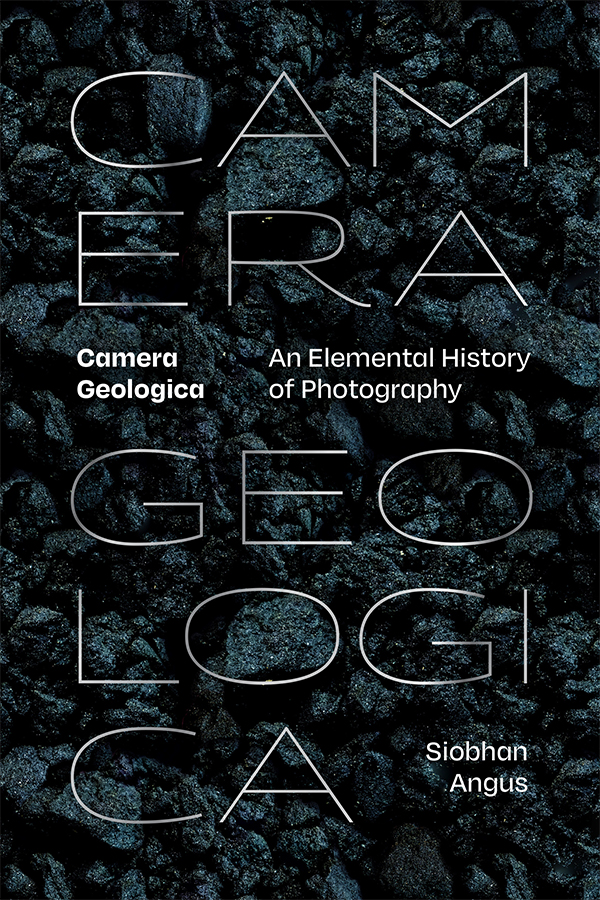
Siobhan Angus, Camera Geologica: An Elemental History of Photography – Duke University Press, March 2024

Siobhan Angus, Camera Geologica: An Elemental History of Photography – Duke University Press, March 2024

In Camera Geologica Siobhan Angus tells the history of photography through the minerals upon which the medium depends. Challenging the emphasis on immateriality in discourses on photography, Angus focuses on the inextricable links between image-making and resource extraction, revealing how the mining of bitumen, silver, platinum, iron, uranium, and rare-earth metals is a precondition of photography. Photography, Angus contends, begins underground and, through photographs of mines and mining, frequently returns there. Through a materials-driven analysis of visual culture, she illustrates histories of colonization, labor, and environmental degradation to expose the ways in which photography is enmeshed within and enables global extractive capitalism. Angus places nineteenth-century photography in dialogue with digital photography and its own entangled economies of extraction, demonstrating the importance of understanding photography’s complicity in the economic, geopolitical, and social systems that order the world.

Posted in Uncategorized | Leave a comment

Melissa Pawelski, Languages of Punishment: Translating Foucault in English and German – MHRA, Autumn 2024

Melissa Pawelski, Languages of Punishment: Translating Foucault in English and German – MHRA, Autumn 2024

Hardback initially, but paperback and e-book forthcoming

The works of French philosopher Michel Foucault (1926-1984) form a multilingual network of ideas. It is for this reason that Foucault’s ideas are difficult to translate. Yet in Anglophone debates, the task of translation has not been critically discussed. Focussing on the challenges of translating concepts of the human body (corps), power (pouvoir), violence, and surveillance in the French language, these key concepts have been informed by German-language philosophy which complicates translating them back into German and English. In this trilingual study of the English and German translations of one of Foucault’s most famous works, Surveiller et punir. Naissance de la prison (1975), Melissa Pawelski proposes for the first time a careful investigation into the difficulties of translating Foucauldian ideas, showing why and how the English and German translations differ from the original and from one another.

Posted in Michel Foucault, Uncategorized | Leave a comment

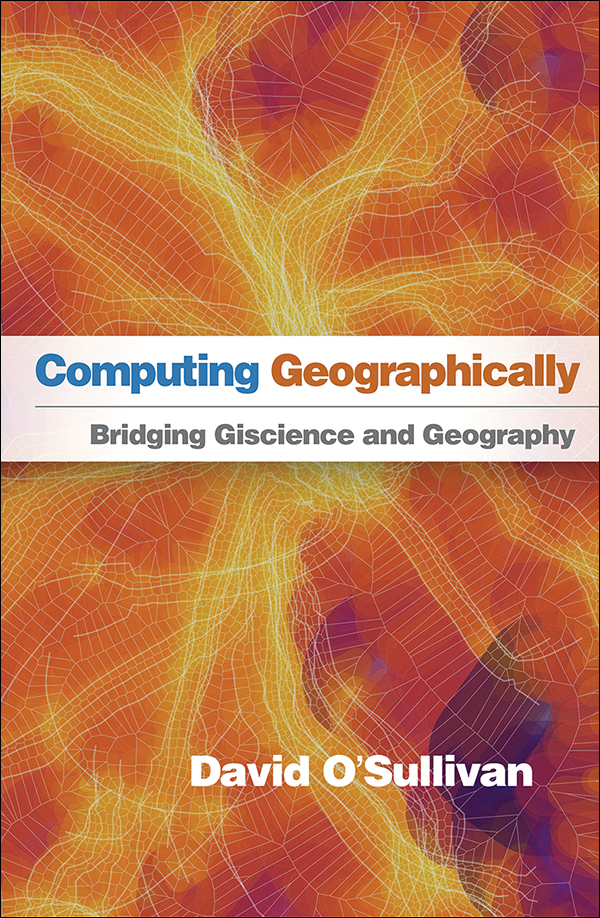
David O’Sullivan, Computing Geographically: Bridging Giscience and Geography – Guilford Press, January 2024

David O’Sullivan, Computing Geographically: Bridging Giscience and Geography – Guilford Press, January 2024

Geographic information science (GISc) and systems (GIS) have grown rapidly in recent decades, increasingly on a separate track from geographic thought. As geography’s “big ideas”—such as space, place, boundaries, scale, process, and relationality—have evolved, what does this mean for their computational representation? This book considers how key concepts have developed in geography and are represented (or not) in GISc, with a view to bridging gaps between the two. David O’Sullivan shows how revisiting the theoretical underpinnings of geography offers insights on enduring GIS challenges—including map projections, the modifiable areal unit problem, scale and map generalization, and the nature of space and place—while also enriching geographic thought. The book uses examples from across geography’s subdisciplines to promote understanding. Chapters are self-contained essays that can easily form the basis of classroom discussions.

Posted in Uncategorized | Leave a comment

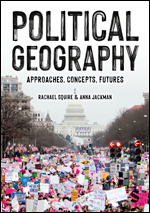
Rachael Squire and Anna Jackman, Political Geography: Approaches, Concepts, Futures – Sage, November 2023

Rachael Squire and Anna Jackman, Political Geography: Approaches, Concepts, Futures – Sage, November 2023

This innovative and thought-provoking text will teach you about the diverse and increasingly expansive sub-discipline of geopolitics. Divided into three sections, Political Geography draws on case studies from a diverse range of scales, contexts, and demographics, to introduce you to the key approaches, concepts, and futures of geopolitics. 

You will cover an extensive range of key topics in Political Geography, from feminist geopolitics to non-human worlds, and nationalism to peace and resistance. Throughout this first edition you will apply various theoretical lenses, utilise a wide range of examples both past and present, and draw on cutting edge scholarship to reinvigorate your understanding of important themes such as the state, borders, and territory.

Based on the award-winning course at RHUL, Political Geography includes a variety of sites, spaces, materials, and images alongside ‘In the field’ tips, ideas for practical dissertation research, and tasks to facilitate active follow-on learning. Case studies, key terms, key questions and learning exercises, and annotated readings are included throughout every chapter to aid understanding and help you to engage and reflect on the content.

Designed as a core text for undergraduates and an introductory text for postgraduates with an interest in Political Geography.

Posted in Uncategorized | 1 Comment

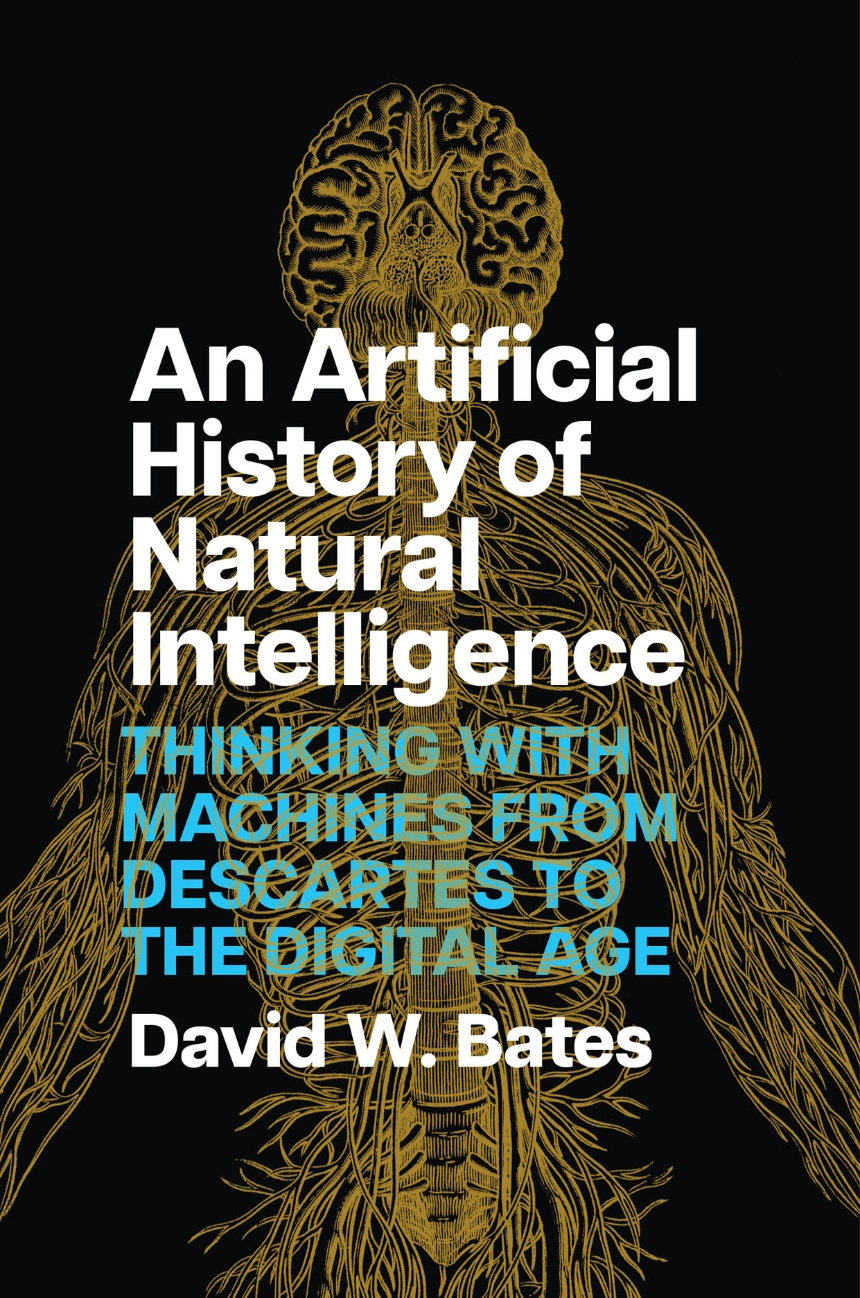
David W. Bates, An Artificial History of Natural Intelligence: Thinking with Machines from Descartes to the Digital Age – University of Chicago Press, April 2024

David W. Bates, An Artificial History of Natural Intelligence: Thinking with Machines from Descartes to the Digital Age – University of Chicago Press, April 2024

A revolutionary history of human intelligence that argues that humans know themselves by knowing their machines.

We imagine that we are both in control of and controlled by our bodies—autonomous and yet automatic. This entanglement, according to David W. Bates, emerges in the seventeenth century when humans first built and compared themselves with machines. Reading varied thinkers from Descartes to Kant to Turing, Bates reveals how time and time again technological developments offered new ways to imagine how the body’s automaticity worked alongside the mind’s autonomy. Tracing these evolving lines of thought, An Artificial History of Natural Intelligence offers a new theorization of the human as a being that is dependent on technology and produces itself as an artificial automaton without a natural, outside origin.

Posted in Uncategorized | Leave a comment

Stefanos Geroulanos, The Invention of Prehistory: Empire, Violence, and our Obsession with Human Origins – Liveright, April 2024

Stefanos Geroulanos, The Invention of Prehistory: Empire, Violence, and our Obsession with Human Origins – Liveright, April 2024

There is more info about the book and related essays on the author’s website.

Books about the origins of humanity dominate bestseller lists, while major newspapers present breathless accounts of new archaeological findings and speculation about what those findings might tell us about ourselves. We are obsessed with prehistory―and, in this respect, our current era is no different from any other in the last three hundred years. In this coruscating history of prehistory, Stefanos Geroulanos moves from Rousseau’s “state of nature” and Romantic notions of virtuous German barbarians to theories about Neanderthals, killer apes, and a matriarchal paradise where women ruled. Yet as he shows, such ideas became, for the most part, the ideological foundations of repressive regimes and globe-spanning empires. Accounts of prehistory tell us more about the moment when they are proposed than about the deep past, Geroulanos argues―and if we hope to start improving our future, we would be better off setting aside the search for how it all started.

Posted in Uncategorized | Leave a comment