Verso have currently made the e-book free to download
Israel’s military industrial complex uses the occupied, Palestinian territories as a testing ground for weaponry and surveillance technology that they then export around the world to despots and democracies. For more than 50 years, occupation of the West Bank and Gaza has given the Israeli state invaluable experience in controlling an “enemy” population, the Palestinians. It’s here that they have perfected the architecture of control.
Best-selling journalist Antony Loewenstein, author of Disaster Capitalism, uncovers this largely hidden world in a global investigation with secret documents, revealing interviews and on-the-ground reporting. This book shows in-depth, for the first time, how Palestine has become the perfect laboratory for the Israeli military-techno complex: surveillance, home demolitions, indefinite incarceration and brutality to the hi-tech tools that drive the ‘Start-up Nation’. From the Pegasus software that hacked Jeff Bezos’ and Jamal Khashoggi’s phones, the weapons sold to the Myanmar army that has murdered thousands of Rohingyas and drones used by the European Union to monitor refugees in the Mediterranean who are left to drown. Israel has become a global leader in spying technology and defence hardware that fuels the globe’s most brutal conflicts. As ethno-nationalism grows in the 21st century, Israel has built the ultimate model.
An accessible and engaging introduction to geographic thought from a recognized leader in the field
In the expanded and engaging Second Edition of Geographic Thought: A Critical Introduction, renowned scholar Tim Cresswell delivers a thoroughly up-to-date and accessible examination of the major thinkers and key theoretical developments in the field. Coverage of the complete range of the development of theoretical knowledge—from ancient geography to contemporary theory—appears alongside treatments of the influence of Darwin and Marx, the emergence of anarchist geographies, the impact of feminism, and myriad other central bodies of thought.
The latest edition explores new chapters on physical geography and theory, postcolonialism and decoloniality, and black geographies.
The author emphasizes the importance of geographic thought and its relevance to our understanding of what it means to be human and to the people, places, and cultures of the world in which we live. The book also includes:
New examples throughout consisting of interesting and up-to-date research from a wider range of geographical contexts and by geographers from diverse backgrounds
Comprehensive explorations of physical geography that combine updated coverage from the first edition with brand new material
Updates discussions of spatial science and quantitative methods that include considerations the role of place and specificity in quantitative work
In-depth examinations of the idea of the Anthropocene, the uses of assemblage theory, and the emergence of the GeoHumanities.
Perfect for students of undergraduate and graduate courses in geographic thought, Geographic Thought: A Critical Introduction will also earn a place in the libraries of students and scholars of the history and philosophy of geography, as well as practicing geographers.
I have now been back at work for a few weeks, initially beginning half-time and gradually increasing what I can do. The support I have had from my department for a long period off work and a phased transition has been much appreciated. However, the nature of being unwell on a research fellowship is that the amount of work does not reduce, just the time in which to do it. I can’t write 90% of the planned book, I don’t want to produce something less than I originally had in mind, and I don’t want to cut corners. So it is likely I will have to extend the period working on this project beyond the original plan. The end of the project is a good way off, but it’s hard to escape the feeling that I am a long way behind.
Especially given the shorter days I’ve been working, I tried to come up with some relatively small and sometimes discrete tasks, so that I could tackle something manageable and have a sense of progress. The plan for term 1 is to write a draft of a chapter on Émile Benveniste’s work in the 1930s and 1940s. This was initially the plan for the first half of the summer, but as well as starting later than planned, I’m also not going to be able to work so intensely. So it’s been a case of breaking down this work into smaller sections, parts and tasks, even more so than normal. One of the things that is interesting about this work is that while I know the broad contours of the themes this chapter needs to cover – Benveniste’s key works, his election to a chair at the Collège de France, his exile in the war, and fieldtrips to Iran and Afghanistan – there are going to be questions I don’t yet know which will need to discussed.
One relatively discrete task was writing about the teaching done by Benveniste. We have a good summary record from the Annuaires of both the Collège de France and the EPHE. Unfortunately his own archive only seems to have limited records of courses, a few of which have been digitised. His Last Lectures have been published, but there doesn’t seem to be a more extensive plan of publication. There are also a few notes from auditors available in archives. But for most years it looks like we simply have his own report of what he did, usually a paragraph in length. Before I became unwell, I’d done a systematic trawl through the Annuaires and had copied or downloaded the reports, and largely consolidated these into single file for each institution. It provides a really interesting trajectory of a career, as the record also does for Georges Dumézil – whose own teaching record is much better preserved – and, in the previous project, Foucault. I’ve been writing small sections on the teaching – Benveniste’s courses were disrupted by war and his health, so it breaks down into shorter periods. At some point I will go through the archival records in Paris and fill in what more detail I can, but for many of the years I think the reports are all we have.
I’ve also being making a few visits to UK archives. I made a return visit to Oxford, to look at the Society for the Protection of Science and Learning (SPSL) papers I mentioned in the previous update. This was mainly to check a few things in relation to the Walter Bruno Henning story I have now drafted. I also used the visit there to request a couple of things from the library I can’t access in London.
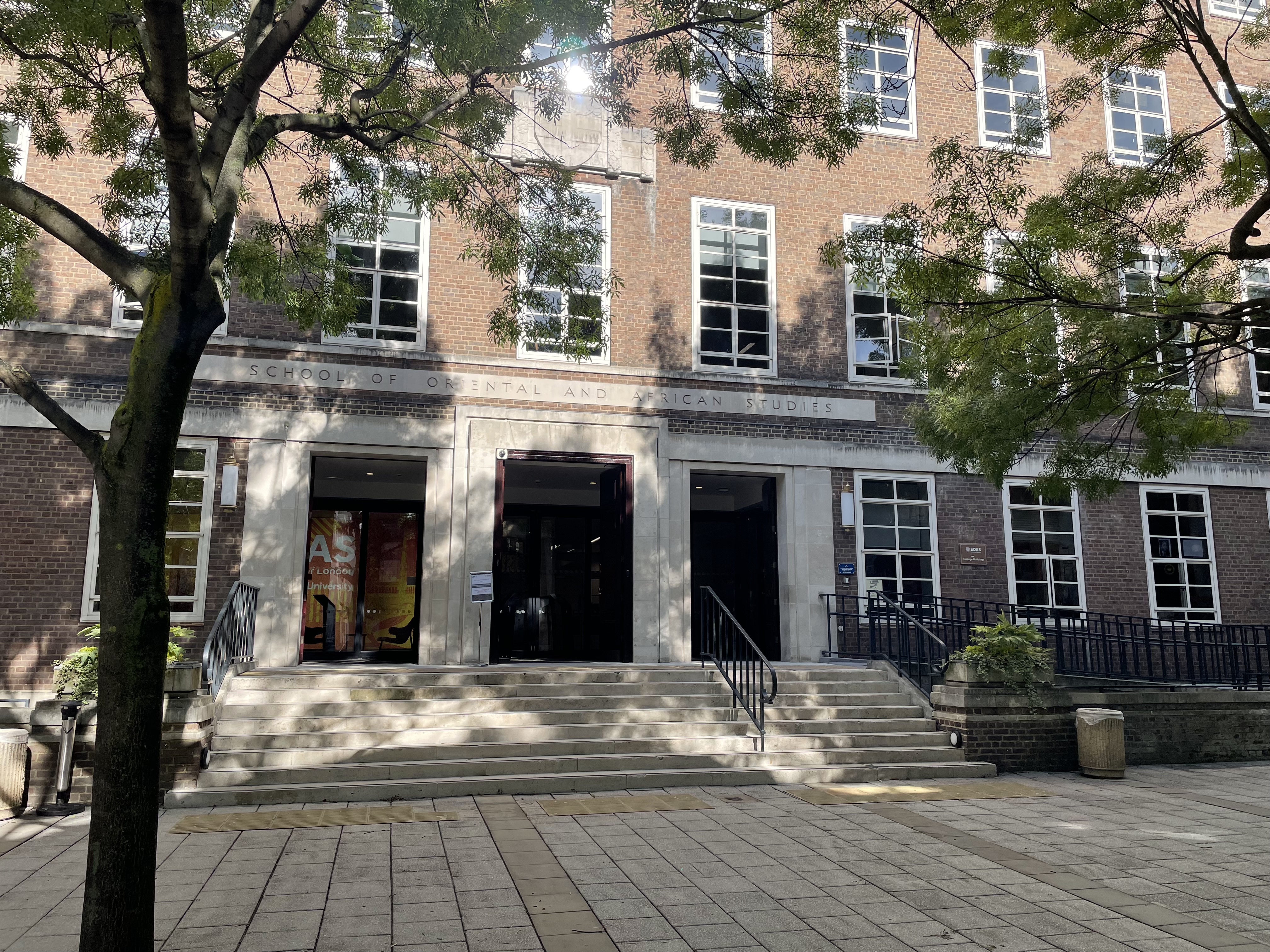
I also visited the archives of SOAS to look at the personnel files of Henning and Harold Bailey. The Bailey files were missing from the relevant box, so a search has been started to see where they might have ended up. The Henning files were fascinating, and helped to fill in some detail in the story I’d reconstructed from the SPSL papers. I made a return visit to the Ancient India and Iran Trust in Cambridge, to look again at the Harold Bailey papers, which include his extensive correspondence with Benveniste. I also took an initial look at some of the other letters there, mainly his long correspondence with Henning.
In the previous update I said I thought I’d finished, at least for now, the discussion of Benveniste’s early work on the Sogdian language. This was work begun by Robert Gauthiot with materials brought back to Paris by Paul Pelliot. Gauthiot died from wounds in the First World War, and a very young Benveniste was asked by Antoine Meillet and Pelliot to continue this work. But I wanted to get a better sense of Gauthiot’s work, and so started reading more of his work. Following a lead there, I chanced upon the work of Ursula Sims-Williams of the British Library. She discusses the exchange between Aurel Stein and Pelliot, and through Pelliot with Gauthiot, where Gauthiot helped to decipher some of the texts brough back by Stein to London. I already knew the importance of Stein to the story because he was at the Dunhuang caves shortly before Pelliot. His haul ended up in various London museums. In parallel to the work going on in London and Paris, there was also work in Berlin with the materials from the Turfan expeditions. A young Henning was involved in that work before he moved to SOAS. Yet again I’m shown by the material how hard this is going to keep to a single-country focus.
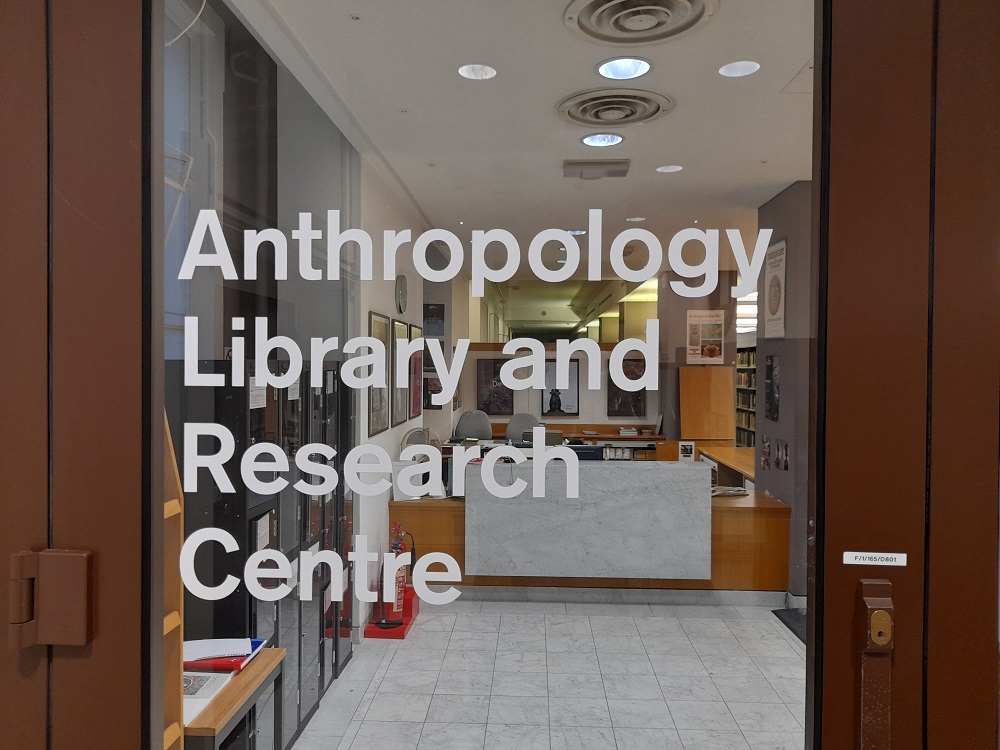
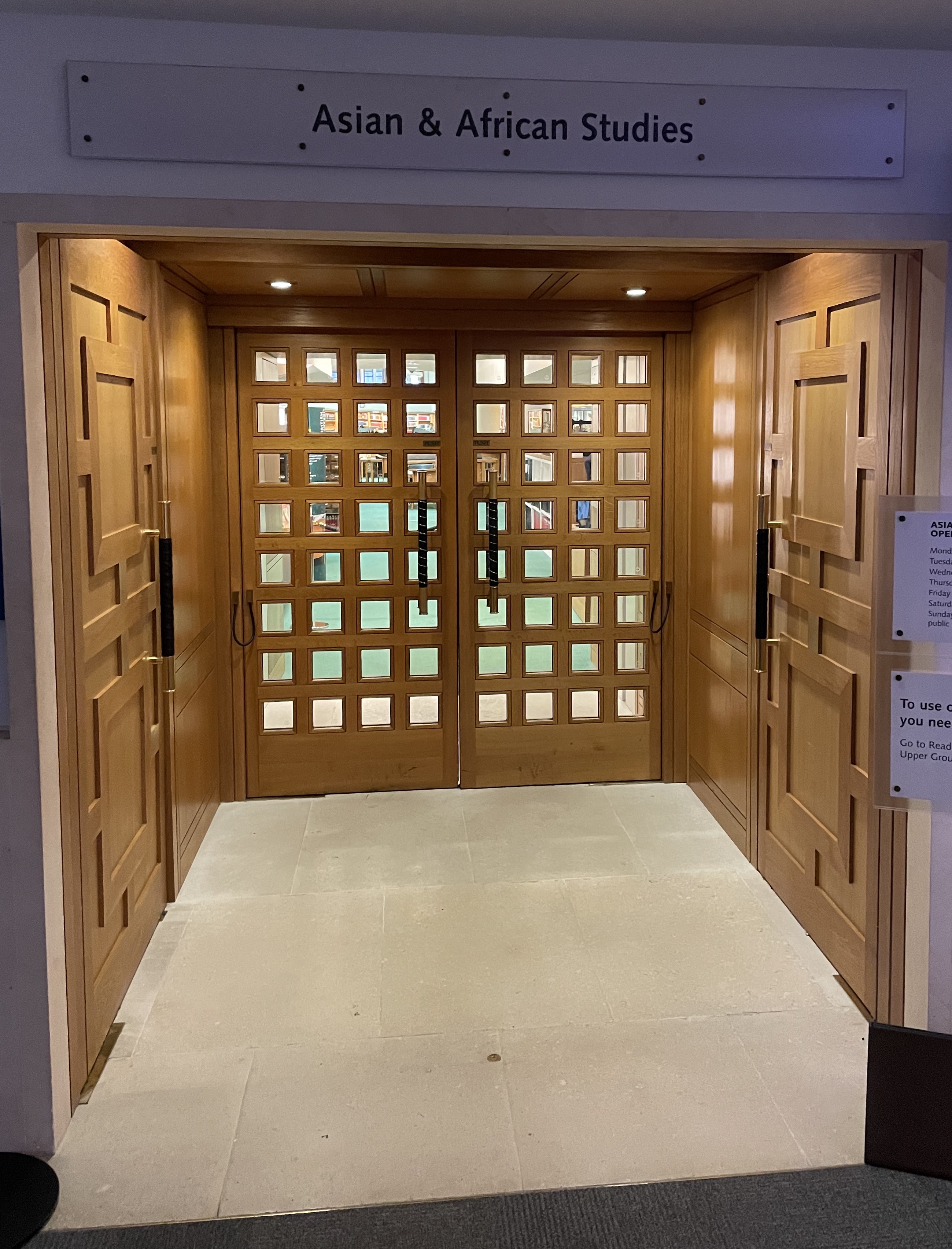
This reading led me to look in a big more detail at Stein himself. I say more about that work here. A lot of his papers are at the Bodleian, including parts of his correspondence. Sims-Williams indicates that at least some of his letters with Pelliot were at the British Library, and they provide a very interesting account of what happened. In all the years I’ve been using the British Library this was the first time I’d consulted something from the Archives and Manuscripts collections. Much of his correspondence is part of the Oriental manuscripts collection, so needs to be read in the Asian and African Studies room; but related material was in the Western manuscripts collection so that led to the Manuscripts room. There are also some very interesting papers at the British Museum, relating to his work for that institution, which also has many of the objects brought back from his expeditions.
Quite a lot of Stein’s reports appeared in print, and he generally gave papers to the Royal Geographical Society on his return to London. These talks were published in The Geographical Journal, and some of the original papers are at the RGS itself. Reading old issues of The Geographical Journal are a real window into orientalism and imperialism, often with names that almost sound made-up. The discussion after a 1916 report by Stein on exploration in Central Asia comprises General Baron Kaulbars of the Imperial Russian army, Sir Hercules Read of the British Museum, RGS President Sir Francis Younghusband, Sir Henry Trotter (a former British Indian Army officer, and about to be president of the Central Asian Society), and the Tory MPs Colonel C.E. Yate and Austen Chamberlain (then Secretary of State for India, and future party leader and Foreign Secretary). I made a visit to RGS archives to look at what they had, and found the correspondence there especially interesting.
For knowing where to look, I found the Handbook to the Collections of Sir Aurel Stein in the UK very useful. There are other archives in London which I hope to visit, including at the British Academy (family correspondence) and the Royal Asiatic Society (mainly photographs). But some crucial materials are in Budapest at the Hungarian Academy of Sciences. It’s clear much more could be done with all these sources, though I’ve been trying to keep a focus on his links to Pelliot, Gauthiot and Benveniste.
So most of the work this month has been at home, with a few short trips to UK archives. It’s been good to get working on the project again, even with the restrictions on time and a daunting amount of work ahead. I’m planning to get back to Paris in November. There are some things I want to consult at the Archives Nationales, some of which I’ve seen before, but most of the time will be spent continuing work at the Collège de France and the Bibliothèque Nationale.
Previous updates on this project can be found here, along with links to some research resources and forthcoming publications, including the delayed reedition of Dumézil’s Mitra-Varuna. There is a lot more about the earlier Foucault work here. The final volume of the series, The Archaeology of Foucault, is now out worldwide. The special issue of Theory, Culture & Society I co-edited on “Foucault before the Collège de France” is also now published.
Albert Camus’s lively journals from his eventful visits to the United States and South America in the 1940s, available again in a new translation.
In March 1946, the young Albert Camus crossed from Le Havre to New York. Though he was virtually unknown to American audiences at the time, all that was about to change—The Stranger, his first book translated into English, would soon make him a literary star. By 1949, when he set out on a tour of South America, Camus was an international celebrity. Camus’s journals offer an intimate glimpse into his daily life during these eventful years and showcase his thinking at its most personal—a form of observational writing that the French call choses vues (things seen).
Camus’s journals from these travels record his impressions, frustrations, joys, and longings. Here are his unguarded first impressions of his surroundings and his encounters with publishers, critics, and members of the New York intelligentsia. Long unavailable in English, the journals have now been expertly retranslated by Ryan Bloom, with a new introduction by Alice Kaplan. Bloom’s translation captures the informal, sketch-like quality of Camus’s observations—by turns ironic, bitter, cutting, and melancholy—and the quick notes he must have taken after exhausting days of travel and lecturing. Bloom and Kaplan’s notes and annotations allow readers to walk beside the existentialist thinker as he experiences changes in his own life and the world around him, all in his inimitable style.
Update: Adam Shatz and Thomas Jones discuss this at the LRB podcast here.
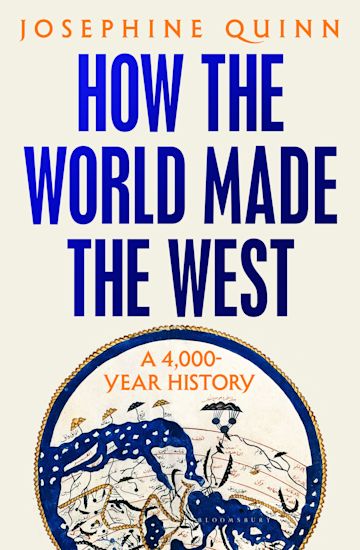
What does history look like without ‘civilisations’? Josephine Quinn calls for a major reassessment of the West and the concepts that define it.
The West, history tells us, was built on the ideas and values of Ancient Greece and Rome, which disappeared from Europe during the Dark Ages and were then rediscovered by the Renaissance. In a bold and magisterial work of immense scope, Josephine Quinn argues that the true story of the West is much bigger than this established paradigm leads us to believe. So much of our shared history has been lost, drowned out by the concept – developed in the Victorian era – of ‘civilisations’.
Quinn reveals a new narrative: one that traces the relationships that built what is now called the West from the Bronze Age to the Age of Exploration, as societies met, tangled and sometimes grew apart. She makes the case that it is contact and connections, rather than distinct and isolated civilisations, that drive historical change. It is not peoples that make history – people do.
Michel Serres, Hermes I: Communication, Translated by Louise Burchill, Introduction by Paul A. Harris, University of Minnesota Press, 2023
Michel Serres is recognized as one of the giants of postwar French philosophy of knowledge, along with Gilles Deleuze, Jacques Derrida, Michel Foucault, and Gilbert Simondon. His early five-volume series Hermes, which appeared in the 1960s and 1970s, was an intellectual supernova in its proposition that culture and science shared the same mythic and narrative structures. Hermes I: Communication marks the start of a major publishing endeavor to introduce this foundational series into English.
Building on the figure of the Greek god Hermes, who presides over the realms of communication and interpretation, Hermes I embarks on a reflection concerning the history of mathematics via Descartes and Leibniz and culminates by way of a Bachelardian logoanalytic reading of Homer, Dumas, Molière, Verne, and the story of Cinderella. We observe a singular poetic philosopher seeking to bridge the gap between the liberal arts and the sciences through a profound mathematical and poetic fable regarding information theory, history, and art, establishing a new way to think about the production of knowledge during the late twentieth century. In these pages, students and scholars of philosophy will discover an extraordinary project of thought as vital to critical reflection today as it was fifty years ago.
The research for the Indo-European thought project has been difficult to confine to a solely French focus. I knew I wanted to begin what will probably be the first chapter with the story of the Mission Paul Pelliot, an expedition to Chinese Turkestan where he plundered the caves of a Thousand Buddhas in Dunhuang and brought back hundreds of manuscripts and other materials to Paris. Émile Benveniste did some of his earliest work on manuscripts from this haul, and tracing the story of Benveniste led me to Robert Gauthiot, and from him to Antoine Meillet and Pelliot. A lot of Benveniste’s initial career was as a successor to Meillet. He helped to revise second editions of at least two of Meillet’s books, he covered some of his teaching at the EPHE, and he taught in his place for two years at the Collège de France when Meillet was ill, before being elected to the chair made vacant by Meillet’s death. It was Pelliot who proposed him.
The manuscripts from Pelliot’s collection needed a range of specialists to interpret them, given the range of languages in which they were written. Sylvain Lévi did some work on Kuchean, and Meillet suggested Gauthiot to work on Sogdian, a language which the German Turfan expeditions had done much to uncover. But the Turfan texts being analysed in Berlin were mainly Manichean, whereas the ones Pelliot had found were often Buddhist. Gauthiot began this work in the early 1910s, but it was interrupted by the war, and Gauthiot died from injuries received in battle. Meillet tried to complete some of his work, but progress slowed considerably until he brought Benveniste on board. Benveniste was only born in 1902, but was working on these manuscripts in the early 1920s, publishing editions of texts with reproductions, transcriptions, translations and commentaries, as well as completing Gauthiot’s work on the grammar of the language.
Pelliot was beaten to the caves by Aurel Stein, a Hungarian-born but naturalised British explorer. While there is, to my knowledge, only one biography of Pelliot, Stein has at least two, by Jeannette Mirsky and Annabel Walker (out of print). He is a major figure in a range of historical accounts of the rediscovery of the Silk Road by Western archaeologists and explorers, a story that is often intertwined with the ‘Great Game’ of rival powers staking out their colonial claims. Stein’s expeditions are indeed epic, four across Central Asia and several in Iran, often retracing the footsteps of historical figures like Marco Polo and Alexander the Great. Stein seems to have been perpetually impatient to get back to the field, though he left a monumental series of publications too. Stein’s collections – again plundered or bought for nominal fees – are huge.
Stein would often write an initial report of each expedition, sometimes delivered as an evening lecture to the Royal Geographical Society in London; then a popular account for a wide audience; and finally a fully academic treatise, usually in multiple volumes, with a range of reproductions, analyses and maps. His first three expeditions to Central Asia were reported in Ancient Khotan, Serindia and Innermost Asia.I’ve only dipped into these so far. Sand-Buried Ruins of Khotan and Ruins of Desert Cathay are the ‘personal narratives’ of the first two expeditions, and are very readable.
The biographies and other accounts seem to tell the story of the expeditions really well, often drawing on the published accounts, but also his massive correspondence. It really was huge, and much of it has survived too, with voluminous letters to his family, friends in India and London, and a wide range of academic contacts. Many of these seem to be a series of reports back from the field. I can totally understand the interest in the more dramatic aspects of his life, but I sense that story has been told.
What I’ve been trying to trace is a few strands of the way he also made use of a legion of scholars to help interpret the finds of his expeditions, in a similar way to Pelliot. It was his contact with Pelliot to begin the cataloguing work that first alerted me to a possible story here. While he and Pelliot were rivals in the field, they were sometime collaborators outside of it, in London and Paris. Pelliot only made one big expedition; Stein was always planning the next, but did follow through on publishing while Pelliot was sometimes erratic. Pelliot also failed to undertake the big task Stein set him, which was to catalogue the Chinese manuscripts he had brought back from Dunhuang. There is an initial report by Pelliot on Chinese and other manuscripts in the British Library archives, but it indicates the plan for a much fuller inventory, with various conditions about payment and possibilities for publication. Two crates of manuscripts were shipped to Paris for Pelliot to begin the work. But Pelliot never delivered the promised report, and there are letters between British Museum staff and Pelliot showing frustration and ultimately asking for the return of material. That was delayed by the war, but it did eventually get back to London.
Stein’s correspondence with Lionel Barnett of the British Museum, now at the British Library, is revealing on this, but also showing that Stein consulted Gauthiot on some of this material. Copies of some of Stein’s letters to Gauthiot are also at the British Library, in the fifth folder of a huge correspondence about the publishing of his detailed scholarly reports – mainly with the publisher and technical correspondence on reproductions, but also with some of the people he consulted. But there is only one letter from Gauthiot there. That letter is acknowledging the receipt of an ‘inscribed stick’, sent via diplomatic mail to Paris for Gauthiot to interpret. Gauthiot’s response is brief and says it is very difficult to decipher. He promises to try harder and report back. But the only other letter there is from his widow, on mourning stationary with a thick black border, returning this item some years later.
There is such a lot of material produced by Stein, including his correspondence but also field reports, notes and reports, that it has taken a lot of work to catalogue this. This is quite apart from the collections he accumulated on his expeditions, which are across London at the British Museum, British Library and the Victoria and Albert Museum, with some in India. Some objects are at the Royal Geographical Society too. The Handbook of the collections just in the UK, edited by Helen Wang and John Perkins has 37 pages listing the various places and collections. With much the material relating to Stein, this is often at a very general level, rather than the detailed work that has been done for some correspondence and most especially for the collection. I knew that a lot of his material was at the Bodleian in Oxford – the Catalogue there is 155 pages, listing material in 393 boxes which stretch for over 43 linear metres – and I requested some of it. At the beginning of the day I thought I needed a day there; at the end of the day I realised I needed at least one more day, but it might be much more. There is some useful correspondence there with Benveniste to whom Stein turned when he needed further assistance. On one occasion Benveniste suggests Stein instead ask Walter Bruno Henning, so I plan to look at those letters too. There is also correspondence with Harold Bailey, and in that instance I know where the other side of the correspondence is, in Cambridge at the Ancient India and Iran Trust. I’ve done some work there with Bailey’s correspondence with Benveniste and Henning. One of the things which is challenging about using correspondence is that often only one side is in a single archive, unless someone happened to keep copies of their own letters. Stein did this sometimes, but not always. So to reconstruct a dialogue, it’s often necessary to go between two different places.
Where are the other side of Stein’s letters? I know there is a lot at the British Academy, which seems to be mainly his correspondence with family members, usually written in German. There are also letters at the Royal Geographical Society, mainly sent by Stein to John Scott Keltie, the secretary of the RGS, which often concern the publication of his reports, but also have some details of what he was finding in the field. The RGS also has some of the typescripts or manuscripts of texts Stein published in The Geographical Journal. The correspondence isn’t in their online catalogue, so I was indebted to the Handbook for alerting me that it existed, and the library staff there for locating it. There is also correspondence at the British Museum, which has its own small archive of material which didn’t get reallocated to the British Library. This mainly concerns correspondence about the British Museum’s collections. But many letters received by Stein are in Budapest, at the Hungarian Academy of Sciences. From the catalogues I’ve seen – a substantial book with a second volume as a supplement – this seems to be where his letters from Gauthiot and Meillet are mainly kept, for instance.
Stein’s letters to Benveniste, as indeed all the letters to Benveniste before the Second World War, seem to be irretrievably lost. When Benveniste fled occupied France for Switzerland, after escaping from a Prisoner of War camp – another story that is going to take some uncovering – he left behind all his papers. His flat was occupied and ransacked, and while some material was saved by friends, much was lost, including preparatory work for books which had to be restarted after the Liberation. I have no idea if there is a Gauthiot archive somewhere. Pelliot and Meillet’s papers will be in Paris.
With much of this, it feels like a jigsaw puzzle, with pieces in lots of different locations, much lost entirely, and with no real idea what the picture I’m trying to reconstruct is. And this is all with the story of one person, who was not intended to be a significant figure in my project at all. I thought Stein would just be of interest as the person who reached Dunhuang before Pelliot, and for whom Pelliot promised to do some cataloguing work. And, as I said, the story of Stein’s expeditions has been told. But perhaps the story of how he put together his reports of those expeditions, the background work which situated him within a wider community of academics across Europe, still has some interest. Helen Wang and Ursula Sims-Williams have done some really valuable work, and I’ve been making use of their specialist analyses alongside the more general accounts of Stein, but I think there is an interesting perspective to add to the story I want to tell about the work in France. It’s also been good to have some archival work in the UK, which I can do as a series of day trips, as I return to work after the period away from the project. I’ll share a more general research update on this project hopefully sometime next week [update 14 is now here].
Despite insoluble contradictions, intense volatility and fierce resistance, the crisis-ridden capitalism of the 21st century lingers on. To understand capital’s paradoxical expansion and entrenchment amidst crisis and unrest, Mute Compulsionoffers a novel theory of the historically unique forms of abstract and impersonal power set in motion by the subjection of social life to the profit imperative. Building on a critical reconstruction of Karl Marx’s unfinished critique of political economy and a wide range of contemporary Marxist theory, philosopher Søren Mau sets out to explain how the logic of capital tightens its stranglehold on the life of society by constantly remoulding the material conditions of social reproduction. In the course of doing so, Mau intervenes in classical and contemporary debates about the value form, crisis theory, biopolitics, social reproduction, humanism, logistics, agriculture, metabolism, the body, competition, technology and relative surplus populations.
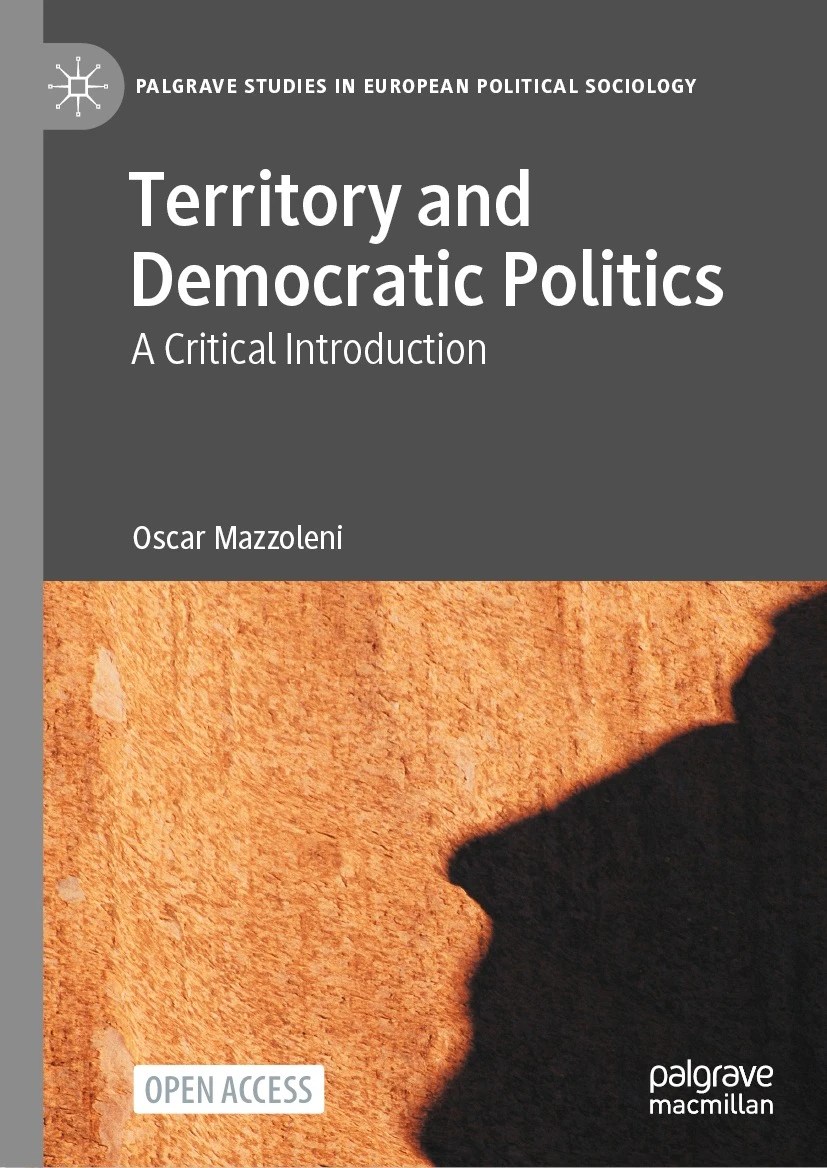
Despite the publication date, the open access version is available now.
The book provides a comprehensive and updated introduction to concept of territory in the study of democratic politics. Territory plays a rather marginal role in the traditional conceptions of democracy that in many ways still prevail today. Democratic politics is often analysed from the point of view of its institutions, citizens and voters, while little is said about the territory through which it is expressed – at most it provides a broader perimeter or context of political and institutional action. The book offers, instead, an introductory theoretically-oriented discussion of crucial issues such as the genesis of state-nation, the transformation of democratic citizenship, the current borders’ policies, the rising of territorial populism and the experience of 19-covid pandemic.
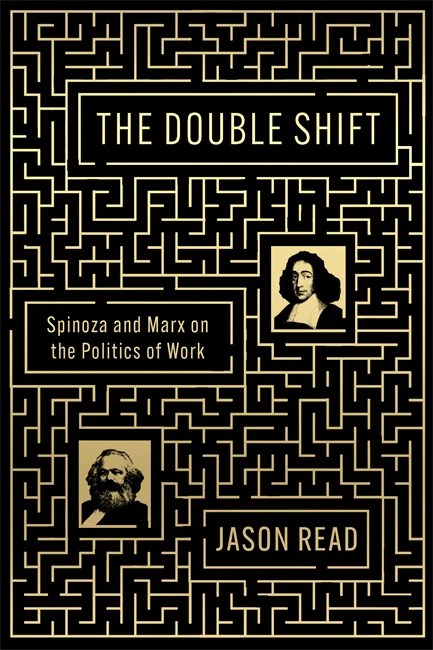
In a world of declining wages, working conditions, and instability, the response for many has been to work harder, increasing hours and finding various ways to hustle in a gig economy. What drives our attachment to work? To paraphrase a question from Spinoza, “Why do people fight for their exploitation as if it was liberation?”
The Double Shift turns towards the intersection of Marx and Spinoza in order to examine the nature of our affective, ideological, and strategic attachment to work. Through an examination of contemporary capitalism and popular culture it argues that the current moment can be defined as one of “negative solidarity.” The hardship and difficulty of work is seen not as the basis for alienation and calls for its transformation but rather an identification with the difficulties and hardships of work. This distortion of the work ethic leads to a celebration of capitalists as job creators and suspicion towards anyone who is not seen as a “real worker.”
The book is grounded in philosophy, specifically Marx and Spinoza, and is in dialogue with Plato, Smith, Hegel, and Arendt, but, at the same time, in examining contemporary ideologies and ideas about work it discusses motivational meetings at Apple Stores, the culture of Silicon Valley, and films and television from Office Space to Better Call Saul
The Double Shift argues for a transformation of our collective imagination and attachment to work.