Todd Andrew Borlik, Shakespeare Beyond the Green World – Oxford University Press, January 2023

Todd Andrew Borlik, Shakespeare Beyond the Green World: Drama and Ecopolitics in Jacobean Britain – Oxford University Press, January 2023

Part of the Early Modern Literary Geographies series – just an expensive hardback at present

Unpicking the ecopolitics of Shakespeare’s plays at the Stuart court, Shakespeare Beyond the Green World establishes that the playwright was remarkably attentive to the environmental issues of his era. As a court dramatist, he designed his plays to captivate a patron deeply involved in both the conservation and exploitation of a burgeoning empire’s natural resources. Spurred by James’ campaign to unify his kingdoms, the Jacobean Shakespeare ventures beyond the green and pleasant lowlands of England to chart the wild topographies of an expansionist Great Britain: the blasted heath in Macbeth, the caves and mines of Timon of Athens, the overfished North Sea in Pericles, the Welsh mountains in Cymbeline, the Arctic fur country in The Winter’s Tale, the fens in The Tempest, overcrowded London and empty Ulster in Measure for Measure and Coriolanus, and the night in Antony and Cleopatra and King Lear. While these plays often simulate a monarch’s-eye-view of the natural world, they also reveal that Crown policies were fiercely contested from below. In addition to trekking beyond verdant landscapes, Shakespeare Beyond the Green World seeks to mitigate the Anglocentric and anthropocentric bias of the archive by putting the plays into conversation with texts in which the subaltern wild growls back. Combining deep dives into environmental history with close readings of Shakespearean wordplay, original typography, and original performance conditions, this study re-wilds the Renaissance stage. It spotlights Shakespeare’s tendency to humanize beasts and bestialize allegedly godlike monarchs, debunking fantasies of human exceptionalism. By clarifying how the Jacobean plays expose monarchical dominion as ecological tyranny, this study remains scrupulously historicist while reasserting Shakespearean drama’s scorching relevance in the Anthropocene.

Posted in William Shakespeare | 2 Comments

Sergei Prozorov, Biopolitics After Truth: Knowledge, Power and Democratic Life – Edinburgh University Press, May 2023 (print and open access)

Sergei Prozorov, Biopolitics After Truth: Knowledge, Power and Democratic Life – Edinburgh University Press, May 2023 (print and open access)

Critically re-examines canonical theories of biopolitics in the post-truth context
  • Argues for a positive role of truth-telling in the democratisation of biopolitical governance
  • Undertakes a genealogical investigation of the origins of the contemporary post-truth regime in early post-communist politics
  • Puts forward an innovative theory of the speech act of truth-telling in democratic biopolitics
  • Draws on familiar examples from contemporary politics such as Vladimir Putin, Donald Trump, Greta Thunberg and Brexit

What makes post-truth politics so difficult to resist is its apparently democratic character that claims to challenge bureaucratic depoliticisation, the rule of experts and the disappearance of alternatives to the hegemonic policy. Sergei Prozorov refutes this interpretation, arguing that the post-truth ideology leads to the degradation of the public sphere that is essential to democratic governance. Rather than enable resistance to expertise-based biopolitical governmentalities, truth denialism dissolves the only framework where their contestation and transformation could take place. In contrast, Biopolitics after Truth argues for a positive role of truth-telling in the democratisation of biopolitical governance.

Posted in Uncategorized | 1 Comment

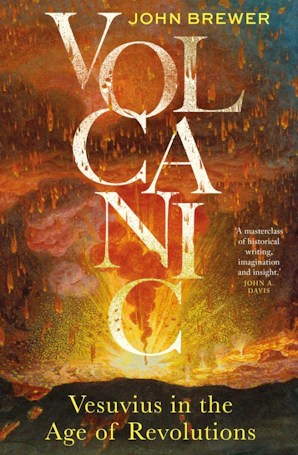
John Brewer, Volcanic: Vesuvius in the Age of Revolutions – Yale University Press, November 2023

John Brewer, Volcanic: Vesuvius in the Age of Revolutions – Yale University Press, November 2023

A vibrant, diverse history of Vesuvius and the Bay of Naples in the age of Romanticism
 
Vesuvius is best known for its disastrous eruption of 79CE. But only after 1738, in the age of Enlightenment, did the excavations of Herculaneum and Pompeii reveal its full extent. In an era of groundbreaking scientific endeavour and violent revolution, Vesuvius became a focal point of strong emotions and political aspirations, an object of geological enquiry, and a powerful symbol of the Romantic obsession with nature.
 
John Brewer charts the changing seismic and social dynamics of the mountain, and the meanings attached by travellers to their sublime confrontation with nature. The pyrotechnics of revolution and global warfare made volcanic activity the perfect political metaphor, fuelling revolutionary enthusiasm and conservative trepidation. From Swiss mercenaries to English entrepreneurs, French geologists to local Neapolitan guides, German painters to Scottish doctors, Vesuvius bubbled and seethed not just with lava, but with people whose passions, interests, and aims were as disparate as their origins.

Posted in Uncategorized | Leave a comment

Susan Bredlau and Talia Welsh (eds.), Normality, Abnormality, and Pathology in Merleau-Ponty, SUNY Press, August 2022

Susan Bredlau and Talia Welsh (eds.), Normality, Abnormality, and Pathology in Merleau-Ponty, SUNY Press, August 2022

Maurice Merleau-Ponty’s work draws our attention to how the body is always our way of having a world and never merely a thing in the world. Our conception of the body must take account of our cultures, our historically located sciences, and our interpersonal relations and cannot reduce the body to a biological given. Normality, Abnormality, and Pathology in Merleau-Ponty takes up Merleau-Ponty’s phenomenology of the body to explore the ideas of normality, abnormality, and pathology. Focusing on the lived experiences of various styles of embodiment, the book challenges our usual conceptions of normality and abnormality and shows how seemingly objective scientific research, such as the study of pathological symptoms, is inadequate to the phenomena it purports to comprehend. The book offers new insights into our understandings of health and illness, ability and disability, and the scientific and cultural practices that both enable and limit our capacity for diverse experiences.

Posted in Uncategorized | Leave a comment

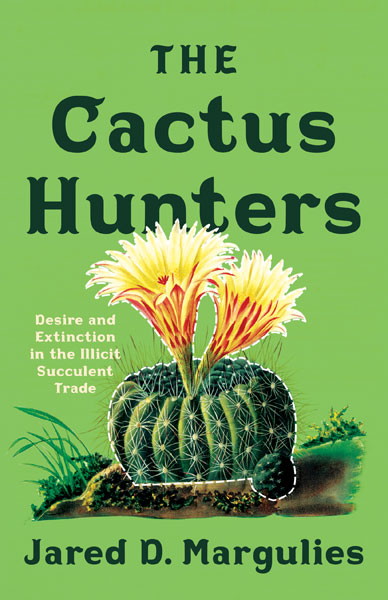
Jared D. Margulies, The Cactus Hunters: Desire and Extinction in the Illicit Succulent Trade – University of Minnesota Press, November 2023

Jared D. Margulies, The Cactus Hunters: Desire and Extinction in the Illicit Succulent Trade – University of Minnesota Press, November 2023

Cacti and succulents are phenomenally popular worldwide among plant enthusiasts, despite being among the world’s most threatened species. The fervor driving the illegal trade in succulents might also be driving some species to extinction. Delving into the strange world of succulent collecting, The Cactus Hunters takes us to the heart of this conundrum: the mystery of how and why ardent lovers of these plants engage in their illicit trade. This is a world of alluring desires, where collectors and conservationists alike are animated by passions that at times exceed the limits of law. 

What inspires the desire for a plant? What kind of satisfaction does it promise? The answer, Jared D. Margulies suspects, might be traced through the roots and workings of the illegal succulent trade—an exploration that traverses the fields of botany and criminology, political ecology and human geography, and psychoanalysis. His globe-spanning inquiry leads Margulies from a spectacular series of succulent heists on a small island off the coast of Mexico to California law enforcement agents infiltrating a smuggling ring in South Korea, from scientists racing to discover new and rare species before poachers find them to a notorious Czech “cacto-explorer” who helped turn a landlocked European country into the epicenter of the illegal succulent trade. 

A heady blend of international intrigue, social theory, botanical lore, and ecological study, The Cactus Hunters offers complex insight into species extinction, conservation, and more-than-human care.

Posted in Uncategorized | 1 Comment

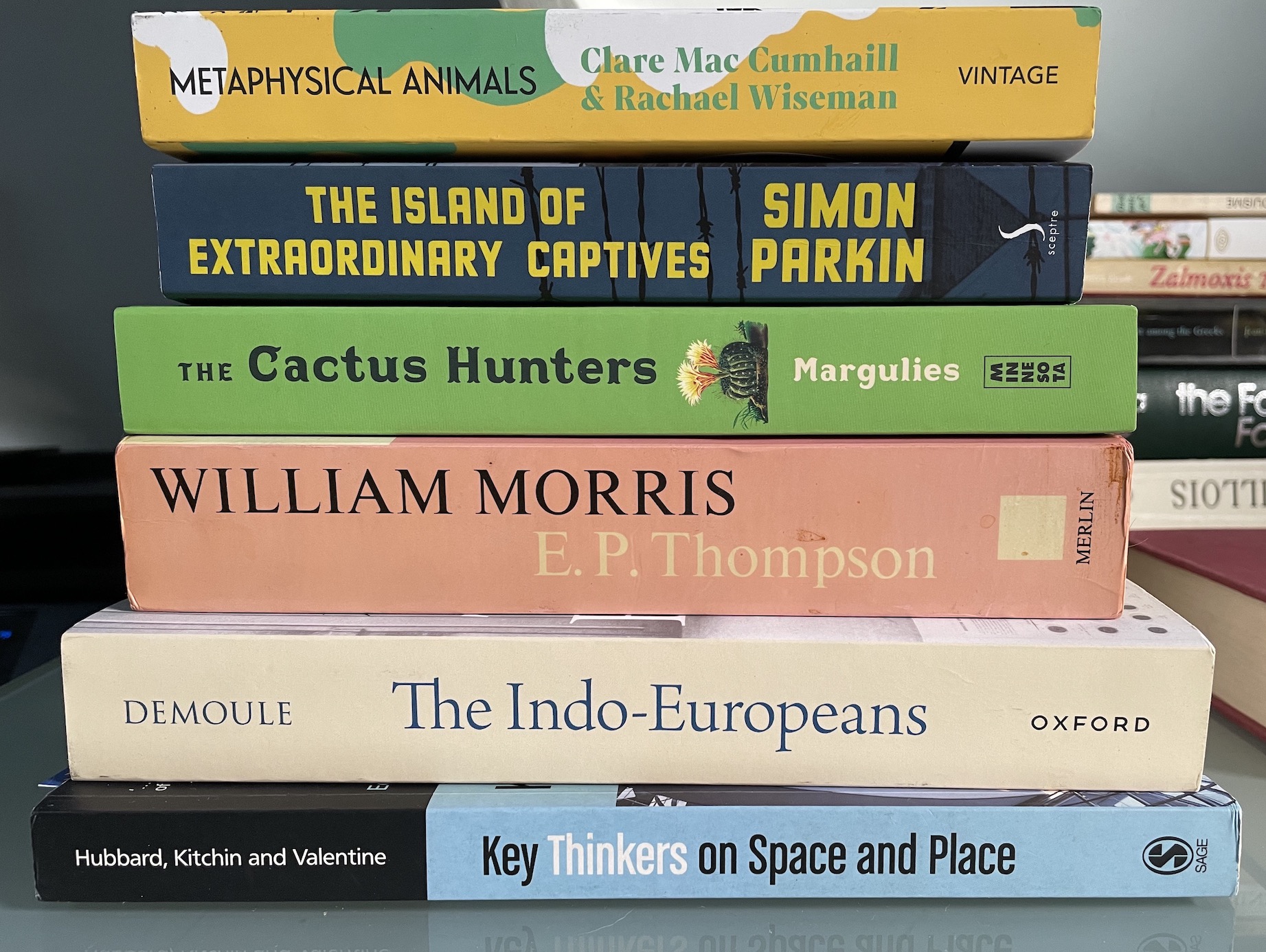
Books received – Parkin, Mac Cumhaill & Wiseman, Margulies, Thompson, Demoule, Hubbard, Kitchin & Valentine

Some recently bought books, along with Jared D. Margulies, The Cactus Hunters: Desire and Extinction in the Illicit Succulent Trade, sent by University of Minnesota Press. Key Thinkers on Space and Place is the first edition; I already had the second. A third is due next year.

Posted in E. P. Thompson, Uncategorized | 1 Comment

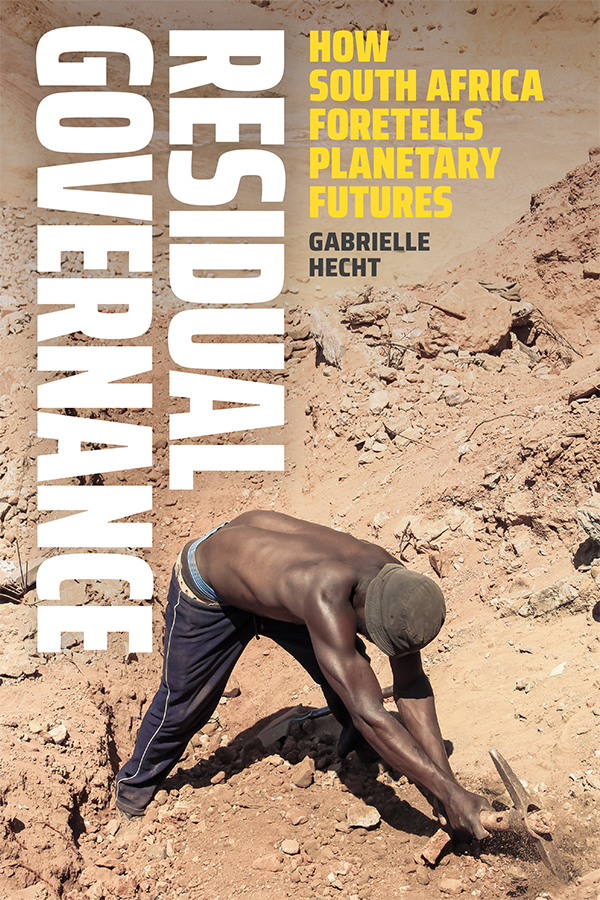
Gabrielle Hecht, Residual Governance: How South Africa Foretells Planetary Futures – Duke University Press, November 2023

Gabrielle Hecht, Residual Governance: How South Africa Foretells Planetary Futures – Duke University Press, November 2023

The Introduction is open access here.

In Residual Governance, Gabrielle Hecht dives into the wastes of gold and uranium mining in South Africa to explore how communities, experts, and artists fight for infrastructural and environmental justice. Hecht outlines how mining in South Africa is a prime example of what she theorizes as residual governance—the governance of waste and discard, governance that is purposefully inefficient, and governance that treats people and places as waste and wastelands. She centers the voices of people who resist residual governance and the harms of toxic mining waste to highlight how mining’s centrality to South African history reveals the links between race, capitalism, the state, and the environment. In this way, Hecht shows how the history of mining in South Africa and the resistance to residual governance and environmental degradation is a planetary story: the underlying logic of residual governance lies at the heart of contemporary global racial capitalism and is a major accelerant of the Anthropocene.

Posted in Uncategorized | Leave a comment

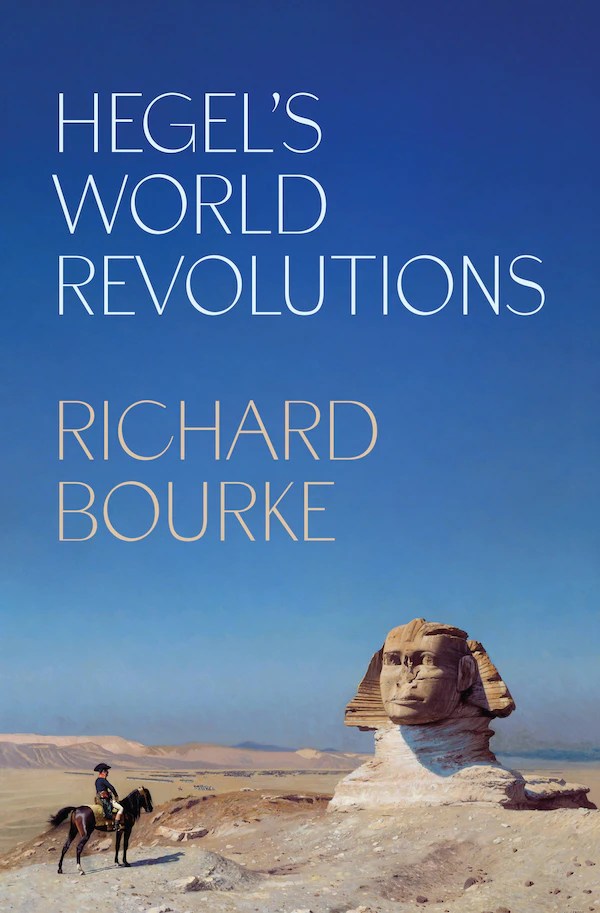
Richard Bourke, Hegel’s World Revolutions – Princeton University Press, October 2023

Richard Bourke, Hegel’s World Revolutions – Princeton University Press, October 2023

G.W.F. Hegel was widely seen as the greatest philosopher of his age. Ever since, his work has shaped debates about issues as varied as religion, aesthetics and metaphysics. His most lasting contribution was his vision of history and politics. In Hegel’s World Revolutions, Richard Bourke returns to Hegel’s original arguments, clarifying their true import and illuminating their relevance to contemporary society. Bourke shows that central to Hegel’s thought was his anatomy of the modern world. On the one hand he claimed that modernity was a deliverance from subjection, but on the other he saw it as having unleashed the spirit of critical reflection. Bourke explores this predicament in terms of a series of world revolutions that Hegel believed had ushered in the rise of civil society and the emergence of the constitutional state.

Bourke interprets Hegel’s thought, with particular reference to his philosophy of history, placing it in the context of his own time. He then recounts the reception of Hegel’s political ideas, largely over the course of the twentieth century. Countering the postwar revolt against Hegel, Bourke argues that his disparagement by major philosophers has impoverished our approach to history and politics alike. Challenging the condescension of leading thinkers—from Heidegger and Popper to Lévi-Strauss and Foucault—the book revises prevailing views of the relationship between historical ideas and present circumstances.

Update 12 February 2024: Terry Eagleton reviews the book in the London Review of Books.

Posted in Georg Wilhelm Friedrich Hegel | Leave a comment

Marcelo Hoffman, Foucault in Brazil: Dictatorship, Resistance, and Solidarity – University of Pittsburgh Press, February 2024

Marcelo Hoffman, Foucault in Brazil: Dictatorship, Resistance, and Solidarity – University of Pittsburgh Press, February 2024

Philosopher Michel Foucault’s cultural criticism crosses disciplines and is well known as an influence on modern conceptions of knowledge and power. Less well known are the five trips he took to Brazil between 1965 and 1976. Although a coup in 1964 had installed a military dictatorship, Foucault kept his opinion on the Brazilian government largely to himself until October 23, 1975. On that date, he delivered a manifesto at a student assembly in São Paulo expressing his solidarity with students and professors protesting a wave of arrests and torture. This manifesto caught the government’s attention and became the focal point of the dictatorship’s surveillance of Foucault. Foucault in Brazil explores the production of the public antagonism between the philosopher and the dictatorship through a meticulous consideration of each of his visits to Brazil. Marcelo Hoffman connects history, philosophy, and political theory to open new ways of thinking about Foucault as a person and thinker and about Brazil and authoritarianism.

 Brilliant and chock-full of insights and impeccably researched historical portraits, Foucault in Brazil is a luminous, indispensable book in a range of fields, and constitutes a landmark for scholars interested in the French philosopher in the continent and beyond. 

Adam Joseph Shellhorse, Temple University

Foucault in Brazil develops a meticulous and riveting historical account of the philosopher’s trips through that country. Hoffman’s scholarship employs rigorous historical investigation to excavate nothing short of a model of what it can mean to marshal one’s social capital to contest power publicly. This work is outstanding and without peer. 

Kevin Thompson, DePaul University

This beautifully crafted account of Foucault’s political activities in Brazil in the 1970s is a tour de force. Foucault in Brazil not only illuminates rich archival details about the philosopher’s support of Brazilians fighting a military dictatorship but also brings much needed nuance to our understanding of how his distinct philosophical approach to power was driven by concrete acts of political solidarity. 

Lynne Huffer, author of Mad for Foucault

Posted in Michel Foucault | Leave a comment

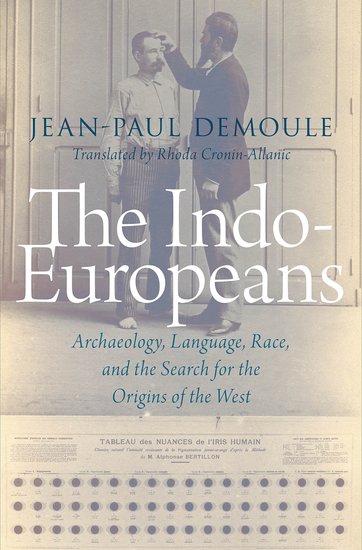
Jean-Paul Demoule, The Indo-Europeans: Archaeology, Language, Race, and the Search for the Origins of the West – Oxford University Press, May/August 2023

Jean-Paul Demoule, The Indo-Europeans: Archaeology, Language, Race, and the Search for the Origins of the West – Oxford University Press, May/August 2023

The OUP site shows a hardback in May 2023, and paperback in August. It is a translation by Rhoda Cronin-Allanic of his French book, Mais où sont passés les Indo-Européens? (2014), which was revised in 2017.

The existence of an Indo-European linguistic family, allowing for the fact that several languages widely dispersed across Eurasia share numerous traits, has been demonstrated for several centuries now. But the underlying factors for this shared heritage have been fiercely debated by linguists, historians, archaeologists, and anthropologists. The leading theory, of which countless variations exist, argues that this similarity is best explained by the existence, at one given point in time and space, of a common language and corresponding population. This ancient, prehistoric, population would then have diffused across Eurasia, eventually leading to the variation observed in historical and modern times. 

The Indo-Europeans: Archaeology, Language, Race, and the Search for the Origins of the West argues that despite its acceptance and use by most researchers from different disciplines, such a model is inherently flawed. This book describes how, beginning in the late eighteenth century, Europeans began a quest for a supposed original homeland, from which a small conquering people would one day spread out, bringing their language to Europe and parts of Asia (India, Iran, Afghanistan). This quest was often closely tied to ideological preoccupations and it was in its name that the Nazi leadership, claiming for the Germans the status of the purest Indo-Europeans (or Aryans), waged genocide. The last part of the book summarizes the current state of knowledge and current hypotheses in the fields of linguistics, archaeology, comparative mythology, and genetics. The culmination of three decades of research, this book offers a sweeping survey of the historiography of the Indo-European debate and poses a devastating challenge to the Indo-European origin story at its roots.

Posted in Uncategorized | Leave a comment