Raymond Aron, Liberty and Equality, trans. Samuel Garrett Zeitlin – Princeton University Press, November 2023
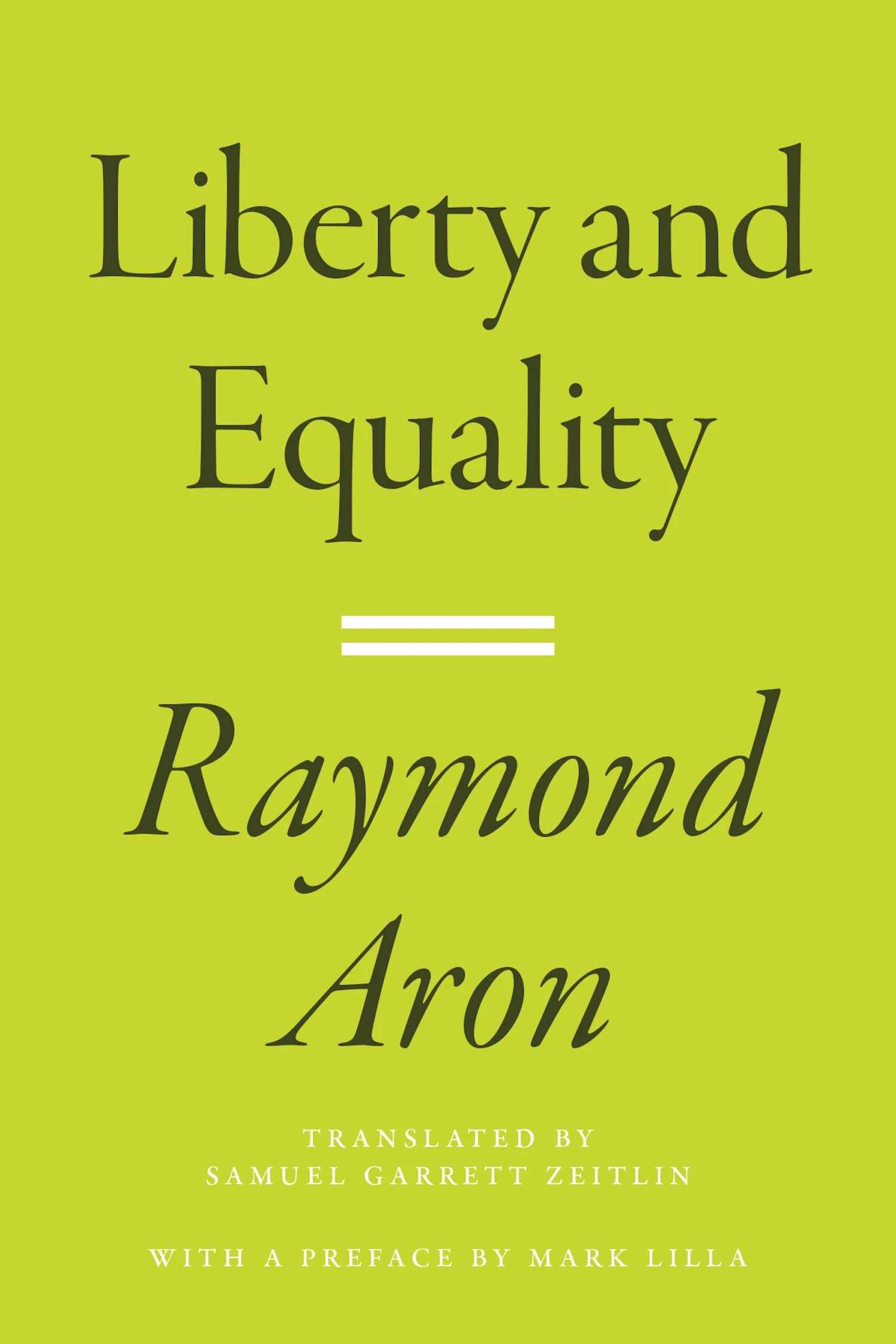
Raymond Aron, Liberty and Equality, trans. Samuel Garrett Zeitlin – Princeton University Press, November 2023

Liberty and Equality is the first English translation of the last lecture delivered at the Collège de France by Raymond Aron, one of the most influential political and social thinkers of the twentieth century. In this important work, the most prominent French liberal intellectual of the Cold War era presents his views on the core values of liberal democracy: liberty and equality. At the same time, he provides an ideal introduction to key aspects of his thought.

Ranging from Soviet ideology to Watergate, Aron reflects on root concepts of democracy and representative government, articulates a notion of liberty or freedom as equal right as distinct from equal outcome, and discusses different kinds of liberties: personal, political, religious, and social. In search of a common truth or at least a common good, and analyzing what he perceives as the crisis of liberal democracies, Aron opens a space for reexamining the relation between liberty and equality.
Posted in Uncategorized | Leave a comment

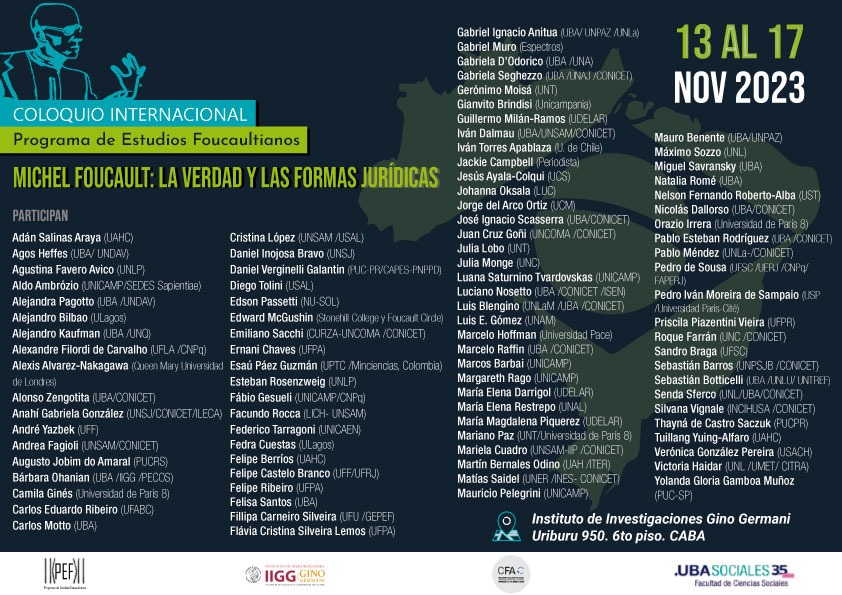
Foucault’s ‘Truth and Juridical Forms’ lectures, 50 years on – conference in Buenos Aires, 13-17 November 2023

Buenos Aires conference next week on Foucault’s ‘Truth and Juridical Forms’ lectures, 50 years on. Apologies for not having a link to a conference website – happy to update if anyone knows of one.

[Update: Foucault News has a pdf of the programme]

Posted in Michel Foucault | Leave a comment

Sarah Hall interviews Louise Amoore on the ethical challenges of AI

Sarah Hall interviews Louise Amoore on the ethical challenges of AI – The UK in a Changing Europe Podcast

In the week of the UK’s AI Safety Summit, Professor Sarah Hall talks to Professor Louise Amoore about responding to the ethical challenges posed by different types of artificial intelligence, regulatory differences between the UK and the EU and the role of tech companies in ensuring the safe use of AI.

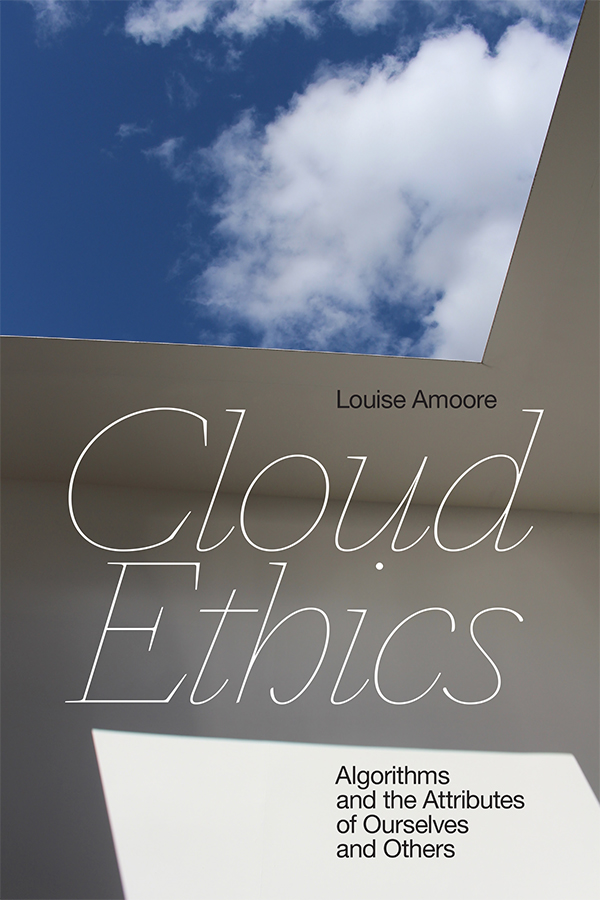
Louise Amoore’s book Cloud Ethics: Algorithms and the Attributes of Ourselves and Others was published by Duke University Press in 2020.

In Cloud Ethics Louise Amoore examines how machine learning algorithms are transforming the ethics and politics of contemporary society. Conceptualizing algorithms as ethicopolitical entities that are entangled with the data attributes of people, Amoore outlines how algorithms give incomplete accounts of themselves, learn through relationships with human practices, and exist in the world in ways that exceed their source code. In these ways, algorithms and their relations to people cannot be understood by simply examining their code, nor can ethics be encoded into algorithms. Instead, Amoore locates the ethical responsibility of algorithms in the conditions of partiality and opacity that haunt both human and algorithmic decisions. To this end, she proposes what she calls cloud ethics—an approach to holding algorithms accountable by engaging with the social and technical conditions under which they emerge and operate.

Posted in Uncategorized | Leave a comment

Iván Chaar López, The Cybernetic Border: Drones, Technology, and Intrusion – Duke University Press, March 2024

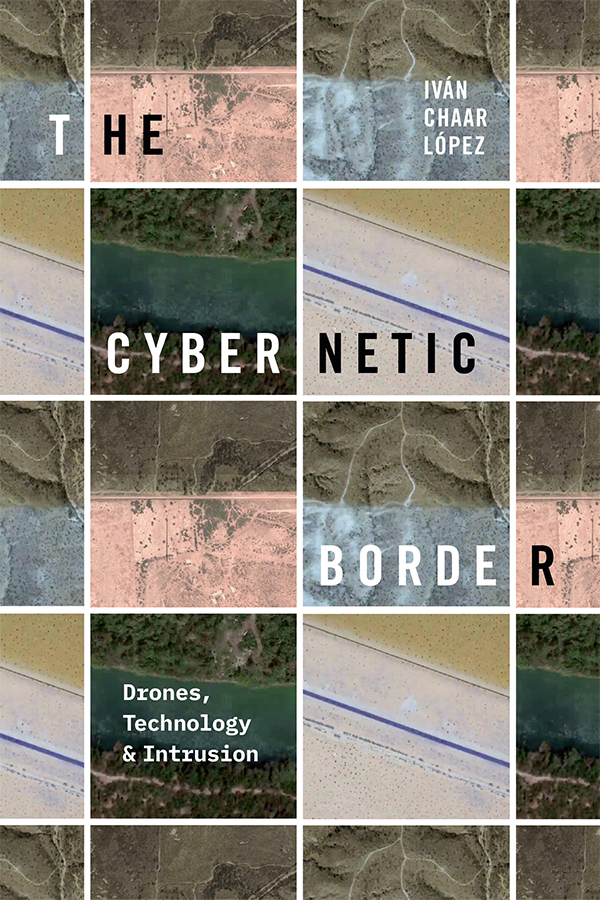
Iván Chaar López, The Cybernetic Border: Drones, Technology, and Intrusion – Duke University Press, March 2024

In The Cybernetic Border, Iván Chaar López argues that the settler US nation requires the production and targeting of a racialized enemy that threatens the empire. The cybernetic border is organized through practices of data capture, storage, processing, circulation, and communication that police bodies and constitute the nation as a bounded, territorial space. Chaar López historicizes the US government’s use of border enforcement technologies on Mexicans, Arabs, and Muslims from the mid-twentieth century to the present, showing how data systems are presented as solutions to unauthorized border crossing. Contrary to enduring fantasies of the purported neutrality of drones, smart walls, artificial intelligence, and biometric technologies, the cybernetic border represents the consolidation of calculation and automation in the exercise of racialized violence. Chaar López draws on corporate, military, and government records, promotional documents and films, technical reports, news reporting, surveillance footage, and activist and artist practices. These materials reveal how logics of enmity are embedded into information infrastructures that shape border control and modern sovereignty.

Posted in Uncategorized | Leave a comment

Antipode Virtual Issue on Palestine/Israel – papers open access until end of 2023

Antipode have put together a Virtual Issue on Palestine/Israel, updating a list from 2021 – with papers open access until end of 2023

Posted in Uncategorized | Leave a comment

Juval Portugali (ed.), The Crisis of Democracy and in the Age of Cities – Edward Elgar, 2023

Juval Portugali (ed.), The Crisis of Democracy and in the Age of Cities – Edward Elgar, 2023

Providing a succinct overview of historical, present and future perspectives of cities and urbanism, this discerning book examines how the 21st century, regarded as the age of cities, is associated with the current crisis of democracy.

The book explores the tension between non-democratic liberalism and non-liberal democracy and the present era of cities as complex systems, in which the characteristics and dynamics of urbanism are transforming our way of life. Against the backdrop of globalization, the Anthropocene, and Industry 4.0, each chapter analyses the challenges and crises facing modern democracies from the unique perspective of cities and complexity theory. Expert contributors analyse the interplay between complexity theory, urban planning, governance and the internet, ultimately highlighting the need to rediscover the relationship between urban beauty and democracy.

Offering key insights into the complexities of urban development and the challenges that arise when democracy intersects with the needs of modern cities, this innovative book will appeal to students and scholars of urban geography, political science, public administration, and architecture. It will be an invaluable resource for those researching cities and complexity.

Posted in Uncategorized | 1 Comment

Ash Amin, After Nativism: Belonging in an Age of Intolerance – Polity, October 2023

Ash Amin, After Nativism: Belonging in an Age of Intolerance – Polity, October 2023

Increasingly, many people in democracies are turning to a strongarm politics for reassurance against globalization, uncertainty and precarity. In countries ranging from the US and the UK to Brazil, India and Turkey, support has grown for a nativist politics attacking migrants, minorities, liberals and elites as enemies of the nation. Is there a politics of belonging that progressive forces could mobilize to counteract these trends?

After Nativism takes up this question, arguing that disarming nativism will require more than improving the security and wellbeing of the ‘left-behind’. The lines drawn by nativism are of an affective nature about imagined community, with meanings of belonging and voice lying at the heart of popular perceptions of just dues. This, argues Ash Amin, is the territory that progressive forces – liberal, social democratic, socialist – need to reclaim in order to shift public sentiment away from xenophobic intolerance towards one of commonality amid difference as a basis for facing existential risk and uncertainty. The book proposes a relational politics of belonging premised on the encounter, fugitive aesthetics, public interest politics, collaboration over common existential threats, and daily collectives and infrastructures of wellbeing. There is ground for progressives to mount a counter-aesthetics of belonging that will convince the discontents of neoliberal globalization that there is a better alternative to nativism.

Posted in Uncategorized | Leave a comment

Daniele Lorenzini, The Force of Truth: Critique, Genealogy, and Truth-Telling in Michel Foucault – University of Chicago Press, September 2023 and New Books discussion

Daniele Lorenzini, The Force of Truth: Critique, Genealogy, and Truth-Telling in Michel Foucault – University of Chicago Press, September 2023

I’ve shared news of this book before, but there now a New Books discussion with Richard Grijalva available.

A groundbreaking examination of Michel Foucault’s history of truth.

Many blame Michel Foucault for our post-truth and conspiracy-laden society. In this provocative work, Daniele Lorenzini argues that such criticism fundamentally misunderstands the philosopher’s project. Foucault did not question truth itself but what Lorenzini calls “the force of truth,” or how some truth claims are given the power to govern our conduct while others are not. This interest, Lorenzini shows, drove Foucault to articulate a new ethics and politics of truth-telling precisely in order to evade the threat of relativism. The Force of Truth explores this neglected dimension of Foucault’s project by putting his writings on regimes of truth and parrhesia in conversation with early analytic philosophy and by drawing out the “possibilizing” elements of Foucault’s genealogies that remain vital for practicing critique today.

Posted in Uncategorized | Leave a comment

Antony Loewenstein, The Palestine Laboratory: How Israel Exports the Technology of Occupation Around the World – Verso, May 2023 (e-book free to download)

Antony Loewenstein, The Palestine Laboratory: How Israel Exports the Technology of Occupation Around the World – Verso, May 2023

Verso have currently made the e-book free to download

Israel’s military industrial complex uses the occupied, Palestinian territories as a testing ground for weaponry and surveillance technology that they then export around the world to despots and democracies. For more than 50 years, occupation of the West Bank and Gaza has given the Israeli state invaluable experience in controlling an “enemy” population, the Palestinians. It’s here that they have perfected the architecture of control. 

Best-selling journalist Antony Loewenstein, author of Disaster Capitalism, uncovers this largely hidden world in a global investigation with secret documents, revealing interviews and on-the-ground reporting. This book shows in-depth, for the first time, how Palestine has become the perfect laboratory for the Israeli military-techno complex: surveillance, home demolitions, indefinite incarceration and brutality to the hi-tech tools that drive the ‘Start-up Nation’. From the Pegasus software that hacked Jeff Bezos’ and Jamal Khashoggi’s phones, the weapons sold to the Myanmar army that has murdered thousands of Rohingyas and drones used by the European Union to monitor refugees in the Mediterranean who are left to drown. Israel has become a global leader in spying technology and defence hardware that fuels the globe’s most brutal conflicts. As ethno-nationalism grows in the 21st century, Israel has built the ultimate model.

Update: Free Palestine: A Verso Reading List

Posted in Uncategorized | Leave a comment

Tim Cresswell, Geographic Thought: A Critical Introduction, 2nd Edition – Wiley, April 2024

Tim Cresswell, Geographic Thought: A Critical Introduction, 2nd Edition – Wiley, April 2024

An accessible and engaging introduction to geographic thought from a recognized leader in the field

In the expanded and engaging Second Edition of Geographic Thought: A Critical Introduction, renowned scholar Tim Cresswell delivers a thoroughly up-to-date and accessible examination of the major thinkers and key theoretical developments in the field. Coverage of the complete range of the development of theoretical knowledge—from ancient geography to contemporary theory—appears alongside treatments of the influence of Darwin and Marx, the emergence of anarchist geographies, the impact of feminism, and myriad other central bodies of thought. 

The latest edition explores new chapters on physical geography and theory, postcolonialism and decoloniality, and black geographies. 

The author emphasizes the importance of geographic thought and its relevance to our understanding of what it means to be human and to the people, places, and cultures of the world in which we live. The book also includes: 

  • New examples throughout consisting of interesting and up-to-date research from a wider range of geographical contexts and by geographers from diverse backgrounds
  • Comprehensive explorations of physical geography that combine updated coverage from the first edition with brand new material
  • Updates discussions of spatial science and quantitative methods that include considerations the role of place and specificity in quantitative work
  • In-depth examinations of the idea of the Anthropocene, the uses of assemblage theory, and the emergence of the GeoHumanities.

Perfect for students of undergraduate and graduate courses in geographic thought, Geographic Thought: A Critical Introduction will also earn a place in the libraries of students and scholars of the history and philosophy of geography, as well as practicing geographers.

Posted in Uncategorized | Leave a comment