Marcello Musto, The Last Years of Karl Marx: An Intellectual Biography – Stanford University Press, July 2020; and New Books discussion

Marcello Musto, The Last Years of Karl Marx: An Intellectual Biography – Stanford University Press, July 2020

There is a New Books discussion between the author, David Norman Smith, Peter Audis and Sean Sayers, moderated by Morteza Hajizadeh here.
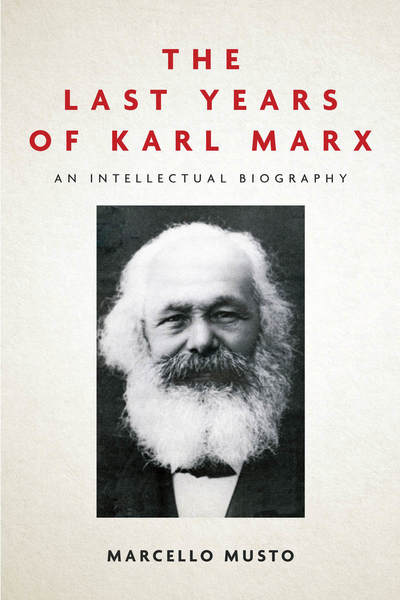
An innovative reassessment of the last writings and final years of Karl Marx.

In the last years of his life, Karl Marx expanded his research in new directions—studying recent anthropological discoveries, analyzing communal forms of ownership in precapitalist societies, supporting the populist movement in Russia, and expressing critiques of colonial oppression in India, Ireland, Algeria, and Egypt. Between 1881 and 1883, he also traveled beyond Europe for the first and only time. Focusing on these last years of Marx’s life, this book dispels two key misrepresentations of his work: that Marx ceased to write late in life, and that he was a Eurocentric and economic thinker fixated on class conflict alone.

With The Last Years of Karl Marx, Marcello Musto claims a renewed relevance for the late work of Marx, highlighting unpublished or previously neglected writings, many of which remain unavailable in English. Readers are invited to reconsider Marx’s critique of European colonialism, his ideas on non-Western societies, and his theories on the possibility of revolution in noncapitalist countries. From Marx’s late manuscripts, notebooks, and letters emerge an author markedly different from the one represented by many of his contemporary critics and followers alike. As Marx currently experiences a significant rediscovery, this volume fills a gap in the popularly accepted biography and suggests an innovative reassessment of some of his key concepts.

Posted in Karl Marx | Leave a comment

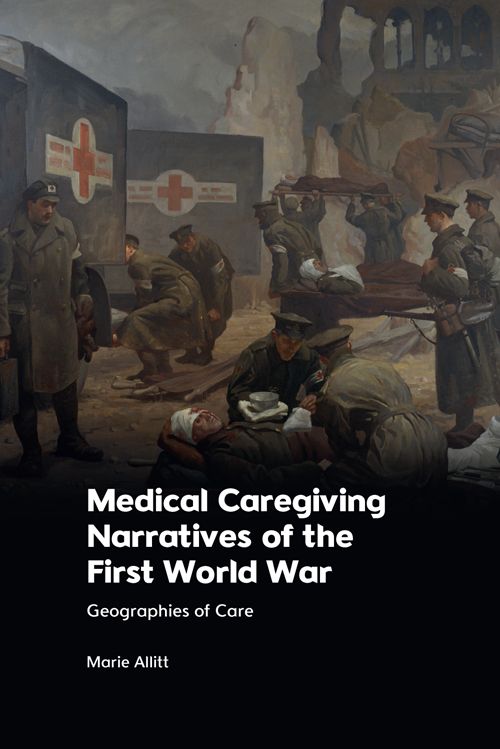
Marie Allitt, Medical Caregiving Narratives of the First World War: Geographies of Care – Edinburgh University Press, May 2023 (print and open access)

Marie Allitt, Medical Caregiving Narratives of the First World War: Geographies of Care – Edinburgh University Press, May 2023 (print and open access)

Explores how military medical practitioners articulated and represented their spatial and sensory experiences of caregiving

  • A sustained literary critical focus on medical caregiving narratives 
  • Novel theorisation of life writing and its relationship to somatic and sensuous geographies 
  • Argues for the centrality of spaces and spatiality in critical medical humanities 
  • A conceptualisation of medical and military-medical spaces 
  • Lays out a new theoretical framework for critical engagements in medical humanities, through the lens of the First World War 

This book offers a novel critical intervention in medical humanities, foregrounding the importance of spaces and senses in medical experiences. It explores the distinctive experience and literary representations of somatic and sensuous geographies in First World War medical caregiving life writing. It demonstrates the complex situation of the medic, who is vulnerable both vicariously and directly to the effects of physical and psychological harm. Chapters look at the medic’s relationship with the war environment; the spaces in which medical care takes place; bodies and the wounds of patients in medical narratives; and psychological and imaginative landscapes and textual spaces where complex emotions, trauma, coping and survival are examined.

Posted in Uncategorized | 1 Comment

Teresa Degenhardt, War as Protection from Punishment: Armed International Intervention at the ‘End of History’ – Routledge, September 2023

Teresa Degenhardt, War as Protection from Punishment: Armed International Intervention at the ‘End of History’ – Routledge, September 2023

This book provides an analysis of how penal discourses are used to legitimate post-Cold War military interventions through three main case studies: Kosovo, Iraq and Libya. These cases reveal the operation of diverse modalities of punishment in extending the ambit of international liberal governance. 

The argument starts from an analysis of these discourses to trace the historical arc in which military interventions have increasingly been launched through reference to both the human rights discourse and humanitarian sentiments, and a desire to punish the perpetrators. The book continues with the analysis of practices involved in the post-intervention phase, looking at the ways in which states have been established as modes of governance (Kosovo), how punitive atmospheres have animated soldiers’ violence in the conduct of war (Iraq), and finally how interventions can expand moral control and a system of devolved surveillance in conjunction with both border control and the engagement of the International Criminal Court (Libya). In all these case, tensions and ambiguities emerge. These practices underscore how punitive intents were also present in the expansion of liberal governance, demonstrating how the rhetoric of punishment was useful in legitimating Western state powers and recomposing the borders of the liberal world at the periphery. 

War as Protection and Punishment ends with a number of critical comments on the diffusion of punitive discourse in the international arena, considering how issues of crime and justice have also animated, at least in part, the current engagement with the Russian invasion of Ukraine. An accessible and compelling read, this book will appeal to students and scholars of criminology, sociology, politics and those interested in how penal discourses are used to legitimize military conventions. 

Posted in Uncategorized | Leave a comment

The Birth of Territory is ten years old…

The book I consider to be my best work – The Birth of Territory – is ten years old this week. It was published by University of Chicago Press in September 2013.

It is the most cited, most widely reviewed and – by very modest academic standards – the best-selling. It’s a book I remain proud of, despite its flaws. I was delighted to win the Association of American Geographers Meridian Book Award for the book.

A page on this site gathers up the reviews, some talks, interviews and other material related to the book.

Posted in Territory, The Birth of Territory | Leave a comment

Andrea Pavoni and Simone Tulumello, Urban Violence: Security, Imaginary, Atmosphere – Roman & Littlefield, September 2023

Andrea Pavoni and Simone Tulumello, Urban Violence: Security, Imaginary, Atmosphere – Rowman & Littlefield, September 2023


Urban violence still has a peculiar standing within social and urban research. This book works to unpack the link between urban, violence, and security with three main arguments. 

The first is that urban violence is under-theorized because long-term theoretical problems with both of its elements (‘urban’ and ‘violence’).

The second is to answer these questions: (1) how can violence be conceptualized in a way that opens to an understanding of the specificity of urban violence? (2) What is the urban in urban violence? And (3) How can ‘urban’ and ‘violence’ be articulated in a way that makes urban violence a category with both analytical and strategic power? 

The third, and central, argument of this book is that, through a genealogy that articulates political economic and vital materialism, urban violence can ultimately be framed as a precise category shaped by three interlocking trajectories: the process of (capitalist) urbanization, the spatio-political project of the urban, and the concrete urban atmospheres in and through which the process and the project materialize, often violently so, in the urban.

Posted in Uncategorized | Leave a comment

Stuart Elden, “From the Archive to the Edited Translation: Lefebvre, Foucault, Dumézil”, audio recording from May 2023 workshop

Technical problems meant that there was unfortunately not a full recording of the Translation and the Archive in the Continental Tradition workshop, held at Senate House, London on 19 May 2023.

I did however record my own talk on my phone, which I’ve now uploaded here: “From the Archive to the Edited Translation: Lefebvre, Foucault, Dumézil”. It’s not a great to have the recording without the images and quotes, but if anyone is interested it’s hopefully better than nothing.

Posted in Georges Dumézil, Henri Lefebvre, Michel Foucault | 1 Comment

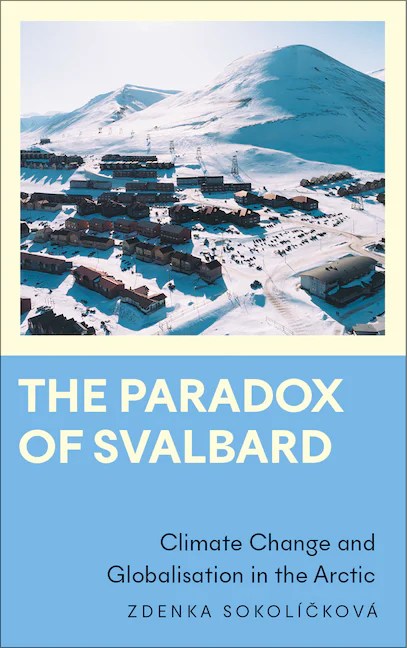
Zdenka Sokolíčková, The Paradox of Svalbard: Climate Change and Globalisation in the Arctic – Pluto, July 2023 and New Books discussion

Zdenka Sokolíčková, The Paradox of Svalbard: Climate Change and Globalisation in the Arctic – Pluto, July 2023

There is a New Books discussion with Stentor Danielson here. Thanks to dmf for this link.

The town of Longyearbyen in the high Arctic is the world’s northernmost settlement. Here, climate change is happening fast. It is clearly seen and sensed by the locals; with higher temperatures, more rain and permafrost thaw. At the same time, the town is shifting from state-controlled coal production to tourism, research and development, rapidly globalising, with numerous languages spoken, cruise ships sounding the horn in the harbour and planes landing and taking off.

Zdenka Sokolickova lived here between 2019 and 2021, and her research in the community uncovered a story about the conflict between sustainability and the driving forces of politics and economy in the rich global North. A small town of 2,400 inhabitants at 78 degrees latitude north on the Norwegian archipelago of Svalbard, Longyearbyen provided a unique view into the unmistakable relationship between global capitalism and climate change.

The Paradox of Svalbard looks at both local and global trends to access a deep understanding of the effects of tourism, immigration, labour and many other elements on the trajectory of climate crisis, and whether anything can be done to reverse them.

Posted in Uncategorized | Leave a comment

Bernard E. Harcourt, Cooperation: A Political, Economic, and Social Theory – Columbia University Press, May 2023

Bernard E. Harcourt, Cooperation: A Political, Economic, and Social Theory – Columbia University Press, May 2023

Update there is a review at NDPR by Albert W. Dzur.

Liberal democracy is in crisis around the world, unable to address pressing problems such as climate change. There is, however, another path—cooperation democracy. From consumer co-ops to credit unions, worker cooperatives to insurance mutuals, nonprofits to mutual aid, countless examples prove that people working together can extend the ideals of participatory democracy and sustainability into every aspect of their lives. These forms of cooperation do not depend on electoral politics. Instead, they harness the longstanding practices and values of cooperatives: self-determination, democratic participation, equity, solidarity, and respect for the environment.

Bernard E. Harcourt develops a transformative theory and practice that builds on worldwide models of successful cooperation. He identifies the most promising forms of cooperative initiatives and then distills their lessons into an integrated framework: Coöperism. This is a political theory grounded on recognition of our interdependence. It is an economic theory that can ensure equitable distribution of wealth. Finally, it is a social theory that replaces the punishment paradigm with a cooperation paradigm.

A creative work of normative critical theory, Cooperation provides a positive vision for addressing our most urgent challenges today. Harcourt shows that by drawing on the core values of cooperation and the power of people working together, a new world of cooperation democracy is within our grasp.

Posted in Bernard E. Harcourt | 1 Comment

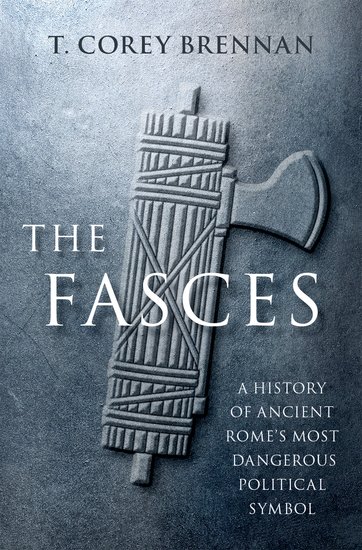
T. Corey Brennan, The Fasces: A History of Ancient Rome’s Most Dangerous Political Symbol – Oxford University Press, November 2022

T. Corey Brennan, The Fasces: A History of Ancient Rome’s Most Dangerous Political Symbol – Oxford University Press, November 2022

“Fascism” is a word ubiquitous in our contemporary political discourse, but few know about its roots in the ancient past or its long, strange evolution to the present.

In ancient Rome, the fasces were a bundle of wooden rods bound with a leather cord, in which an axe was placed—in essence, a mobile kit for corporal or capital punishment. Attendants typically carried fasces before Rome’s higher officials, to induce feelings of respect and fear for the relevant authority. This highly performative Roman institution had a lifespan of almost two millennia, and made a deep impression on subsequent eras, from the Byzantine period to the present.

Starting in the Renaissance, we find revivals and reinterpretations of the ancient fasces, accelerating especially after 1789, the first year of the United States’ Constitution and the opening volley of the French Revolution. But it was Benito Mussolini, who, beginning in 1919, propagated the fasces on an unprecedented scale. Oddly, today the emblem has grown largely unfamiliar, which in turn has offered an opening to contemporary extremist groups.

In The Fasces, T. Corey Brennan offers the first global history of the nature, development, and competing meanings of this stark symbol, from antiquity to the twenty-first century. The word “fascism” has universal awareness in contemporary political discourse, which thus makes this, the first book to trace the full arc of the fasces’ almost 3,000-year history, essential reading for all who wish to understand how the past informs the present.

Posted in Uncategorized | Leave a comment

Rosemary Lévy Zumwalt, Franz Boas: Shaping Anthropology and Fostering Social Justice – University of Nebraska Press, December 2022

Rosemary Lévy Zumwalt, Franz Boas: Shaping Anthropology and Fostering Social Justice – University of Nebraska Press, December 2022

I’m late in noticing the second part of this biography – the first part Franz Boas: The Emergence of the Anthropologist was published in November 2019.

Franz Boas defined the concept of cultural relativism and reoriented the humanities and social sciences away from race science toward an antiracist and anticolonialist understanding of human biology and culture. Franz Boas: Shaping Anthropology and Fostering Social Justiceis the second volume in Rosemary Lévy Zumwalt’s two-part biography of the renowned anthropologist and public intellectual.

Zumwalt takes the reader through the most vital period in the development of Americanist anthropology and Boas’s rise to dominance in the subfields of cultural anthropology, physical anthropology, ethnography, and linguistics. Boas’s emergence as a prominent public intellectual, particularly his opposition to U.S. entry into World War I, reveals his struggle against the forces of nativism, racial hatred, ethnic chauvinism, scientific racism, and uncritical nationalism.

Boas was instrumental in the American cultural renaissance of the 1920s and 1930s, training students and influencing colleagues such as Melville Herskovits, Zora Neale Hurston, Benjamin Botkin, Alan Lomax, Langston Hughes, and others involved in combating racism and the flourishing Harlem Renaissance. He assisted German and European émigré intellectuals fleeing Nazi Germany to relocate in the United States and was instrumental in organizing the denunciation of Nazi racial science and American eugenics. At the end of his career Boas guided a network of former student anthropologists, who spread across the country to university departments, museums, and government agencies, imprinting his social science more broadly in the world of learned knowledge.

Franz Boas is a magisterial biography of Franz Boas and his influence in shaping not only anthropology but also the sciences, humanities, social science, visual and performing arts, and America’s public sphere during a period of great global upheaval and democratic and social struggle.

Posted in Uncategorized | Leave a comment