Ian Klinke, Life, Earth, Colony: Friedrich Ratzel’s Necropolitical Geography – University of Michigan Press, August 2023 (print and open access)

Ian Klinke, Life, Earth, Colony: Friedrich Ratzel’s Necropolitical Geography – University of Michigan Press, August 2023

The book is available in print and open access.

Life, Earth, Colony explores the ideas, life, and historical significance of German zoologist turned geographer Friedrich Ratzel (1844–1904), famous for developing the foundations of geopolitical thought. Ratzel produced a remarkable body of work that revolutionized the study of space, movement, colonization, and war. He also served as a source of intellectual inspiration for national socialism, particularly through his Lebensraum (living space) concept, which understood all life as being caught in an eternal struggle for space. This book closely analyzes this radical conservative intellectual, focusing on his often-overlooked ethnography, biogeography, travel, and creative writing, and colonial activism as well as his more widely-known political geography.

Life, Earth, Colony finds that there is an as yet unexplored necropolitical impulse at the heart of Ratzel’s entire oeuvre, a preoccupation with death and dying, which had a profound impact on twentieth-century history.
Posted in Uncategorized | 2 Comments

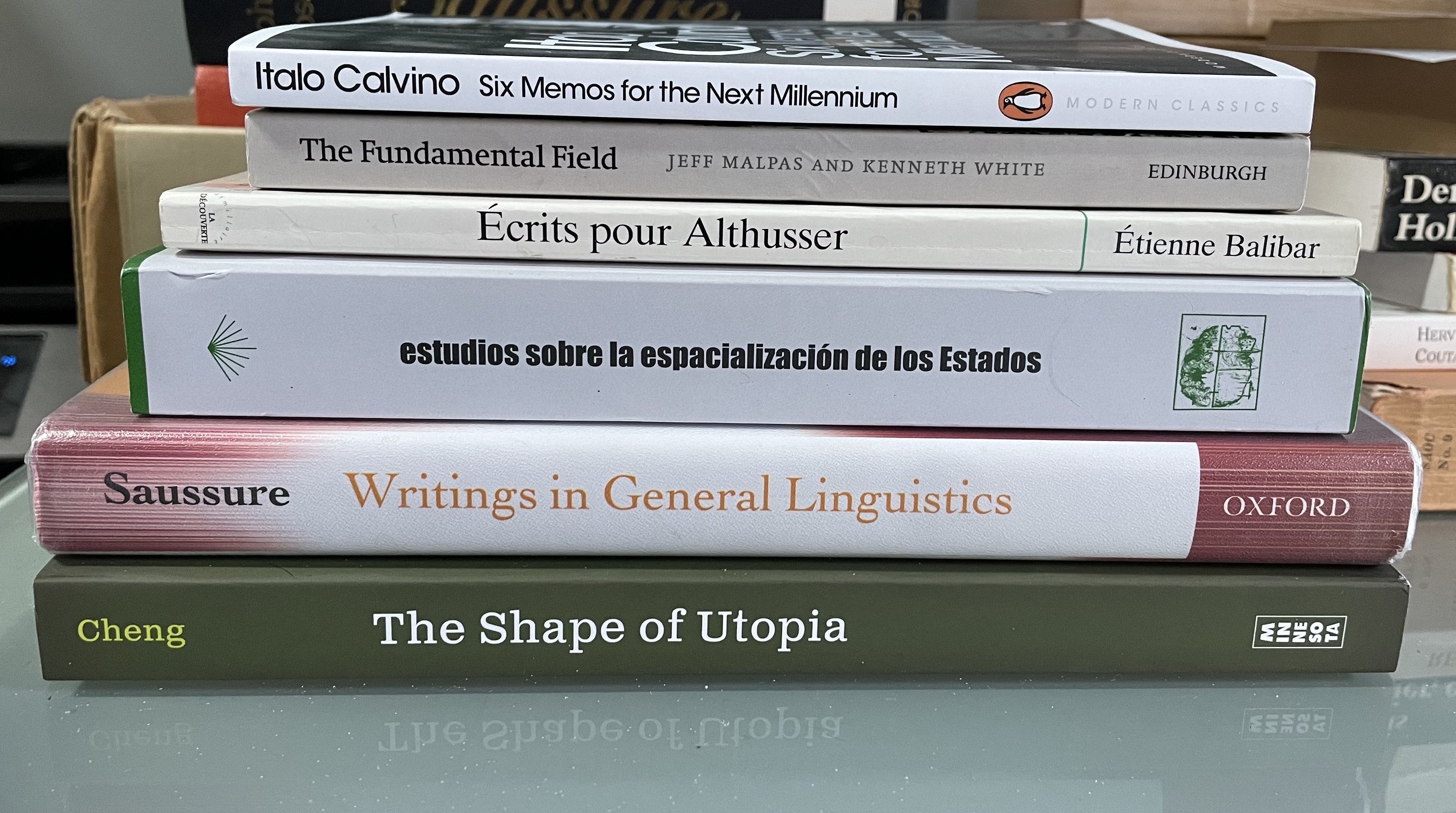
Books received – Calvino, Malpas & White, Balibar, Villamizar, González and Astudillo, Saussure, Cheng

Some books bought or sent recently – Italo Calvino’s Six Memos for the Next Millennium, Jeff Malpas and Kenneth White, The Fundamental Field, Étienne Balibar’s Écrits pour Althusser, Carlos Salamanca Villamizar, Gabriela González and Francisco Astudillo (eds.), Estudios sobre la espacialización de los Estados: Políticas, prácticas, y representaciones, Saussure’s Writings in General Linguistics and Irene Cheng, The Shape of Utopia: The Architecture of Radical Reform in Nineteenth-Century America.

University of Minnesota Press sent the copy of Irene Cheng’s book, and Estudios sobre la espacialización de los Estados has a translation of an old piece by Neil Brenner and me on Lefebvre and was sent by the editors. The collection is available open access here (and the original article here). The other books were bought new or second-hand – I was finally able to find reasonably priced copies of the Saussure and Balibar collections.

Posted in Bartolus of Sassoferrato, Etienne Balibar, Italo Calvino, Jeff Malpas, Louis Althusser, My Publications, Neil Brenner, Uncategorized | 1 Comment

Gregory J. Seigworth & Carolyn Pedwell (eds.), The Affect Theory Reader 2 – Duke University Press, October 2023

Gregory J. Seigworth & Carolyn Pedwell (eds.), The Affect Theory Reader 2 – Duke University Press, October 2023

The Introduction is available open access here.

Building on the foundational Affect Theory Reader, this new volume gathers together contemporary scholarship that highlights and interrogates the contemporary state of affect inquiry. Unsettling what might be too readily taken-for-granted assumptions in affect theory, The Affect Theory Reader 2 extends and challenges how contemporary theories of affect intersect with a wide range of topics and fields that include Black studies, queer and trans theory, Indigenous cosmologies, feminist cultural analysis, psychoanalysis, and media ecologies. It foregrounds vital touchpoints for contemporary studies of affect, from the visceral elements of climate emergency and the sensorial sinews of networked media to the minor feelings entangled with listening, looking, thinking, writing, and teaching otherwise. Tracing affect’s resonances with today’s most critical debates, The Affect Theory Reader 2 will reorient and disorient readers to the past, present, and future potentials of affect theory.

Contributors. Lauren Berlant, Lisa Blackman, Rizvana Bradley, Ann Cvetkovich, Ezekiel J. Dixon-Román, Adam J. Frank, M. Gail Hamner, Omar Kasmani, Cecilia Macón, Hil Malatino, Erin Manning, Derek P. McCormack, Patrick Nickleson, Susanna Paasonen, Tyrone S. Palmer, Carolyn Pedwell, Jasbir K. Puar, Jason Read, Michael Richardson, Dylan Robinson, Tony D. Sampson, Kyla Schuller, Gregory J. Seigworth, Nathan Snaza, Kathleen Stewart, Elizabeth A. Wilson

Posted in Uncategorized | 1 Comment

Stefanos Geroulanos, The Invention of Prehistory: Empire, Violence, and our Obsession with Human Origins – Liveright, April 2024

Stefanos Geroulanos, The Invention of Prehistory: Empire, Violence, and our Obsession with Human Origins – Liveright, April 2024

No publisher page yet, though it is appearing in online bookstores. There is more info about the book and related essays on the author’s website.

[Update November 2023 – the publisher page is here]

Books about the origins of humanity dominate bestseller lists, while major newspapers present breathless accounts of new archaeological findings and speculation about what those findings might tell us about ourselves. We are obsessed with prehistory―and, in this respect, our current era is no different from any other in the last three hundred years. In this coruscating history of prehistory, Stefanos Geroulanos moves from Rousseau’s “state of nature” and Romantic notions of virtuous German barbarians to theories about Neanderthals, killer apes, and a matriarchal paradise where women ruled. Yet as he shows, such ideas became, for the most part, the ideological foundations of repressive regimes and globe-spanning empires. Accounts of prehistory tell us more about the moment when they are proposed than about the deep past, Geroulanos argues―and if we hope to start improving our future, we would be better off setting aside the search for how it all started.

Posted in Uncategorized | Leave a comment

Mark Carrigan, “Where now for academics on social media, post Twitter?”

Mark Carrigan, “Where now for academics on social media, post Twitter?

Posted in Uncategorized | Leave a comment

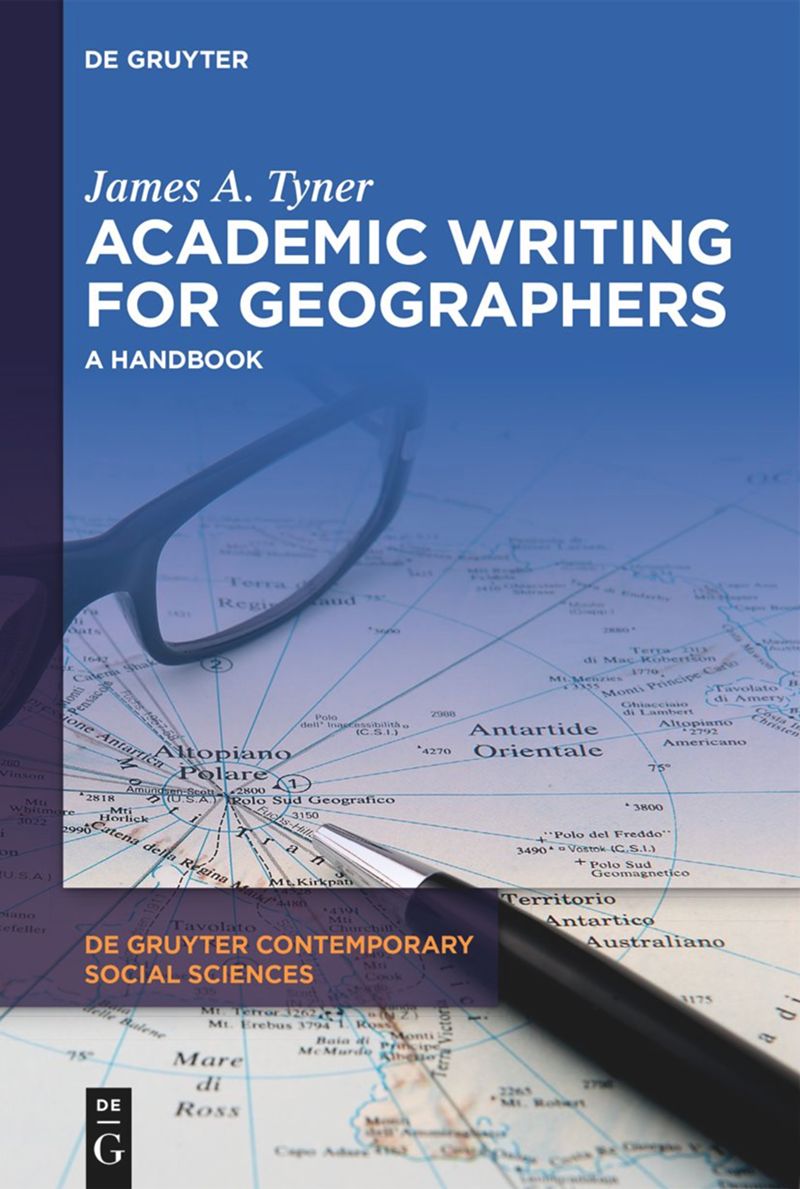
James Tyner, Academic Writing for Geographers: A Handbook – De Gruyter, 2023

James Tyner, Academic Writing for Geographers: A Handbook – De Gruyter, 2023

Expensive hardback and e-book only at this point; paperback coming next year.

There are many ‘how-to’ books on writing for academics; none of these, however, relate specifically to the discipline of geography. In this book, the author identifies the principle modes of academic writing that graduate students and early-career faculty will encounter – specifically focusing on those forms expected of geographers, that is, those modes that are reviewed by academic peers. 

This book is readily accessible to senior undergraduate and graduate students and early-career faculty who may feel intimidated by the process of writing. This volume is not strictly a ‘how-to’ or ‘step-by-step’ manual for writing an article or book; rather, through the use of real, concrete examples from published and unpublished works, the author de-mystifies the process of different types of scholarly pieces geographers have to write with the specific needs and challenges of the discipline in mind. 

Although chapters are thematic-based, e.g., stand-alone chapters on book reviews, articles, and books, the manuscript is structured around the concept of story-telling, for it is the author’s contention that all writing, whether a ‘scientific’ study or more humanist essay, is a form of story-telling. 

  • The first and only book on academic writing for geographers.
  • An explicit focus on academic writing as a holistic process/skill.
  • A comprehensive book on academic writing in geography sensitive to the myriad subfields of the discipline.
Posted in Uncategorized | Leave a comment

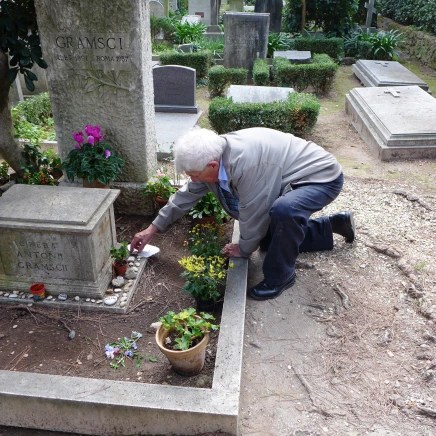
Andy Merrifield, John Berger and Gramsci in Rome

Andy Merrifield, John Berger and Gramsci in Rome

I’m sitting at the bar of Blackmarket Hall in Rome, a trendy food and drink hang out not far from my new home in Monti. It’s Friday night and the joint is heaving. I’ve had a couple of glasses of wine and a whole world spins around in my head. I’m conscious that I’ve been inactive for a few months now, feeling exhausted, a bit overwhelmed by the practical chores my recent move necessitated. My brain felt dead. Yet sitting here, amid a crowded scene of noisy, young revelers, listening to seventies funk music boom out, tunes I remember first-time around, I knew I had to try to do something creative again soon.

The feeling–a kind of urgency of the moment–was prompted by what I was reading. I had with me a copy of John Berger’s book of essays, The White Bird, from the mid-1980s, taking it along to offset my aloneness. A book is always a good cover for the solitary person in public, an effective disguise. I was in awe at how good these pieces were. White Bird’s most famous essay is “The Moment of Cubism”; but tonight, I guess I was having my “Moment of John Berger.” I remember John once telling me–or else I’d read it somewhere–that he’d hated White Bird; when it first appeared, in disgust, he threw it across the room, launched it like a missile. He never thought it any good. My God, what could he have been thinking? Was he talking about its form or content? Its content, after all, while previously published material, is as brilliant as I recall, maybe even better now than upon my first reading decades ago. [continues here]

Posted in Uncategorized | 1 Comment

Trenton Holliday, Cro-Magnon: The Story of the Last Ice Age People of Europe – Columbia University Press, July 2023

Trenton Holliday, Cro-Magnon: The Story of the Last Ice Age People of Europe – Columbia University Press, July 2023

During the Last Ice Age, Europe was a cold, dry place teeming with mammoths, woolly rhinoceroses, reindeer, bison, cave bears, cave hyenas, and cave lions. It was also the home of people physically indistinguishable from humans today, commonly known as the Cro-Magnons. Our knowledge of them comes from either their skeletons or the tools, art, and debris they left behind.

This book tells the story of these dynamic and resilient people in light of recent scientific advances. Trenton Holliday—a paleoanthropologist who has studied the Cro-Magnons for decades—explores questions such as: Where and when did anatomically modern humans first emerge? When did they reach Europe, and via what routes? How extensive or frequent were their interactions with Neandertals? What did Cro-Magnons look like? What did they eat, and how did they acquire their food? What can we learn about their lives from studying their skeletons? How did they deal with the glacial cold? What does their art tell us about them?

Holliday offers new insights into these ancient people from anthropological, archaeological, genetic, and geological perspectives. He also considers how the Cro-Magnons responded to Earth’s postglacial warming almost 12,000 years ago, showing that how they dealt with climate change holds valuable lessons for us as we negotiate life on a rapidly warming planet.

Posted in Uncategorized | Leave a comment

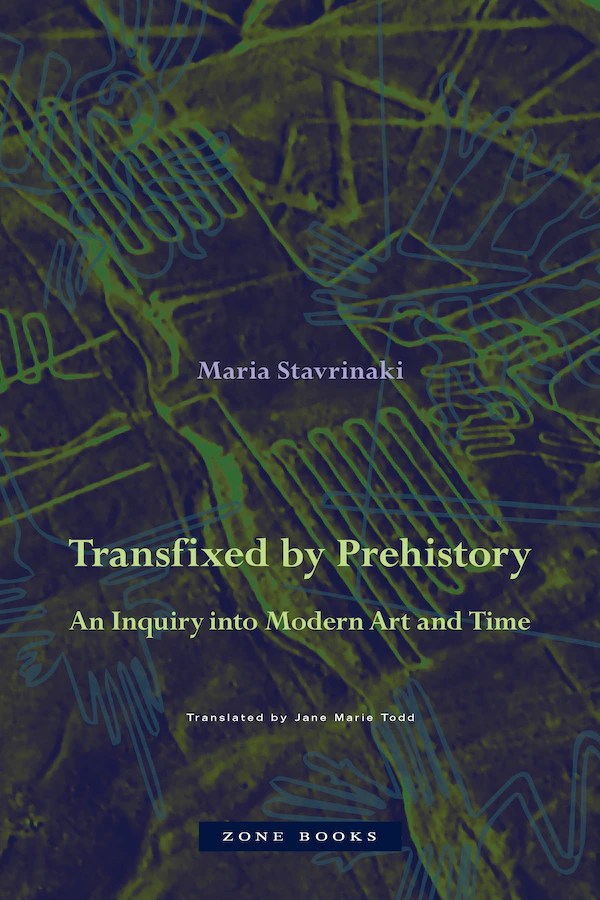
Maria Stavrinaki, Transfixed by Prehistory: An Inquiry into Modern Art and Time, trans. Jane Marie Todd – Zone Books, May 2022

Maria Stavrinaki, Transfixed by Prehistory: An Inquiry into Modern Art and Time, trans. Jane Marie Todd – Zone Books, May 2022

Prehistory is an invention of the late nineteenth century. In that moment of technological progress and acceleration of production and circulation, three major Western narratives about time took shape. One after another, these new fields of inquiry delved into the obscure immensity of the past: first, to surmise the age of the Earth; second, to find the point of emergence of human beings; and third, to ponder the age of art. Maria Stavrinaki considers the inseparability of these accounts of temporality from the disruptive forces of modernity. She asks what a history of modernity and its art would look like if considered through these three interwoven inventions of the longue duréeTransfixed by Prehistory attempts to articulate such a history, which turns out to be more complex than an inevitable march of progress leading up to the Anthropocene. Rather, it is a history of stupor, defamiliarization, regressive acceleration, and incessant invention, since the “new” was also found in the deep sediments of the Earth. Composed of as much speed as slowness, as much change as deep time, as much confidence as skepticism and doubt, modernity is a complex phenomenon that needs to be rethought. Stavrinaki focuses on this intrinsic tension through major artistic practices (Cézanne, Matisse, De Chirico, Ernst, Picasso, Dubuffet, Smithson, Morris, and contemporary artists such as Pierre Huyghe and Thomas Hirschhorn), philosophical discourses (Bataille, Blumenberg, and Jünger), and the human sciences. This groundbreaking book will attract readers interested in the intersections of art history, anthropology, psychoanalysis, mythology, geology, and archaeology.

Posted in Uncategorized | Leave a comment

Heinrich Meier, Nietzsche’s Legacy: Ecce Homo and The Antichrist, Two Books on Nature and Politics – University of Chicago Press, trans. Justin Gottschalk, March 2024

Heinrich Meier, Nietzsche’s Legacy: Ecce Homo and The Antichrist, Two Books on Nature and Politics – University of Chicago Press, trans. Justin Gottschalk, March 2024

[update 15 October 2024: the book is reviewed by Joshua Fox at NDPR]

A reappraisal of Ecce Homo and The Antichrist within Nietzsche’s oeuvre.

Nietzsche’s Legacy takes on the most challenging and misunderstood works in Nietzsche’s oeuvre to illuminate his view of what a philosopher is and what constitutes a philosophic life. Interpreting Ecce Homo and The Antichrist as twin books meant to replace the abandoned Will to Power project, Heinrich Meier recovers them from the stigma of Nietzsche’s late mental collapse, showing that these works are, above all, a lucid self-assessment. The carefully written pair contains both the highest affirmation—the Yes of the “revaluation of all values”—and the most resolute negation—the No to Christianity. How the Yes and the No go together, how the relation between nature and politics is to be determined, how Nietzsche’s intention is governing the political-philosophical double-face: this is the subject of Nietzsche’s Legacy, which opens up a new understanding of Nietzsche’s philosophy as a whole.

Posted in Uncategorized | Leave a comment