Alison Bashford, Emily M. Kern and Adam Bobbette (eds.), New Earth Histories: Geo-Cosmologies and the Making of the Modern World – University of Chicago Press, November 2023
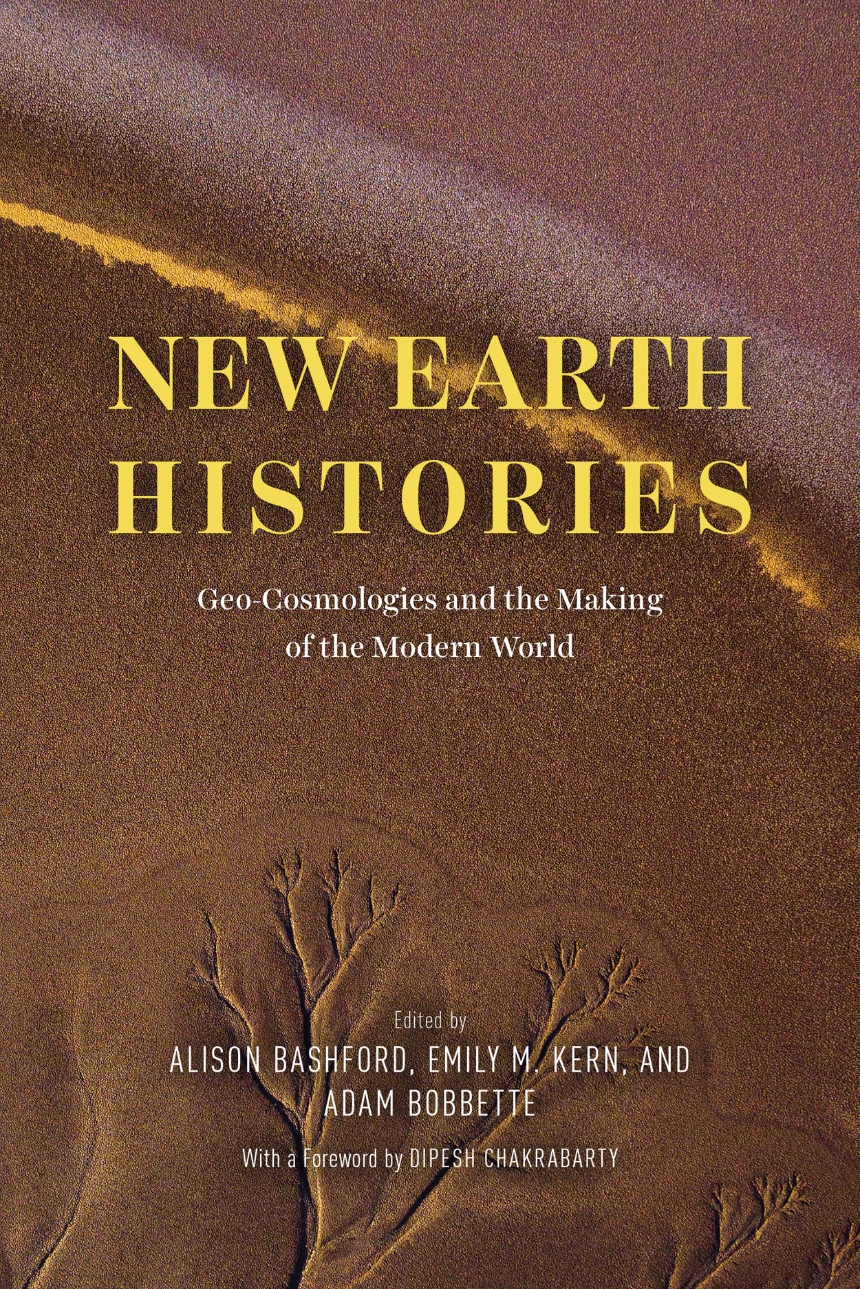
Alison Bashford, Emily M. Kern and Adam Bobbette (eds.), New Earth Histories: Geo-Cosmologies and the Making of the Modern World – University of Chicago Press, November 2023

A kaleidoscopic rethinking of how we come to know the earth.
 
This book brings the history of the geosciences and world cosmologies together, exploring many traditions, including Chinese, Pacific, Islamic, South and Southeast Asian conceptions of the earth’s origin and makeup. Together the chapters ask: How have different ideas about the sacred, animate, and earthly changed modern environmental sciences? How have different world traditions understood human and geological origins? How does the inclusion of multiple cosmologies change the meaning of the Anthropocene and the global climate crisis? By carefully examining these questions, New Earth Histories sets an ambitious agenda for how we think about the earth.
 
The chapters consider debates about the age and structure of the earth, how humans and earth systems interact, and how empire has been conceived in multiple traditions. The methods the authors deploy are diverse—from cultural history and visual and material studies to ethnography, geography, and Indigenous studies—and the effect is to highlight how earth knowledge emerged from historically specific situations. New Earth Histories provides both a framework for studying science at a global scale and fascinating examples to educate as well as inspire future work. Essential reading for students and scholars of earth science history, environmental humanities, history of science and religion, and science and empire.

Posted in Uncategorized | Leave a comment

Adam Shatz, The Rebel’s Clinic: The Revolutionary Lives of Frantz Fanon, Farrar, Straus and Giroux, January 2024

Adam Shatz, The Rebel’s Clinic: The Revolutionary Lives of Frantz Fanon, Farrar, Straus and Giroux, January 2024

A revelatory new biography of the writer-activist who inspired today’s movements for racial liberation

In the era of Black Lives Matter, Frantz Fanon’s shadow looms larger than ever. He was the intellectual activist of the postcolonial era, and his writings about race, revolution, and the psychology of power continue to shape radical movements across the world. In this searching biography, Adam Shatz tells the story of Fanon’s stunning journey, which has all the twists of a Cold War-era thriller. Fanon left his modest home in Martinique to fight in the French Army during World War II; when the war was over, he fell under the influence of Existentialism while studying medicine in Lyon and trying to make sense of his experiences as a Black man in a white city. Fanon went on to practice a novel psychiatry of “dis-alienation” in rural France and Algeria, and then join the Algerian independence struggle, where he became a spokesman, diplomat, and clandestine strategist. He died in 1961, while under the care of the CIA in a Maryland hospital. Today, Fanon’s Black Skin, White Masks and The Wretched of the Earth have become canonical texts of the Black and global radical imagination, comparable to James Baldwin’s essays in their influence. And yet they are little understood. In The Rebel’s Clinic, Shatz offers a dramatic reconstruction of Fanon’s extraordinary life—and a guide to the books that underlie today’s most vital efforts to challenge white supremacy and racial capitalism.

Posted in Uncategorized | Leave a comment

A. Azfar Moin and Alan Strathern (eds.), Sacred Kinship in World History: Between Immanence and Transcendence – Columbia University Press, May 2022

A. Azfar Moin and Alan Strathern (eds.), Sacred Kinship in World History: Between Immanence and Transcendence – Columbia University Press, May 2022

Sacred kingship has been the core political form, in small-scale societies and in vast empires, for much of world history. This collaborative and interdisciplinary book recasts the relationship between religion and politics by exploring this institution in long-term and global comparative perspective.

Editors A. Azfar Moin and Alan Strathern present a theoretical framework for understanding sacred kingship, which leading scholars reflect on and respond to in a series of essays. They distinguish between two separate but complementary religious tendencies, immanentism and transcendentalism, which mold kings into divinized or righteous rulers, respectively. Whereas immanence demands priestly and cosmic rites from kings to sustain the flourishing of life, transcendence turns the focus to salvation and subordinates rulers to higher ethical objectives. Secular modernity does not end the struggle between immanence and transcendence—flourishing and righteousness—but only displaces it from kings onto nations and individuals. 

After an essay by Marshall Sahlins that ranges from the Pacific to the Arctic, the book contains chapters on religion and kingship in settings as far-flung as ancient Egypt, classical Greece, medieval Islam, Mughal India, modern European drama, and ISIS. Sacred Kingship in World History sheds new light on how religion has constructed rulership, with implications spanning global history, religious studies, political theory, and anthropology.

Posted in Uncategorized | Leave a comment

Dany Nobus on Jacques Lacan – two part discussion with Daniel Tutt

Dany Nobus on Jacques Lacan – two part discussion with Daniel Tutt. Has a lot of fascinating archival finds of photos, articles and letters.

Posted in Jacques Lacan | Leave a comment

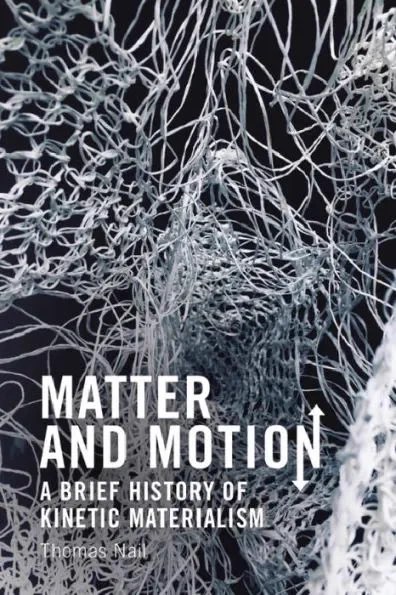
Thomas Nail, Matter and Motion: A Brief History of Kinetic Materialism – Edinburgh University Press, December 2023

Thomas Nail, Matter and Motion: A Brief History of Kinetic Materialism – Edinburgh University Press, December 2023

Tells a new history of materialism – from prehistory to the present – that resists stasis, heirarchy and domination

  • Traces a lineage of thinkers who have philosophically integrated ideas of matter, motion, indeterminacy, relationality and process
  • Discusses thinkers drawn from the ancient to the modern – from the Bronze Age to quantum physics – who each offer their own kind of evidence for a world without metaphysics or hierarchy
  • Shows that the established hierarchies that govern Western thought and society are contingent and performative – there is no ontologically legitimate justification for social, aesthetic or scientific domination

Thomas Nail traces an alternative history of ancient and modern thinkers who share a radically different understanding of the nature of matter and motion within the Euro-Western tradition. From Archaic Greek poetry and Bronze Age Minoan religion to the Roman poet Lucretius, and from German philosopher Karl Marx and English writer Virginia Woolf to contemporary physicists Carlo Rovelli and Karen Barad, Nail identifies a minor tradition of what he calls kinetic materialism and its three central ideas: indeterminacy, relationality and process.

Posted in Uncategorized | Leave a comment

Andrew Mason, What’s Wrong with Lookism? Personal Appearance, Discrimination, and Disadvantage – Oxford University Press, July 2023

Andrew Mason, What’s Wrong with Lookism? Personal Appearance, Discrimination, and Disadvantage – Oxford University Press, July 2023

People are treated differently as a result of their looks. But when is appearance discrimination, or “lookism” as it is often called, morally objectionable? This issue is important for at least two reasons. First, the benefits that flow to people who are regarded as visually attractive are sizeable and are enjoyed in a number of contexts, including employment, personal relationships, education, politics, and the criminal justice system. Second, appearance discrimination is of moral interest not only in its own right, but also in terms of its connection to other forms of discrimination. Appearance norms, that is, norms concerning how we should look, often place greater burdens on disadvantaged groups. As a result, discrimination on the basis of appearance, when it rewards people who conform to these norms, may involve, or interact with, the effects of, wrongful discrimination on the basis of features other than appearance, in a way that aggravates existing injustices.

What’s Wrong with Lookism? examines the morality of appearance discrimination in three contexts: employment decisions; the choice of friends or romantic partners; and the everyday practice of judging and commenting upon people’s looks. Andrew Mason develops a pluralist theory of what makes discrimination wrong that identifies three wrong-making features, namely, disrespect, deliberative unfairness, and contributing to unjust consequences, and demonstrates how the presence of one or more of these features in each of these contexts problematises the lookism that takes place in it.

Posted in Uncategorized | Leave a comment

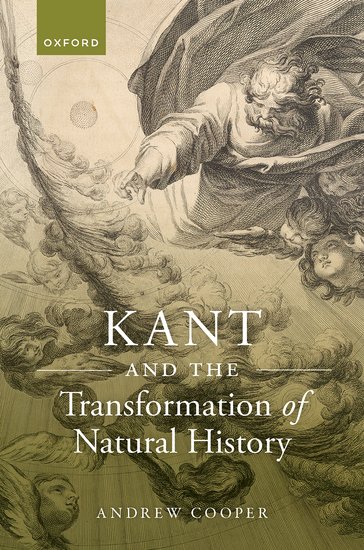
Andrew Cooper, Kant and the Transformation of Natural History – Oxford University Press, September 2023

Andrew Cooper, Kant and the Transformation of Natural History – Oxford University Press, September 2023

Andrew Cooper presents the first systematic study of Kant’s account of natural history. Cooper contends that Kant made a decisive contribution to one of the most explosive and understudied revolutions in the history of science: the addition of time to the frame in which explanations are required, sought, and justified in natural science. 

Through addressing a wide range of Kant’s works, Cooper challenges the claim that Kant’s theory of science denies a developmental conception of nature and argues instead that it establishes a method by which natural historians can genuinely dispute historical claims and potentially come to consensus. This method, Cooper argues, can be used to expose serious flaws in Kant’s own historical reasoning, including the formation and defence of his racist views. The book will be valuable to philosophers seeking to discern both the power and limitations of Kant’s theory of science, and to historians of science working on the fractured landscape of eighteenth-century Newtonianism.

Posted in Immanuel Kant, Uncategorized | Leave a comment

Lauren Benton, They Called It Peace: Worlds of Imperial Violence – Princeton University Press, February 2024

Lauren Benton, They Called It Peace: Worlds of Imperial Violence – Princeton University Press, February 2024

Imperial conquest and colonization depended on pervasive raiding, slaving, and plunder. European empires amassed global power by asserting a right to use unilateral force at their discretion. They Called It Peace is a panoramic history of how these routines of violence remapped the contours of empire and reordered the world from the fifteenth to twentieth centuries.

In an account spanning from Asia to the Americas, Lauren Benton shows how imperial violence redefined the very nature of war and peace. Instead of preparing lasting peace, fragile truces insured the easy return to war. Serial conflicts and armed interventions projected a de facto state of perpetual war across the globe. Benton describes how seemingly limited war sparked atrocities, from sudden massacres to long campaigns of dispossession and extermination. She brings vividly to life a world in which warmongers portrayed themselves as peacemakers and Europeans imagined “small” violence as essential to imperial rule and global order.

Holding vital lessons for us today, They Called It Peace reveals how imperial violence of the past has made perpetual war and the threat of atrocity endemic features of the international order.

Posted in Uncategorized | 1 Comment

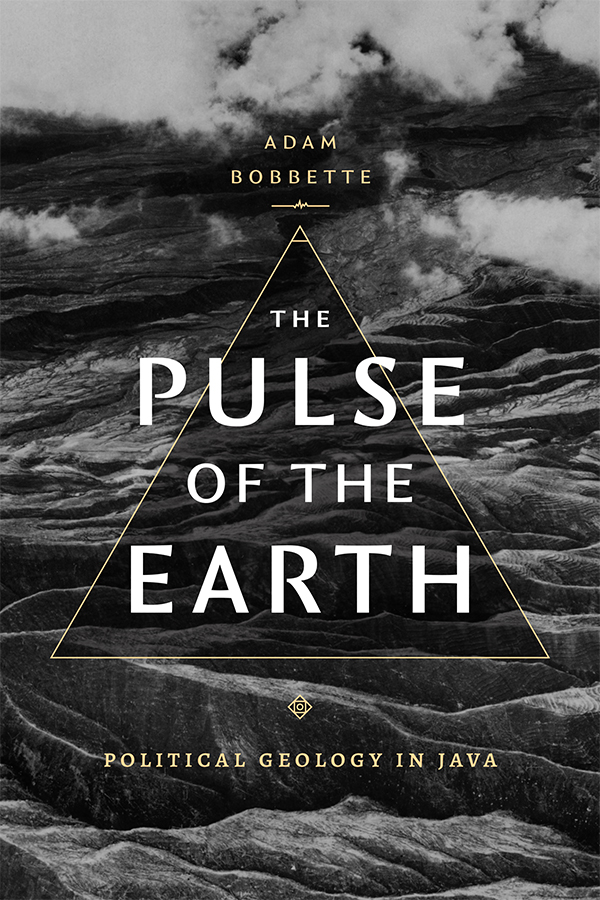
Adam Bobbette, The Pulse of the Earth: Political Geology in Java – Duke University Press, August 2023

Adam Bobbette, The Pulse of the Earth: Political Geology in Java – Duke University Press, August 2023

The Introduction is available here

In The Pulse of the Earth Adam Bobbette tells the story of how modern theories of the earth emerged from the slopes of Indonesia’s volcanoes. Beginning in the late nineteenth century, scientists became concerned with protecting the colonial plantation economy from the unpredictable bursts and shudders of volcanoes. Bobbette follows Javanese knowledge traditions, colonial geologists, volcanologists, mystics, Theosophists, orientalists, and revolutionaries to show how the earth sciences originate from a fusion of Western and non-Western cosmology, theology, anthropology, and geology. Drawing on archival research, interviews, and fieldwork at Javanese volcanoes and in scientific observatories, he explores how Indonesian Islam shaped the theory of plate tectonics, how Dutch colonial volcanologists learned to see the earth in new ways from Javanese spiritual traditions, and how new scientific technologies radically recast notions of the human body, distance, and the earth. In this way, Bobbette decenters the significance of Western scientists to expand our understanding of the evolution of planetary thought and rethinks the politics of geological knowledge.

Posted in Uncategorized | Leave a comment

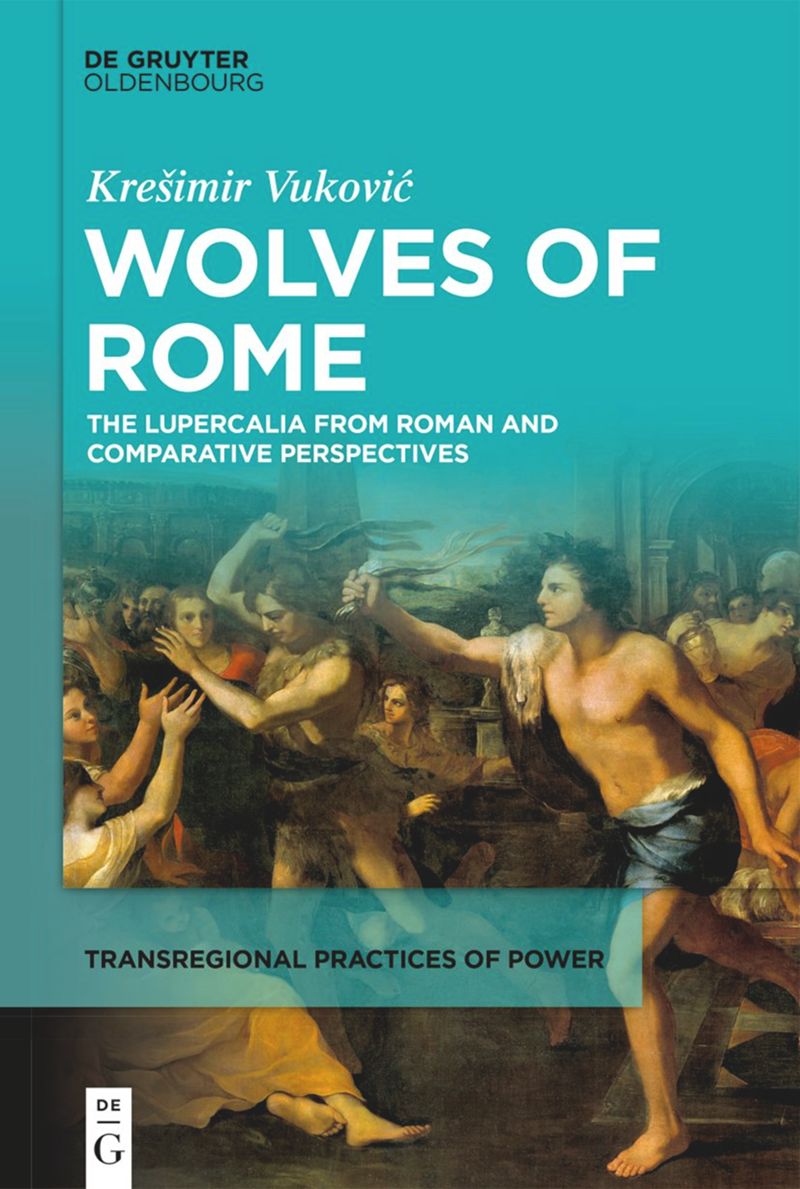
Krešimir Vuković, Wolves of Rome: The Lupercalia from Roman and Comparative Perspectives – December 2022 (and Journal of History of Ideas blog)

Krešimir Vuković, Wolves of Rome: The Lupercalia from Roman and Comparative Perspectives – December 2022

The study is a fresh interpretation of the Roman foundation myth and one of the most important Roman festivals – the Lupercalia, an annual celebration of youth and sexuality by Roman men and women. Written with clarity and force the book spans the whole of Roman history and takes the Lupercalia back to its Indo-European roots by presenting clear parallels between Roman and Indian traditions.

There is a good summary of aspects of the argument at the Journal of History of Ideas blog

Posted in Uncategorized | Leave a comment