Kenneth W. Harl, Empires of the Steppes: The Nomadic Tribes who Shaped Civilisation – Bloomsbury, March 2023

Kenneth W. Harl, Empires of the Steppes: The Nomadic Tribes who Shaped Civilisation – Bloomsbury, March 2023
The barbarian nomads of the Eurasian steppes played a decisive role in world history, but their achievements have gone largely unnoticed. These tribes produced some of the world’s greatest conquerors: Attila the Hun, Genghis Khan and Tamerlane, among others. And their deeds still resonate today.

Indeed, these nomads built long-lasting empires, facilitated the first global trade of the Silk Road and disseminated religions, technology, knowledge and goods of every description that enriched and changed the lives of so many across Europe, China and the Middle East. From a single region emerged a great many peoples – the Huns, the Mongols, the Magyars, the Turks, the Xiongnu, the Scythians, the Goths – all of whom went on to profoundly and irrevocably shape the modern world.

In this enthralling new history, Professor Kenneth W. Harl draws on a lifetime of scholarship to vividly recreate the lives of these peoples from their beginnings to the early modern age. Their brutal struggle to survive on the steppes bred a resilient, pragmatic people ever-ready to learn from their neighbours. In warfare, they dominated the battlefield for over fifteen hundred years. Under charismatic rulers, they could topple empires and win their own.

There is a review in The Guardian here.
Posted in Uncategorized | Leave a comment

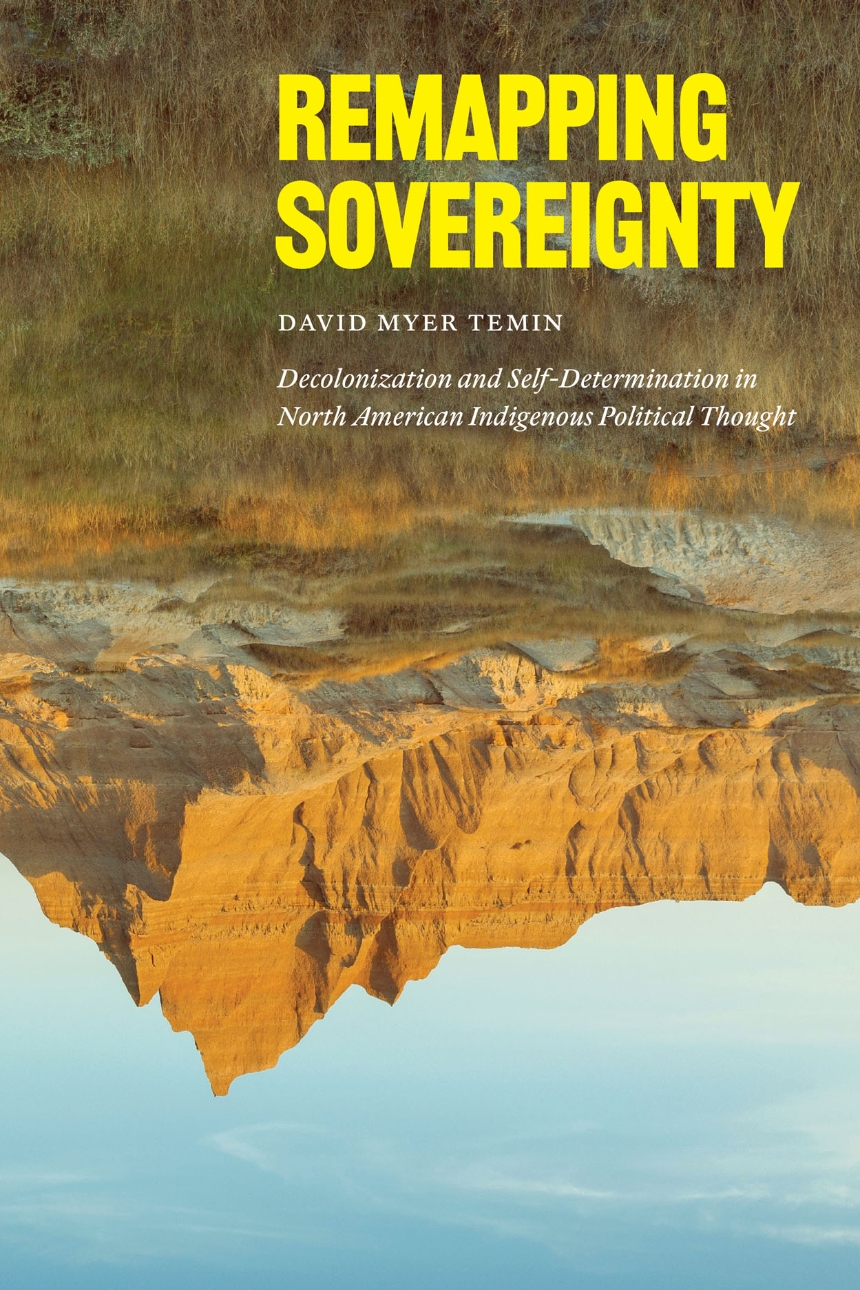
David Myer Temin, Remapping Sovereignty: Decolonization and Self-Determination in North American Indigenous Political Thought – University of Chicago Press, August 2023

David Myer Temin, Remapping Sovereignty: Decolonization and Self-Determination in North American Indigenous Political Thought – University of Chicago Press, August 2023

An examination of anticolonial thought and practice across key Indigenous thinkers.

Accounts of decolonization routinely neglect Indigenous societies, yet Native communities have made unique contributions to anticolonial thought and activism. Remapping Sovereignty examines how twentieth-century Indigenous activists in North America debated questions of decolonization and self-determination, developing distinctive conceptual approaches that both resonate with and reformulate key strands in other civil rights and global decolonization movements. In contrast to decolonization projects that envisioned liberation through state sovereignty, Indigenous theorists emphasized the self-determination of peoples against sovereign state supremacy and articulated a visionary politics of decolonization as earthmaking. Temin traces the interplay between anticolonial thought and practice across key thinkers, interweaving history and textual analysis. He shows how these insights broaden the political and intellectual horizons open to us today.

Posted in Uncategorized | Leave a comment

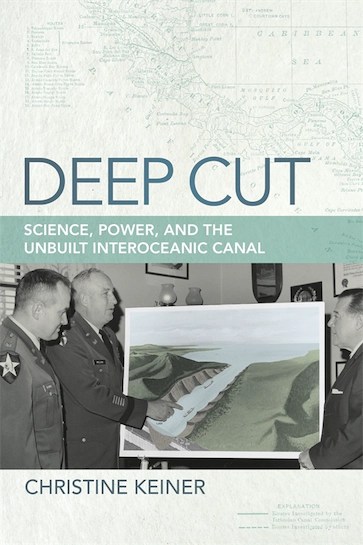
Christine Keiner, Deep Cut: Science, Power, and the Unbuilt Interoceanic Canal, University of Georgia Press, December 2020 – open access and New Books discussion

Christine Keiner, Deep Cut: Science, Power, and the Unbuilt Interoceanic Canal, University of Georgia Press, December 2020

This book is openly available in digital formats thanks to a generous grant from the Andrew W. Mellon Foundation.

The Atlantic-Pacific Central American sea-level canal is generally regarded as a spectacular failure. However, Deep Cut examines the canal in an alternative context, as an anticipated infrastructure project that captured attention from the nineteenth through the late twentieth centuries. Its advocates included naturalist Alexander von Humboldt, physicist Edward Teller, and U.S. presidents John F. Kennedy, Lyndon Johnson, and Jimmy Carter. The waterway did not come to fruition, but as a proposal it served important political and scientific purposes during different eras, especially the years spanning the Cold War and the “environmental decade” of the 1970s.

Historian Christine Keiner shows how the evolving plans for the sea-level ship canal performed distinct kinds of work for diverse historical actors in light of shifting scientific, environmental, and diplomatic values. Dismissing it as a failed scheme prevents us from considering the political, cultural, and epistemological processes that went into constructing the seaway as an innovative diplomatic solution to rising U.S.-Panama tensions, an exciting research opportunity for evolutionary biologists, a superior hydrocarbon highway for the oil industry, or a serious ecological threat to marine biodiversity.

Invoking past dreams and nightmares of peaceful nuclear explosives, invasive sea snakes, and the 1970s energy crisis, Deep Cut uses the Central American seaway proposal to examine the changing roles of environmental diplomacy and state-sponsored environmental impact assessment. More broadly, Keiner amplifies an emerging conversation around the environmental, scientific, and political histories and legacies of unrealized megaprojects.

The book is available open access here. There is a New Books discussion with Shu Wan here. Thanks to dmf for the links.

Posted in Uncategorized | Leave a comment

Henry Wai-chung Yeung, Theory and Explanation in Geography – Wiley/RGS-IBG book series, October 2023

Henry Wai-chung Yeung, Theory and Explanation in Geography – Wiley/RGS-IBG book series, October 2023

A thought-provoking resource detailing why causal theory is useful in geographical enquiry and how it can be developed through mechanism-based thinking. 

  • Includes a multitude of approaches and concepts in human geography today, covering important caveats, key considerations, and a synthetic approach 
  • Details contemporary geographical thought, covering theory in Marxism, poststructuralism and post-phenomenology/posthumanism, and feminism and postcolonialism 
  • Explores relationality and relational thought in contemporary human geography, plus moving towards a relational theory for the 2020s and beyond 
  • Discusses mechanism and process in causal explanation, covering causal theory and actors, neoliberalization, and the process-mechanism distinction of neoliberalism 
  • Essential reading for academics, geographers, and scholars seeking unique perspective on an important facet of the field
Posted in Uncategorized | Leave a comment

Rachael Cayley, Thriving as a Graduate Writer: Principles, Strategies and Habits for Effective Academic Writing – University of Michigan Press, May 2023

Rachael Cayley, Thriving as a Graduate Writer: Principles, Strategies and Habits for Effective Academic Writing – University of Michigan Press, May 2023

Thriving as a Graduate Writer offers a comprehensive guide to the multifaceted challenges of writing in graduate school. It shows readers how to think about academic writing, how to manage an academic text, and how to establish an effective writing practice. Graduate students from all disciplines will find concrete strategies and motivation for the enterprise of academic writing. Intended for both multilingual writers and those for whom English is a first language, Thriving as a Graduate Writer offers essential writing support in quick, easily digestible chunks.

Readers of Thriving as a Graduate Writer will:

– Learn how to establish an effective writing practice
– ​Discover how to position themselves as competent and engaged writers
– Learn how to structure their writing, craft effective sentences, and create movement with a text
– Develop processes for draft revisions
– Create individual writing strategies that will last throughout their careers

More about the book and a lot of resources at the Explorations of Style blog.

There are a lot of Writing and Publishing posts and links on this site

Posted in Writing | Leave a comment

Jeffrey Whyte, The Birth of Psychological War. Propaganda, Espionage, and Military Violence from WWII to the Vietnam War – British Academy/Oxford University Press, 2023

Jeffrey Whyte, The Birth of Psychological War. Propaganda, Espionage, and Military Violence from WWII to the Vietnam War – British Academy/Oxford University Press, 2023 – open access

Posted in Uncategorized | Leave a comment

Nicolas de Warren, German Philosophy and the First World War – Cambridge University Press, March 2023

Nicolas de Warren, German Philosophy and the First World War – Cambridge University Press, March 2023

How did the First World War, the so-called ‘Great War’ – widely seen on all sides as ‘the war to end all wars’ – impact the development of German philosophy? Combining history and biography with astute philosophical and textual analysis, Nicolas de Warren addresses here the intellectual trajectories of ten significant wartime philosophers: Ernst Bloch, Martin Buber, Ernst Cassirer, Hermann Cohen, György Lukács, Martin Heidegger, Edmund Husserl, Franz Rosenzweig, Max Scheler and Georg Simmel. In exploring their individual works written during and after the War, the author reveals how philosophical concepts and new forms of thinking were forged in response to this unprecedented catastrophe. In reassessing standardized narratives of German thought, the book deepens and enhances our understanding of the intimate and complex relationship between philosophy and violence by demonstrating how the 1914-18 conflict was a crucible for ways of thinking that still define us today.

Posted in Uncategorized | Leave a comment

Alison Bashford, Emily M. Kern and Adam Bobbette (eds.), New Earth Histories: Geo-Cosmologies and the Making of the Modern World – University of Chicago Press, November 2023

Alison Bashford, Emily M. Kern and Adam Bobbette (eds.), New Earth Histories: Geo-Cosmologies and the Making of the Modern World – University of Chicago Press, November 2023

A kaleidoscopic rethinking of how we come to know the earth.
 
This book brings the history of the geosciences and world cosmologies together, exploring many traditions, including Chinese, Pacific, Islamic, South and Southeast Asian conceptions of the earth’s origin and makeup. Together the chapters ask: How have different ideas about the sacred, animate, and earthly changed modern environmental sciences? How have different world traditions understood human and geological origins? How does the inclusion of multiple cosmologies change the meaning of the Anthropocene and the global climate crisis? By carefully examining these questions, New Earth Histories sets an ambitious agenda for how we think about the earth.
 
The chapters consider debates about the age and structure of the earth, how humans and earth systems interact, and how empire has been conceived in multiple traditions. The methods the authors deploy are diverse—from cultural history and visual and material studies to ethnography, geography, and Indigenous studies—and the effect is to highlight how earth knowledge emerged from historically specific situations. New Earth Histories provides both a framework for studying science at a global scale and fascinating examples to educate as well as inspire future work. Essential reading for students and scholars of earth science history, environmental humanities, history of science and religion, and science and empire.

Posted in Uncategorized | Leave a comment

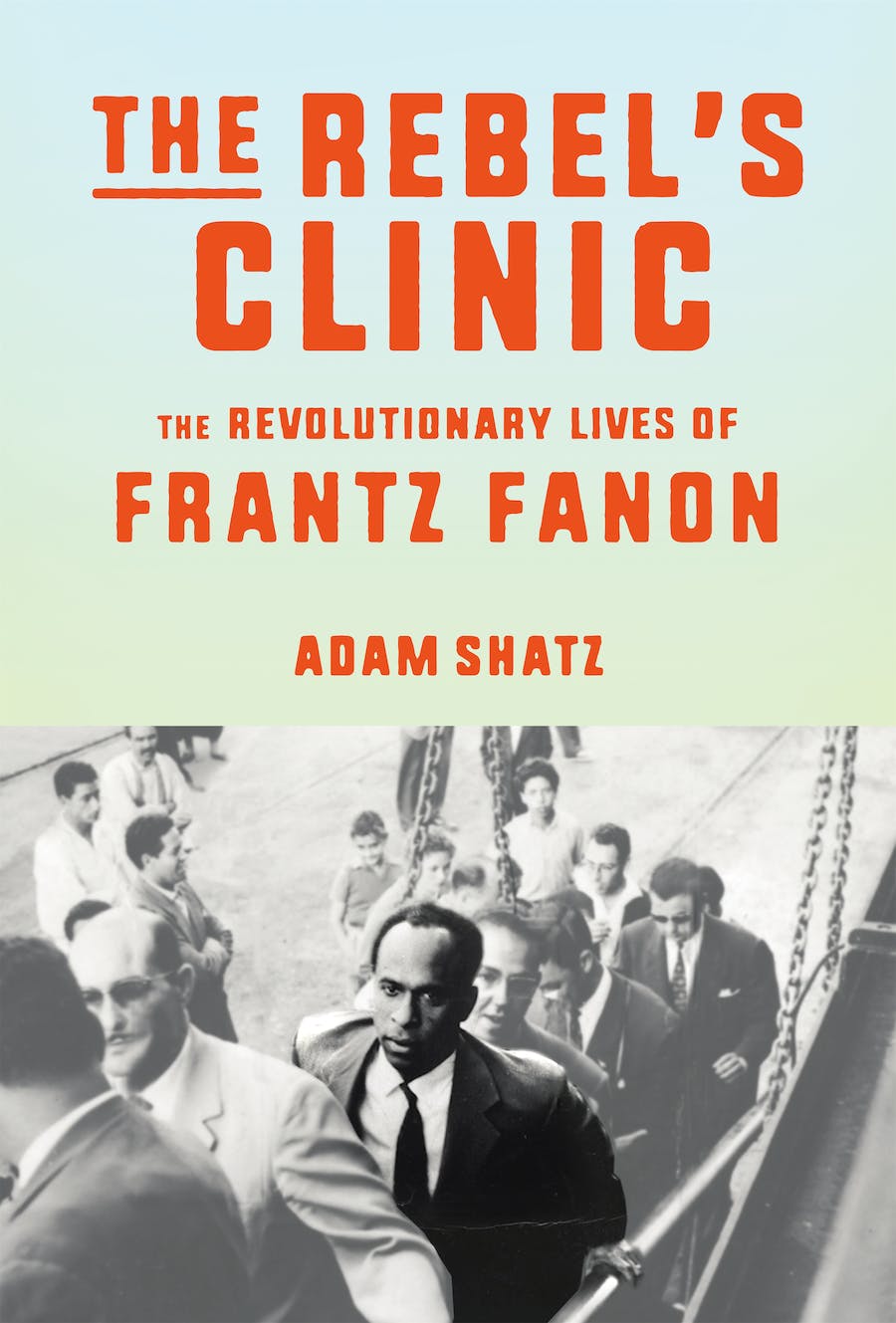
Adam Shatz, The Rebel’s Clinic: The Revolutionary Lives of Frantz Fanon, Farrar, Straus and Giroux, January 2024

Adam Shatz, The Rebel’s Clinic: The Revolutionary Lives of Frantz Fanon, Farrar, Straus and Giroux, January 2024

A revelatory new biography of the writer-activist who inspired today’s movements for racial liberation

In the era of Black Lives Matter, Frantz Fanon’s shadow looms larger than ever. He was the intellectual activist of the postcolonial era, and his writings about race, revolution, and the psychology of power continue to shape radical movements across the world. In this searching biography, Adam Shatz tells the story of Fanon’s stunning journey, which has all the twists of a Cold War-era thriller. Fanon left his modest home in Martinique to fight in the French Army during World War II; when the war was over, he fell under the influence of Existentialism while studying medicine in Lyon and trying to make sense of his experiences as a Black man in a white city. Fanon went on to practice a novel psychiatry of “dis-alienation” in rural France and Algeria, and then join the Algerian independence struggle, where he became a spokesman, diplomat, and clandestine strategist. He died in 1961, while under the care of the CIA in a Maryland hospital. Today, Fanon’s Black Skin, White Masks and The Wretched of the Earth have become canonical texts of the Black and global radical imagination, comparable to James Baldwin’s essays in their influence. And yet they are little understood. In The Rebel’s Clinic, Shatz offers a dramatic reconstruction of Fanon’s extraordinary life—and a guide to the books that underlie today’s most vital efforts to challenge white supremacy and racial capitalism.

Posted in Uncategorized | Leave a comment

A. Azfar Moin and Alan Strathern (eds.), Sacred Kinship in World History: Between Immanence and Transcendence – Columbia University Press, May 2022

A. Azfar Moin and Alan Strathern (eds.), Sacred Kinship in World History: Between Immanence and Transcendence – Columbia University Press, May 2022

Sacred kingship has been the core political form, in small-scale societies and in vast empires, for much of world history. This collaborative and interdisciplinary book recasts the relationship between religion and politics by exploring this institution in long-term and global comparative perspective.

Editors A. Azfar Moin and Alan Strathern present a theoretical framework for understanding sacred kingship, which leading scholars reflect on and respond to in a series of essays. They distinguish between two separate but complementary religious tendencies, immanentism and transcendentalism, which mold kings into divinized or righteous rulers, respectively. Whereas immanence demands priestly and cosmic rites from kings to sustain the flourishing of life, transcendence turns the focus to salvation and subordinates rulers to higher ethical objectives. Secular modernity does not end the struggle between immanence and transcendence—flourishing and righteousness—but only displaces it from kings onto nations and individuals. 

After an essay by Marshall Sahlins that ranges from the Pacific to the Arctic, the book contains chapters on religion and kingship in settings as far-flung as ancient Egypt, classical Greece, medieval Islam, Mughal India, modern European drama, and ISIS. Sacred Kingship in World History sheds new light on how religion has constructed rulership, with implications spanning global history, religious studies, political theory, and anthropology.

Posted in Uncategorized | Leave a comment