Irene Cheng, The Shape of Utopia: The Architecture of Radical Reform in Nineteenth-Century America – University of Minnesota Press, August 2023

Irene Cheng, The Shape of Utopia: The Architecture of Radical Reform in Nineteenth-Century America – University of Minnesota Press, August 2023

In the middle of the nineteenth century, a utopian impulse flourished in the United States through the circulation of architectural and urban plans predicated on geometrically distinct designs. Though the majority of such plans remained unrealized, The Shape of Utopiaemphasizes the enduring importance of these radical propositions and their ability to visualize alternatives to what was then a newly emerging capitalist nation. 

Drawing diagrammatic plans for structures such as octagonal houses, a hexagonal anarchist city, and circular centers of equitable commerce, these various architectural utopians applied geometric forms to envision a more just and harmonious society. Highlighting the inherent political capacity of architecture, Irene Cheng showcases how these visionary planners used their blueprints as persuasive visual rhetoric that could mobilize others to share in their aspirations for a better world. 

Offering an extensive and uniquely focused view of mid-nineteenth-century America’s rapidly changing cultural landscape, this book examines these utopian plans within the context of significant economic and technological transformation, encompassing movements such as phrenology, anarchism, and spiritualism. Engaging equally with architectural history, visual culture studies, and U.S. history, The Shape of Utopia documents a pivotal moment in American history when ordinary people ardently believed in the potential to reshape society.

Posted in Uncategorized | Leave a comment

Michel Foucault, The Japan Lectures: A Transnational Critical Encounter – Routledge, December 2023

Michel Foucault, The Japan Lectures: A Transnational Critical Encounter – Routledge, December 2023

[the print book link has some more detail, including some endorsements]

This looks a useful collection, though despite what the description says most of the texts are in English already in different collections [actually 4 of 8; see below]. No details of editor or translator – it would be good if these were all new translations. [Anton Lee has told me the editor is John Rajchman.] It also looks like it is just the 1978 material, not the lectures from Foucault’s earlier visit in 1970, nor based on archival material not yet available in French.

This book makes available, for the first time in English, lectures and interviews that Foucault gave in Japan in 1978, reconstructing their context, and isolating the question of their singular relevance for us today. In these forgotten lectures, in a free and often informal style, Foucault explores, together with his Japanese interlocutors, what it would mean to take up, from outside Europe, the questions he was raising at the time about Revolution and Enlightenment in the traditions of European critical thought. In a series of wide-ranging discussions, on sexuality and its history, non-Christian forms of spirituality, new forms of political movements, and the role of knowledge, power, and truth in them, Foucault examines these questions in relationship to Asia. He had hoped these questions, very much debated at the time in post-war Japan, would be the start of new forms of translation, publication and exchange. At the heart of the lectures is thus a search for the creation of a new sort of transnational collaboration, recasting the history of European colonialism and opening to a philosophy, no longer simply Western, yet to come.

The Japan Lectures thus contribute to the new scholarship in Asian and in translation studies which have long since moved away from earlier ‘Area Studies’; at the same time, they participate in the new scholarship about Foucault’s own work and itinerary, following the publication of an extraordinary wealth of materials left unfinished or unpublished by his untimely death. In these ways, The Japan Lectures help us to better see the implications of Foucault’s work for philosophy in the twenty-first century.

Acknowledgements

I. Foucault in Asia: An Introduction

II. THE JAPAN LECTURES

      1. Power and Knowledge

      2. Sexuality and Politics

      3. Disciplinary Society in Crisis

      4. The Analytic Philosophy of Power

      5. Sexuality and Power

      6. The Theater of Philosophy

      7. Methodology for a Knowledge of the World: How to Get Rid of Marxism

      8. Michel Foucault and Zen: A Stay in a Zen Temple

III. An interview with Shiguéhiko Hasumi

Index

Update: To the best of my knowledge, the texts included here are Dits et écrits texts 216, 230, 231, 232, 233, 234, 235, and 236. Text 4 (DE#232) was translated in Foucault Studies in 2018; texts 5 and 8 (DE#233 and 236) in Religion and Culture, ed. Jeremy Carrette; and text 6 (DE#234) in Foucault’s Theatres, eds. Tony Fisher and Kélina Gotman. I don’t think the others have been translated before.

I think only text 7 (DE#235) was a translation from a Japanese publication back into French. Other texts first published in Japan were translated back into French for Dits et écrits (i.e. texts 82, 83, 174, 271), but these mainly relate to the 1970 visit. With those, in the absence of French recordings/manuscripts, direct from Japanese may be better.

Posted in Michel Foucault, Uncategorized | 1 Comment

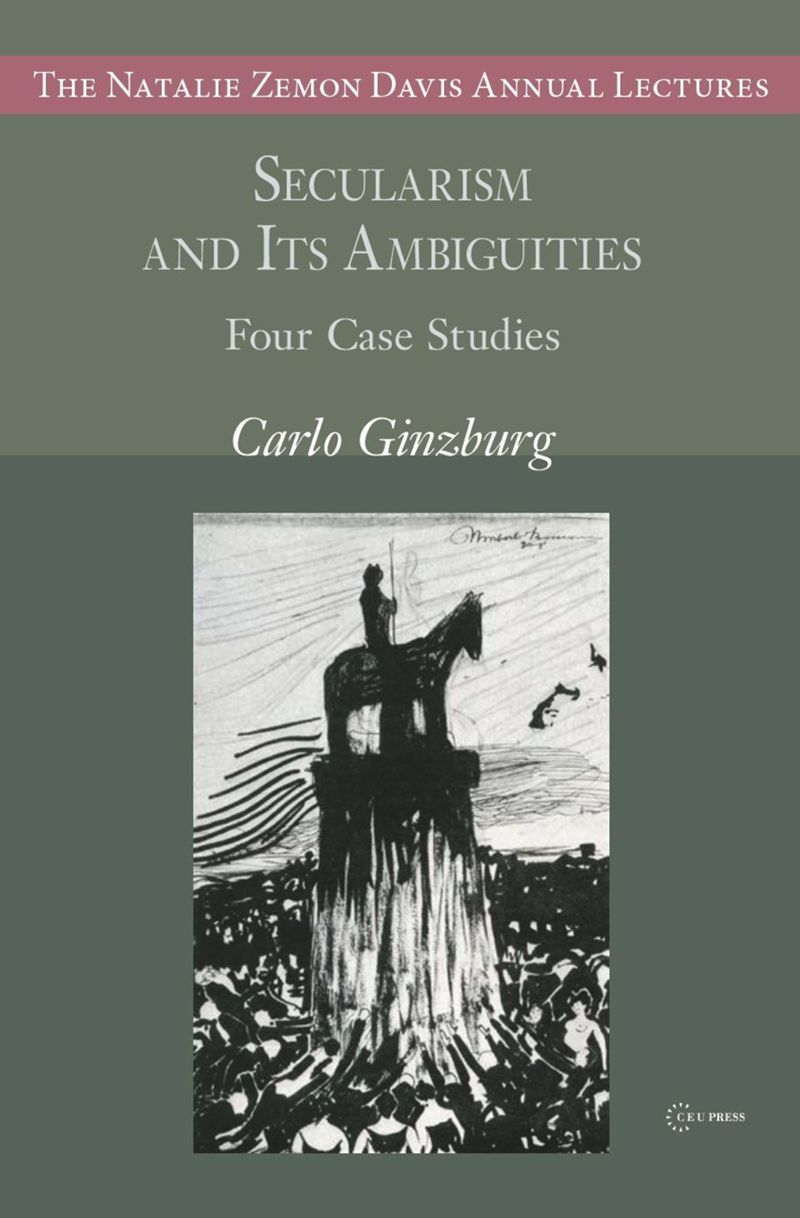
Carlo Ginzburg, Secularism and its Ambiguities: Four Case Studies – Central European University Press, July 2023

Carlo Ginzburg, Secularism and its Ambiguities: Four Case Studies – Central European University Press, July 2023 (Natalie Zemon Davis Annual Lectures)

In the best micro-historical tradition, Carlo Ginzburg, himself one of the founders and icons of this genre of historiography, dissects four moments of European intellectual history. This book relives the experience that participants in the Natalie Zemon Davis Lecture Series at the Budapest campus of Central European University had in 2019 listening to Ginzburg’s eloquent and engaging discourses. For the purposes of this volume he has re-edited and completed the leporello of cases charged with the inherent ambiguity between secularism and religions.

Secularism is often identified with rejection or at least distancing from the sacred. However, if one assumes that secularism also appropriates and reworks the sacred, its ambiguities come to the fore. The dilemma accompanies the reception of La Boétie’s Servitude volontaire between 1574 and today. Before Walter Benjamin, the lesser-known 19th-century Léon de Laborde defended the profanity of reproducing the arts. The tension around the secular pervades the case of the College de Sociologie (Paris, 1937-1939), an attempt to analyze the ideological components of fascism. The fourth lecture approaches a much-discussed contemporary phenomenon – fake news – from a long-term perspective. To what extent are some disturbing features of the world we live in the result of a long, tortuous, unpredictable trajectory?

Posted in Uncategorized | Leave a comment

Evgenia Iliadou, Border Harms and Everyday Violence: A Prison Island in Europe – Bristol University Press, September 2023

Evgenia Iliadou, Border Harms and Everyday Violence: A Prison Island in Europe – Bristol University Press, September 2023

The Greek island of Lesvos is frequently the subject of news reports on the refugee ‘crisis’, but they only occasionally focus on the dire living conditions of asylum seekers already present on the island. Through direct experience as an activist in Lesvos refugee camps and detention centres, Iliadou gives voice to those with lived experiences of state violence. 

The author considers the escalation of EU border regime and deterrence policies seen in the past decade alongside their present impacts. Asking why the social harm and suffering border crossers experience is normalized and rendered invisible, the book highlights the collective, global responsibility for safeguarding refugees’ human rights.

Posted in Uncategorized | 1 Comment

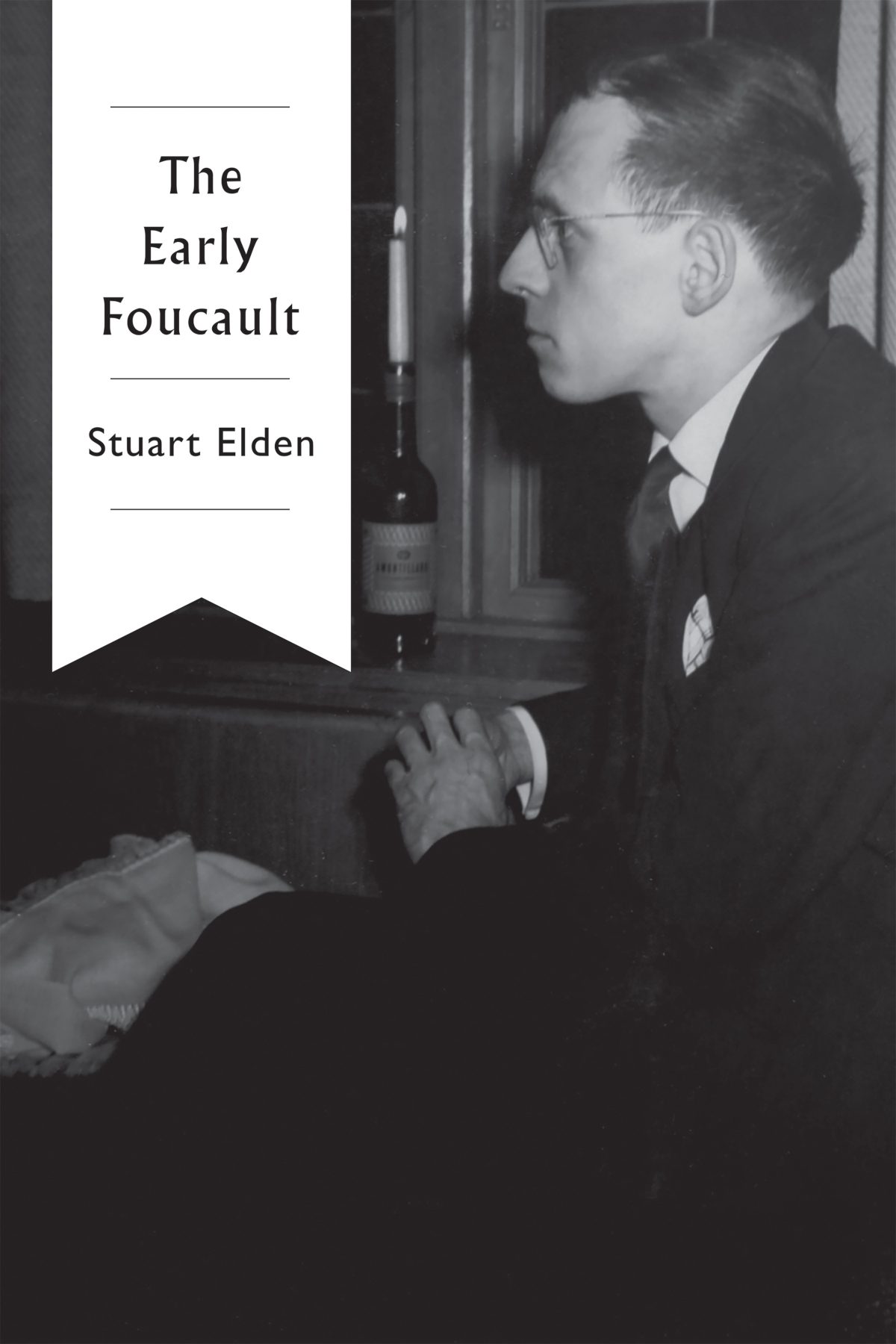
Patrick Gamez review of The Early Foucault (Polity, 2021)

Patrick Gamez has a generous, appreciative and thoughtful review of my 2021 book The Early Foucault in the Journal of the History of the Behavioral Sciences. It’s in the same issue as my review of Elisabetta Basso’s Young Foucault (here). Both reviews require subscription, unfortunately. A preprint of my review of Elisabetta Basso’s book is here.

Here’s a few bits from the start of the Gamez review:

This is a somewhat belated review of Stuart Elden’s The Early Foucault, the third volume of a now‐completed tetralogy of works providing the most comprehensive intellectual history of Foucault available in English, covering the first major period of his intellectual activity, from his preparation for agrégation at the ENS in 1950 through the writing, submission, and subsequent revisions of his thesis, Folie et déraison, and the accompanying secondary thesis, a translation of and introduction to Kant’s Anthropology from a Pragmatic Point of View.

For Anglophone scholars, partisans, and critics of Foucault, Elden’s work has simply been a gift, demanding gratitude first. This volume is no different, being richly rewarding for those hungry for information about the young Foucault’s intellectual life and, for a book that deals above all in facts about the whos, whats, wheres, and whens, very pleasantly written. While there are a couple of excellent biographies of Foucault, there is nothing that compares to what Elden has provided in terms of detailed research into Foucault’s sources, abandoned writings, academic contacts and conversations—in short, the whole archive of how his thought came to maturity. 

And the very last part:

… consider, for comparison, the way in which Paul Rabinow’s division of Foucault’s texts into widely influential readers in the 1990s, focusing on “Power,” “Ethics,” and the grab‐bag of “Aesthetics, Method, and Epistemology” has subtly enforced our most basic framings of Foucault, splitting his work into both methodologically and substantively distinct periods. Despite the fact that Elden has largely respected that framing, the very idea of foregrounding Foucault’s predoctoral work like The Early Foucault does works against it. If this body of work deserves such attention, it must be because of its subterranean influence on his later thought; a profound continuity, despite the surface differences. Indeed, Elden cannot but disrespect arbitrary periodizations, following the reception and revisions of Folie et déraison into the mid‐1960s, bleeding into the archaeological period (Ch. 8). One wonders what sort of Foucault would emerge if we started from a more holistic perspective to begin with. Of course, this is all speculative. Elden’s book will be incredibly valuable not only to researchers and graduate students, but to anyone interested in one of the most important figures in 20th century French thought.

Posted in The Early Foucault | Leave a comment

Christopher Smith (ed.), Sovereignty: A Global Perspective – British Academy/Oxford University Press, November 2022

Christopher Smith (ed.), Sovereignty: A Global Perspective – British Academy/Oxford University Press, November 2022

Sovereignty has been at the heart of political philosophy for centuries, and yet it is far from clear what work sovereignty is actually doing in the modern world.  Is sovereignty indivisible?  Why are some international interventions acceptable but others condemned or resented?  Is sovereignty always popular?  What role does sovereignty have in a world of international finance, global information exchange, and supranational regulation?  Is sovereignty only relevant to some parts of the world or of global relevance? This volume will place the intellectual roots of sovereignty in a conversation with sociological theory and the realities of a globalised world to create a broader context for our contemporary debates.

Posted in Uncategorized | Leave a comment

Thinking about Shakespeare and Film, 2 September 2023

Thinking about Shakespeare and Film, 2 September 2023

Garrick’s Temple to Shakespeare, Hampton Court Road, Hampton TW12 2EJ

registration free but required – Eventbrite page

Cover image: Leslie Howard and Norma Shearer in George Cukor's Romeo and Juliet (1936; Folger Shakespeare library. CC BY-SA 4.0).

Provisional Schedule

Session 1

10:00  Katrin Truestedt (ZfL Berlin), ‘Politics of Appearing: Pulcinella & Ophelia Are Dead’

11:00  coffee break

Session 2

11:30 Julia Ng (Goldsmiths, U of London), ‘Unnatural Means: Max Reinhardt’s A Midsummer Night’s Dream and the Dialectical Task of Becoming Unromantic’

12:15  Jessica Chiba (Birmingham), ’This is not [Shakespeare], he’s some other where: absent presence in Shakespeare films’

1:00  lunch

Session 3

2:00  Paul Kottman (The New School), ‘Churches, theaters, museums, shopping malls, subways and buses: Rohmer and Shakespeare’

2:45  Inma Sánchez García (Edinburgh), ‘Exit Romeo: Queer Temporalities and the Contemporary LGBTQ Romeo and Juliet Short Film’

3:30  tea break

Session 4

4:00  Mark Burnett (Queen’s University Belfast), ‘Shakespeare / Cinema / Asia: Encounters Across Time and Space’

5:00  Roundtable

5:30  end

Posted in William Shakespeare | Leave a comment

Nancy Fraser and Rahel Jaeggi, Capitalism: A Conversation in Critical Theory – Verso, July 2023

Nancy Fraser and Rahel Jaeggi, Capitalism: A Conversation in Critical Theory – Verso, July 2023

Capitalism, by the twenty-first century, has brought us an era of escalating, overlapping crisis – ecological, political, social – which we may not survive. In this brilliant, wide-ranging conversation, political philosophers Nancy Fraser and Rahel Jaeggi identify capitalism as the source of the devastation and examine its in-built tendency to crisis. In an exchange that ranges across history, critical theory, ecology, feminism and political theory, Fraser and Jaeggi find that capitalism’s tendency to separate what is connected – human from non-human nature, commodity production and social reproduction – is at the heart of its crisis tendency. These “boundary struggles,” Fraser and Jaeggi conclude, constitute capitalism’s most destructive power but are also the sites where a fighting left movement might be able to halt the destruction and build the non-capitalist future we so desperately need.

A crucial text for students of political theory, economic theory, and social change, Capitalism offers an invigorated critique of twenty-first century capitalism and an incisive study of our current conjuncture.

Update: there is an extended interview with Sebastian Budgen of Verso Books here

Update 2: Adam David Morton discusses Fraser’s earlier Cannibal Capitalism at Progress in Political Economy.

Posted in Uncategorized | Leave a comment

A gradual return to Progressive Geographies

It will still be some time before I return to work, as there are medical issues still to be resolved. I’m not returning to the research for my new Indo-European thought project yet, but I will be sharing a few things here and on social media – mainly the work of others that looks interesting. 

Posted in Uncategorized | Leave a comment

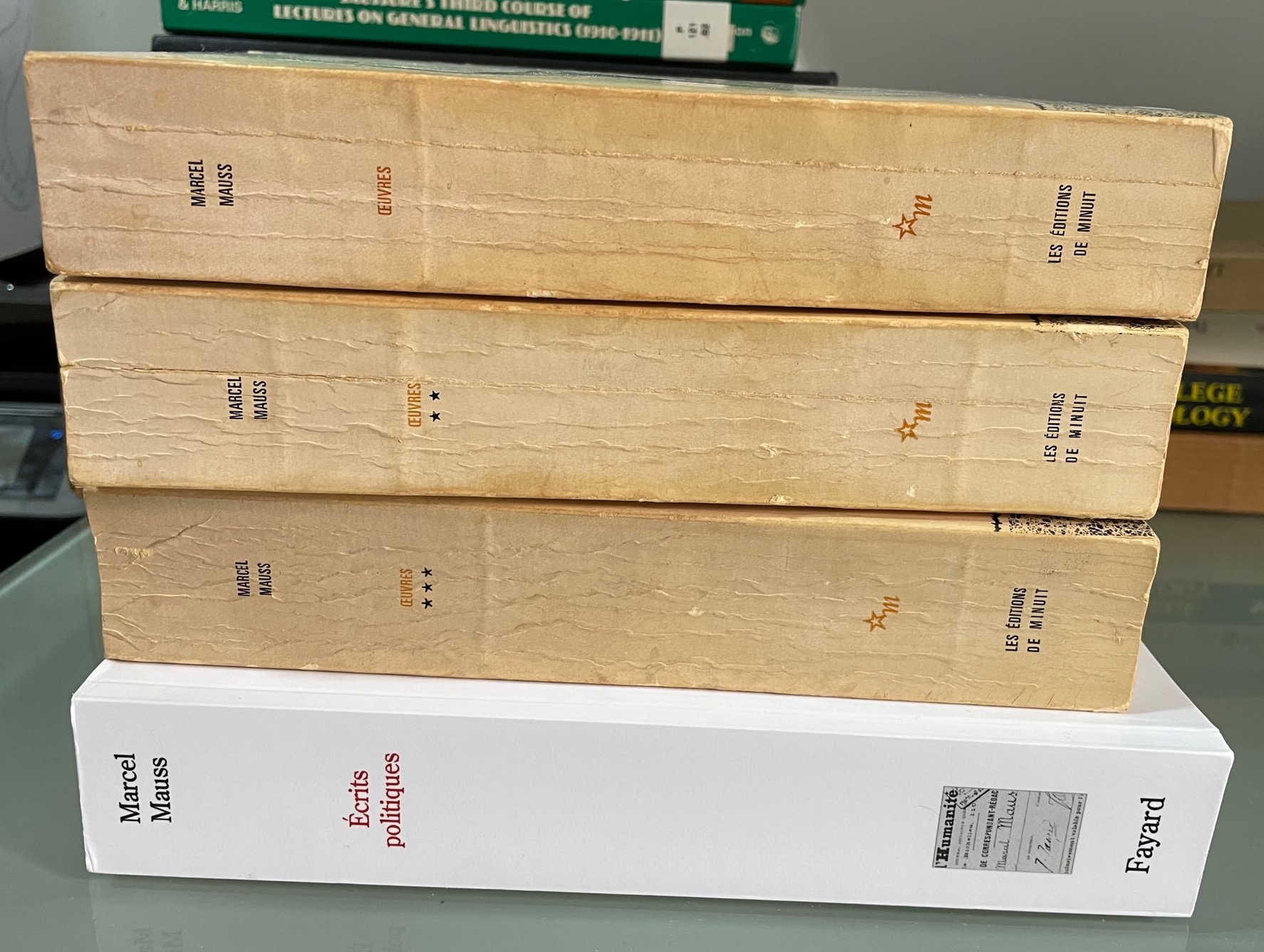
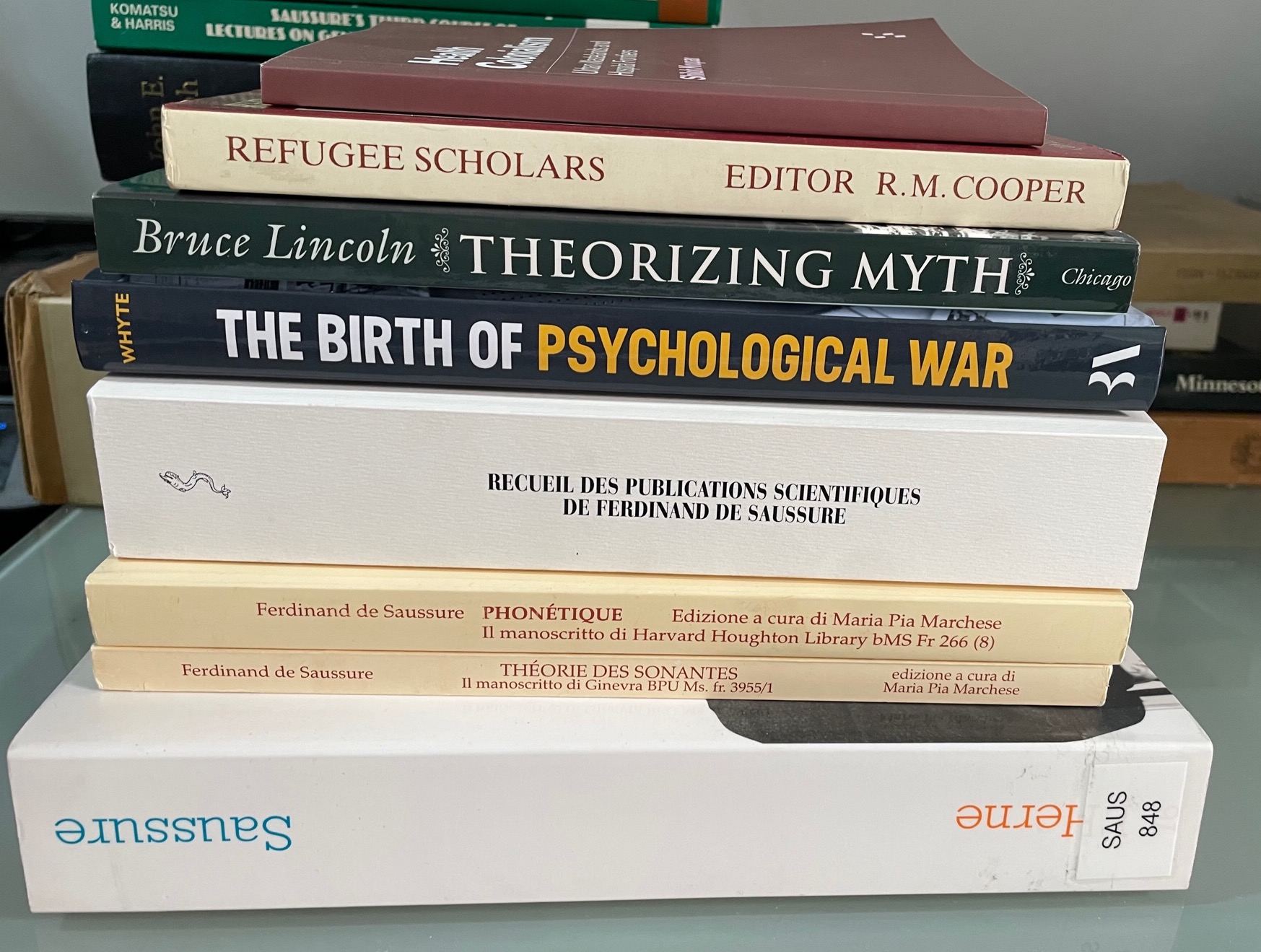
Books received while in hospital – Saussure, Mauss, Whyte, Krupar, Girard, et. al.

The books which arrived while I was in hospital – mostly ordered before I was admitted.

I was pleased to be able to find a complete set of the Marcel Mauss, Œuvres, along with the Écrits politiques; a few books by or about Saussure, including some of his previously-unpublished manuscripts. Other books here include Jeffrey Whyte’s The Birth of Psychological Warfare, which I read in manuscript, and which is open access as an e-book. There’s also a copy of Shiloh Krupar’s Health Colonialism: Urban Wasteland and Hospital Frontiers (also an open access e-book), Emmanuelle Loyer’s biography of Lévi-Strauss (I’d had the Warwick library copy out for months), and the new René Girard collection, All Desire is a Desire for Being: Essential Writings, edited by Cynthia L. Haven.

The last of these piles has some English translations of Portuguese books, kindly sent by my former PhD, António Ferraz de Oliveira. As it is some time before I’m supposed to be back at work, these are likely to be some of the first things I read from this lot.

Posted in Ferdinand de Saussure, Marcel Mauss | 1 Comment