H. Clark Barrett, Michael L. Cepek, Pablo Quintanilla, Emanuele Fabiano, and Edouard Machery eds. Southern Epistemologies: Knowledge, Wisdom, and Understanding in the Andes and Western Amazon – Hau Books, June 2026 (print and open access)

H. Clark Barrett, Michael L. Cepek, Pablo Quintanilla, Emanuele Fabiano, and Edouard Machery eds. Southern Epistemologies: Knowledge, Wisdom, and Understanding in the Andes and Western Amazon – Hau Books, June 2026 (print and open access)
What does it mean to know, and how is knowledge practiced? How can Indigenous perspectives challenge conventional concepts of knowledge in the Global North? Drawing on Indigenous epistemologies from the Andes and Western Amazon, Southern Epistemologies investigates how knowledge, wisdom, and understanding are shaped by local cultures, languages, bodies, and environments.

Bringing together linguists, philosophers, anthropologists, and Indigenous knowledge holders, the volume examines the dynamic interactions between culture, language, and place, showing how the unique linguistic histories and worldviews of Andean and Amazonian societies inform distinct ways of knowing. By interpreting these perspectives on their own terms, the book offers fresh insights into the plurality and diversity of human knowledge.

As the first volume specifically focused on Indigenous South American epistemologies, Southern Epistemologies foregrounds Indigenous knowledge systems and science while fostering dialogue with academic traditions. By opening new interdisciplinary and cross-cultural conversations, this groundbreaking volume challenges conventional notions of knowledge and illuminates how engagement with Indigenous perspectives can expand and enrich our understanding of what it truly means to know.
Posted in Uncategorized | 1 Comment

Shirley Samuels, Haunted by the Civil War: Cultural Testimony in the Nineteenth-Century United States – Princeton University Press, October/December 2025

Shirley Samuels, Haunted by the Civil War: Cultural Testimony in the Nineteenth-Century United States – Princeton University Press, October/December 2025

In Haunted by the Civil War, Shirley Samuels explores the work of Walt Whitman, Emily Dickinson, Herman Melville, Frederick Douglass, Charlotte Perkins Gilman, and others to investigate the long cultural shadow of America’s cataclysmic sundering. Juxtaposing these texts with images—ranging from paintings by Winslow Homer to newspaper and magazine illustrations of political controversies—Samuels argues that the Civil War still haunts our attitudes toward democracy. The recent toppling of Confederate monuments, the continuing protests over racial and sexual discrimination, immigration, and Indigenous land rights: each of these forms part of the war’s legacy.

Examining the fraught deliberations about an ideal American democracy in the early republic, Samuels turns to the language of sensation in the poetry of Melville, Dickinson, and Whitman alongside Lincoln’s relation to the poetic and visual culture of his time. She considers the haunted afterlives of war in the work of Louisa May Alcott and Harriet Beecher Stowe as well as in popular nineteenth-century inspirational fiction. And she investigates the literature of men at sea (and on rivers, enabling both connection and escape), as seen in Melville and Mark Twain, while examining women’s wartime work and experience, in writings by Gilman and Frances Harper.

Why does the Civil War still haunt us? To find the answer, Samuels identifies not only the ghosts that cannot rest but also the cultural practices that name them.

Posted in Uncategorized | Leave a comment

Mary Gilmartin, Malene H. Jacobsen, Anna-Kaisa Kuusisto, Migration: A Critical Introduction – Wiley, January 2026

Mary Gilmartin, Malene H. Jacobsen, Anna-Kaisa KuusistoMigration: A Critical Introduction – Wiley, January 2026

Migration: A Critical Introduction offers a fresh and accessible framework for understanding migration through a distinctly geographical lens. Going beyond traditional borders and categories, this book examines the forces that shape migration—historical, political, spatial—and invites readers to think differently about how migration is defined, governed, and experienced.

Challenging conventional understandings of migration by centring geographical concepts, critical theory, and storytelling, the authors explore the production of migration knowledge and the power relations that underpin it. Readers are introduced to various forms of migration, from labour and family migration to displacement caused by climate change and conflict. Each chapter builds on practical, ethical, and conceptual tools for critically engaging with migration research and narratives, whilst fostering more inclusive and emancipatory imaginaries of migration futures.

Migration: A Critical Introduction is an essential resource for upper-level undergraduate and postgraduate students of Geography, Sociology, Anthropology, International Relations, and related fields. It is particularly suitable for courses on Human Geography, Migration Studies, and Political Geography as part of broader degree programmes in the social sciences and humanities.

Posted in Uncategorized | Leave a comment

Antoine Compagnon, 1966, année mirifique – Gallimard, January 2026

Antoine Compagnon, 1966, année mirifique – Gallimard, January 2026

Thanks to John Raimo for the link

« L’année des cheveux longs et de la minijupe », résume le journal rétrospectif des Actualités françaises le 27 décembre 1966. Sommet des Trente Glorieuses, arrivée des enfants du baby-boom à l’âge adulte, début d’une révolution accélérée des moeurs et entrée dans la société d’abondance, 1966 a été une année tournant sur de nombreux fronts — démographique, économique, politique, social et culturel.
C’est à restituer le tissu de ses jours que s’attache cette enquête profondément novatrice où se croisent, entre marée structuraliste et Nouvelle Vague, Georges Perec, Michel Foucault, le briquet jetable, André Malraux, les livres de poche, La Grande Vadrouille, la microcassette Philips, ainsi que Marguerite Duras, Aragon, Jean-Luc Godard, Roland Barthes et bien d’autres.
Il y est question de choses et de mots, de sons et d’images, mais encore d’histoire et de sociologie, de cinéma et de télévision, de poésie et de musique, de révolte aussi — deux ans avant Mai —, et de mémoire, avec le débat sur les camps d’extermination.
Il n’en faut pas moins pour recomposer cet incendie prodigieux qui marque un seuil entre deux époques.

Posted in Uncategorized | Leave a comment

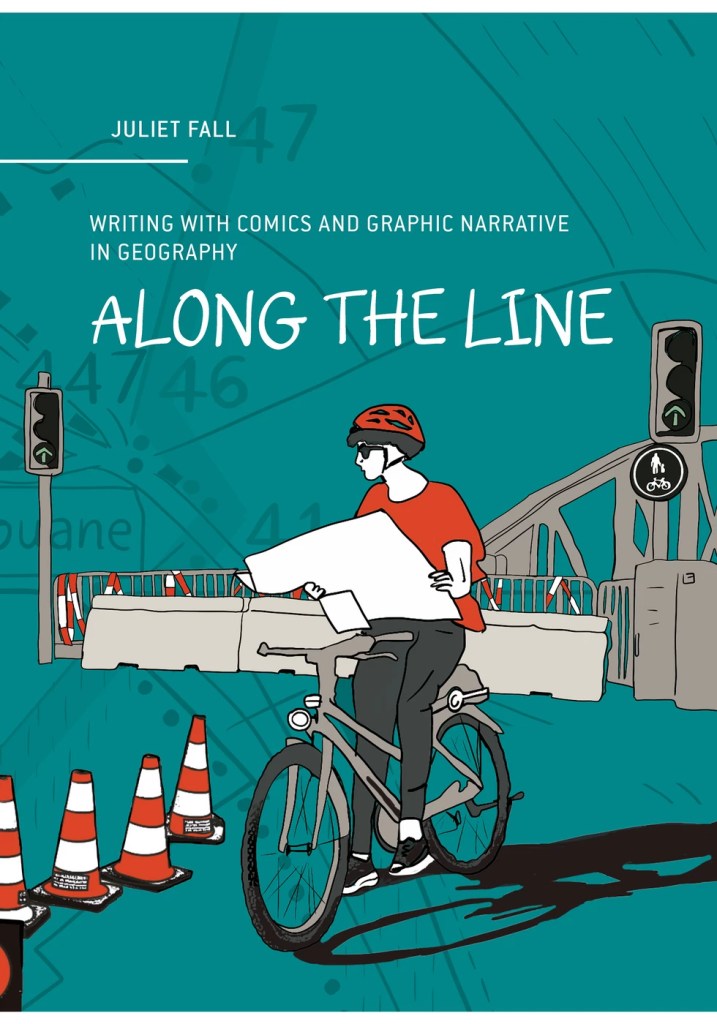
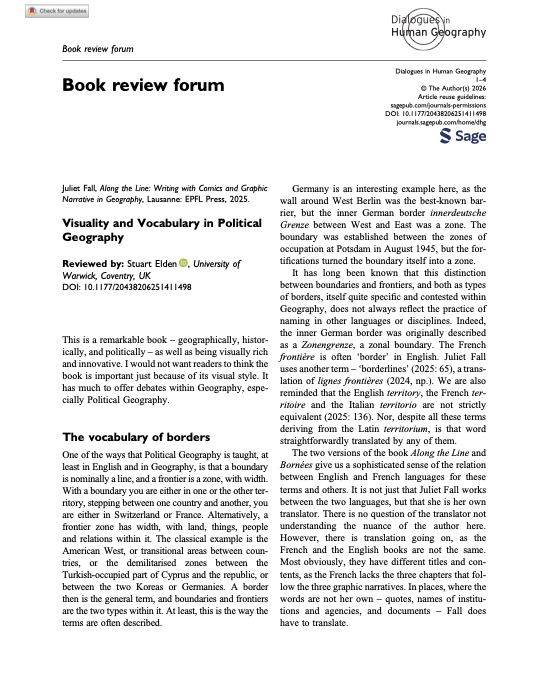
Stuart Elden, “Visuality and Vocabulary in Political Geography”, Dialogues in Human Geography, review forum on Juliet Fall, Along the Line: Writing with Comics and Graphic Narrative in Geography, online first

My contribution to a review forum on Juliet Fall’s remarkable books Bornées: Une histoire illustrée de la frontière (Mētis); Along the Line: Writing with Comics and Graphic Narrative in Geography (EPFL) has now been published online first in Dialogues in Human Geography

Stuart Elden, “Visuality and Vocabulary in Political Geography“.

It requires subscription, but as ever, email if you want to see it and don’t have institutional access.

Posted in Boundaries, Emile Benveniste, Juliet Fall, My Publications, terrain, Territory | Leave a comment

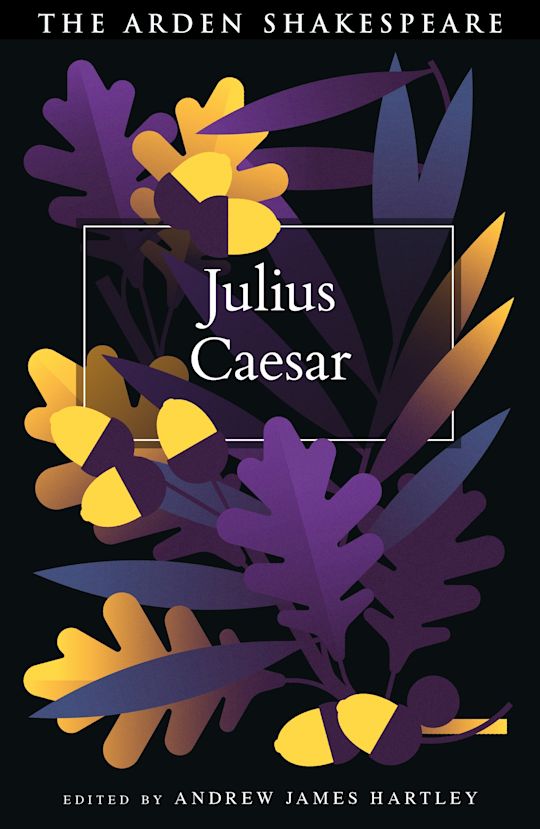
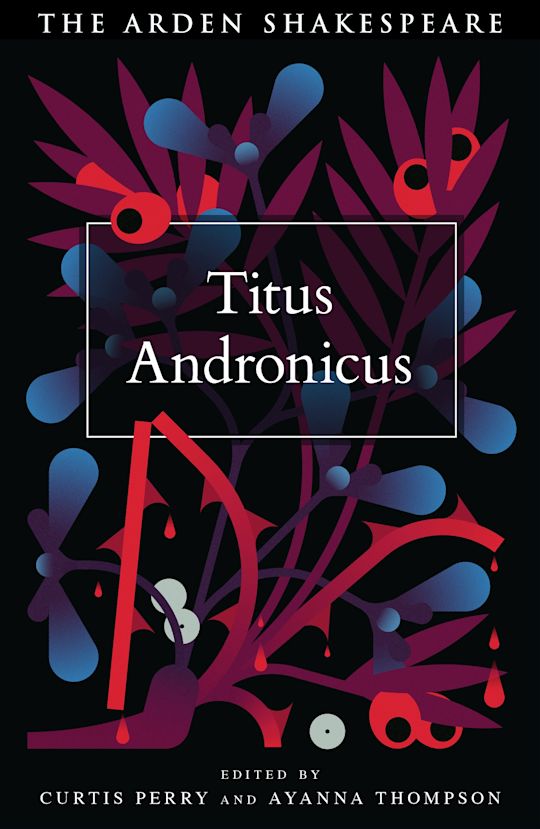
Arden Shakespeare fourth series – first three volumes scheduled

Arden Shakespeare fourth series – first three volumes scheduled

Julius Caesar, edited by Andrew James Hartley

Titus Andronicus, edited by Curtis Perry and Ayanna Thompson

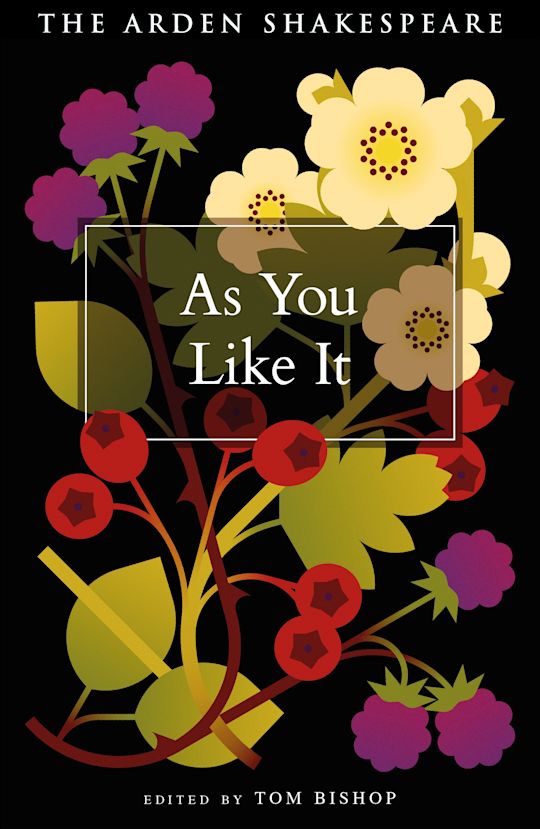
As You Like It, edited by Tom Bishop

The first two are scheduled for May, and the third for September. Thanks to Chathan Vemuri for the news that publication is beginning.

Posted in Uncategorized, William Shakespeare | Leave a comment

Lawrence Douglas, The Criminal State: War, Atrocity, and the Dream of International Justice – Princeton University Press, April/June 2026

Lawrence Douglas, The Criminal State: War, Atrocity, and the Dream of International Justice – Princeton University Press, April/June 2026

The Criminal State offers a gripping account of how law has confronted the most radical forms of state violence. Beautifully written, broad in scope, and bracingly original, it weaves history with political thought to trace the shifting legal response to state aggression and atrocities, from Leopold’s rule over the Congo to Putin’s war in Ukraine.

At its heart is Lawrence Douglas’s fresh interpretation of the law’s reckoning with Nazi aggression and atrocity. He shows how the Nuremberg trials challenged centuries of thought—rooted in Hobbes and other canonical thinkers—that shielded sovereigns from legal scrutiny. Yet Nuremberg’s bid to frame aggression as the cornerstone of a new order of international criminal law largely failed, giving way to a system now centrally concerned with crimes against humanity and genocide—while leaving unresolved the legality and effectiveness of using force to stop the worst violations of human rights.

Providing rare historical perspective on the dilemmas facing international courts, The Criminal State is a sweeping, provocative history of the struggle to bring perpetrators of state violence to justice.

Posted in Uncategorized | Leave a comment

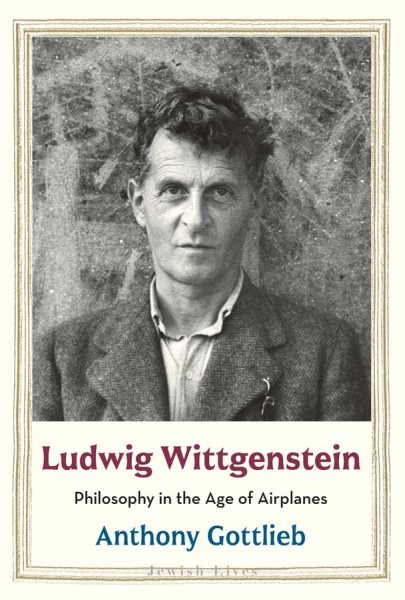
Anthony Gottlieb, Ludwig Wittgenstein: Philosophy in the Age of Airplanes – Yale University Press, January 2026

Anthony Gottlieb, Ludwig Wittgenstein: Philosophy in the Age of Airplanes – Yale University Press, January 2026

The first biography in more than three decades of the Austrian-born thinker Ludwig Wittgenstein, one of the most influential philosophers of the twentieth century

According to the philosopher Ludwig Wittgenstein (1889–1951), philosophy is a “battle against the bewitchment of our intelligence by means of language.” This audacious idea changed the way many of its practitioners saw their subject. In the first biography of Wittgenstein in more than three decades, Anthony Gottlieb evaluates this revolutionary idea, explaining the evolution of Wittgenstein’s thought and his place in the history of philosophy.
 
Wittgenstein was born into an immensely rich Viennese family but yearned to live a simple life, and he gave away his inheritance. After studying with Bertrand Russell in Cambridge, he wrote his famous Tractatus Logico-Philosophicus while serving in World War I. He then took several positions as a primary-school teacher in rural Austria before returning as a fellow to Cambridge, where a cultlike following developed around him. Wittgenstein worked not only as a philosopher and schoolteacher, but also as an aeronautical engineer in Manchester and as an architect in Vienna.
 
Gottlieb’s meticulously researched book traces the itinerant and troubled life of Wittgenstein, the development of his influential ideas, and the Viennese intellectual milieu and family background that shaped him.

Posted in Uncategorized | 3 Comments

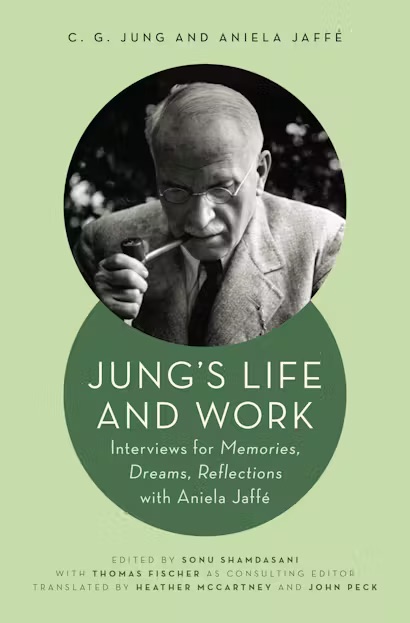
C. G. Jung and Aniela Jaffé, Jung’s Life and Work: Interviews for Memories, Dreams, Reflections with Aniela Jaffé – ed. Sonu Shamdasani, Princeton University Press, December 2025/January 2026

C. G. Jung and Aniela Jaffé, Jung’s Life and Work: Interviews for Memories, Dreams, Reflections with Aniela Jaffé – ed. Sonu Shamdasani, Princeton University Press, December 2025/January 2026

In 1957, at the age of eighty-one, C. G. Jung began a collaboration with his student and secretary Aniela Jaffé and the legendary publisher Kurt Wolff on a book about his life. Memories, Dreams, Reflections would become a bestseller, yet it draws from less than half of Jaffé’s original interviews with Jung. Much of the material from these candid, wide-ranging conversations was left on the cutting-room floor. Jung’s Life and Work presents these interviews in their entirety for the first time.

Marking the 150th anniversary of Jung’s birth, this new English translation captures the cadence and subtlety of the brilliant psychologist in his own words, giving voice to a thinker and teacher who is by turns witty and intellectually daring but also vulnerable and humbled by the world’s great mysteries. It restores numerous passages that were originally omitted or heavily edited and toned down for publication, “auntified” as Jung himself put it. Taken together, these talks reveal Jung actively discovering meaningful new connections in his life’s work. He shares his impressions of notable figures he encountered throughout his life—such as Sigmund Freud, William James, Albert Einstein, and H. G. Wells—and describes his striking visions, religious and paranormal experiences, and pioneering self-experimentation. Aided by Jaffé’s skillful questioning, Jung reflects on subjects ranging from Christianity and Buddhism and the fate of the West to the experiences that led to the formulation of his signature concepts of the collective unconscious, archetypes, anima and animus, and the shadow as well as on karma, the afterlife, and much more.

With an introduction and extensive annotations by acclaimed Jung scholar Sonu Shamdasani that provide invaluable historical perspective, Jung’s Life and Work includes previously unpublished extracts from Jung’s letters and a completely reorganized text.

Posted in Uncategorized | Leave a comment

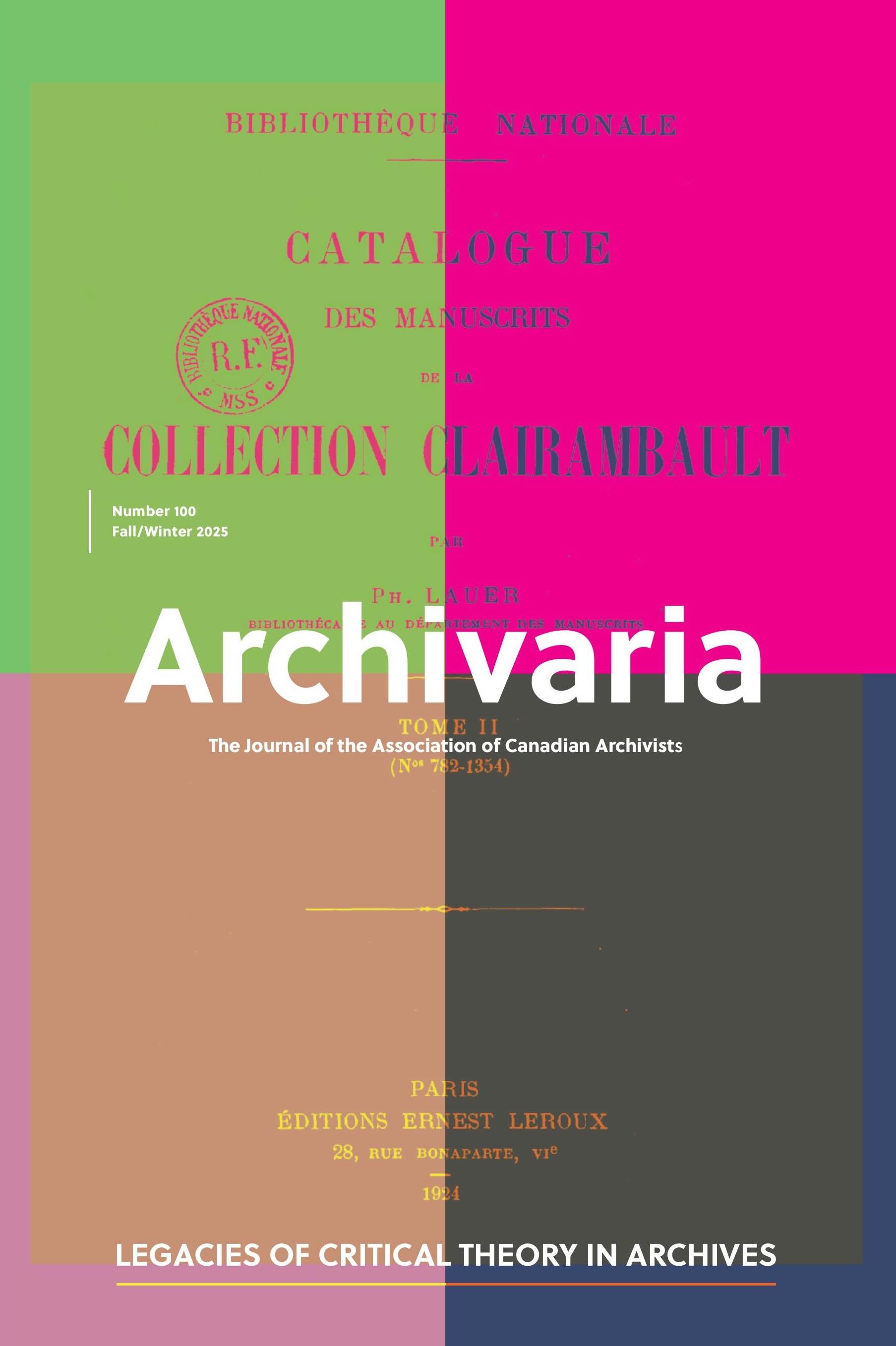
Archivaria 100: Special Issue – Legacies of Critical Theory in Archives (Fall/Winter 2025), including a piece on Foucault’s archives

Archivaria 100: Special Issue – Legacies of Critical Theory in Archives (Fall/Winter 2025)

The issue is not yet on Project Muse and requires subscription.

The issue contains Steven Maynard, “Michel and Mathurin: Finding Foucault in the Archives“, Archives,” Archivaria 100 (fall/winter 2025): 44-73

Steven has said he is happy to share his piece if you email him.

Posted in Uncategorized | Leave a comment