Online & River Room, King’s College London, The Strand, London WC2R 2LS, May 19–20, 2023
Culture has always been on the move, but the notion that culture is itself a product of movement is relatively recent. Beginning in the late nineteenth century, scholars hypothesised that the world’s cultures developed not by linear evolution, but through migration, invasion, conquest, trade and exchange. Diffusionism became a master paradigm across several disciplines. The fascination and concern with how movement had shaped cultures historically reflected the anxieties of a time that witnessed more global migrations of people than ever before. Further, the modern quest for lost origins was (and is) inherently entangled in contemporary debates about the rights to land and resources.
This conference explores the relation between scientific and artistic imaginings of prehistoric migrations. To map cultural diffusion is also to theorize the relationship between bodies, place, art, and innovation. When investigating societies who have left no written records, the visual has a dual role: it is both the means by which these cultures are reconstructed, and the tool by which knowledge about them is disseminated. We ask how artists and scholars influenced one another in reconstructing lost origins, and probe the ways that these images were embedded in contemporary debates about race and migration.
Registration details and programme here. Thanks to Adalbert Saurma for the link.
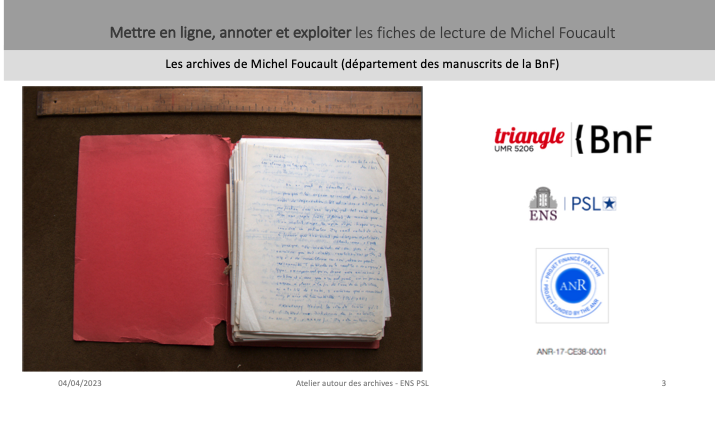
Avec près de 20 000 feuillets numérisés et mis en ligne, la plateforme Eman a permis au projet Foucault fiches de lecture de diffuser très largement le fonds Foucault de la BnF. Nous verrons comment cet outil modulaire a pu être adapté, moins pour la production des données de description et d’indexation que pour leur exposition et exploitation. En particulier, nous présenterons la chaîne de traitement et l’articulation avec les autres outils du projet FFL, le prototype de plateforme collaborative et Transkribus, et les développements informatiques réalisés pour Eman au cours du projet.
Update January 2025: A revised and expanded version of this post is here.
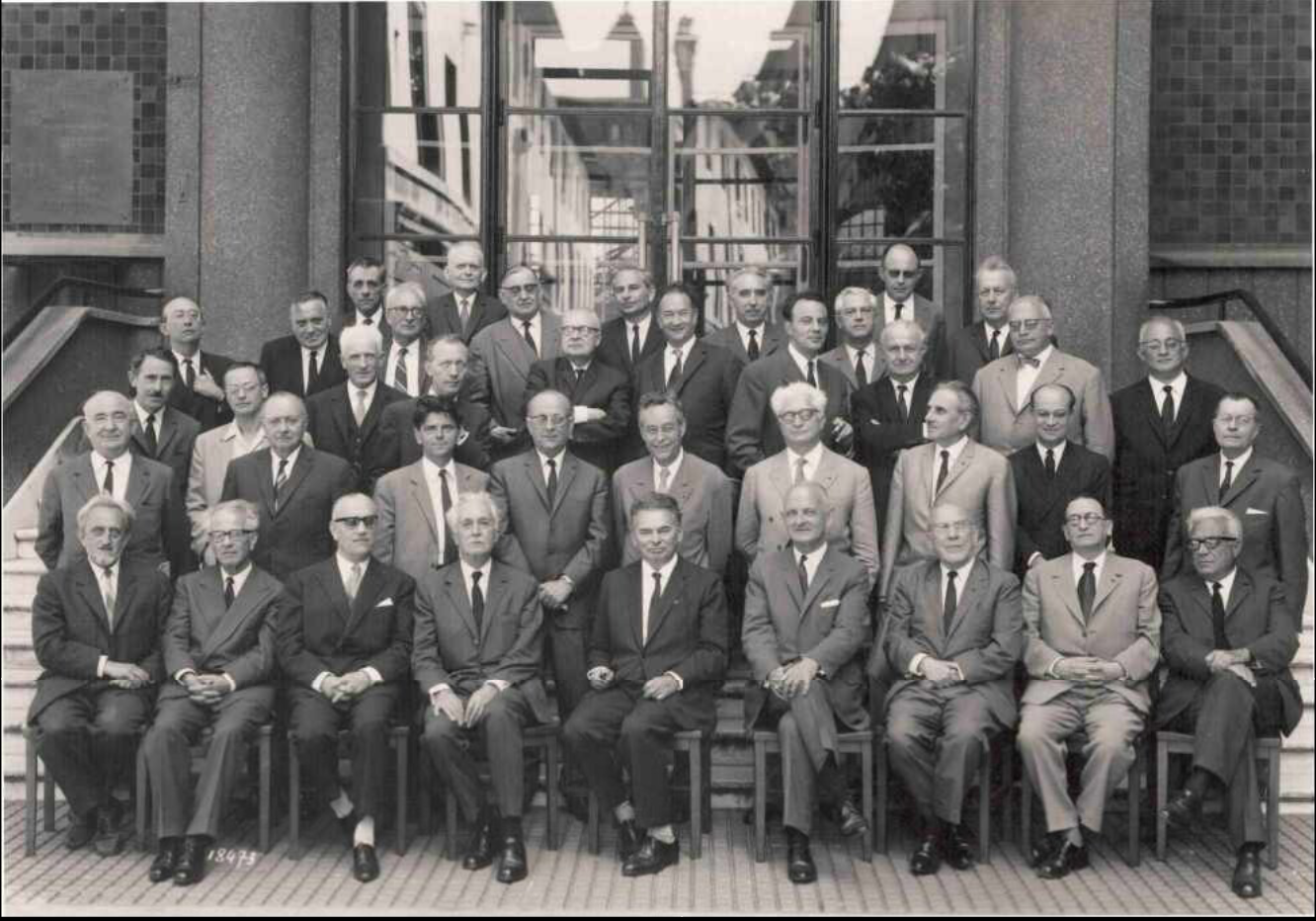
One of the problems with my current project on Indo-European thought in France is how male-dominated it is. If you look at a photograph of the Collège de France in 1967, you can perhaps see why. It wasn’t much better at the Collège de France almost 20 years later (1985).
Professors at the Collège de France, 1967; source: Collège de France archives 4 Fi 4
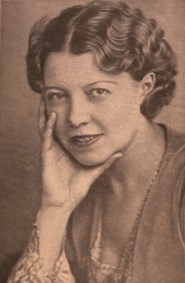
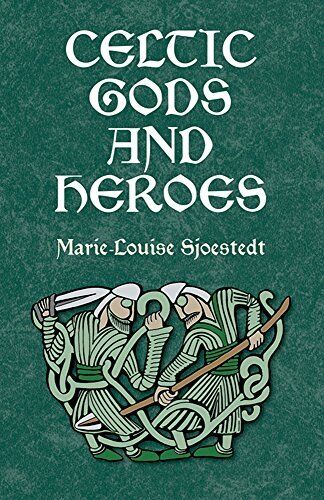
Marie-Louise Sjoestedt is one exception, though she died at the age of just 40. She was the author of several technical works on the Welsh and Irish languages, but also Dieux et héros des Celtes, which is translated as Gods and Heroes of the Celts. Her thesis was supervised by Joseph Vendryes, she studied with Antoine Meillet, was a colleague of Émile Benveniste at the Ecole Pratique des Hautes Études, and one of the editors of Études celtiques. She attended some of Georges Dumézil’s classes but he also notes that he was also her student, and that he taught him Welsh and Irish. Dumézil references her work in Mitra-Varuna, and in the preface to the second edition mentions her as one of those lost in the war – “she was not to survive France’s first misfortunes”.
Natalie Zemon Davis, in a valuable essay on “Women and the World of the Annales” situates Sjoestedt in relation to a wider intellectual network.
Joining [Germaine] Rouillard at the Ecole Pratique in 1926 and under like auspices was a young woman whose family was of Swedish origin, Marie-Louise Sjoestedt. She had published her doctoral thesis that year, a technical linguistic study directed by the great Celtic specialist at the Sorbonne, Joseph Vendryes. Vendryes had just taken over the Celtic program at the Ecole Pratique and brought Sjoestedt along as Chargie de conferences to teach both middle and modern Irish. She continued to work as his associate over the years: in 1936, when the Etudes Celtiques were founded (published by Eugénie Droz), Vendryes was the editor and Sjoestedt was the Secretaire de la Rédaction, while writing reviews and articles for the journal. But, a Directeur d’études from 1930 on, she also developed on her own, marrying a fellow linguist who worked on Baltic languages and Latvian myth, discussing linguistic matters with her colleague at the Ecole, Emile Benveniste, and returning often to Ireland for field work in language and folklore. In 1938, she reviewed a new History of Ireland for the Annales. Her important book on the structure of Celtic myths about gods and heroes was under press as the Germans invaded France. She committed suicide in early December 1940 at age forty; her Dieux et héros des Celtes appeared a few weeks later.
Reviewing the book in the first Annales to appear under the Occupation, [Lucien] Febvre praised Sjoestedt’s ‘remarkable knowledge of the languages, beliefs and customs of the Celtic world’ and regretted that she was gone when so much was still to be expected from her labour.
A collection of tributes – including ones by Benveniste and Dumézil and a brief biography by Louis Renou was published in 1941: Marie-Louise Sjoestedt (1900–1940). In Memoriam, suivi de Essai sur une littérature nationale, la littérature irlandaise contemporaine (Paris: E. Droz, 1941). Vendryes’s obituary was published in Études Celtiques. Her entry in the Dictionary of Irish Biography gives some more details.
I was pleased to be Gabriel’s guest on the Urban Nature podcast for a discussion of several different aspects of my work – on territory, terrain, Lefebvre, Foucault, Shakespeare and even the new Indo-European project.
In this episode of URBAN NATURE, Professor of Political Theory and Geography at the University of Warwick Stuart Elden and Gabriel Kozlowski talk about the intersections between people, place, and power, in relation to concepts such as territory, understood as a political technology, and terrain, as the physical materiality of territory. The discussion touches on Lefebvre’s formulations on the rural, Foucault’s notion of milieu, and ideas around a Politics of the Earth.
“It’s very easy to think that in the past the world was organized in a similar way it is today, except that the borders were different places and that there were different regimes within them.” – Stuart Elden, Professor of Political Theory and Geography at University of Warwick
A ’74PODCAST Series, URBAN NATURE is hosted by Gabriel Kozlowski, Brazilian architect and curator working on urbanization from the perspective of political ecology. The Series presents guests from a diverse set of disciplines—including Anthropology, Biology, Philosophy, Political Science, Political Theory, Geography, Architecture, and the Arts, among others—that have been reflecting on the relationship between humans and nature. Produced by ISTANBUL’74.
Michel Foucault, Le Discours philosophique, eds. Daniele Lorenzini and Orazio Irrera – Gallimard/Seuil/EHESS, 2023
Qu’est-ce que la philosophie et quel est son rôle aujourd’hui ? Entre juillet et octobre 1966, quelques mois après la parution des Mots et les Choses, Michel Foucault, dans un manuscrit très soigneusement rédigé mais qu’il ne publiera pas, apporte sa réponse à cette question tant débattue.
À la différence de ceux qui, à l’époque, s’attachent à dévoiler l’essence de la philosophie ou à en prononcer la mort, Foucault l’appréhende, dans sa matérialité, comme un discours dont il convient de dégager l’économie eu égard aux autres discours (scientifique, fictif, ordinaire, religieux) qui circulent dans un contexte donné.
Le Discours philosophique propose ainsi une nouvelle manière de faire l’histoire de la philosophie, qui la décentre du commentaire des grands philosophes. Nietzsche y occupe toutefois une place particulière car il inaugure une conjoncture où la philosophie…
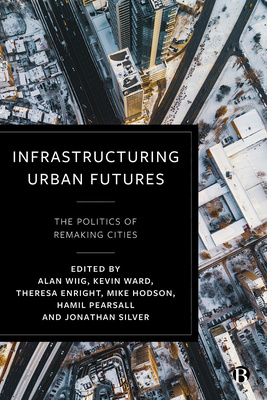
Focusing on material and social forms of infrastructure, this edited collection draws on rich empirical details from cities across the global North and South. The book asks the reader to think through the different ways in which infrastructure comes to be present in cities and its co-constitutive relationships with urban inhabitants and wider processes of urbanization.
Considering the climate emergency, economic transformation, public health crises and racialized inequality, the book argues that paying attention to infrastructures’ past, present and future allows us to understand and respond to the current urban condition.
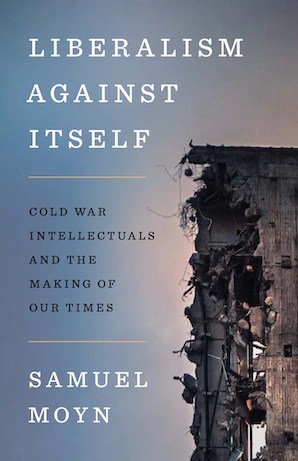
By the middle of the twentieth century, many liberals looked glumly at the world modernity had brought about, with its devastating wars, rising totalitarianism, and permanent nuclear terror. They concluded that, far from offering a solution to these problems, the ideals of the Enlightenment, including emancipation and equality, had instead created them. The historian of political thought Samuel Moyn argues that the liberal intellectuals of the Cold War era—among them Isaiah Berlin, Gertrude Himmelfarb, Karl Popper, Judith Shklar, and Lionel Trilling—transformed liberalism but left a disastrous legacy for our time.
In his iconoclastic style, Moyn outlines how Cold War liberals redefined the ideals of their movement and renounced the moral core of the Enlightenment for a more dangerous philosophy: preserving individual liberty at all costs. In denouncing this stance, as well as the recent nostalgia for Cold War liberalism as a means to counter illiberal values, Moyn presents a timely call for a new emancipatory and egalitarian liberal philosophy—a path to undoing the damage of the Cold War and to ensuring the survival of liberalism.
I’m disappointed to hear that WordPress posts will no longer be able to be shared to Twitter automatically. It’s of course possible to do this manually, but it’s still frustrating for me, as someone who has used this blog for several years with this functionality. The reason is Twitter removing the ability for other platforms to do this without a charge. Given that these posts (not just me, of course) generate a lot of content for Twitter with no cost, it seems like they want one side of it, but not the other.
I keep thinking that my days on Twitter are numbered, but then this week the response to the Alexandre Koyré and a network of ideas post was far better there than on any other site. So I’m really reluctant to lose that community, but this feels like another step in the wrong direction. I’ve been trying to make Mastodon work, and there content has to be manually shared, as there isn’t a WordPress-Mastodon link as yet (it’s been long promised). But the engagement on Mastodon is very limited, even though I have quite a lot of followers – I sense a lot of people joined but their accounts are largely dormant. Recently the ability to post project updates on researchgate was removed. Email listserves are largely unusable these days. I see some other people are going down the Substack route, but I’m not sure about that.
I’ve long been aware that most people follow this blog for the information about other people’s work – recent books, conferences, etc. – rather than my own. But I could build an audience through that, and keep a record of stuff I found interesting, which also benefited my work. The advantage of automatic posting was that I could do one post here and it would be shared on Facebook, Twitter, and other platforms I don’t use. But take that away, and the idea of manually reposting things across multiple platforms is much less appealing.
How are others who use WordPress going to deal with this?
Mostly bought in Paris – second-hand books for the new project: Mircea Eliade, Oceanographie; Pierre Gavotte, La Marquise et moi (which has a preface by Dumézil, and contains many letters to his daughter); Gerard Jorland’s study of Alexandre Koyré; Lévi-Strauss’s Anthropologie structurale zéro; and the new edition of Roland Barthes, Le Neutre: Cours au Collège de France (1978), edited by Eric Marty.
The COVID-19 pandemic had a profound and persistent impact – a tragic loss of life, changes to established patterns of life and social inequalities laid bare. It brought out the good in many and the worst in others, and raised questions around what is truly important in our lives.
In this book, academics, activists and artists come together to remember, and to reflect on, the pandemic. What lessons should we learn? How can things be different when this is over?
Sensitive to inequalities of gender, race and class, the book highlights the experience of marginalised and minority groups, and the unjust and uneven spread of violence, deprivation and death. It combines academic analysis with personal testimonies, poetry and images from contributors including Sue Black, Led By Donkeys, Lara-Rose Iredale, Michael Rosen and Gary Younge.
This truly inclusive commemorative overview honours the experience of a global disaster lived up close, and suggests the steps needed to ensure we do better next time.