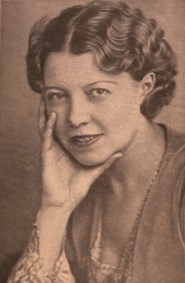
Marie-Louise Sjoestedt (1900-1940) – an important scholar of Celtic languages and mythology

Update January 2025: A revised and expanded version of this post is here.

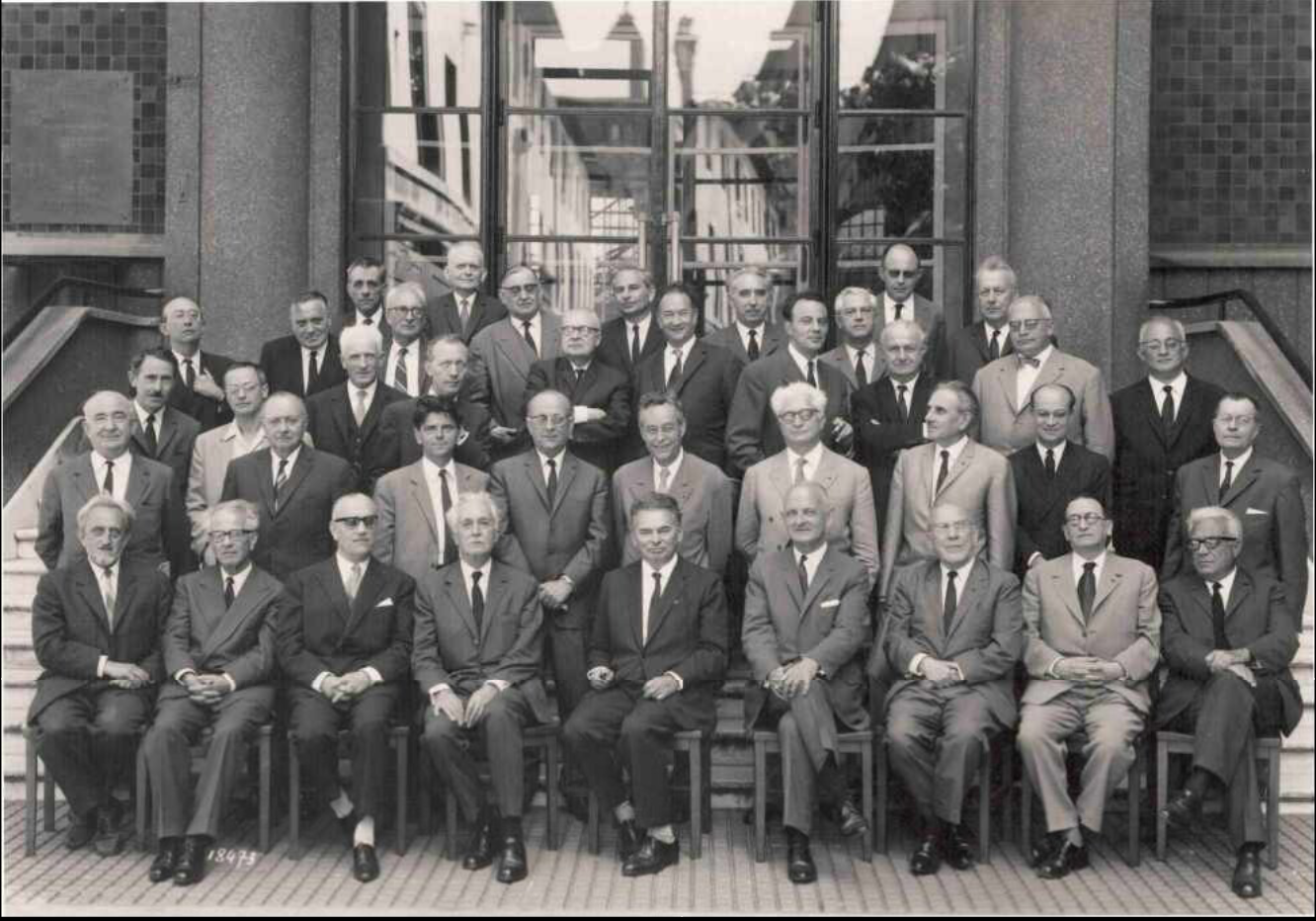
One of the problems with my current project on Indo-European thought in France is how male-dominated it is. If you look at a photograph of the Collège de France in 1967, you can perhaps see why. It wasn’t much better at the Collège de France almost 20 years later (1985).

Professors at the Collège de France, 1967; source: Collège de France archives 4 Fi 4

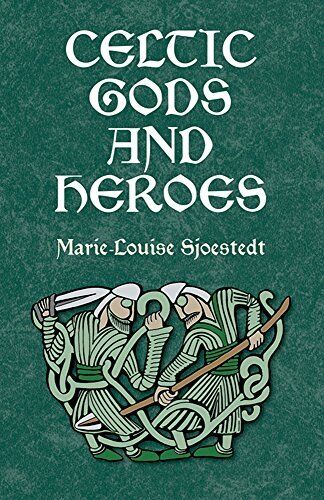
Marie-Louise Sjoestedt is one exception, though she died at the age of just 40. She was the author of several technical works on the Welsh and Irish languages, but also Dieux et héros des Celtes, which is translated as Gods and Heroes of the Celts. Her thesis was supervised by Joseph Vendryes, she studied with Antoine Meillet, was a colleague of Émile Benveniste at the Ecole Pratique des Hautes Études, and one of the editors of Études celtiques. She attended some of Georges Dumézil’s classes but he also notes that he was also her student, and that he taught him Welsh and Irish. Dumézil references her work in Mitra-Varuna, and in the preface to the second edition mentions her as one of those lost in the war – “she was not to survive France’s first misfortunes”.

Natalie Zemon Davis, in a valuable essay on “Women and the World of the Annales” situates Sjoestedt in relation to a wider intellectual network.

Joining [Germaine] Rouillard at the Ecole Pratique in 1926 and under like auspices was a young woman whose family was of Swedish origin, Marie-Louise Sjoestedt. She had published her doctoral thesis that year, a technical linguistic study directed by the great Celtic specialist at the Sorbonne, Joseph Vendryes. Vendryes had just taken over the Celtic program at the Ecole Pratique and brought Sjoestedt along as Chargie de conferences to teach both middle and modern Irish. She continued to work as his associate over the years: in 1936, when the Etudes Celtiques were founded (published by Eugénie Droz), Vendryes was the editor and Sjoestedt was the Secretaire de la Rédaction, while writing reviews and articles for the journal. But, a Directeur d’études from 1930 on, she also developed on her own, marrying a fellow linguist who worked on Baltic languages and Latvian myth, discussing linguistic matters with her colleague at the Ecole, Emile Benveniste, and returning often to Ireland for field work in language and folklore. In 1938, she reviewed a new History of Ireland for the Annales. Her important book on the structure of Celtic myths about gods and heroes was under press as the Germans invaded France. She committed suicide in early December 1940 at age forty; her Dieux et héros des Celtes appeared a few weeks later.

Reviewing the book in the first Annales to appear under the Occupation, [Lucien] Febvre praised Sjoestedt’s ‘remarkable knowledge of the languages, beliefs and customs of the Celtic world’ and regretted that she was gone when so much was still to be expected from her labour.

Natalie Zemon Davis, “Women and the World of the Annales“, History Workshop Journal, 1992, 126-27

A collection of tributes – including ones by Benveniste and Dumézil and a brief biography by Louis Renou was published in 1941: Marie-Louise Sjoestedt (1900–1940). In Memoriam, suivi de Essai sur une littérature nationale, la littérature irlandaise contemporaine (Paris: E. Droz, 1941). Vendryes’s obituary was published in Études Celtiques. Her entry in the Dictionary of Irish Biography gives some more details.

Posted in Emile Benveniste, Georges Dumézil, Mapping Indo-European Thought in Twentieth Century France, Uncategorized | 5 Comments

Urban Nature podcast episode 4: Stuart Elden and Gabriel Kozlowski

Urban Nature episode 4: Stuart Elden and Gabriel Kozlowski

I was pleased to be Gabriel’s guest on the Urban Nature podcast for a discussion of several different aspects of my work – on territory, terrain, Lefebvre, Foucault, Shakespeare and even the new Indo-European project.

It’s available on Spotify; Apple Podcasts and Google Podcasts

In this episode of URBAN NATURE, Professor of Political Theory and Geography at the University of Warwick Stuart Elden and Gabriel Kozlowski talk about the intersections between people, place, and power, in relation to concepts such as territory, understood as a political technology, and terrain, as the physical materiality of territory. The discussion touches on Lefebvre’s formulations on the rural, Foucault’s notion of milieu, and ideas around a Politics of the Earth.


“It’s very easy to think that in the past the world was organized in a similar way it is today, except that the borders were different places and that there were different regimes within them.”  – Stuart Elden, Professor of Political Theory and Geography at University of Warwick


A ’74PODCAST Series, URBAN NATURE is hosted by Gabriel Kozlowski, Brazilian architect and curator working on urbanization from the perspective of political ecology. The Series presents guests from a diverse set of disciplines—including Anthropology, Biology, Philosophy, Political Science, Political Theory, Geography, Architecture, and the Arts, among others—that have been reflecting on the relationship between humans and nature.
Produced by ISTANBUL’74.

Posted in Bruno Latour, Henri Lefebvre, Mapping Indo-European Thought in Twentieth Century France, Shakespearean Territories, terrain, Territory, The Birth of Territory, Uncategorized, William Shakespeare | Leave a comment

Michel Foucault, Le Discours philosophique (2023)

preorder details for the previously unpublished Foucault book manuscript, due out in May – Le Discours philosophique 

Clare O'Farrell's avatarFoucault News

Michel Foucault, Le Discours philosophique, eds. Daniele Lorenzini and Orazio Irrera – Gallimard/Seuil/EHESS, 2023

Qu’est-ce que la philosophie et quel est son rôle aujourd’hui ? Entre juillet et octobre 1966, quelques mois après la parution des Mots et les Choses, Michel Foucault, dans un manuscrit très soigneusement rédigé mais qu’il ne publiera pas, apporte sa réponse à cette question tant débattue.
À la différence de ceux qui, à l’époque, s’attachent à dévoiler l’essence de la philosophie ou à en prononcer la mort, Foucault l’appréhende, dans sa matérialité, comme un discours dont il convient de dégager l’économie eu égard aux autres discours (scientifique, fictif, ordinaire, religieux) qui circulent dans un contexte donné.

Le Discours philosophique propose ainsi une nouvelle manière de faire l’histoire de la philosophie, qui la décentre du commentaire des grands philosophes. Nietzsche y occupe toutefois une place particulière car il inaugure une conjoncture où la philosophie…

View original post 63 more words

Posted in Uncategorized | Leave a comment

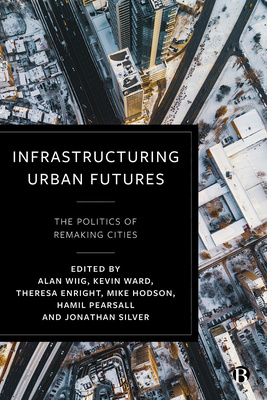
Alan Wiig, Kevin Ward, Theresa Enright, Mike Hodson, Hamil Pearsall and Jonathan Silver (eds.), Infrastructuring Urban Futures: The Politics of Remaking Cities – Bristol University Press, May 2023

Alan Wiig, Kevin Ward, Theresa Enright, Mike Hodson, Hamil Pearsall and Jonathan Silver (eds.), Infrastructuring Urban Futures: The Politics of Remaking Cities – Bristol University Press, May 2023

Update: the book is available open access here

Focusing on material and social forms of infrastructure, this edited collection draws on rich empirical details from cities across the global North and South. The book asks the reader to think through the different ways in which infrastructure comes to be present in cities and its co-constitutive relationships with urban inhabitants and wider processes of urbanization. 

Considering the climate emergency, economic transformation, public health crises and racialized inequality, the book argues that paying attention to infrastructures’ past, present and future allows us to understand and respond to the current urban condition.

Posted in Uncategorized | Leave a comment

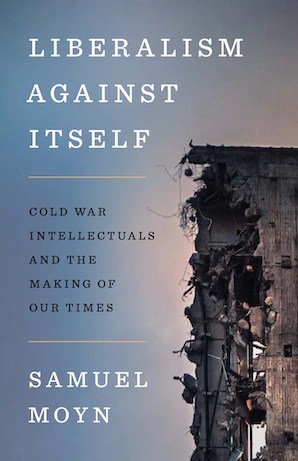
Samuel Moyn, Liberalism Against Itself: Cold War Intellectuals and the Making of Our Times – Yale University Press, August 2023

Samuel Moyn, Liberalism Against Itself: Cold War Intellectuals and the Making of Our Times – Yale University Press, August 2023

By the middle of the twentieth century, many liberals looked glumly at the world modernity had brought about, with its devastating wars, rising totalitarianism, and permanent nuclear terror. They concluded that, far from offering a solution to these problems, the ideals of the Enlightenment, including emancipation and equality, had instead created them. The historian of political thought Samuel Moyn argues that the liberal intellectuals of the Cold War era—among them Isaiah Berlin, Gertrude Himmelfarb, Karl Popper, Judith Shklar, and Lionel Trilling—transformed liberalism but left a disastrous legacy for our time.
 
In his iconoclastic style, Moyn outlines how Cold War liberals redefined the ideals of their movement and renounced the moral core of the Enlightenment for a more dangerous philosophy: preserving individual liberty at all costs. In denouncing this stance, as well as the recent nostalgia for Cold War liberalism as a means to counter illiberal values, Moyn presents a timely call for a new emancipatory and egalitarian liberal philosophy—a path to undoing the damage of the Cold War and to ensuring the survival of liberalism.

Posted in Uncategorized | Leave a comment

The end of WordPress-Twitter functionality

I’m disappointed to hear that WordPress posts will no longer be able to be shared to Twitter automatically. It’s of course possible to do this manually, but it’s still frustrating for me, as someone who has used this blog for several years with this functionality. The reason is Twitter removing the ability for other platforms to do this without a charge. Given that these posts (not just me, of course) generate a lot of content for Twitter with no cost, it seems like they want one side of it, but not the other.

I keep thinking that my days on Twitter are numbered, but then this week the response to the Alexandre Koyré and a network of ideas post was far better there than on any other site. So I’m really reluctant to lose that community, but this feels like another step in the wrong direction. I’ve been trying to make Mastodon work, and there content has to be manually shared, as there isn’t a WordPress-Mastodon link as yet (it’s been long promised). But the engagement on Mastodon is very limited, even though I have quite a lot of followers – I sense a lot of people joined but their accounts are largely dormant. Recently the ability to post project updates on researchgate was removed. Email listserves are largely unusable these days. I see some other people are going down the Substack route, but I’m not sure about that.

I’ve long been aware that most people follow this blog for the information about other people’s work – recent books, conferences, etc. – rather than my own. But I could build an audience through that, and keep a record of stuff I found interesting, which also benefited my work. The advantage of automatic posting was that I could do one post here and it would be shared on Facebook, Twitter, and other platforms I don’t use. But take that away, and the idea of manually reposting things across multiple platforms is much less appealing.

How are others who use WordPress going to deal with this?

Posted in Uncategorized | 2 Comments

Books received – Eliade, Gavotte, Jorland, Lévi-Strauss, Barthes

Mostly bought in Paris – second-hand books for the new project: Mircea Eliade, Oceanographie; Pierre Gavotte, La Marquise et moi (which has a preface by Dumézil, and contains many letters to his daughter); Gerard Jorland’s study of Alexandre Koyré; Lévi-Strauss’s Anthropologie structurale zéro; and the new edition of Roland Barthes, Le Neutre: Cours au Collège de France (1978), edited by Eric Marty.

Posted in Alexandre Koyré, Claude Lévi-Strauss, Mircea Eliade, Roland Barthes | 1 Comment

Amy Cortvriend, Lucy Easthope, Jenny Edkins and Kandida Purnell (eds.), When this is Over: Reflections on an Unequal Pandemic – Policy Press, March 2023

Amy Cortvriend, Lucy Easthope, Jenny Edkins and Kandida Purnell (eds.), When this is Over: Reflections on an Unequal Pandemic – Policy Press, March 2023

The COVID-19 pandemic had a profound and persistent impact – a tragic loss of life, changes to established patterns of life and social inequalities laid bare. It brought out the good in many and the worst in others, and raised questions around what is truly important in our lives. 

In this book, academics, activists and artists come together to remember, and to reflect on, the pandemic. What lessons should we learn? How can things be different when this is over? 

Sensitive to inequalities of gender, race and class, the book highlights the experience of marginalised and minority groups, and the unjust and uneven spread of violence, deprivation and death. It combines academic analysis with personal testimonies, poetry and images from contributors including Sue Black, Led By Donkeys, Lara-Rose Iredale, Michael Rosen and Gary Younge. 

This truly inclusive commemorative overview honours the experience of a global disaster lived up close, and suggests the steps needed to ensure we do better next time.

Posted in Jenny Edkins | Leave a comment

Indo-European thought in twentieth-century France update 11: Dumézil and Charachidzé’s work on Ubykh; Lévi-Strauss and his archive; Eliade’s correspondence; Koyré’s networks; and continuing work with Dumézil’s archive

My attempt with this project to keep to a broadly chronological order of working through of Georges Dumézil’s major publications (see last update) took a bit of a detour, as his 1931 book La Langue des Oubykhs led me to follow the thread of his career-long work on the Ubykh language, part of the Northwest Caucasian group of languages. I already knew the broad outcline of the story, but there is a lot of detail which I’m trying to piece together. Dumézil was appointed to the University of Istanbul in 1925, and used the opportunity to learn languages and travel. 1930 is really when the Ubykh story begins, when Dumézil follows the lead of work done by Adolf Dirr and visits some of the few villages where exiled Ubykh speakers still lived in Anatolia. Quickly – and as he’d later recognise, too quickly – this leads to La Langue des Oubykhs, which appeared shortly before Julius von Mészáros’s Die Päkhy-Sprache on the same subjectTheir informants were all elderly, and researchers initially thought the language had died out around the time of the Second World War. Dumézil moves from the University of Istanbul to Uppsala in 1931, and during his time there and for a while after his return to Paris in 1933 he concentrates on writing up the research he had done in Turkey on Caucasian linguistics and folktales. He produces a large number of book publications between 1930 and 1939 on these questions, before he takes quite a long break from this topic, at least in book-form. But Dumézil’s work on Ubykh restarts in the 1950s when he is informed that there are still a few isolated speakers left in Turkey.

For the next twenty or so years Dumézil’s work continues with many visits to Turkey, until his health problems in the early 1970s prevented him from travelling. Instead, in the last decade of his life he and his colleague (and former student) Georges Charachidzé bring the last native Ubykh speaker Tevfik Esenç to Paris for long research visits. Esenç had been brought up by his grandparents, which helps to explain the generation gap between him and the other last speakers. One interesting aspect of the story is a rivalry between Dumézil and the Norwegian linguist Hans Vogt, who Dumézil had introduced to his informants. Vogt publishes an Ubykh dictionary in 1963, which Dumézil and Charachidzé work on revising and correcting, then reconstructing the grammar, and develop plans for a brand-new dictionary that continue until Dumézil’s death in 1986. 

Charachidzé continues working with Esenç, including making several visits to Turkey, until Esenç died in 1992, at which point the language is functionally extinct. Charachidzé continues work on his own, and provides various reports of progress, but when he dies in 2010 the dictionary is still unfinished. It remains unpublished. Along the way Dumézil publishes many works on the language, including recording and transcribing Esenç, collections of folktales, elements of the grammar, including the co-authored book Le Verbe Oubykh in 1975, and many shorter pieces often in some unbelievably obscure outlets. Apparently, half the extant corpus of the language is based on work with Esenç, mainly conducted by Dumézil and Charachidzé. Charachidzé publishes some of Dumézil’s work posthumously and adds his own pieces with Esenç to the record. But this work is often unsystematic, and there are many pieces which are correcting previous ones. I have a few of Charachidzé’s own books, which are on Caucasian mythology, history and language, but have also been tracking down copies of some of his shorter publications. The work has taken me to London, Oxford and Paris on the trail of published traces.

I can’t pretend to have any understanding of the grammatical work in itself, or the textual record of the language. Rhona Fenwick published a very expensive English grammar of the language over a decade ago, and has plans for a dictionary. But even though that work is in the hands of experts, I hope I can say something interesting about the history of the project from Dumézil and Charachidzé’s perspective, even though some of the most valuable archival traces are difficult to locate. 

I also did some more work on Claude Lévi-Strauss, particularly his letters. Some of Lévi-Strauss’s correspondence has been published, notably with his parents and with Roman Jakobson, but also letters from Benveniste. There is a lot more in the Lévi-Strauss archive at the Bibliothèque nationale de France. I spent a few useful days going through some of these files, after getting permission from Madame Lévi-Strauss to access the material. In particular I was interested in his correspondence with Dumézil and a few related figures. And I found a really interesting document in the correspondence which was a great surprise to me.

Related to this, I also tried to find out what traces there might be of Lévi-Strauss’s 1950 Loubat Fondation lectures at the Collège de France. These lectures were never published, and I couldn’t work out where they might be held in manuscript. Patrice Maniglier and Emmanuelle Loyer kindly confirmed to me that there is no trace in the BnF archives. I followed some other leads in a different archive which led me to a short summary of the lectures, which hasn’t been published, so that was another interesting discovery. Bernard Dionysius Geoghegan shared some other very interesting documents from Lévi-Strauss’s early career.

I’ve also been getting hold of the published correspondence between Mircea Eliade and Dumézil, Carl Jung, Stig Wikander, and others. His letters to Henry Pernet and Raffaele Pettazzoni are extensive enough to be books, one of which I have and the other I’ve ordered. Some of this correspondence is available in a three volume Romanian collection – with the letters in the language they were written, and a translation into Romanian – but it is certainly incomplete, and more thorough records are in some very hard-to-find places. Alin Constantine has been helpful again here, but some of the outlets have defeated even Warwick’s diligent inter-library loan specialists. At some point I plan to go to the Eliade archive in Chicago, but that’s probably some way in the future.

Most of my time in Paris was spent going through further boxes of the Fonds Dumézil at the Collège de France. There is a huge amount here, and it’s taking me a lot of time. I find useful things in almost every folder, so it’s hard to know which boxes to concentrate my time on. At the moment I’m working through it all, chronologically for the most part, but moving between lectures, material for books and other publications. Apart from the cost of visits to Paris, helpfully mostly covered by the Leverhulme fellowship and department funds, I’ve realised I’m close to breaching the 90 days in any 180 days EU limit. This is a direct result of Brexit, which seems continually to provide more problems. So I am keeping a check on this. For various reasons I’m unable to come back to Paris again until July, which helps with keeping the days limited.

Among the highlights of this trip were Dumézil’s Haskell lectures at the University of Chicago, which exist in the archive as handwritten French originals, French typescripts and English translations with a ton of handwritten annotations. The lectures were published in Mythe et Épopée volume 2, and translated as The Destiny of a King (see my note on how the Mythe et Épopée volumes are partly available in English). There is some correspondence with the translator, Alf Hiltebeitel, who died very recently (obituary note here). Dumézil was asked to contribute something to a Chicago in-house journal, and provided a short and interesting summary text, which was in the archive in a French typescript. I was imagining finding the published translation was going to be a challenge, especially as this text as missed from Hervé Coutau-Bégarie’s very detailed book-length bibliography of Dumézil’s publications. But a bit of hunting around found that almost all the issues of this journal are online.

I was also pleased to discover the name ‘Calvino’ in one of Dumézil’s notebooks, which indicated that they’d met. I wondered if this could be the novelist and essayist Italo Calvino, and yes it was – they both attended a conference in Palermo in 1972, as did Umberto Eco. 

While in Paris I also had a half-day at the Archives Nationales, mainly for some CNRS records, but also found an extensive file of administrative records which shed valuable light on different parts of Dumézil’s career. Benveniste’s letters to Ignace Meyerson were interesting too. I also made several visits to the Mitterand site of the BnF, tracking down some of Dumézil’s more obscure publications like pieces in conference proceedings, and checking a host of references. Coutau-Bégarie’s bibliography is really helpful here, and with some of this stuff I’m trying to get ahead of the broadly chronological approach, so that when I need something I’ve already got a copy. 

And finally, as a post on this site indicated (with an update here), I’ve also been looking at the work of Alexandre Koyré again – someone I have read for many years, and cited in my work on territory, Foucault, Canguilhem and Heidegger. I’m now particularly interested in his role in introducing some key figures to each other – particularly Lévi-Strauss to Jakobson, Dumézil, Benveniste, and Lacan.

Previous updates on this project can be found here, along with links to some research resources and forthcoming publications, including the reedition of Dumézil’s Mitra-Varuna. There is a lot more about the earlier Foucault work here. The final volume, The Archaeology of Foucault, is now out worldwide.

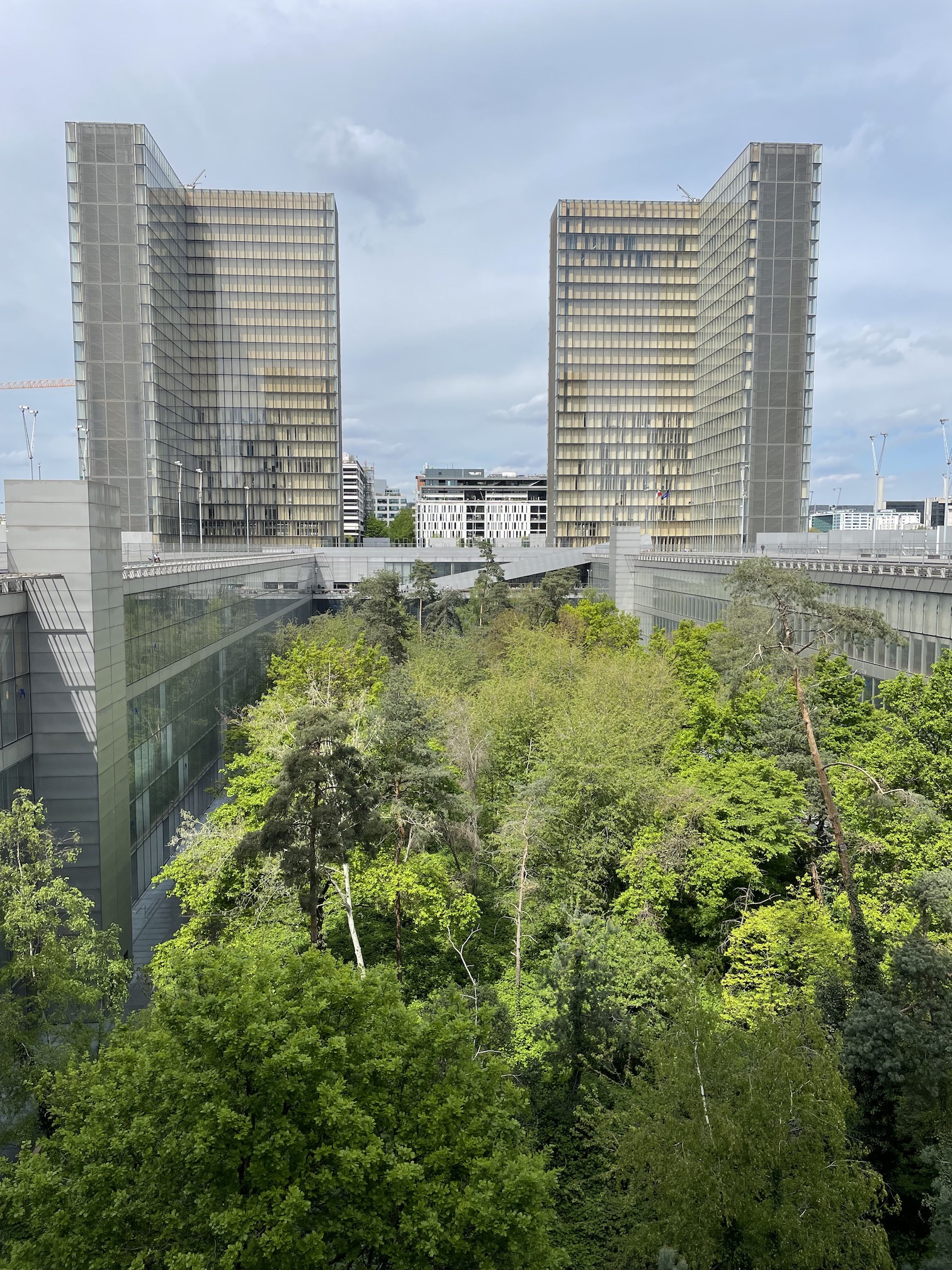
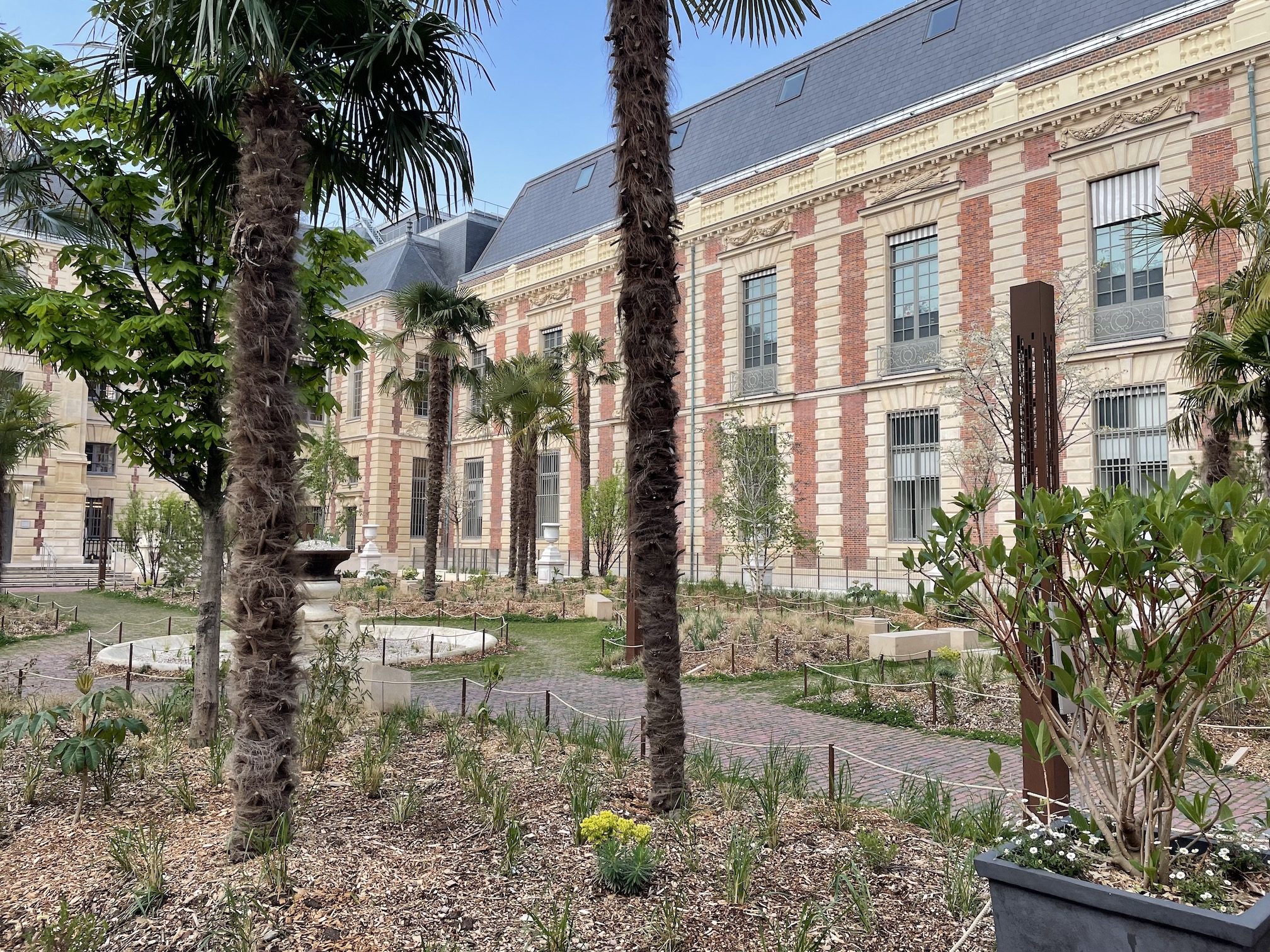
images of the BnF Mitterand, BnF Richelieu, Archives Nationales and Collège de France

Posted in Alexandre Koyré, Claude Lévi-Strauss, Emile Benveniste, Georges Dumézil, Italo Calvino, Jacques Lacan, Mapping Indo-European Thought in Twentieth Century France, Mircea Eliade, Roman Jakobson, Umberto Eco, Uncategorized | 1 Comment

Charisse Burden-Stelly, Black Scare/Red Scare: Theorizing Capitalist Racism in the United States – University of Chicago Press, November 2023

Charisse Burden-Stelly, Black Scare/Red Scare: Theorizing Capitalist Racism in the United States – University of Chicago Press, November 2023

A radical explication of the ways anti-Black racial oppression has infused the US government’s anti-communist repression.
 
In the early twentieth century, two panics emerged in the United States. The Black Scare was rooted in white Americans’ fear of Black Nationalism and dread at what social, economic, and political equality of Black people might entail. The Red Scare, sparked by communist uprisings abroad and subversion at home, established anticapitalism as a force capable of infiltrating and disrupting the American order. In Black Scare / Red Scare, Charisse Burden-Stelly meticulously outlines the conjoined nature of these state-sanctioned panics, revealing how they unfolded together as the United States pursued capitalist domination. Antiradical repression, she shows, is inseparable from anti-Black oppression, and vice versa.
 
Beginning her account in 1917—the year of the Bolshevik Revolution, the East St. Louis Race Riot, and the Espionage Act—Burden-Stelly traces the long duration of these intertwined and mutually reinforcing phenomena. She theorizes two bases of the Black Scare/Red Scare: US Capitalist Racist Society, a racially hierarchical political economy built on exploitative labor relationships, and Wall Street Imperialism, the violent processes by which businesses and the US government structured domestic and foreign policies to consolidate capital and racial domination. In opposition, Radical Blackness embodied the government’s fear of both Black insurrection and Red instigation. The state’s actions and rhetoric therefore characterized Black anticapitalists as foreign, alien, and undesirable. This reactionary response led to an ideology that Burden-Stelly calls True Americanism, the belief that the best things about America were absolutely not Red and not Black, which were interchangeable threats.
 
Black Scare / Red Scare illuminates the anticommunist nature of the US and its governance, but also shines a light on a misunderstood tradition of struggle for Black liberation. Burden-Stelly highlights the Black anticapitalist organizers working within and alongside the international communist movement and analyzes the ways the Black Scare/Red Scare reverberates through ongoing suppression of Black radical activism today. Drawing on a range of administrative, legal, and archival sources, Burden-Stelly incorporates emancipatory ideas from several disciplines to uncover novel insights into Black political minorities and their legacy.

Posted in Uncategorized | Leave a comment