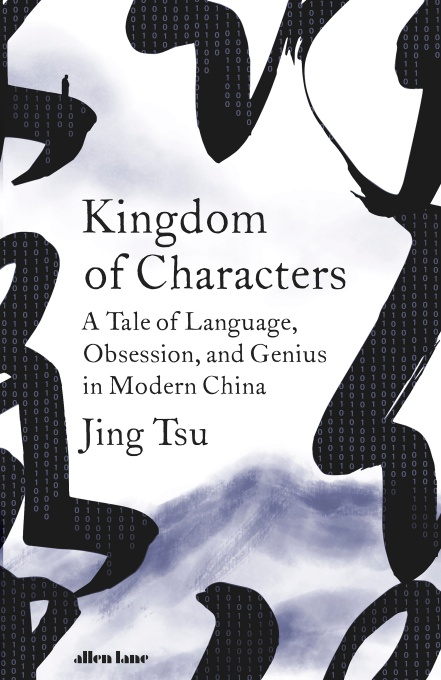
China today is one of the world’s most powerful nations, yet just a century ago it was a crumbling empire with literacy reserved for the elite few, left behind in the wake of Western technology. InKingdom of Characters, Jing Tsu shows that China’s most daunting challenge was a linguistic one: to make the formidable Chinese language – a 2,200-year-old writing system that was daunting to natives and foreigners alike – accessible to a globalized, digital world.
Kingdom of Charactersfollows the bold innovators who adapted the Chinese script – and the value-system it represents – to the technological advances that would shape the twentieth century and beyond, from the telegram to the typewriter to the smartphone. From the exiled reformer…
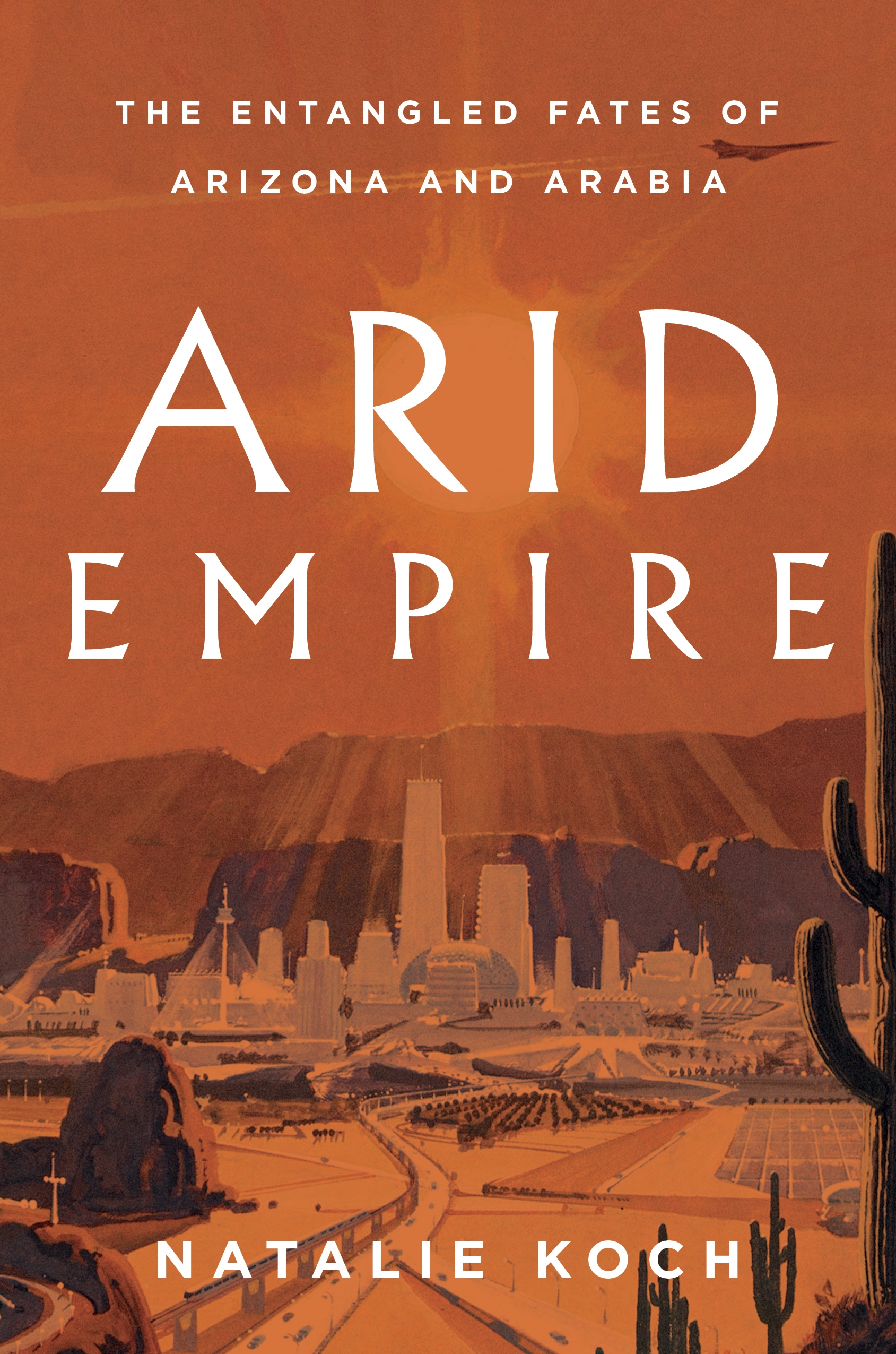
A revelatory new history of the colonization of the American West, by way of camels, date palms, and Biosphere 2
The iconic deserts of the American southwest could not have been colonized and settled without the help of desert experts from the Middle East. For example: In 1856, a caravan of thirty-three camels arrived in Indianola, Texas, led by a Syrian cameleer the Americans called “Hi Jolly.” This “camel corps,” the US government hoped, could help the army secure the new southwest swath of the country just wrested from Mexico. Though the dream of the camel corps—and sadly, the camels—died, the idea of drawing on expertise, knowledge, and practices from the desert countries of the Middle East did not.
As Natalie Koch demonstrates in this evocative, narrative history, the exchange of colonial technologies between the Arabian Peninsula and United States over the past two centuries—from date palm farming and desert agriculture to the utopian sci-fi dreams of Biosphere 2 and Frank Herbert’s Dune—bound the two regions together, solidifying the colonization of the US West and, eventually, the reach of American power into the Middle East. Koch teaches us to see deserts anew, not as mythic sites of romance or empty wastelands but as an “arid empire,” a crucial political space where imperial dreams coalesce.
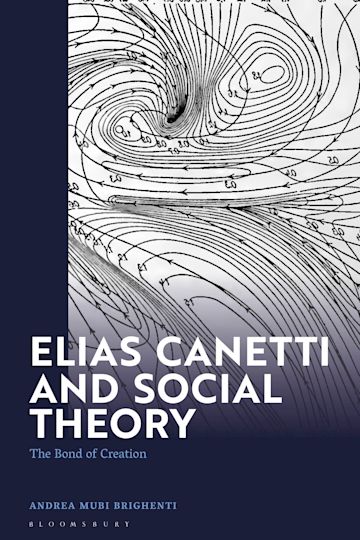
Elias Canetti is a key thinker in the trend towards the renewal of social theory for the 21st century. He is increasingly being recognised in the social and political sciences for the seminal text, Crowds and Power (1960). While this work can sometimes be criticised for its alleged anti-historicity, anti-modernism, fixation on death, and a dark vision of humankind, Crowds and Power can, in fact, be interpreted as a study and a critiqueof the mono-dimensionality and the obsessiveness of power. In Canetti’s own words, it is an attempt ‘to find the weak spot of power’ and, ultimately, an invitation to recognise and explore the endless richness of human transformations.
Elias Canetti and Social Theory argues that the alleged anti-modernism of Canetti actually makes him morecontemporary than many contemporary social-political thinkers. It deals with key concepts within socio-political theory including: commands, increase, resistance, and commonality. Each of these ideas is connected with real, lived social realities making this book a compelling argument for Canetti’s crucial relevance today.
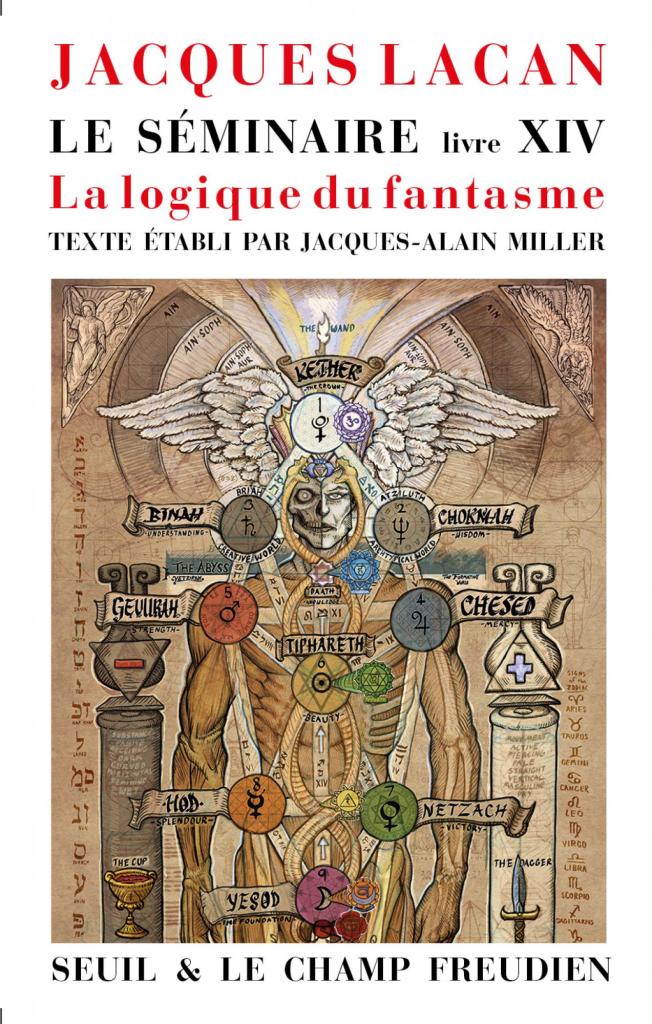
After a long gap, and some legal problems, the publication of the seminar is ongoing once again:
« Logique du fantasme », l’expression revient tout du long du Séminaire comme un leitmotiv. Cependant, nulle leçon ne lui est consacrée, ni même un développement un peu soutenu. Est-ce à dire que la logique du fantasme joue ici le rôle d’une Arlésienne nouvelle manière ? Non, si l’on veut bien admettre que cette logique est le point de convergence des propos de Lacan, ce que j’ai voulu indiquer en intitulant le tout dernier chapitre « L’axiome du fantasme ».
C’est ainsi qu’il commence en croisant audacieusement le groupe mathématique de Klein avec le cogito cartésien, modifié de manière à délivrer l’alternative « Ou je ne suis pas, ou je ne pense pas ». D’où Lacan trouve occasion à résumer en quatre temps le cours d’une analyse.
Autre croisement mathématico-psychanalytique : l’acte sexuel éclairé à partir du Nombre d’or. Il s’ensuit qu’ « il n’y a pas d’acte sexuel », amorce de ce dit devenu pont-aux-ânes : « il n’y a pas de rapport sexuel ».
On trouvera aussi l’invention d’une « valeur de jouissance », inspirée par Marx, et on aura la surprise de voir le grand Autre, « lieu de la parole », nouvellement défini comme « le corps », lieu primordial de l’écriture.
Bien d’autres vues et constructions saisissantes attendent le lecteur s’il veut bien suivre dans ses méandres, piétinements, revirements, et aussi avancées et fulgurances, une pensée obstinée et profondément honnête, qui, lorsqu’elle rencontre telle pierre d’achoppement, ne la contourne jamais, mais s’emploie à en faire une pierre angulaire.
In his discussion of the socio-ecological crisis of capitalism, Jason Moore dismisses the theoretical tendency to describe ‘twin’ social and environmental crises, arguing that ‘these are in fact a singular process of transformation that today we call a crisis’ (2011: 136). In order to interrogate the singular socio-ecological crisis further, this conference proposes ‘territorial bodies’ as a critical framework for readings of contemporary world culture, synthesising interdisciplinary approaches to embodiment and violence studies. It considers how the ‘territorial body’ offers an analytical tool for addressing urgent social, ecological, and political challenges, from ecological breakdown to the rise of statelessness, to violence against women and racial exploitation. Key questions include:
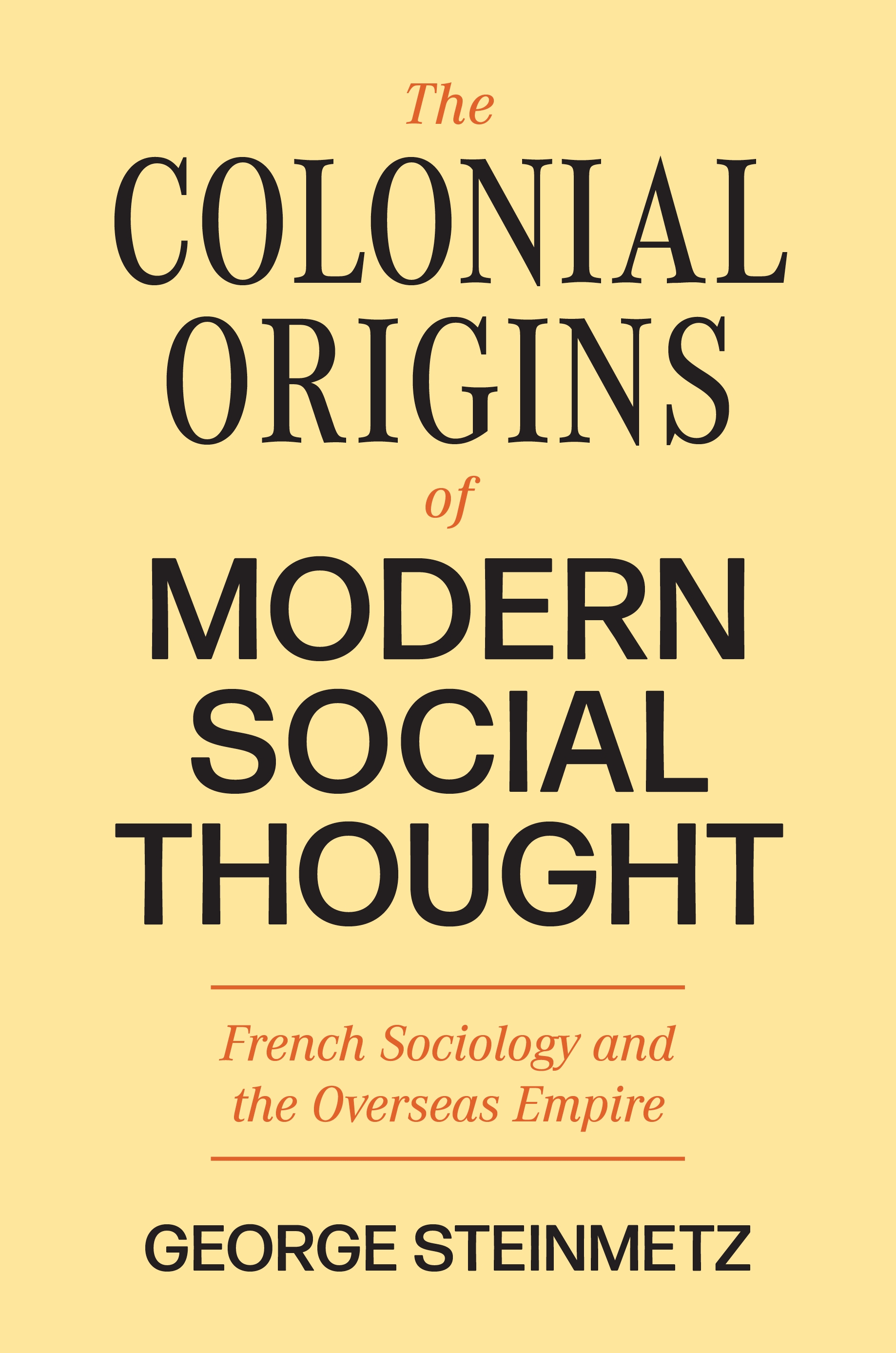
In this provocative and original retelling of the history of French social thought, George Steinmetz places the history and development of modern French sociology in the context of the French empire after World War II. Connecting the rise of all the social sciences with efforts by France and other imperial powers to consolidate control over their crisis-ridden colonies, Steinmetz argues that colonial research represented a crucial core of the renascent academic discipline of sociology, especially between the late 1930s and the 1960s. Sociologists, who became favored partners of colonial governments, were asked to apply their expertise to such “social problems” as detribalization, urbanization, poverty, and labor migration. This colonial orientation permeated all the major subfields of sociological research, Steinmetz contends, and is at the center of the work of four influential scholars: Raymond Aron, Jacques Berque, Georges Balandier, and Pierre Bourdieu.
In retelling this history, Steinmetz develops and deploys a new methodological approach that combines attention to broadly contextual factors, dynamics within the intellectual development of the social sciences and sociology in particular, and close readings of sociological texts. He moves gradually toward the postwar sociologists of colonialism and their writings, beginning with the most macroscopic contexts, which included the postwar “reoccupation” of the French empire and the turn to developmentalist policies and the resulting demand for new forms of social scientific expertise. After exploring the colonial engagement of researchers in sociology and neighboring fields before and after 1945, he turns to detailed examinations of the work of Aron, who created a sociology of empires; Berque, the leading historical sociologist of North Africa; Balandier, the founder of French Africanist sociology; and Bourdieu, whose renowned theoretical concepts were forged in war-torn, late-colonial Algeria.
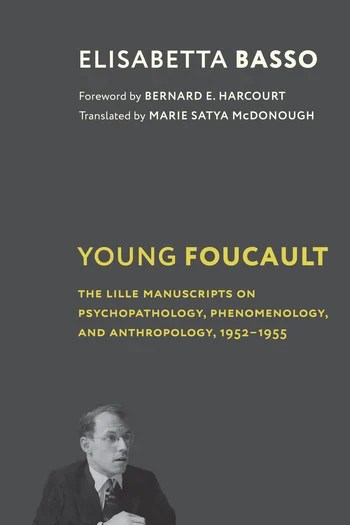
Box 46 [of the Foucault archive] is especially noteworthy. It contains 400 pages of manuscripts, most of which have recently been published but await translation. There are notes for a course on the question of philosophical anthropology, probably delivered both at the University of Lille and the École normale supérieure (ENS) in Paris in the early 1950s, a manuscript with the title Phénoménologie et psychologie, probably from around 1953–1954, and another manuscript from a similar time, without a title but published as Binswanger et l’analyse existentielle (Foucault, 2021a, 2021b, 2022). The editor of the last text is Elisabetta Basso, and the book under review here is an exemplary analysis of the importance of these manuscripts.
Basso’s work on Foucault’s relation to Binswanger’s approach to psychoanalysis dates from her Italian book Michel Foucault e la Daseinsanalyse (2007), through articles in English and French, as coeditor of the important collection Foucault à Münsterlingen: À l’origine de l’Histoire de la folie (Bert & Basso, 2015), and as editor of some important correspondence, including Foucault’s with Binswanger (in Foucault à Münsterlingen) and the Binswanger‐ Gaston Bachelard letters (Basso ed. 2016). She was, therefore, the natural editor of the Binswanger et l’analyse existentielle manuscript, and her contextualization in that book is a crucial guide.
Young Foucault takes all of that work and deepens, reassesses, and expands it. It is a significant contribution to our understanding of Foucault’s intellectual development, focusing on the box 46 manuscripts, all written while Foucault was teaching in Lille between 1952 and 1955…
Basso is excellent on situating the Binswanger et l’analyse existentielle manuscript in relation to the published ‘Dream and Existence’ introduction, as well as to Foucault’s interest in psychology and a network of thinkers around Binswanger, especially Roland Kuhn. She shows how Jacqueline Verdeaux was not just significant as Foucault’s collaborator on the ‘Dream and Existence’ translation, but also for providing him with some clinical experience, working in a laboratory at the Hôpital Saint‐Anne and at the Fresnes correctional center. She reconstructs the story of Foucault’s visits to Switzerland to meet Binswanger and Kuhn, especially the first visit to Münsterlingen, in which Foucault, Jacqueline and Georges Verdeaux also attended a Mardi Gras fête des fous. Foucault mentions this festival of the mad, where residents in the asylum would parade in masks and costumes, obliquely later in life, but Basso shows how important this was in the connection to Binswanger and Kuhn. While Young Foucault is good on the story, Foucault à Münsterlingen should also be consulted for the valuable documentary and photographic record it provides. There are a few interesting photographs and manuscript pages reproduced in this book too. While Basso makes use of a large number of archival sources, she also uses some material still in private hands, including letters between Verdeaux and Foucault…
Basso is an invaluable guide to much of this rich new material.
I’d be happy to share the full review with people if interested. Please email me.
A sociological history of literary study—both as a discipline and as a profession.
As the humanities in higher education struggle with a labor crisis and with declining enrollments, the travails of literary study are especially profound. No scholar has analyzed the discipline’s contradictions as authoritatively as John Guillory. In this much-anticipated new book, Guillory shows how the study of literature has been organized, both historically and in the modern era, both before and after its professionalization. The traces of this volatile history, he reveals, have solidified into permanent features of the university. Literary study continues to be troubled by the relation between discipline and profession, both in its ambivalence about the literary object and in its anxious embrace of a professionalism that betrays the discipline’s relation to its amateur precursor: criticism.
In a series of timely essays, Professing Criticism offers an incisive explanation for the perennial churn in literary study, the constant revolutionizing of its methods and objects, and the permanent crisis of its professional identification. It closes with a robust outline of five key rationales for literary study, offering a credible account of the aims of the discipline and a reminder to the professoriate of what they already do, and often do well.
The books looks important, but the review is a good brief (3000 words) overview of the UK higher education review process – perhaps especially useful for those outside it to understand something of what has happened.
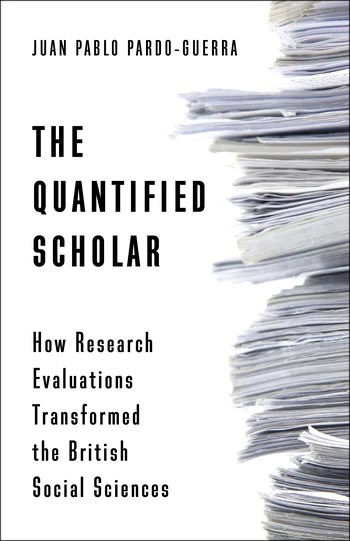
Since 1986, the British government, faced with dwindling budgets and growing calls for public accountability, has sought to assess the value of scholarly work in the nation’s universities. Administrators have periodically evaluated the research of most full-time academics employed in British universities, seeking to distribute increasingly scarce funding to those who use it best. How do such attempts to quantify the worth of knowledge change the nature of scholarship?
Juan Pablo Pardo-Guerra examines the effects of quantitative research evaluations on British social scientists, arguing that the mission to measure academic excellence resulted in less diversity and more disciplinary conformity. Combining interviews and original computational analyses, The Quantified Scholar provides a compelling account of how scores, metrics, and standardized research evaluations altered the incentives of scientists and administrators by rewarding forms of scholarship that were closer to established disciplinary canons. In doing so, research evaluations amplified publication hierarchies and long-standing forms of academic prestige to the detriment of diversity. Slowly but surely, they reshaped academic departments, the interests of scholars, the organization of disciplines, and the employment conditions of researchers.
Critiquing the effects of quantification on the workplace, this book also presents alternatives to existing forms of evaluation, calling for new forms of vocational solidarity that can challenge entrenched inequality in academia.