One for libraries, at this price… [update Jan 2023: a more affordable e-book is also available. If you buy direct from Routledge, code FLE22 currently gives a 20% discount]
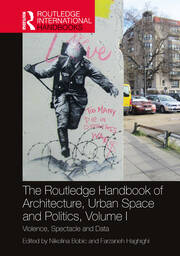
For architecture and urban space to have relevance in the 21st Century, we cannot merely reignite the approaches of thought and design that were operative in the last century. This is despite, or because of, the nexus between politics and space often being theorized as a representation or by-product of politics. As a symbol or an effect, the spatial dimension is depoliticized. Consequently, architecture and the urban are halted from fostering any systematic change as they are secondary to the event and therefore incapable of performing any political role. This handbook explores how architecture and urban space can unsettle the unquestioned construct of the spatial politics of governing.
Considering both ongoing and unprecedented global problems – from violence and urban warfare, the refugee crisis, borderization, detention camps, terrorist attacks to capitalist urbanization, inequity, social unrest and climate change – this handbook provides a comprehensive and multidisciplinary research focused on the complex nexus of politics, architecture and urban space. Volume I starts by pointing out the need to explore the politics of spatialization to make sense of the operational nature of spatial oppression in contemporary times. The operative and active political reading of space is disseminated through five thematics: Violence and War Machines; Security and Borders; Race, Identity and Ideology; Spectacle and the Screen; and Mapping Landscapes and Big Data.
This first volume of the handbook frames cutting-edge contemporary debates and presents studies of actual theories and projects that address spatial politics. This Handbook will be of interest to anyone seeking to meaningfully disrupt the reduction of space to an oppressive or neutral backdrop of political realities.
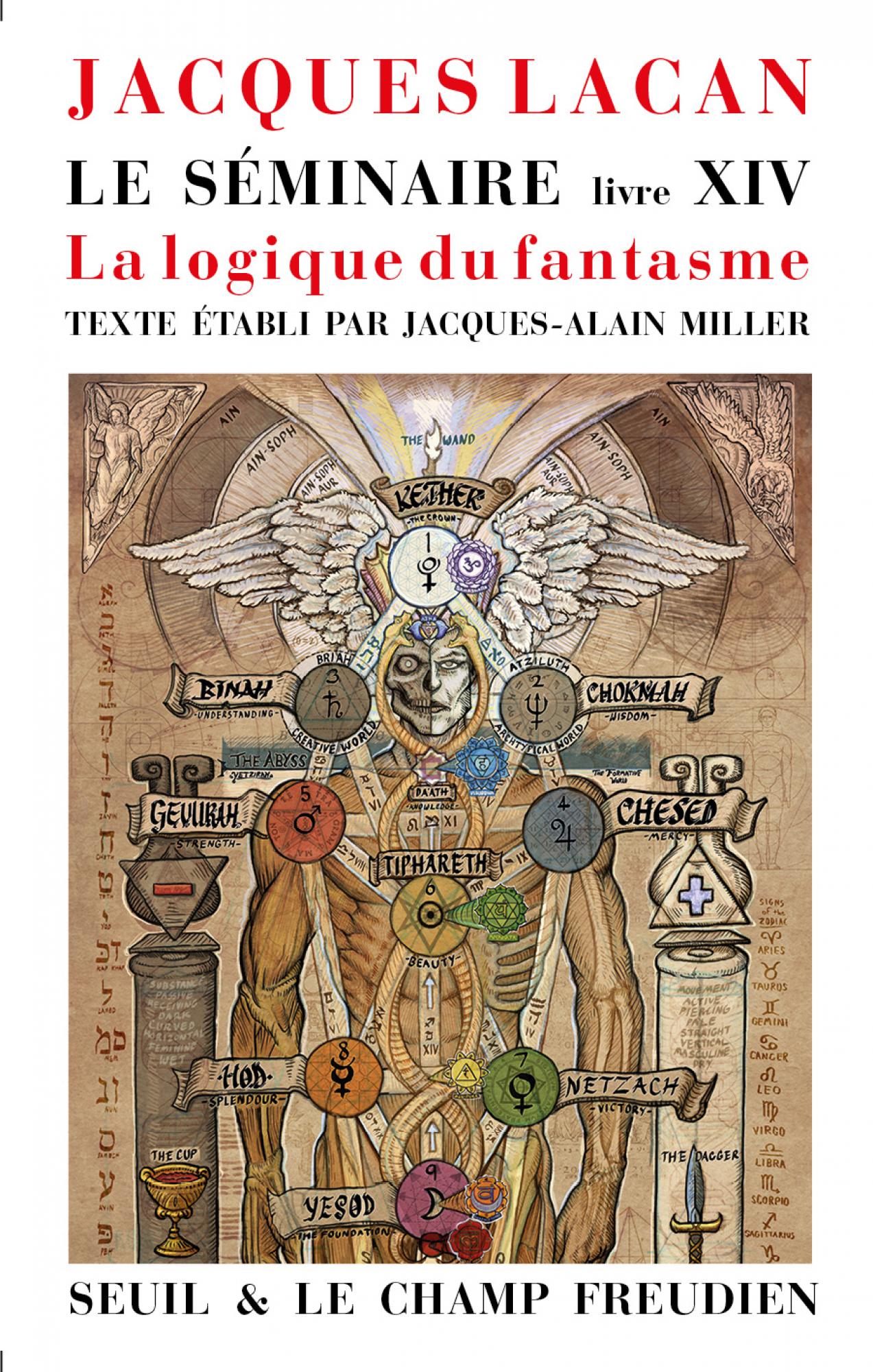
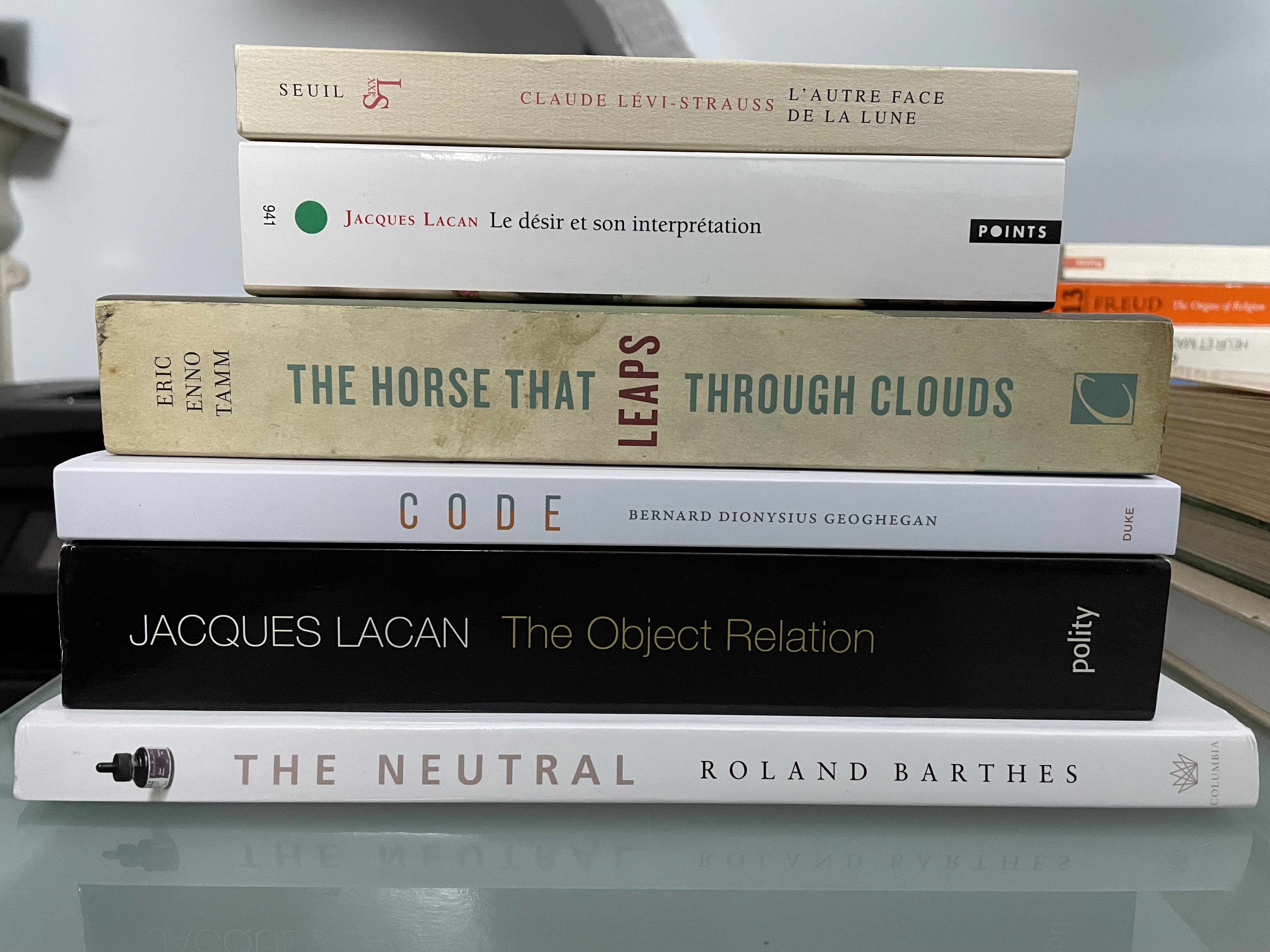
Le Séminaire Livre XIV: La Logique du fantasme, edited by Jacques-Alain Miller – the first seminar to be published in French for quite a long time, now legal problems have been addressed.
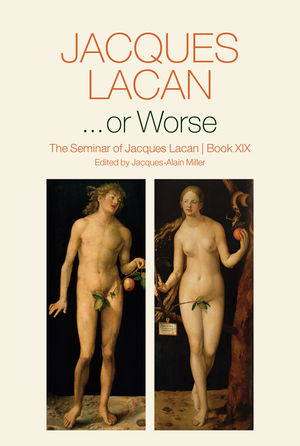
the paperback of the English translation of Or Worse… translated by A.R. Price (seminar XIX)
and the Seuil Points edition of Le Séminaire V: Les formations de l’inconscient (which has been out in the original format for a long time, and is already translated as Formations of the Unconscious by Russell Grigg)
In Sharing Territories, Cara Nine defends a river model of territorial rights. On a river model, groups are assumed to be interdependent and overlapping. If we imagine human settlements and territorial rights as established in river catchment areas-not on lands with walls and borders-the primary features of group life are not independence and distinctness. Drawing on natural law philosophy, Nine’s theory argues for the establishment of foundational territories around geographical areas like rivers. Usually lower-scale political entities, foundational territories overlap with and serve as the grounding blocks of larger territorial units. Examples of foundational territories include not only river catchment areas but also urban areas, drawn around individuals who hold obligations to collectively manage their surroundings. Foundational territorial authorities manage spatially integrated areas where agents are interconnected by dense and scaffolded physical circumstances. In these areas, individuals cannot fulfil their natural obligations to each other without the help of collective rules. As foundational territories overlap the territories of other political units, Nine frames a theory of nested and shared territorial rights, and argues for insightful changes to the allocation of resource rights between political groups and individuals.
The proliferation of social media has provided ideal conditions in which feelings of anger and frustration can be expressed and shared, forming a deep pool of ressentiment that is being drawn upon and exploited by populist and authoritarian leaders.
In his new book, Joseph Vogl shows how this dynamic is rooted in the fusing of finance capital and information in a new form of information capitalism that is reshaping the affective economy of our societies. The capital accumulation strategies of powerful new platforms and social media are pushing people into fragmented, opposing, and conflictual communities where ressentiment is nurtured and grows. The feelings of grievance and rejection generated by capitalism are redirected into attacks on migrants, foreigners, and others, thereby deflecting their critical potential, and bolstering the system that is their source. It is the cunning of ressentiment that provides the key to understanding why, despite the profusion of communication in our social media age, global finance and information capital can be neither understood nor attacked as a totalizing power.
This brilliant analysis of the ways in which information capitalism is transforming the affective economy of our societies will be of great interest to anyone concerned with the forces that are shaping our societies today.
Engin Isin has relaunched his website – The Subjects of Politics – with most of his publications available to download, some thematic organisation with “reflections on concepts and methods that guided it and the questions that motivated it”, along with possible connections to an “interest in images”.
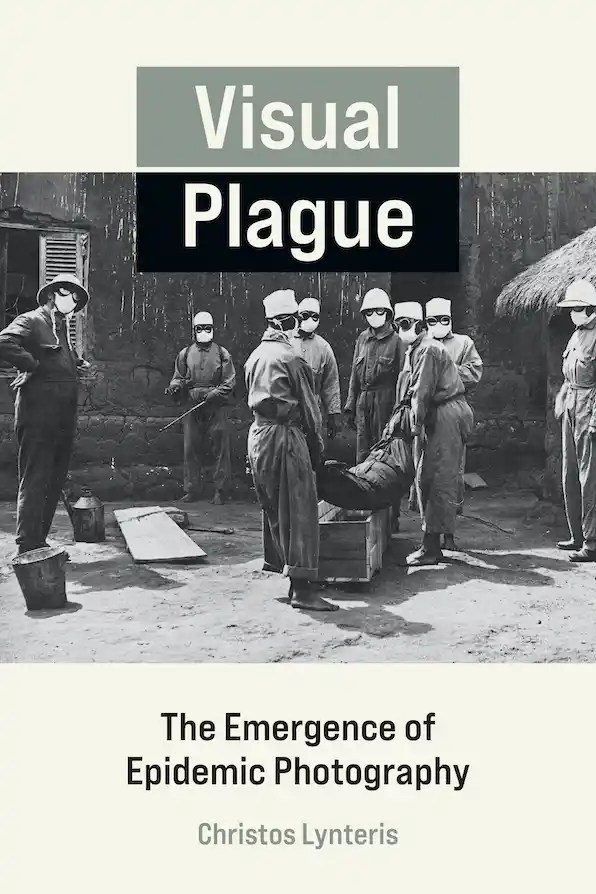
How epidemic photography during a global pandemic of bubonic plague contributed to the development of modern epidemiology and our concept of the “pandemic.”
In Visual Plague, Christos Lynteris examines the emergence of epidemic photography during the third plague pandemic (1894–1959), a global pandemic of bubonic plague that led to over twelve million deaths. Unlike medical photography, epidemic photography was not exclusively, or even primarily, concerned with exposing the patient’s body or medical examinations and operations. Instead, it played a key role in reconceptualizing infectious diseases by visualizing the “pandemic” as a new concept and structure of experience—one that frames and responds to the smallest local outbreak of an infectious disease as an event of global importance and consequence.
As the third plague pandemic struck more and more countries, the international circulation of plague photographs in the press generated an unprecedented spectacle of imminent global threat. Nothing contributed to this sense of global interconnectedness, anticipation, and fear more than photography. Exploring the impact of epidemic photography at the time of its emergence, Lynteris highlights its entanglement with colonial politics, epistemologies, and aesthetics, as well as with major shifts in epidemiological thinking and public health practice. He explores the characteristics, uses, and impact of epidemic photography and how it differs from the general corpus of medical photography. The new photography was used not simply to visualize or illustrate a pandemic, but to articulate, respond to, and unsettle key questions of epidemiology and epidemic control, as well as to foster the notion of the “pandemic,” which continues to affect our lives today.
“Of deeply satisfying methodological and historiographical richness, this book demonstrates how photographs reconceptualized epidemiological practices and imaginations. It presents a compelling historical analysis in which photographs are integral ‘think-spaces’ that open up innovative interpretative possibilities.”
Elizabeth Edwards, Professor Emerita of Photographic History, De Montfort University Leicester
“A fantastic book. Lynteris tells an astonishing story of plague photography and, in doing so, offers clues for thinking through the images and imaginaries that attempt to hold our present pandemic moment.”
Todd Meyers, Marjorie Bronfman Chair in Social Studies of Medicine, McGill University
China today is one of the world’s most powerful nations, yet just a century ago it was a crumbling empire with literacy reserved for the elite few, left behind in the wake of Western technology. InKingdom of Characters, Jing Tsu shows that China’s most daunting challenge was a linguistic one: to make the formidable Chinese language – a 2,200-year-old writing system that was daunting to natives and foreigners alike – accessible to a globalized, digital world.
Kingdom of Charactersfollows the bold innovators who adapted the Chinese script – and the value-system it represents – to the technological advances that would shape the twentieth century and beyond, from the telegram to the typewriter to the smartphone. From the exiled reformer…
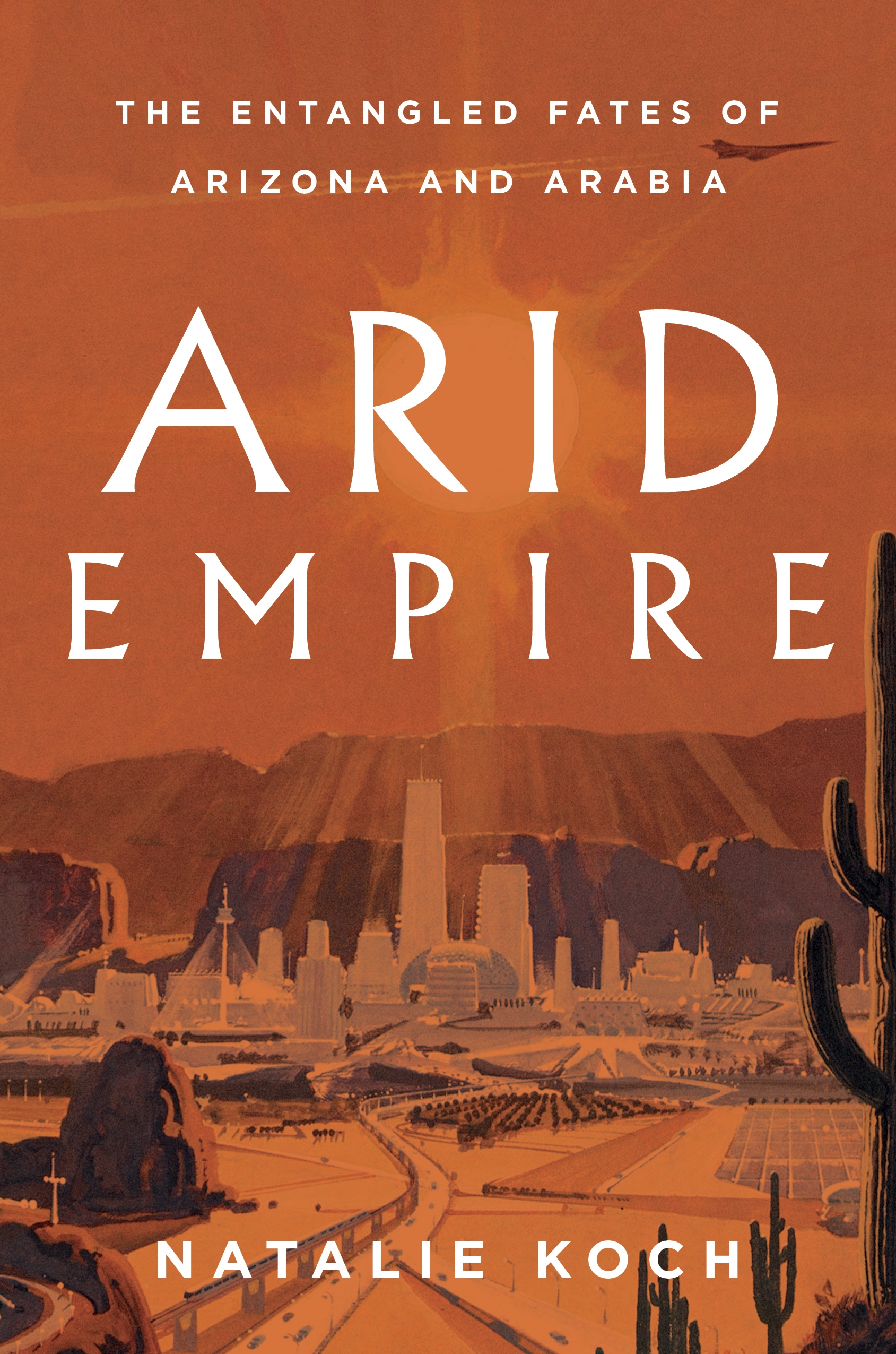
A revelatory new history of the colonization of the American West, by way of camels, date palms, and Biosphere 2
The iconic deserts of the American southwest could not have been colonized and settled without the help of desert experts from the Middle East. For example: In 1856, a caravan of thirty-three camels arrived in Indianola, Texas, led by a Syrian cameleer the Americans called “Hi Jolly.” This “camel corps,” the US government hoped, could help the army secure the new southwest swath of the country just wrested from Mexico. Though the dream of the camel corps—and sadly, the camels—died, the idea of drawing on expertise, knowledge, and practices from the desert countries of the Middle East did not.
As Natalie Koch demonstrates in this evocative, narrative history, the exchange of colonial technologies between the Arabian Peninsula and United States over the past two centuries—from date palm farming and desert agriculture to the utopian sci-fi dreams of Biosphere 2 and Frank Herbert’s Dune—bound the two regions together, solidifying the colonization of the US West and, eventually, the reach of American power into the Middle East. Koch teaches us to see deserts anew, not as mythic sites of romance or empty wastelands but as an “arid empire,” a crucial political space where imperial dreams coalesce.