Update: the e-book can be accessed open access here.
Currently listed just as hardback, but a paperback and open access e-book will also be available. One of the chapters comes from the ICE-LAW project run by Phil Steinberg at Durham University.
Assembling scholars across multiple orientations – from legal studies, geography, anthropology, cultural and political theory, the environmental humanities, and ocean studies –this book connects law to the broader humanities in order to critically engage contemporary concerns with the fate of the ocean.
Although the United Nations’ monumental ‘Convention on the Law of the Sea’ imagines an all-encompassing constitutional framework for governing the ocean, this collection, Laws of the Sea, approaches law in plural ways, applying the insights that have emerged within various disciplines to consider the possibilities of a critical ocean approach in legal studies. The collection is comprised of twelve chapters that utilize a diverse set of methodological tools to explore a range of intersecting sites: from hydrothermal vents, through the continental shelf and marine genetic resources, to coastal communities in areas including France, Sweden, Florida, and Indonesia. Confronting the longstanding binary of land and sea, these chapters pose a fundamental challenge to law’s terracentrism, and its pervasive influence on juridical modes of knowing and making the world. Together, they ask: is contemporary Eurocentric law – and international law in particular – capable of moving away from its capitalist and colonial legacies, established through myriad oceanic abstractions and classifications, toward more amphibious legalities?
This collection will appeal to sociolegal, international, and environmental law scholars, as well as geographers and anthropologists, cultural and political theorists, and those working in environmental history, political ecology, and animal studies.
A complete guide for how small states can be strikingly successful and influential–if they assess their situations and adapt their strategies. Small states are crucial actors in world politics. Yet, they have been relegated to a second tier of International Relations scholarship. In A Small State’s Guide to Influence in World Politics, Tom Long shows how small states can identify opportunities and shape effective strategies to achieve their foreign policy goals. To do so, Long puts small states’ relationships at the center of his approach. Although small states are defined by their position as materially weaker actors vis-a-vis large states, Long argues that this condition does not condemn them to impotence or irrelevance. Drawing on typological theory, Long builds an explanation of when and how small states might achieve their goals. The book assesses a global range of cases-both successes and failures-and offers a set of tools for scholars and policymakers to understand how varying international conditions shape small states’ opportunities for influence.
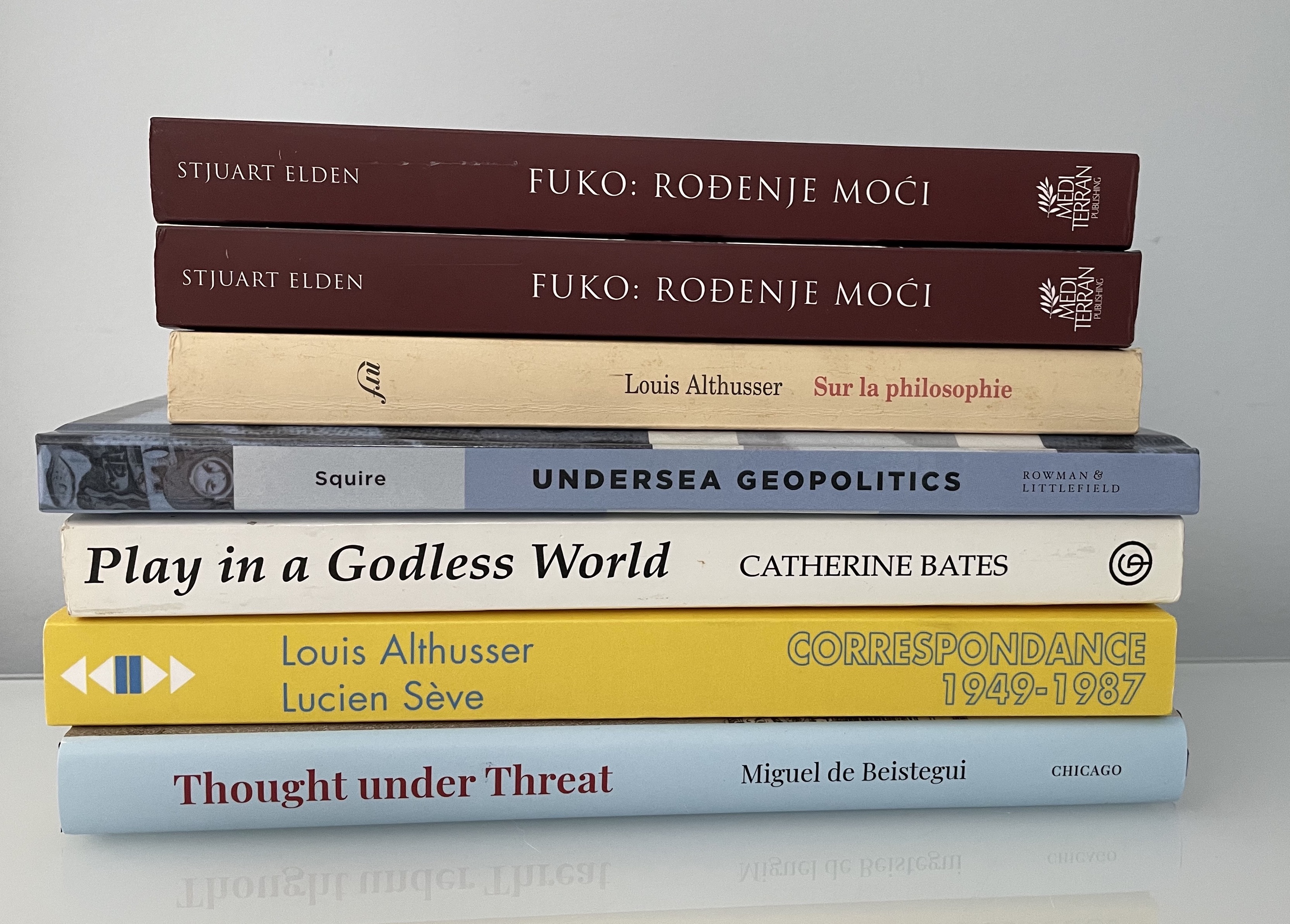
This came out a while ago, but I’ve only just now received copies. Many thanks to Tomislav Kargačin for the work on the translation. The back cover looks to be text from the Introduction.
Pažljivom rekonstrukcijom Fukoovog rada i interesovanja, ova knjiga predstavlja nastojanje da se prikaže detaljna intelektualna istorija Fukoa kao pisca, istraživača, predavača i aktiviste u ovom periodu. Mogućnost da pratimo Fukoove preokupacije znatno je unapređena velikom količinom odnedavno dostupnog materijala, kako objavljenih tekstova tako i arhivskih dokumenata. Ova knjiga, kao i prikaz koji sam ponudio u svojoj prethodnoj knjizi Fukoova poslednja dekada obilato se koristi svim ovim materijalom. Izvori uključuju prve kurseve na Kolež de Fransu, mnoge kraće radove i intervjue, kutije sa rukopisima dostupnim u Nacionalnoj biblioteci (Francuska), kao i materijale koji se odnose na njegov aktivizam i kolaborativna istraživanja. Zbog datiranja njihove kolekcije u ovoj knjizi nisam koristio arhivu biblioteke u Berkliju. Među novim publikacijama, od naročitog su značaja njegovi godišnji istraživački kursevi na Kolež de Fransu. Oni obuhvataju predavanja održana od kraja 1970. do 1984. Od profesora se tamo zahteva da napišu izveštaje o projektima na kojima trenutno rade, a ne toliko da predaju. Ova predavanja pružaju fascinantan uvid u razvoj ideja i začetke novih projekata. Prva tri kursa sadrže širok dijapazon analiza – od stare Grčke, mračnog doba, srednjeg veka, rane moderne istorije Francuske i Evrope, sve do devetnaestog veka. U ovim i narednim kursevima, u publikacijama i zajedničkim istraživačkim radovima unutar i izvan Koleža, Fuko će svoju pažnju posvetiti detaljnom ispitivanju azila, bolnica i javnog zdravlja i, naravno, zatvora…
Although I’ve been teaching this term, I have also been working hard on the manuscript of The Archaeology of Foucault, in particular completing one chapter for which I had some draft material before. It’s the first chapter of the book, on madness and medicine, but I’ve ended up finishing it last. Part of the reason for this is that it is reliant on archival sources.
The chapter begins with a discussion of Birth of the Clinic. This is an interesting book – it seemed to receive limited attention at the time, compared to History of Madness before and The Order of Things afterwards. A bit of hunting around uncovered only two reviews. For a related piece and another account, see the discussion here. Its quite specific historical and geographical focus makes it one of Foucault’s most compelling books, though relatively little read. Even this 1963 text is quite political. (It reminded me of someone who once complained that Foucault never discussed the French Revolution. I did have to point out what this book was about). I think the discussion of this book, though necessarily brief, is in quite good shape for the chapter.
I then say a bit about the 1972 second edition, with the important changes Foucault made. Some time back I’d marked up a copy of the book with all the changes – slow work, but valuable for this discussion. The English translation is a mess though, switching between editions sometimes in a paragraph or even a sentence. It really needs to be redone, either of one edition alone, or perhaps as a proper critical edition, which we lack even in French – François Delaporte’s notes in Œuvres are good, but not exhaustive. I’ve mentioned this before and have started a page on this site where I list the changes between editions and compare them to the English version. I’ve only done some of this so far, and doing the whole book will be a lot of work. I have a marked-up copy of the English translation as well as the French, but transferring them to this format is exhausting, especially since the page numbers change between different printings of the second editions and the English translation.
There are several other pieces by Foucault on madness in the 1960s. Some are published – “Religious Deviations and Medical Knowledge” and “Médecins, juges et sorciers”, for example – and several have appeared posthumously, including in Language, Madness, Desire and Folie, langage, littérature. There are more in the archive, including one on the demonic, which seems to be the start of the promised study on this theme mentioned in History of Madness. It begins with a brief quote from René Char, as do several of Foucault’s texts. Two of the pieces in Language, Madness, Desire are transcriptions of radio lectures, but there were five in the series, and the recordings of these are online. (They are listed here, along with other audio and video recordings online.)
I then turn to the discussions by Derrida and Althusser of the book. Derrida’s library is at Princeton, and his copies of Foucault’s books were one of the things I really wanted to see. I had a trip booked in April 2020, which had to be cancelled for obvious reasons, and I’ve been unable to make a trip since. The times it was possible without travel restrictions I was tied up with teaching; and the times I had breaks from teaching there were restrictions making it too difficult. I’ve recently had to make the difficult decision to abandon the hope of doing a US trip before I complete this manuscript. Fortunately, remote access is possible, which happened this week. The copy of the 1961 text is interesting, but so too is the copy of the 1972 edition which contains Foucault’s response.
Foucault’s copy of Derrida’s L’écriture et la difference, which contains the critique, is at Yale, and this I have seen. Althusser’s copy is at IMEC, which again I have seen. Althusser mentions the impact of the book in a couple of his letters to Franca Madonia, and discusses it in an unpublished seminar, for which Etienne Balibar’s notes are at IMEC. In this section I also very briefly discuss the importance of Jacques Martin for both Althusser and Foucault, which is helped by Martin’s thesis now being published as L’individu chez Hegel, edited with a very useful introduction by Jean-Baptiste Vuillerod. Vuillerod’s study La naissance de l’anti-hégélianisme: Louis Althusser et Michel Foucault, lecteurs de Hegel has also just appeared.
I was also given access to some of the Gérard Deledalle papers, which help with some aspects of Foucault’s time in Tunisia. This is another archive I’d hoped to visit, and may still do at some point. Fortunately, the archivist has been very helpful, and Yale’s Beinecke library also provided some information on material I wanted to consult. I’d been to the Beinecke before, and seen most of the key texts, but I was given scans of the dedications of a few more I wanted to see.
I do really feel I’m now on the final stretch, with the rereading of a few things, and a couple of discussions in subsequent chapters which I revisited in the light of some material which I’ve only been able to access recently. There were lots of things to check at libraries, but I’ve managed to do nearly all of those. The last major task is going through the whole thing and editing it, cutting in places and tightening up. I’ve printed the text for the first time – I do nearly all the editing on screen, but at a very late stage like to read it on paper. But I hope it is now relatively close to submission.
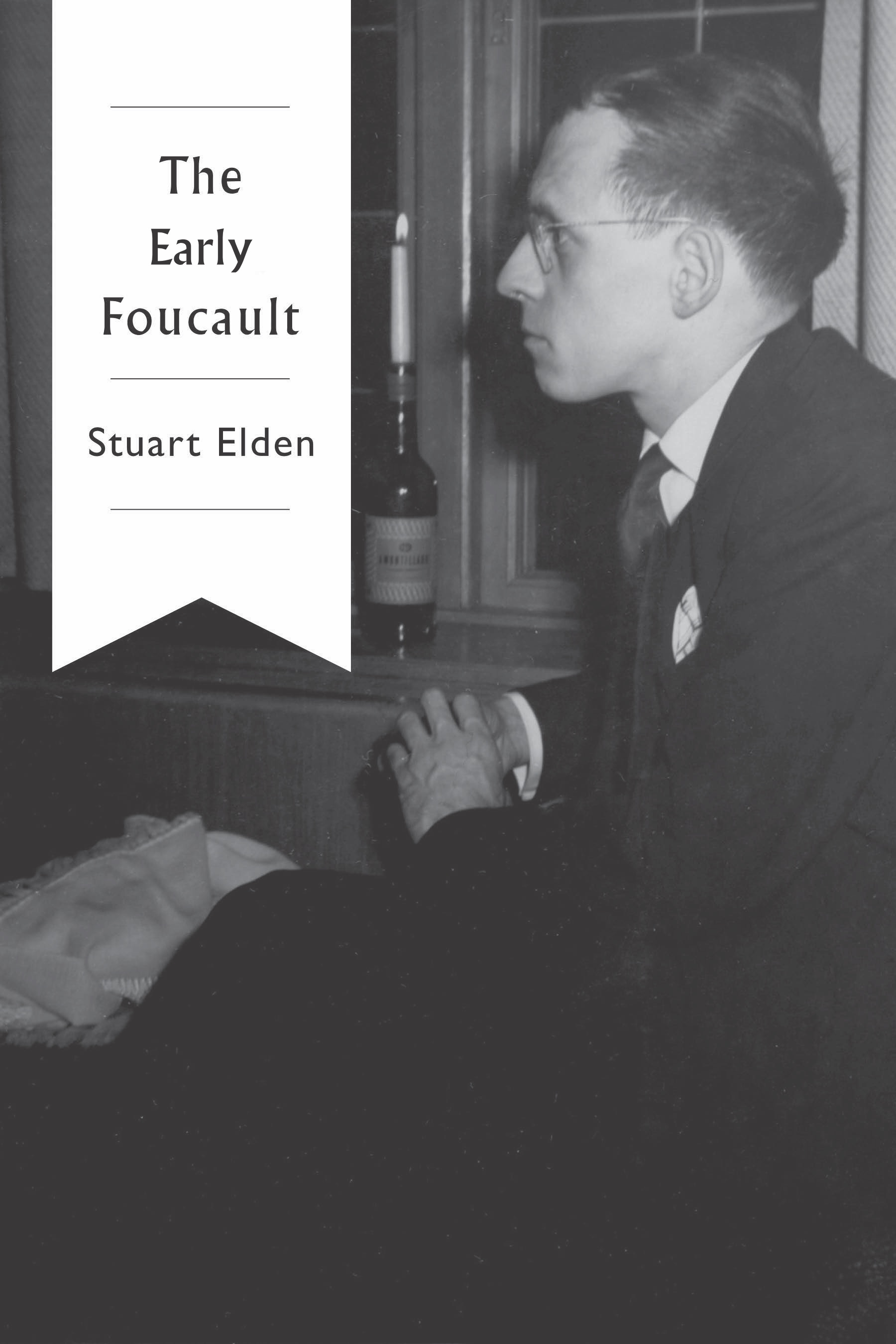
Previous updates on this book are here. The Early Foucault was published by Polity in June 2021, and updates for its writing are here. A list of the resources on this site relating to Foucault – bibliographies, audio and video files, some textual comparisons, some short translations, etc. – can be found here. The earlier books in this series are Foucault: The Birth of Power and Foucault’s Last Decade, both available from Polity.
What were the key ideas and influences on Michel Foucault’s early career? In The Early Foucault (Polity Press, 2021),Stuart Elden, Professor of Political Theory and Geography at the University of Warwick and author of the Progressive Geographies blog, charts Foucault’s formative intellectual years leading up to the publication of the ground-breaking The History of Madness. The book uses a range of new archival material, much of which has been only recently accessible, to show the influence of teachers, mentors, and colleagues, as well as Foucault’s practice as an academic and writer during the 1950s and early 1960s. Telling the story of the possible intellectual trajectories, in psychology and philosophy, Foucault might have followed, along with a clear examination of the roots of his later work, the book is essential reading across the humanities and social sciences.
Many thanks to Dave for the interest in the book and the New Books Network for hosting this – and for making it book of the day.
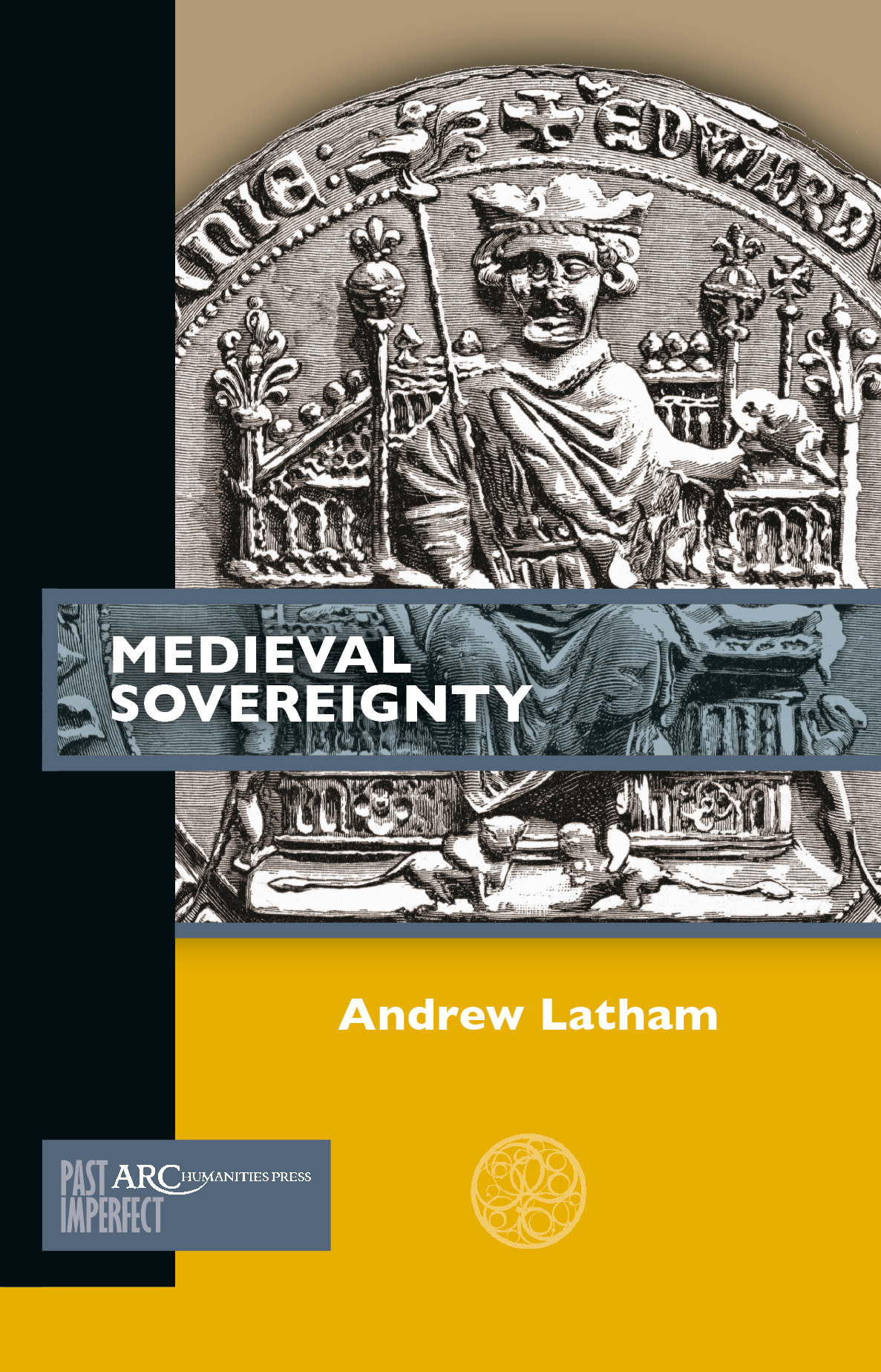
Through a focused and systematic examination of medieval theologians, philosophers, and jurists, Andrew Latham explores how ideas about supreme political authority—sovereignty—first emerged during the high medieval period. The author provides a new model for understanding the concept of sovereignty, and traces its roots, not to the early modern or late medieval eras as do all other accounts, but to the High Middle Ages.
This book aims first to provide an account of a pivotal episode in the historical evolution of the idea of sovereignty—the supreme authority to command, legislate, and judge—in the thirteenth century. It also aims to reconnect early modern theorists of sovereignty to the medieval intellectual tradition out of which they emerged.
Latham traces the rise of a “dualist–regnalist” model whereby supreme authority was vested neither in the pope nor the emperor; nor was it divided between coordinate temporal and spiritual powers (kings and popes). Instead, it was vested exclusively in the king, who held it directly from God or (in the case of John of Paris, for example) “the people,” without any papal or imperial mediation.
There is no Shakespeare without text. Yet readers often do not realize that the words in the book they hold, like the dialogue they hear from the stage, has been revised, augmented and emended since Shakespeare’s lifetime. An essential resource for the history of Shakespeare on the page, Shakespeare and Textual Theory traces the explanatory underpinnings of these changes through the centuries.
After providing an introduction to early modern printing practices, Suzanne Gossett describes the original quartos and folios as well as the first collected editions. Subsequent sections summarize the work of the ‘New Bibliographers’ and the radical challenge to their technical analysis posed by poststructuralist theory, which undermined the presumed stability of author and text. Shakespeare and Textual Theory presents a balanced view of the current theoretical debates, which include the nature of the surviving texts we call Shakespeare’s; the relationship of the author ‘Shakespeare’ and of authorial intentions to any of these texts; the extent and nature of Shakespeare’s collaboration with others; and the best or most desirable way to present the texts – in editions or performances. The book is illustrated throughout with examples showing how theoretical decisions affect the text of Shakespeare’s plays, and case studies of Hamlet and Pericles demonstrate how different theories complicate both text and meaning, whether a play survives in one version or several. The conclusion summarizes the many ways in which beliefs about Shakespeare’s texts have changed over the centuries.